By Holiday Home Ideas Editorial Team · June 5, 2026
Christmas Tablescape Ideas (by Style): The Complete Guide
How to set a Christmas table that looks intentional, not cluttered. The five universal tablescape rules, ideas for six decorating styles, common mistakes, and a starter shopping list.
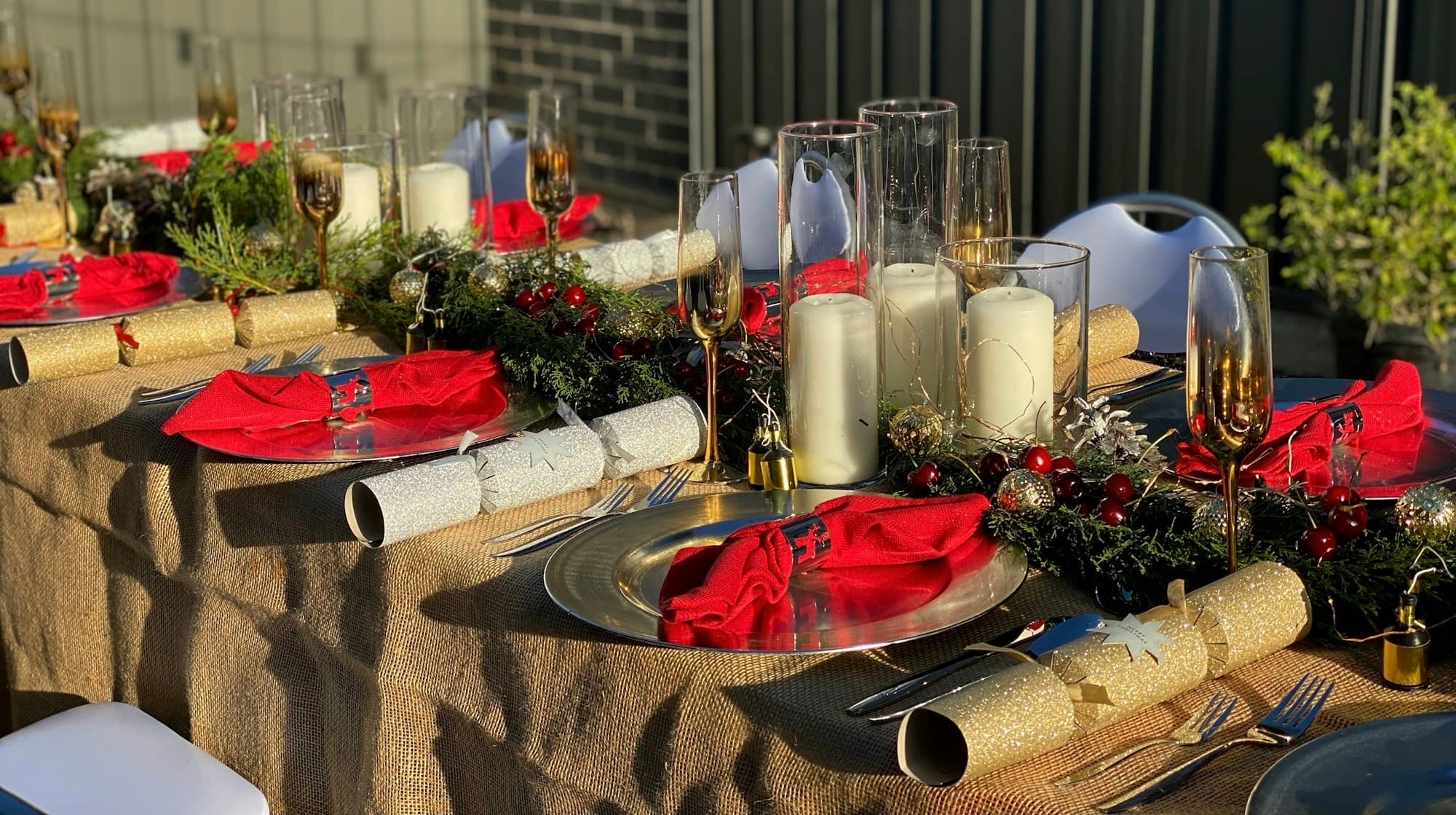
The Christmas table is the one decorating surface your guests look at for hours. The tree is admired on arrival and then forgotten. The mantel is glanced at from the couch. But the table is studied, up close, at eye level, across a long meal, by everyone you've invited. It's the most scrutinized square footage of Christmas decor in the house, and it's the one most people improvise an hour before dinner.
The trouble is that most Christmas table advice treats "more" as the goal. A "30 stunning Christmas tablescape ideas" roundup will pile on the chargers, the napkin rings, the place cards, the ribbon, the ornaments scattered between plates, the second runner, the third candle style, until the table is so busy there's nowhere to put a plate of food. A beautiful Christmas table is not the most decorated one. It's the most composed one: a clear palette, deliberate layers, the right scale, and enough restraint that the food and the people are still the point.
This guide covers the five universal rules that make any Christmas table look intentional, then tablescape ideas for six decorating styles, the most common mistakes, and a realistic starter shopping list.
Not sure which decorating style is yours? Take the free Christmas decor style quiz. Eight questions, then jump to the section of this guide written for your style.
The 5 universal tablescape rules
These apply regardless of style. Get them right and the by-style choices become easy; get them wrong and no amount of pretty dinnerware will save the table.
Rule 1: Pick one palette and commit
The single biggest failure on Christmas tables is too many colors. A red charger, a green napkin, a gold ribbon, a silver candlestick, and a blue ornament on the same table is five colors with no relationship, and the whole thing feels chaotic no matter how nice each piece is on its own.
Pick two or three colors and repeat them at every layer. Classic red-and-green-and-gold works. So does an all-neutral cream-and-cedar table. So does white-and-silver, or burgundy-and-blush, or forest-green-and-brass. The restraint is what makes it look styled rather than thrown together. When in doubt, build the palette from your dinnerware out: if your plates are white, the whole table can be white-plus-one-accent and it will always look composed.
Rule 2: Layer from the table up
A flat table, plates straight on bare wood, looks unfinished. A composed table builds vertical layers at each seat:
- The base: a placemat, charger, or runner under each setting. This is what separates a "set table" from a "styled table."
- The plates: dinner plate, then a salad plate or bowl stacked on top.
- The napkin: cloth, not paper, folded simply, placed on the stack or to the left.
- The seasonal touch: one small thing per setting, like a sprig of cedar, a cinnamon stick tied with twine, a name card, a single ornament, or a sugared pear. One. Not all of them.
The layers give the eye somewhere to travel and make even inexpensive dinnerware look considered.
Rule 3: Mind the centerpiece height
The centerpiece is where most Christmas tables go wrong, and it's a geometry problem, not a taste problem. Anything in the 12-to-24-inch height range sits exactly in the sightline across the table, so guests can't see each other, and conversation dies behind a wall of florals.
The fix: keep the centerpiece either low (under 12 inches), like a runner of greenery and candles or a row of small arrangements, or tall (above 24 inches), like slender taper candles in candlesticks or a raised arrangement on a footed stand that clears the eyeline entirely. Both work; the dead zone in the middle doesn't. Run a low evergreen-and-candle composition down the center of the table and you've solved the centerpiece for almost any style.
Rule 4: Use odd numbers and varied heights
Like the mantel, the table rewards odd-numbered groupings in graduated heights. Three, five, or seven candles down the center read as more natural and rhythmic than four or six in matched rows. The same goes for any clustered elements, whether votives, small bud vases, or ornaments. Vary the heights so the eye moves; a flat line of identical objects looks rigid.
Rule 5: Leave room to actually eat
The point of a table is the meal. A tablescape so dense that there's no clear space for a dinner plate, a bread plate, two glasses, and the serving dishes has failed at its only real job. Before you finish, set an actual plate at each seat and put a couple of serving bowls in the center. If there's no room, subtract decor until there is. The most elegant Christmas tables leave generous negative space; the scattered-ornaments-between-every-plate look photographs busy and eats terribly.
Tablescape ideas by style
Below: the palette, the centerpiece move, the signature detail, and the common mistake for each of six decorating styles.
Traditional
The palette: Red, green, and gold, the canonical Christmas trio. Deep burgundy reds rather than bright primary red; forest or hunter green; antique or brushed gold rather than shiny.
The centerpiece: A low runner of mixed evergreen (cedar, pine, magnolia) studded with gold-and-burgundy ornaments and pinecones, with brass candlesticks holding cream or burgundy tapers rising above it. Or a footed compote of fruit (pomegranates, sugared grapes, lady apples) for an old-world look.
The signature detail: A sprig of holly with red berries tucked into each folded napkin, or a name card in classic script. Velvet ribbon (not satin) tying the napkins.
The common mistake: Going too bright. Traditional looks expensive when the reds are deep and the golds are antiqued. Primary-red plastic and shiny-gold dollar-store accents drag the whole table down to "office party." Lean dark and muted.
For the full palette logic, see The Best Christmas Color Schemes for Traditional Homes.
Modern minimalist
The palette: Two colors, maximum, usually white-and-green, or cream-and-black, or all-white with the greenery as the only color. Matte finishes, no metallics, no glitter.
The centerpiece: A single clean line of eucalyptus or fir down the bare center of the table, with a few unscented white pillar or taper candles at varied heights. Nothing else. The restraint is the statement.
The signature detail: One matte-white or natural-linen napkin per setting, folded simply, with a single sprig of greenery and no ring. The negative space of the bare wood or white tablecloth between settings does the work.
The common mistake: Adding "just one more thing." Modern minimalist fails the moment a second decorative element creeps in. If you're tempted to add ornaments, ribbon, or a second candle style, don't. The discipline is the entire look.
If clean-and-restrained is your aesthetic, the Modern Minimalist Christmas Mantel Ideas guide goes deeper on the same principles.
Rustic farmhouse
The palette: Cream, sage, kraft brown, and matte black, with greenery and natural-wood tones doing most of the work. Warm and earthy rather than bright.
The centerpiece: A wooden dough bowl or a length of burlap or unbleached-linen runner down the center, filled or topped with cedar, eucalyptus, cotton bolls, dried orange slices, and pillar candles in galvanized or matte-black holders. Lanterns instead of candlesticks.
The signature detail: Napkins tied with jute twine and a sprig of rosemary or a cinnamon stick. Stoneware or enamelware plates rather than fine china. A wooden bead garland looped down the runner.
The common mistake: Over-cute. Farmhouse slides into kitsch fast: "Joy" and "Merry" wooden signs propped on the table, mason jars stuffed with everything, decorative truck-with-tree figurines. Keep it to natural materials and let the texture, not the slogans, carry it.
The same restraint applies to the rest of the room. See How to Decorate a Modern Farmhouse for Christmas.
Scandinavian
The palette: White, pale wood, soft grey, and a single warm accent, usually a muted red or a sprig of green. Cozy and pared-back at once; this is the hygge table.
The centerpiece: A low arrangement of fir branches with white candles and a scattering of natural elements like pinecones, dried citrus, and a few red berries for warmth. Lots of candlelight; the Scandinavian table is defined by the glow of many small flames against pale surfaces.
The signature detail: A simple straw star or a single wooden heart ornament at each place. Grey or oatmeal linen napkins. A paper or straw Advent-style accent.
The common mistake: Letting it go cold. The Scandinavian palette is pale, so the warmth has to come from candlelight and natural texture (wood, linen, dried botanicals). A Scandi table lit by overhead electric light instead of candles looks clinical. Dim the room and load up on real flame.
For the broader aesthetic, see Scandinavian Christmas Decor: A Complete Hygge Guide.
Coastal
The palette: White, navy, silver, and sea-glass green or pale blue, with greenery kept cool-toned (eucalyptus, blue spruce) rather than warm. Crisp and bright.
The centerpiece: A low runner of blue-green eucalyptus and white candles, with accents of silver, white coral, or oyster shells, and clear or mercury-glass votives. For a warm-climate Christmas, this style replaces the heavy traditional look beautifully.
The signature detail: Navy-and-white striped or solid napkins, a small starfish or shell at each setting, rope-tied napkins. Clear glass and silver rather than gold.
The common mistake: Mixing in warm tones. Coastal lives or dies on a cool palette. The moment gold, burgundy, or warm-red sneaks in, it stops reading as coastal and becomes muddled traditional. Keep everything in the white-silver-blue-green family.
Coastal is the natural fit for a warm-climate Christmas. See Outdoor Christmas Decorations That Work in Warm Climates.
Glam / formal
The palette: Deep jewel tones (emerald, sapphire, or burgundy) with heavy metallics (gold, brass, or mercury silver) and plenty of sparkle. The most maximalist of the six, and the one where shine is welcome.
The centerpiece: A tall, raised arrangement on a footed stand or a candelabra with multiple tapers. This is the one style that wants height and drama. Jewel-toned glass ornaments, metallic chargers, and a velvet or sequined runner.
The signature detail: Gold-rimmed glassware, metallic or velvet napkins in ornate rings, a small wrapped favor or a crystal ornament at each setting. Crystal and mercury glass catching the candlelight.
The common mistake: Cheap sparkle. Glam is the one style that survives shine, but only good shine: real brass, mercury glass, velvet, crystal. Plastic gold and loose glitter (which ends up in the food) read as the opposite of luxurious. Spend the budget on a few genuinely lustrous pieces rather than a lot of shiny plastic.
This pairs naturally with Victorian Christmas decorating, the house style built for abundance.
Common Christmas tablescape mistakes
The failures that show up most often, most of them fixable with one specific change.
Too many colors. The number-one error. Squint at the finished table; if you see more than three color groups, pull one out.
A centerpiece in the dead zone. Anything 12-24 inches tall blocks sightlines. Go low or go tall.
Paper napkins. The single cheapest upgrade to a Christmas table is cloth napkins. Paper undoes an otherwise beautiful setting instantly.
Scattered ornaments between every plate. It photographs busy and leaves nowhere for the food. A few ornaments worked into the centerpiece runner, yes; a confetti of them across the whole table, no.
No real candlelight. The warmth and flicker of real flame is most of what makes a Christmas table feel special. Use real tapers where it's safe.
Decor with no room to eat. Set an actual place setting plus serving dishes before you finish. If there's no room, subtract.
Matching themed dinnerware sets. A full set of patterned snowman or plaid holiday plates dates fast and limits your palette. White or cream plates plus a real greenery runner looks more expensive and works every year.
Flat, unlayered settings. A plate straight on bare wood looks unfinished. Add at least a charger or placemat and a stacked salad plate to build the layers.
The centerpiece, solved
If you do one thing well, make it the centerpiece runner. It carries the whole table.
The reliable formula, adaptable to any of the six styles above:
- Lay a runner down the center, either fabric (linen, burlap, velvet) or simply a line of greenery straight on the table.
- Build a low spine of fresh greenery, whether cedar, fir, eucalyptus, or magnolia, 9-12 inches wide, running the length. Real greenery is non-negotiable for the first few years; it's what makes the table smell and read like Christmas.
- Add candles in odd numbers and varied heights: tapers in candlesticks for traditional/glam, pillars in holders for farmhouse, unadorned white candles for minimalist/Scandi. Keep the whole composition under 12 inches if you want guests to see across, or go tall with slender tapers that clear the eyeline.
- Tuck in 5-9 accent objects from your palette (ornaments, pinecones, dried citrus, small bud vases, sugared fruit) worked into the greenery, not scattered loose.
- Stop. Set a plate and a serving bowl to confirm there's room to eat.
That's a complete, style-flexible Christmas centerpiece. Swap the candle type, the runner fabric, and the accent objects and the same formula reads traditional, farmhouse, coastal, or glam.
For string-light counts if you're weaving lights into the runner, the Christmas Light Calculator handles the math.
Starter tablescape shopping list
A realistic first-year list to set a table for eight, with rough costs. Skip what you already own.
- Cloth napkins, set of 8: $20-40. The highest-impact single purchase. Linen or cotton; pick a palette neutral you'll reuse for years.
- Chargers or placemats, set of 8: $30-70. The base layer that makes the table read as "styled." Rattan, metallic, or wood depending on style.
- Fresh greenery runner (9 ft) or 2-3 bunches: $15-30. Cedar, fir, or eucalyptus. The element that makes the table.
- Taper candles (set of 8-12) + candlesticks (3-5): $30-80. Real, not LED, where it's safe. Mismatched brass candlesticks from estate sales work beautifully.
- A runner (fabric): $15-40. Linen, burlap, or velvet depending on style. Optional if you're running bare greenery.
- Accent objects (ornaments, pinecones, bud vases): $20-50. From your palette, for the centerpiece.
- Napkin rings or twine + sprigs: $0-25. Twine and a rosemary sprig cost almost nothing and often look better than rings.
Starter total: roughly $130-335 depending on style and what you already own, and most of it (napkins, chargers, candlesticks, rings) is reusable for years.
To fold the table into your overall holiday budget, the Christmas Decoration Budget Planner breaks the season into categories.
Composed, not crowded
A beautiful Christmas table is composed, not crowded. Pick one palette and repeat it. Layer each setting from the base up. Keep the centerpiece out of the sightline. Use odd numbers and real candlelight. And always leave room to actually eat. Get those five rules right and the style, whether traditional, minimalist, farmhouse, Scandinavian, coastal, or glam, is just a matter of swapping the palette and the accents.
Then carry the look through the rest of the room. The Christmas mantel guide and the front porch guide apply the same composed-not-crowded logic to the other two surfaces guests actually study. And if you're hosting the meal, the Christmas Dinner Timing Calculator and Christmas Dinner Shopping List handle everything that goes on the beautiful table you just set.
Share this guide
Frequently asked questions
What's the best centerpiece height for a Christmas table?
How do you set a Christmas table on a budget?
What are the layers of a place setting?
How many candles should be on a Christmas table?
When should I set the Christmas table?
Keep reading
Christmas Stockings: How to Choose, Hang, and Fill Them (by Style)
The most personal piece of Christmas decor, done right. How to choose stockings by decorating style, the heirloom and needlepoint options worth keeping, how to hang them with or without a mantel, and what to actually put inside.
Christmas Tree Ornaments: How to Choose and Arrange Them (by Style)
How to decorate a Christmas tree that looks designed, not decorated. How many ornaments you actually need, the pro layering method, ornaments by decorating style, and the heirloom-vs-themed-tree question settled.
Outdoor Christmas Decorating Ideas That Read From the Street
How to compose the outside of your house for Christmas as one picture instead of a pile of parts: the three layers that matter, the one color decision that makes or breaks it, ideas sorted by what your house actually gives you to work with, and the daytime layer almost everyone skips.
Prefer pen & paper?
The Christmas Planner
A 25-page printable kit covering budget, gifts, hosting, and decor, built on the same planning logic as this tool. Print it once, keep it in a binder, and reuse it every year.
Or grab 3 pages free first.
Decor that suits the home you have.
Seasonal decorating tips and the occasional new tool, straight to your inbox. One list, no spam.