By Brian · May 3, 2026
How to Decorate a Victorian House for Christmas
Victorian-era homes were built to be decorated. Their ornate architecture rewards Christmas abundance in a way no other style does. 14 ideas designed for the houses that invented modern Christmas.
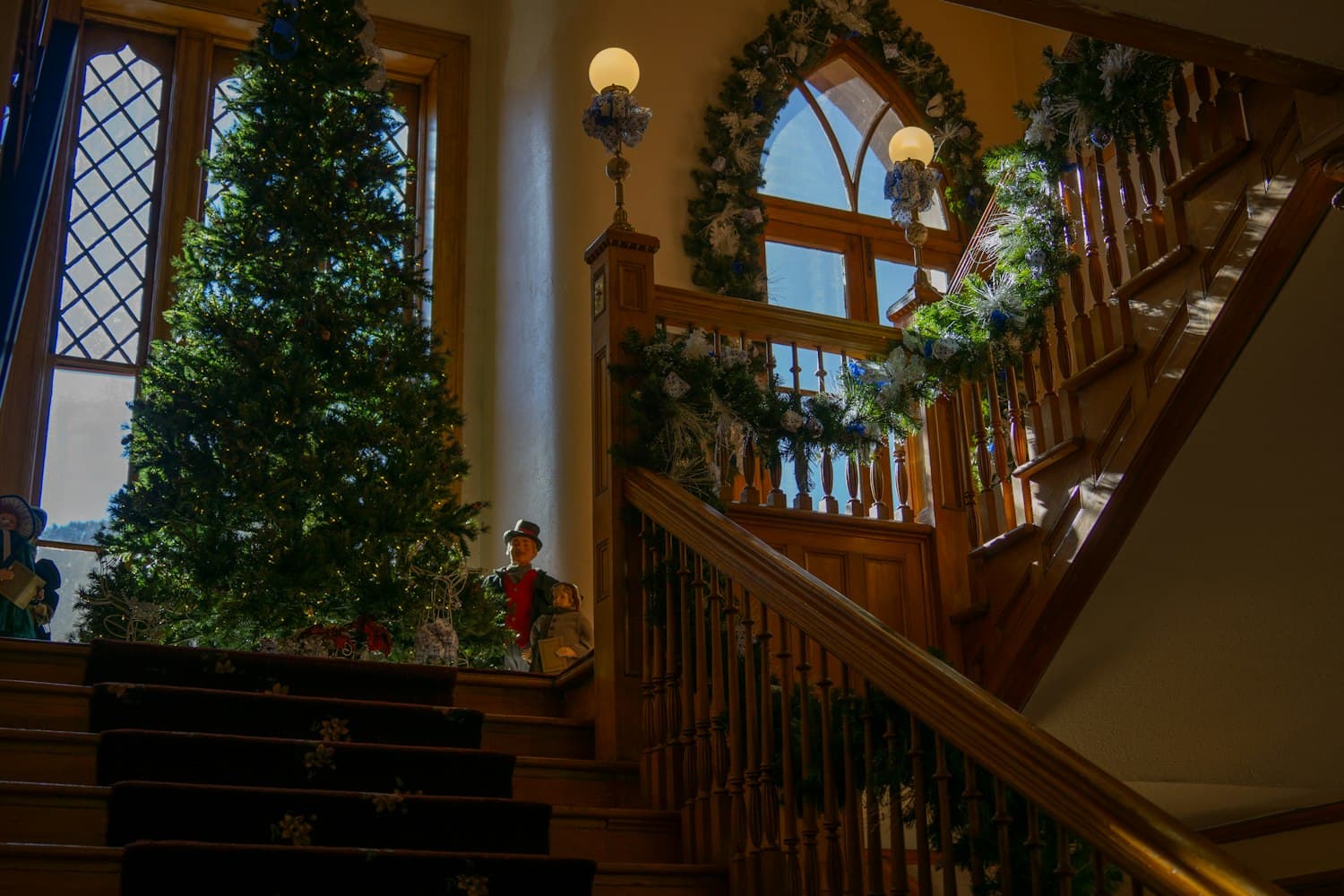
Victorian-era homes are unique in American architecture for one specific reason: they were built during the same cultural moment that invented modern Christmas. Between roughly 1840 and 1900, the Victorians gave us the decorated Christmas tree as a household tradition, the first commercial Christmas cards, the Christmas cracker, the modern image of Santa Claus, and the whole notion of Christmas as a family-centered domestic celebration. The houses built in that period (Queen Anne, Italianate, Stick, Folk Victorian, Second Empire) share a deep aesthetic alignment with the holiday they helped create.
That means Victorian houses don't just tolerate abundant Christmas decor. They reward it. The ornate spindlework, the wraparound porches, the multiple gables, the turrets, the painted-lady palettes: every element of a Victorian was designed to be elaborate, layered, and visually rich. Christmas decoration that respects that architectural exuberance is some of the most stunning seasonal styling in American homes. Christmas decoration that fights it (modern minimalism, restrained Scandinavian palettes) just looks wrong against the architecture.
This guide covers 14 ideas built specifically for Victorian-era homes, plus the principles behind them. Whether yours is an original 1880s Queen Anne, a 1900s Folk Victorian farmhouse, or a modern Victorian revival, the same logic applies: lean into the ornament, embrace the abundance, and decorate the house the era that invented Christmas would have wanted you to.
Not sure whether your home counts as a true Victorian versus an Italianate or a Folk Victorian cousin? The house style identifier quiz pins it down in about a minute.
Why Victorians Decorate Differently
A few architectural realities shape what works:
- The architecture is already maximalist. Spindlework, gingerbread trim, decorative shingles, bargeboard, finials: Victorian homes are visually busy by design. Christmas decor that's also visually rich complements rather than competes.
- The wraparound porch is a continuous decorating canvas. Most Victorians have a porch that wraps at least one side. This is a 30-50 foot stretch of railing, columns, and ceiling, the longest decorating opportunity of any house style.
- Multiple gables and a turret demand acknowledgment. Unlike a colonial's clean roofline, a Victorian has a complex roof shape with multiple gables, often a turret or tower, and decorative chimneys. Each one wants its own small Christmas moment.
- Tall, narrow proportions favor vertical decor. Victorian rooms often have 9-10 foot ceilings, and the windows are tall and narrow. Vertical decor (tall trees, garland-wrapped staircases, full-length curtain treatments) flatters the proportions.
- Painted-lady palettes work with traditional Christmas colors. A Victorian painted in cranberry, forest green, gold, and cream already has Christmas colors built into its facade. Coordinate your decor to match what's already there.
- Stained glass becomes a Christmas asset. Many Victorians have leaded or stained glass windows. With a lit Christmas tree behind, the windows become glowing focal points from outside.
Hold those six things in mind and the ideas below feel like a system rather than a list.
Exterior Ideas
1. Hang a Wreath in Every Front-Facing Window
Same logic as a Cape Cod or colonial, but Victorian windows are usually taller and more numerous. A 2-3 story Victorian might have 10-15 front-facing windows. Every one gets a wreath, hung centered, with simple red or green velvet ribbon.
Use 14- to 18-inch wreaths for double-hung windows; sized larger (20-24 inch) for the typically larger first-floor windows. Mix materials slightly: some pine, some magnolia, some mixed evergreen. Victorian eclecticism rewards a coordinated-but-not-identical approach more than the Cape Cod approach of total uniformity.
2. Garland the Entire Wraparound Porch Railing
The wraparound porch is the most distinctive Christmas decorating feature a Victorian has. Run pre-lit garland (fresh or high-quality faux mixed evergreen) along the entire railing, secured every 18 inches with floral wire so it doesn't sag.
For a 30-foot wraparound porch you'll need about 30-40 feet of garland (factor in the slight drape between fastening points). Add red velvet bows at each corner of the porch and one at the front steps. The result looks fully decorated from any angle, which is exactly what a wraparound porch deserves.
3. Wrap the Spindlework and Bargeboard with Greenery
Most Victorians have decorative spindlework on the porch (small turned wood elements between posts) and bargeboard along the gable edges (carved wooden trim). These are unique to Victorian architecture and deserve specific acknowledgment.
Tuck small sprigs of fresh evergreen (cedar or pine) into the spindlework at regular intervals. Wind narrow ribbon (1-inch wide) through the bargeboard along the front gable. The result is small, almost subliminal, but visitors notice that the house itself is decorated, not just the porch.
4. Light the Turret or Tower as a Focal Point
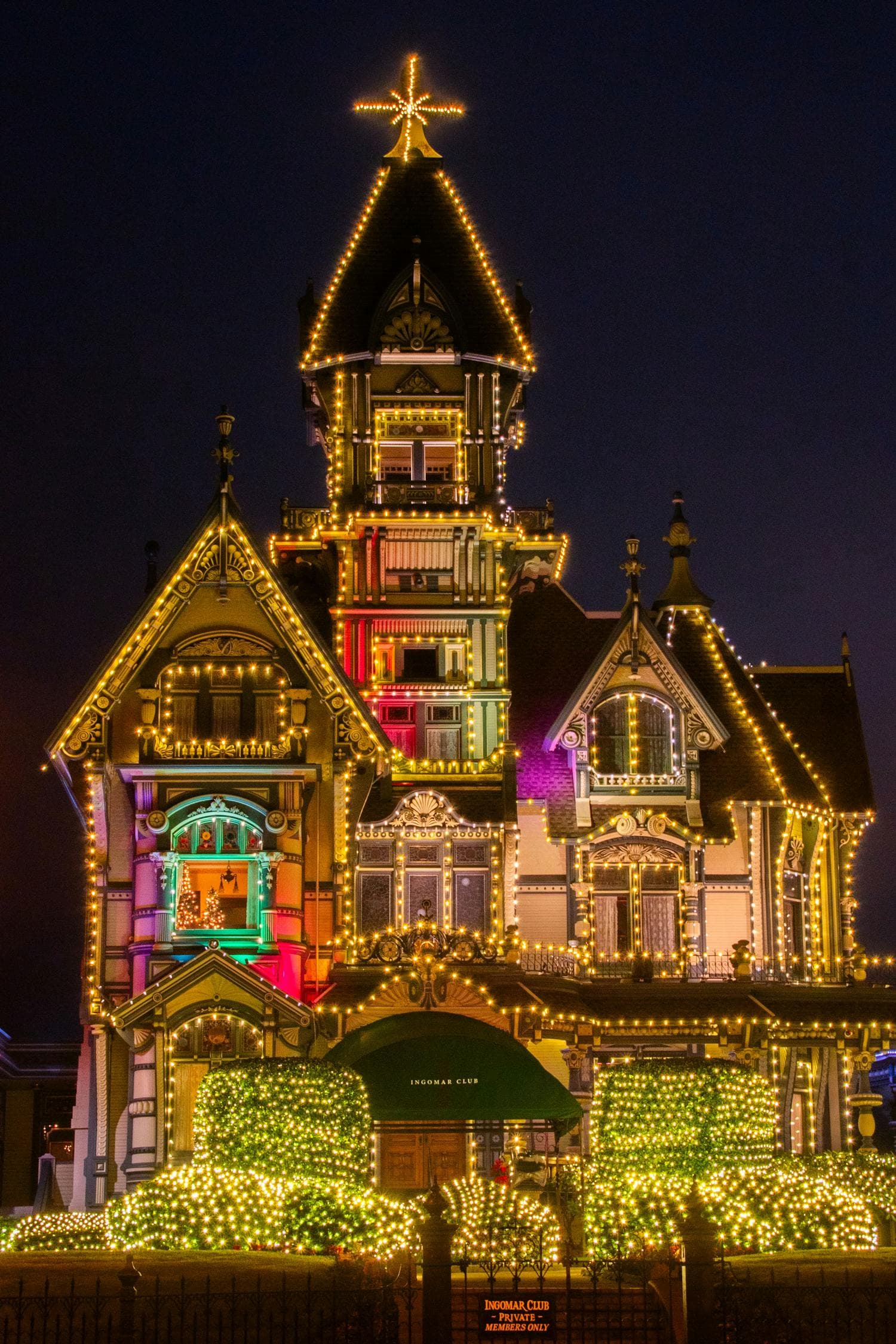
If your Victorian has a turret, tower, or prominent gable, it deserves to be the focal point of the front facade after dark. Drape warm-white string lights along the leading edges of the turret roof and around the upper windows. Add a single grand wreath in the topmost turret window.
Don't overwhelm the turret with light. The architecture is doing the work. A subtle outline plus one focal wreath comes across as deliberate and elegant rather than over-decorated.
5. Hang an Oversized Wreath on the Front Door
Victorian front doors are often elaborate in their own right: carved panels, leaded glass, brass hardware, sometimes decorative iron. The wreath on this door has to match the door's energy: large, layered, and rich.
Aim for a 32-36 inch wreath, made from mixed evergreen with magnolia leaves, pinecones, dried orange slices, red berries, and a wide red or burgundy velvet bow. The wreath should be larger than feels intuitive. Victorian doors absorb scale that would overwhelm a colonial.
6. Embrace the Painted-Lady Palette in Your Decor
Most Christmas decorating advice assumes a neutral house and tells you to add Christmas colors. Victorians are different. Your house is already painted in coordinated colors that often happen to be Christmas-adjacent. Cranberry. Forest. Gold. Plum. Sage. Cream.
Match your decor to your house's existing palette rather than fighting it. If your Victorian is painted cranberry and forest green, lean into those colors with cranberry and forest green Christmas decor. The result is dramatically more cohesive than dropping standard red-green-gold onto an already-decorated house.
See The Best Christmas Color Schemes for Traditional Homes for six palette options that all work on a Victorian, including the burgundy-forest-cream "old money" variant that pairs especially well with original-era houses.
7. Drape Garland on the Iron Fence (If You Have One)
Many Victorian properties have decorative iron fencing along the property line: wrought iron or cast iron with finials and decorative posts. If yours does, the fence itself becomes a decorating canvas.
Drape garland along the top rail, accented with red bows tied to each prominent post or finial. Hang small wreaths (10-12 inch) on the gates if there are any. The fence becomes a continuous Christmas border around the property, visible from a distance and unmistakably Victorian.
8. Light the Multiple Gables with Restraint
Victorian roofs are complex: multiple gables, hip roofs blending into gables, shed dormers, decorative chimneys. Each one wants a small acknowledgment but the whole roof should not be aggressively lit.
The right approach: clean warm-white C9 bulbs along the primary front gable's edges and along the porch roofline. Subtle lights along secondary gables. No lights on the back-facing gables. The result reads as intentional outlining rather than full-roof Christmas-light commitment.
Interior Ideas
9. Treat the Parlor as the Christmas Centerpiece
Most Victorians have a formal parlor: a more elaborate front-of-house room used for receiving guests and special occasions. This is the room where Victorian-era Christmas was invented, and yours should be the most fully decorated room in the house.
The parlor gets:
- The grand Christmas tree (8-9 feet tall on a 9-foot ceiling)
- Garland on every horizontal surface (mantel, picture rails, doorway transoms)
- The most elaborate ornament collection (glass, crystal, antique reproductions)
- Multiple grouped candle moments
- A fully styled mantel with stockings hung in a row
The parlor should feel like you walked into an 1890s holiday illustration. That's the right tone.
10. Build a Grand Victorian Christmas Tree
Modern decorating wisdom says "less is more." Victorian Christmas trees say "more is more." This is the era that invented the decorated Christmas tree. Embrace the abundance.
A grand Victorian tree includes:
- A 9-foot pre-lit fir or spruce (use the Christmas Tree Size Calculator to verify it fits your room)
- Layered ribbon (1.5- to 2.5-inch wide, in coordinating colors, draped in long swags)
- Glass ornaments in mixed sizes (3-inch through 6-inch baubles, alternating)
- Smaller specialty ornaments tucked into the inner branches
- Vintage-reproduction tinsel garland (silver or gold)
- A glass star or angel topper, plus 2-3 decorative finials at the very top
- A broad fabric tree skirt (velvet works perfectly) or an antique trunk as the base
The right number of ornaments on a 9-foot Victorian tree is around 200-300. That's not a typo. Victorian Christmas trees were covered in ornaments, and the layered effect is the point.
11. Run Garland Along the Staircase Banister
Victorian homes are famous for their elaborate staircases: often a grand front stair with carved newel posts, decorative balusters, and a long sweeping handrail. Garland-wrapping the banister is one of the most recognizable Victorian Christmas moves.
Use pre-lit garland that's at least as long as the staircase (measure with extra for the swags). Wrap continuously from the bottom newel post all the way up, securing with floral wire. Add red or burgundy velvet bows at each landing. The newel post at the bottom (the most decorative element of the stair) gets an oversized bow or a small wreath as its final flourish.
12. Position the Christmas Tree to Glow Through Stained Glass
Many Victorians have stained glass windows or leaded glass in the front room. If your tree can be positioned so that its lights filter through the stained glass when viewed from outside, the effect is one of the most beautiful Christmas moments possible.
Test the placement at twilight. Walk outside, stand on the sidewalk, and check what the tree looks like from there. If the tree's lights backlight the stained glass colors, you've nailed it. The window glow becomes a focal point of your home's facade after dark, with no extra decoration needed.
13. Layer Velvet, Brocade, Antique Brass, and Glass
Victorian-era interiors were defined by texture. Heavy fabrics, ornate metals, glass under everything. Christmas decor that respects this layering looks deeply Victorian:
- Velvet ribbon (red, burgundy, forest green) on every wreath and garland
- Brocade or jacquard table runners and napkins
- Antique brass candleholders, brass-rim china, brass picture frames
- Mercury glass ornaments and votives
- Glass ornaments (especially European-blown reproductions)
- Plush throws on every chair
Avoid: matte modern finishes, plastic anything, monochromatic minimalism. Everything should reward close inspection.
14. Set the Dining Room for a Victorian Christmas Feast
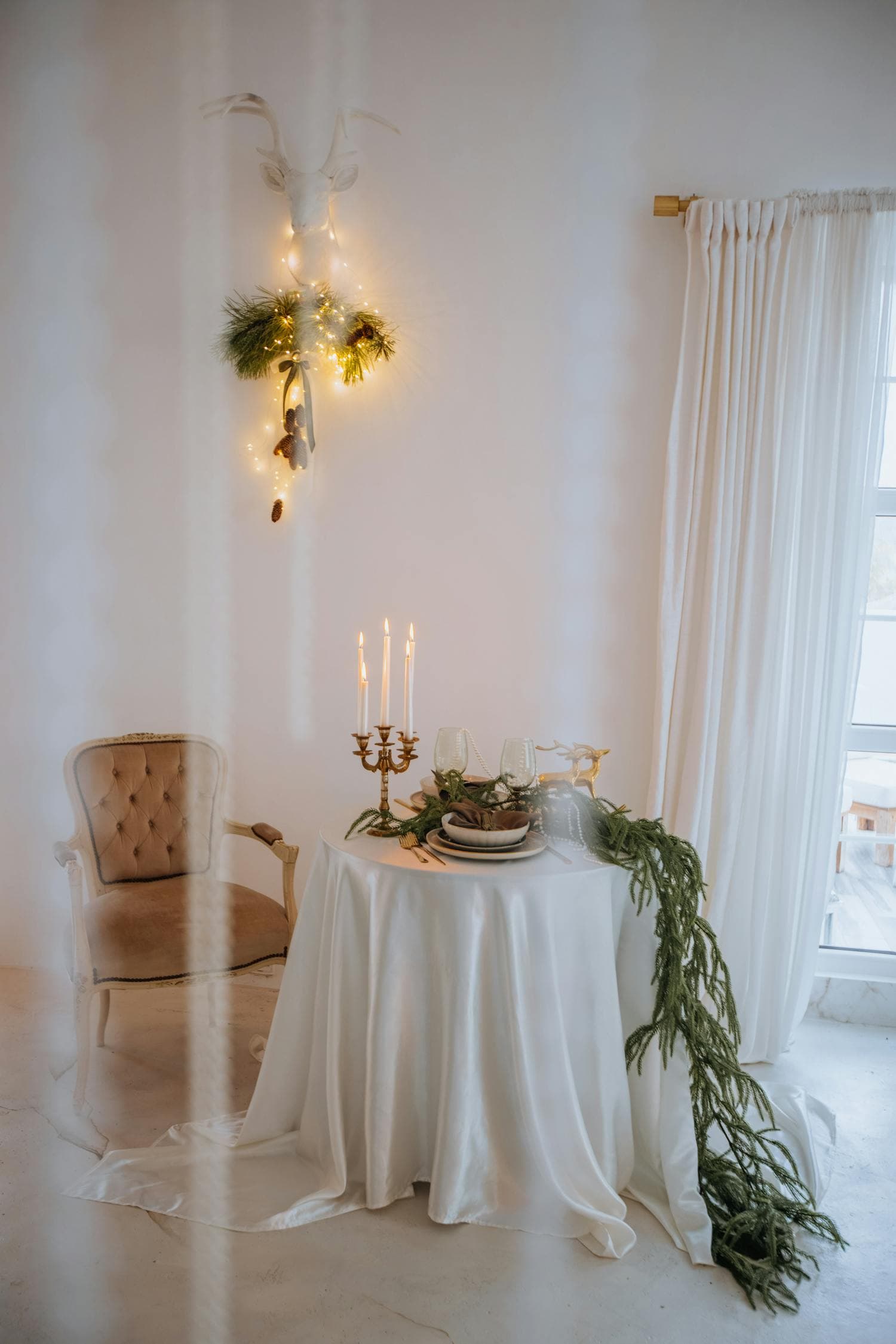
Victorian Christmas dinner was an event: multiple courses, full china service, candelabras, dressed tables. Set yours the same way:
- White or cream tablecloth (linen, ideally)
- Brass or silver candelabras with tall candles
- Full china service (mix antique pieces if you have them; matched-set otherwise)
- Crystal stemware
- A long centerpiece running the table's length: mixed evergreen, red roses, holly berries, pillar candles in groups of three
- Cloth napkins folded elaborately, tied with greenery and a single ornament
- Place cards (handwritten, Victorian formality)
Set the table at the start of December. Use it for actual Christmas dinner. The room itself becomes a daily Christmas presence for the whole season.
Common Victorian Christmas Mistakes
A few specific failure modes to avoid:
- Modern minimalism. A Victorian decorated like a modern minimalist home looks disjointed. The architecture wants ornament, and you're starving it. The two aesthetics don't reconcile.
- Plastic and glittery cheap decor. Victorians are detail-rich; close inspection is invited. Cheap plastic ornaments betray themselves immediately.
- Insufficient quantity. Victorian rewards abundance more than any other house style. A half-decorated Victorian looks unfinished, not restrained.
- Wrong color palette. Cool blues, white-silver glam, kelly greens: these fight Victorian color schemes. Stick to traditional warm reds, forest greens, and golds, or coordinate with your house's painted-lady palette.
- Skipping the parlor. If you have a formal parlor and you don't make it the Christmas centerpiece, you've missed the point of the architecture.
- Underdecorating the tree. Victorian trees were loaded. Your 200-300 ornament target is not a typo. Layered abundance is the look.
Where to start on a Victorian
For a first-year Victorian Christmas with no missteps:
- Wreath in every front-facing window (Idea 1)
- Garland the entire wraparound porch railing (Idea 2)
- Oversized 36-inch wreath on the front door (Idea 5)
- Warm-white C9 lights along the primary front gable and porch roofline (Idea 8)
- Inside: a grand 9-foot tree in the parlor, abundantly decorated (Idea 10)
- Garland the staircase banister (Idea 11)
Six moves. The exterior will look fully decorated from the street, and the parlor will be the Christmas centerpiece the architecture demands. Add the dining room (Idea 14), the painted-lady palette coordination (Idea 6), and the iron fence garland (Idea 7) over the next two weeks of December.
If there's one principle to remember, it's honor the abundance. Victorian homes were built during the cultural moment that invented modern Christmas. They were designed to be elaborate, layered, and rich. Christmas decor that respects that ethos (abundant, traditional, deeply layered) is some of the most beautiful seasonal styling in American homes. Decor that fights it never quite works, no matter how much money is spent.
You're decorating a house that was meant for this. Trust the architecture.
Related guides:
- Christmas Front Porch Decorating Ideas (by House Style): porch-specific decor with the Victorian section's full-abundance treatment, including multiple wreaths, garland on every railing, and ribbon down every column
- Christmas Mantel Ideas (by House Style): the interior mantel companion, where the Victorian section embraces layered abundance (multiple garlands, votives plus candlesticks, jewel-tone accents) as the one house style where "more" is the right answer
- The Best Christmas Color Schemes for Traditional Homes: six palette options that all work on a Victorian, including the burgundy-forest-cream "old money" variant
- Christmas Decorating Ideas for Cape Cod Style Homes: the architectural opposite (restraint-first) for comparison
- How to Decorate a Craftsman Bungalow for Christmas: the early-1900s architectural cousin that reacted against Victorian excess
- Modern Minimalist Christmas Mantel Ideas: how the other end of the abundance spectrum is composed
- Christmas Tree Size Calculator: pick the tall tree (often 9+ ft) that suits Victorian ceilings
Share this guide
Frequently asked questions
What style of Christmas decorations work best on a Victorian house?
What colors are traditional for a Victorian Christmas?
How do you decorate a Victorian wraparound porch for Christmas?
What kind of Christmas lights work best on a Victorian house?
What is a Victorian Christmas tree?
Keep reading
How to Decorate a Christmas Tree (Like You Hired Someone)
The professional method for decorating a Christmas tree, step by step: fluffing, lights first (with real per-foot counts), ribbon technique, ornament layering, the topper, and the skirt.
Christmas Tree Ornaments: How to Choose and Arrange Them (by Style)
How to decorate a Christmas tree that looks designed, not decorated. How many ornaments you actually need, the pro layering method, ornaments by decorating style, and the heirloom-vs-themed-tree question settled.
The American Christmas Tree, by the Numbers
Real Christmas tree statistics, sourced: how many Americans put up a tree, real vs artificial, when trees go up and come down, and the 16,000 farms growing the real ones.
Prefer pen & paper?
The Christmas Planner
A 25-page printable kit covering budget, gifts, hosting, and decor, built on the same planning logic as this tool. Print it once, keep it in a binder, and reuse it every year.
Or grab 3 pages free first.
Decor that suits the home you have.
Seasonal decorating tips and the occasional new tool, straight to your inbox. One list, no spam.