By Holiday Home Ideas Editorial Team · June 12, 2026
Christmas Stockings: How to Choose, Hang, and Fill Them (by Style)
The most personal piece of Christmas decor, done right. How to choose stockings by decorating style, the heirloom and needlepoint options worth keeping, how to hang them with or without a mantel, and what to actually put inside.
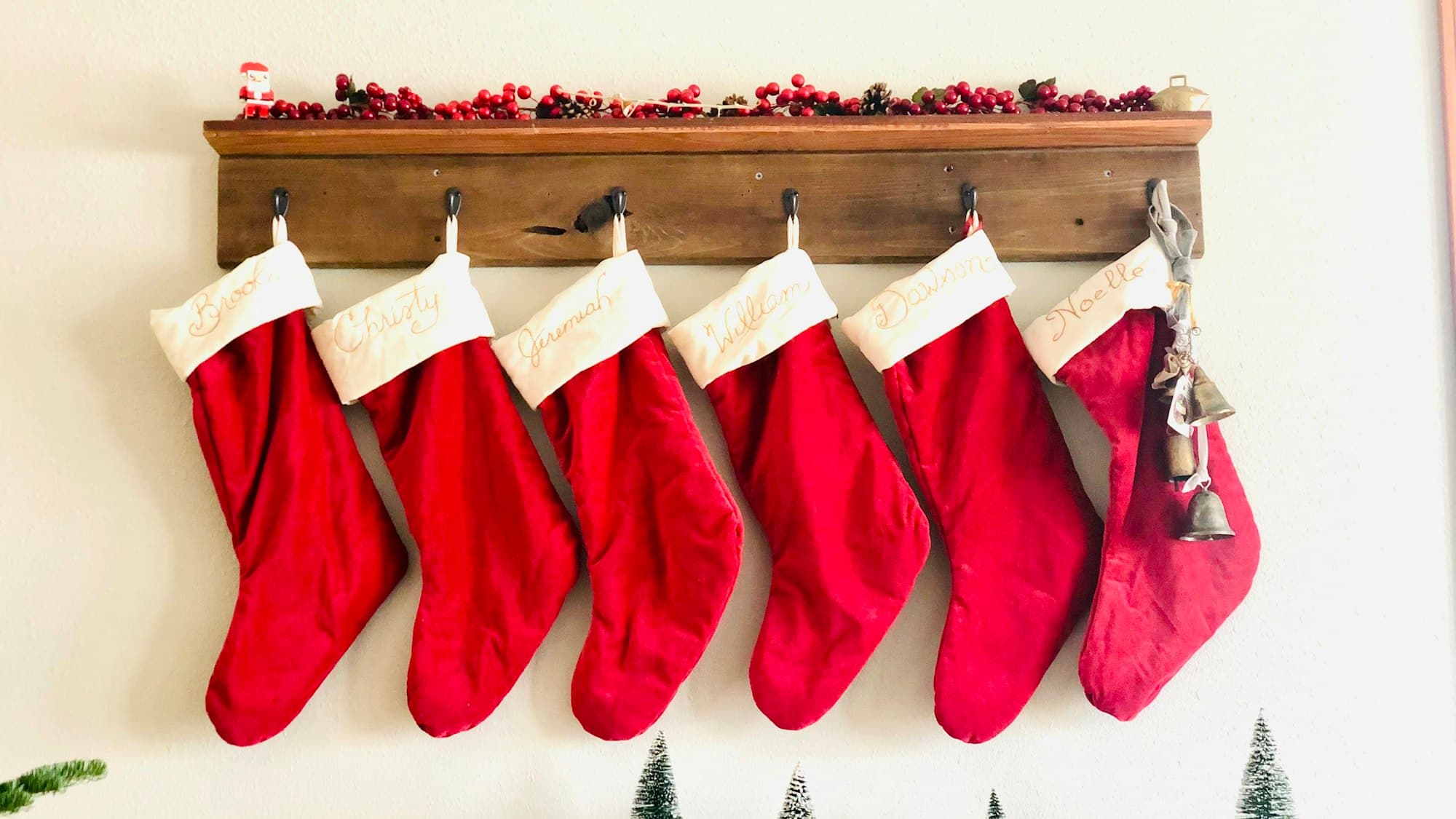
The stocking is the most personal piece of Christmas decor in the house. There's one for each person, hung where everyone gathers, with a name on it, and unlike the tree or the lights, a good one gets kept and rehung for decades, until it's soaked in memory. It's the closest thing Christmas decorating has to an heirloom.
And yet most people give it the least thought of anything: a fuzzy red felt stocking grabbed off an endcap, a different mismatched one for each family member, all of them hung in a clump. The stocking deserves better, and getting it right is genuinely easy. It comes down to choosing a coordinated set that suits your room, hanging them with a little intention, and filling them with a thoughtful handful rather than a stuffed sock.
This guide covers all three: how to choose stockings by decorating style (including the heirloom options worth keeping), how to hang them whether or not you have a mantel, and what to actually put inside.
Not sure what your decorating style is? The free Christmas decor style quiz takes eight questions and tells you which section below to read first.
Choosing stockings by style
The biggest upgrade most mantels can make is swapping a pile of mismatched novelty stockings for a coordinated set: same material and palette, distinguished only by a name or monogram. Within that principle, the right stocking depends on your room:
- Traditional. Velvet stockings, ideally with a fur or faux-fur cuff, in classic red, deep green, or cream. A monogram or embroidered name pushes it from generic to heirloom. This is the plush, firelit, Williamsburg-adjacent look.
- Modern / minimalist. Solid-color stockings in a restrained palette (cream, charcoal, a single accent), no pattern, clean lines, hung from simple matte-black or brass holders. The restraint is the style.
- Farmhouse / rustic. Buffalo check, ticking stripe, burlap, or chunky cream knit, often with a leather or jute hanging loop. Pairs with greenery and brown-kraft wrapping.
- Scandinavian. Pale, natural, cozy: oatmeal and cream cable-knit, simple Fair Isle patterns, a single muted accent color. Wool, not shine.
- Coastal. Lighter and brighter: soft blues, whites, and naturals, sometimes a subtle nautical or textural element. Reads calm rather than crimson.
- Glam. Velvet, sequins, or metallic-threaded stockings in jewel tones or champagne, with ornate holders. The one style where a little sparkle is the point.
Build the set from your existing palette, the same two or three colors as your tree and mantel, and the whole display locks together.
The heirloom stocking (and the needlepoint question)
There's a reason "needlepoint Christmas stocking" is one of the most-searched stocking terms: the hand-stitched stocking is the keepsake version. A personalized needlepoint or hand-knit stocking is made (or commissioned) once, with the person's name worked right into it, and then it comes out every December for decades, often outliving the décor trends around it.
It's worth it specifically when you want a stocking that becomes part of the family's story rather than something you replace. The investment is real either way: a finished, personalized needlepoint stocking runs well over $100, and a DIY canvas kit is many evenings of stitching. That cost is exactly what gives it sentimental weight. If you'd rather make than buy, a hand-knit stocking or a simpler embroidered monogram on a plain knit stocking gets much of the heirloom feel for less. See the Christmas crafts guide for the make-it-look-intentional rules.
Stockings for kids
For children, the stocking is often the most magical part of Christmas morning: small, personal, and theirs. A few things make it land:
- Personalize it. A name (embroidered, appliquéd, or on a wooden tag) turns a generic stocking into their stocking, and it's what makes it keepable as they grow.
- Coordinate, don't clash. It's tempting to let each kid pick a wildly different character stocking. A better-aging approach: keep the family set coordinated and let the name and one small detail do the individualizing. The character phase passes; the cream knit stocking with their name on it doesn't.
- Keep the fill age-right and small. Little hands love opening many small things, so see the filling section below.
How to hang them
With a mantel
The mantel is the classic stage, and the rules are simple:
- Use real holders. Weighted stocking holders (not nails or tape) that can take a full stocking without sliding. Match the metal to your style: brass for traditional, matte black for modern.
- Space them evenly, with equal gaps, centered or balanced across the mantel. Even spacing is most of what makes a row look composed.
- Mind the weight. A heavily stuffed stocking can drag a light holder off the edge, so either use heavier holders or hang the stockings empty and fill them on a side table Christmas morning.
- Let them hang below the greenery, not buried in it. The mantel guide covers composing the whole ledge so the stockings, garland, and candles work together.
Without a mantel
No fireplace is the rule, not the exception, in modern homes, and the solutions look great:
- A stocking holder stand. A weighted freestanding base with hooks, purpose-built for mantel-less rooms. The most plug-and-play option.
- A stocking ladder. A wooden ladder leaned against the wall with stockings hung from the rungs. Equal parts decor and display.
- A wall-mounted rod or garland. A length of greenery, a wooden dowel, or a curtain rod fixed to the wall, stockings hung evenly along it.
- Adhesive hooks (Command-style) spaced along a wall, a staircase wall, or the side of a bookshelf. Invisible when done evenly.
- The banister. Stockings tied to staircase spindles, an easy and traditional fallback.
The single rule across all of these: commit to one deliberate, evenly spaced line. A row of evenly hung stockings looks like intentional decor anywhere; the same stockings stuck up at random look like an afterthought.
How to fill them
The goal is a thoughtful little collection, not a sock crammed to bursting. Aim for 4–7 small items per stocking, balanced across a few categories:
- Something useful. Nice socks, a phone charger, a good pen, lip balm.
- Something consumable. Quality chocolate, a favorite snack, specialty coffee.
- Something fun and small. A puzzle, a mini game, a tiny toy, a paperback.
- One slightly nicer treat. The small splurge that rounds out the rest.
- The orange in the toe. The traditional anchor (see the FAQ for the lovely St. Nicholas backstory), which also fills the foot so the good stuff rides higher where it's seen.
Stuck for ideas on the people you don't know well, like the office exchange or the in-laws? The gift guide by who you're shopping for is organized for exactly that, and if you're running a name draw, the Secret Santa generator handles the matchmaking (no emails, private links).
Common mistakes
- The mismatched clump. Different novelty stockings in clashing colors, hung in a heap. Coordinate the set and space them out. This one fix does the most.
- Hanging the full weight on flimsy holders. Fill stockings after hanging, or use weighted holders.
- Forgetting the name. An unlabeled stocking is generic forever; a name makes it an heirloom.
- Over-stuffing. A sock bursting with filler signals quantity over thought. A curated handful is better.
- Treating it as the last decoration. The stocking is the most personal thing on the mantel, so give it the same palette discipline as everything else.
Coordinate, hang, fill
Christmas stockings are the most personal decor in the house, so treat them that way: choose a coordinated set that suits your style, spring for (or stitch) a personalized heirloom one you'll keep for decades, hang them in one evenly spaced line whether you have a mantel or not, and fill them with a thoughtful handful topped off with the orange in the toe.
Ready to actually shop? The best Christmas stockings buying guide covers exactly what to buy by style, plus holders and no-mantel hanging solutions.
From there, carry the look through the rest of the room: the mantel guide composes the ledge the stockings hang from, the Christmas crafts guide covers making the heirloom version, and the tablescape guide brings the same composed-not-crowded logic to the table.
Share this guide
Frequently asked questions
How do you hang Christmas stockings without a mantel?
How many stocking stuffers should you get?
What is the orange in the Christmas stocking for?
What are the best Christmas stockings to buy?
Should every family member have a matching stocking?
Are needlepoint Christmas stockings worth it?
Keep reading
The Best Christmas Stockings to Buy (by Style)
How to choose Christmas stockings and what's actually worth buying, by style: classic velvet, cozy knit, farmhouse check, modern neutral, personalized, and pet. Plus how to hang them beautifully even with no mantel.
Christmas Mantel Ideas (by House Style): The Complete Guide
How to decorate your Christmas mantel by the architectural style of your home. Six styles (ranch, colonial, Cape Cod, Craftsman, Victorian, modern farmhouse), the five universal mantel rules, common mistakes, and a starter shopping list.
Modern Minimalist Christmas Mantel Ideas for 2026
A modern minimalist Christmas mantel works on restraint, not abundance. Here are 14 ideas (plus the styling rules behind them) for a mantel that feels intentional instead of cluttered.
Prefer pen & paper?
The Christmas Planner
A 25-page printable kit covering budget, gifts, hosting, and decor, built on the same planning logic as this tool. Print it once, keep it in a binder, and reuse it every year.
Or grab 3 pages free first.
Decor that suits the home you have.
Seasonal decorating tips and the occasional new tool, straight to your inbox. One list, no spam.