By Holiday Home Ideas Editorial Team · June 8, 2026
Christmas Crafts That Don't Look Homemade (by What You're Making)
DIY Christmas decor that looks designed, not crafted. The five rules that separate handmade from homemade, plus projects by category: ornaments, wreaths, garlands, centerpieces, gift toppers, and crafts to do with kids.
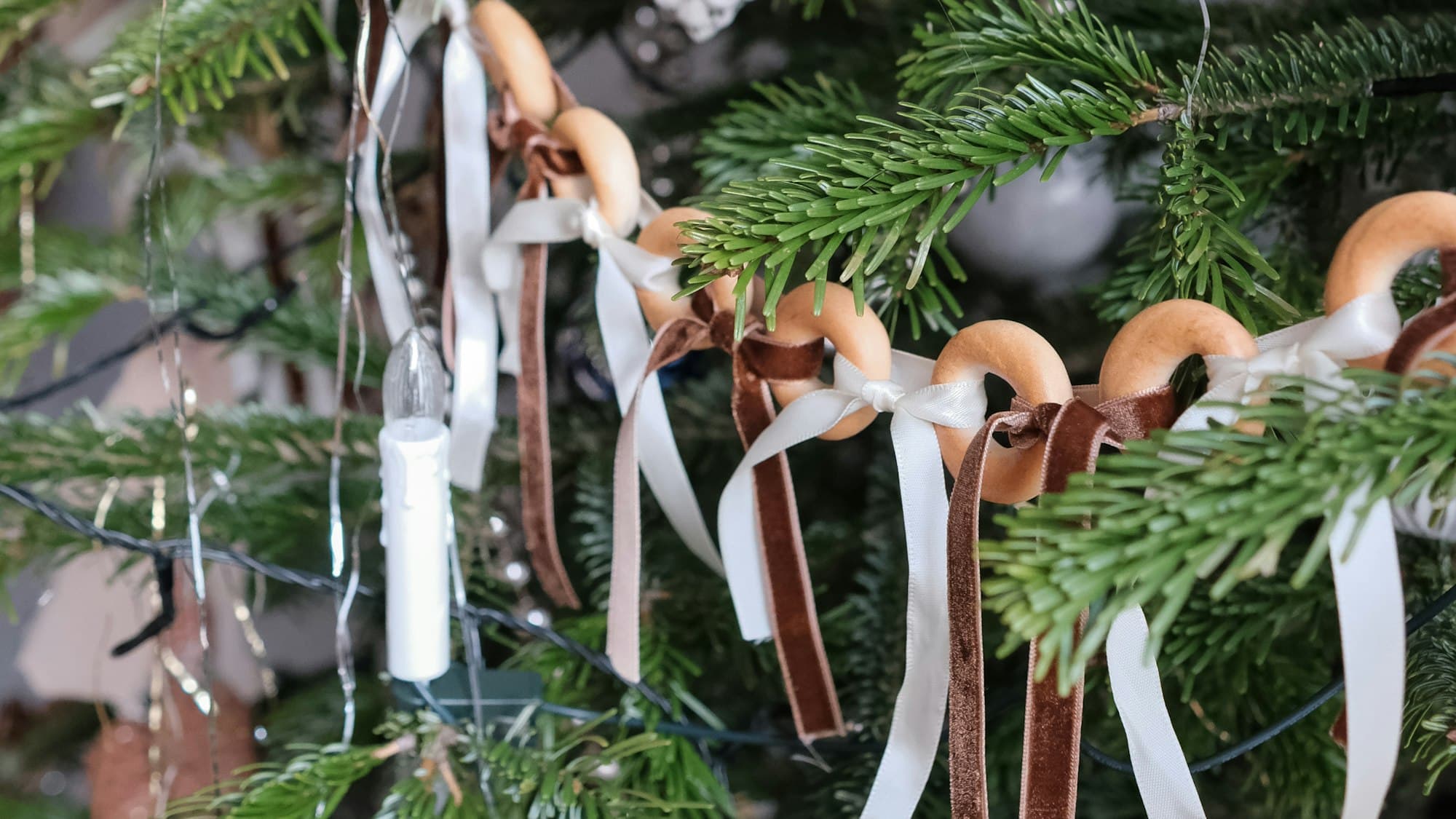
There are two kinds of DIY Christmas decor. There's handmade: the dried-orange garland glowing in a window, the salt dough ornaments in a single matte color, the fresh wreath with one wide velvet ribbon, the kind of thing a stylist would happily photograph. And there's homemade: glitter shedding off foam balls, popsicle-stick reindeer, a craft project that announces itself as a craft project from across the room.
The difference is almost never skill, and it's almost never money. Handmade-that-looks-designed follows a few quiet rules about palette, materials, and repetition, and then picks projects where those rules can shine. Homemade-that-looks-homemade skips the rules and tries to make everything at once.
This guide covers the five rules first, then the projects worth your time, organized by what you're actually making: ornaments, the wreath, garlands, candles and centerpieces, gift toppers, and the crafts genuinely worth doing with kids. Most need nothing more exotic than scissors, twine, and an oven.
Not sure what your decorating style even is? The free Christmas decor style quiz takes eight questions, and knowing whether you're a Scandinavian-minimal house or a traditional red-and-gold house decides half your craft choices for you.
The 5 rules that separate handmade from homemade
Rule 1: Pick a palette before you pick a project
The clearest tell of "homemade" is color chaos: red felt here, blue glitter there, neon pom-poms somewhere else, each project chosen on impulse. Decide your two or three Christmas colors first (the same palette as your tree and mantel), then make every craft inside it. A dozen different projects in one disciplined palette read as a collection. Three projects in twelve colors read as a craft bin.
Rule 2: Natural materials always win
Real evergreen, dried citrus, cinnamon, pinecones, wood, paper, linen, twine, brass. These materials are cheap, they photograph beautifully, and they cannot look tacky, since nature doesn't make aesthetic mistakes. Plastic, foam, and most glitter sit on the other side of the line. If a project's ingredient list is mostly from the floral-foam aisle, it will look like the floral-foam aisle.
Rule 3: Repetition looks intentional
One of anything looks like a craft. Twelve of the same thing looks like decor. A single dried-orange slice is a curiosity; forty of them strung into a garland is a design statement. Nine salt dough stars in the same color, hung at varying heights in a window, look deliberate in a way one of each shape never will. When in doubt, make multiples of one simple thing rather than one of everything.
Rule 4: Matte over sparkle (mostly)
Glitter is the strongest signal of "kids' craft" there is, and it never fully leaves your floors. Matte textures (unglazed dough, raw wood, dried botanicals, brushed metal, velvet) are what make handmade pieces look expensive. If you want shimmer, get it from candlelight, glass, and a little brass rather than from a shaker bottle.
Rule 5: Go bigger than feels natural
Small crafts scattered around a room read as clutter; fewer, larger pieces read as decorating. One six-foot garland beats six tabletop trinkets. An oversized paper star in the window beats a row of small ones on a shelf. When you're choosing between making something small and making something big, the big version almost always looks more intentional.
Ornaments worth making
The ornament box is where handmade earns its keep. Store-bought ornaments are expensive in quantity, and the handmade ones become the ones you keep for decades.
- Dried citrus ornaments. Slice oranges (or blood oranges for deeper color) about ¼-inch thick, pat dry, and bake at 200°F for 2–3 hours until translucent and dry. Thread with twine. Backlit by tree lights, they glow like stained glass, the single highest payoff-to-effort ornament there is.
- Salt dough, done like an adult. The recipe is in the FAQ below. The styling rule: skip the rainbow paint. Leave them natural, or paint the whole batch one matte color, and press texture in before baking: a doily, a rubber stamp, a sprig of rosemary. A batch of stamped white stars looks like it came from a Scandinavian design shop.
- Velvet ribbon balls. Buy plain matte glass ball ornaments (cheap by the dozen) and replace the flimsy metal hangers with wide velvet ribbon in your palette, tied in a simple bow. Five minutes per box, and it upgrades the whole tree.
- Beaded wooden garlands-in-miniature. Wooden beads on twine with a tassel knot, a Scandinavian classic that takes a child's skill level and looks like a boutique bought it.
If your tree itself is the project this year, the Christmas tree types guide covers choosing the tree those ornaments will hang on.
The wreath (make one, once, and you'll never buy again)
A fresh evergreen wreath is the gateway craft. It takes 45 minutes and about $15 in materials if you buy greenery (free if you have a yard to prune), and the result outclasses most store wreaths at any price.
The short version: wire wreath frame + floral paddle wire + mixed greenery (three textures, say fir, cedar, and pine, is the stylist's trick). Cut the greenery into 6–8 inch pieces, bundle three or four, wire the bundle to the frame, then lay the next bundle over the stems of the last and keep wrapping, using one continuous wire, never cut until the end. Work in one direction the whole way around.
The finishing rule: one statement, not ten trinkets. A single wide velvet or linen ribbon, or a cluster of dried oranges and cinnamon sticks, or a few brass bells, but not all three. The restraint is what makes it look professional. (The full step-by-step is in the FAQ below.)
Where it goes matters too. Our front porch decorating guide covers sizing and styling the wreath to your door and house style.
Garlands: the highest-impact craft in the house
If you only make one thing this year, make a garland. They cover the most visual territory per hour of work.
- The dried-orange garland. The same oven-dried citrus slices as the ornaments, strung on twine with simple overhand knots, optionally alternating with cinnamon sticks or bay leaves. Hang it across a window, along the mantel, or on the tree. Sunlight through dried oranges is the cheapest beautiful thing in all of Christmas decorating.
- The cranberry garland. Fresh cranberries on a needle and heavy thread, an American classic that costs four dollars and looks stunning against greenery. (It dries to a deep ruby and lasts the season.)
- The paper chain, grown up. The kindergarten project becomes legitimately elegant when you make it from heavy paper in two colors (cream and sage, kraft and white) with rings cut wide and crisp. Scale it generously (Rule 5) and run it across a doorway.
For the mantel the garland lands on, the mantel styling guide covers composing the whole shelf around it.
Candles and the centerpiece
The Christmas table doesn't need a crafted centerpiece so much as a composed one, but two projects earn their place:
- The cinnamon candle wrap. Bundle cinnamon sticks vertically around a plain pillar candle, secure with twine or a rubber band hidden under ribbon. The heat releases the scent gently. Five minutes.
- The low greenery runner. Less a craft than an assembly: fresh cedar or eucalyptus laid directly down the table's center line, studded with whatever your palette calls for: dried oranges, brass candlesticks, a few matte ornaments. No floral foam, no vessel, nothing to store in January.
The composed-table rules (palette, layers, sightlines) are covered in the Christmas tablescape guide, and the runner above is the centerpiece chapter of it.
Gift wrap and toppers
Handmade shines hardest on top of a package, where the cost of materials is pennies and the contrast with store-bought bows is immediate:
-
Kraft paper + one good ribbon is the uniform. Brown kraft or plain white paper, wrapped crisply, with real ribbon (velvet, linen, or satin, not curling ribbon) in your palette.
-
Toppers from the yard and the spice rack: a sprig of evergreen or rosemary, a cinnamon stick, a dried orange slice, a few jingle bells on the ribbon knot. Each one upgrades a package from errand to gift.
-
Stamped tags. Plain kraft tags plus one rubber stamp and an ink pad in your accent color, and a single afternoon makes tags for every gift you'll wrap this decade.
(Buying paper for the pile? The free gift wrap calculator tells you exactly how many rolls the season actually needs.)
Crafts worth doing with kids
Kid crafts have a different job. The point is the afternoon, not the styling. But a few classics produce things you'll genuinely want to keep, especially if you apply the one parent-trick: let them do the making, but you supply the palette. Hand them paint and ribbon in your two or three Christmas colors, and whatever they produce will coordinate.
- Paper chains. Scissors-and-glue fine-motor practice, and in good paper (see above) the results are display-worthy.
- Orange pomanders. Pressing whole cloves into oranges in patterns. No sharp tools, immediate results, and the house smells like Christmas for weeks.
- Salt dough handprints. The one craft that gets more valuable every single year. Stamp the year into the dough before baking.
- Pinecone bird feeders. Pinecone, nut butter, birdseed, twine. Half craft, half nature program, zero clutter (the birds take care of cleanup).
- Painted wooden ornaments. Plain wood shapes from the craft store plus your palette's paint. Imperfect brushwork in a disciplined palette comes across as charming, not chaotic.
A December weekend afternoon is the natural slot, and the month-by-month Christmas checklist has craft sessions built into the calendar where they actually fit.
What to skip
A short, honest list of projects that almost never escape "homemade": anything where glitter is the main event; foam-ball snowmen and their relatives from the foam aisle; mason-jar snow globes (beloved, but they read as Pinterest-2014 from any distance); and ornament kits where the result is assembling someone else's design. None of these are crimes, but if the goal is decor you'll be proud of in photos, the natural-materials projects above beat them on every axis, usually at lower cost.
Making it look designed
Handmade Christmas decor that looks designed comes down to discipline, not talent: one palette, natural materials, multiples of simple things, matte over glitter, and generous scale. Start with the dried-orange garland (the highest payoff per hour in this entire guide), make the wreath once and you'll never buy another, and let the kids own the salt dough, in your colors.
Then put the crafts where they'll work hardest: the mantel, the front porch, and the Christmas table are the three surfaces guests actually study, and a handmade piece on each one, in one palette, says more than a houseful of store-bought ever could.
The same logic applies to the card you send. A photo in a restrained frame with one good typeface beats a busy template every time, and our free Christmas card maker turns any photo into a print-ready 5x7 in about thirty seconds, entirely in your browser.
Share this guide
Frequently asked questions
What are the easiest Christmas crafts for adults?
How do you make DIY Christmas decor look expensive?
How do you make a fresh Christmas wreath?
What is the salt dough ornament recipe?
What Christmas crafts can you do with young kids?
When should you start making Christmas crafts?
Keep reading
Christmas Tree Ornaments: How to Choose and Arrange Them (by Style)
How to decorate a Christmas tree that looks designed, not decorated. How many ornaments you actually need, the pro layering method, ornaments by decorating style, and the heirloom-vs-themed-tree question settled.
The Best Outdoor Christmas Decorations to Buy (by Where They Go)
What outdoor Christmas decorations are actually worth buying, organized by where they go in your yard: the front lawn, pathways, trees and shrubs, the roofline, and the porch. Inflatables, lit figures, projectors, and the practical gear that makes it all work.
10 Christmas Decorating Mistakes That Make a Home Look Cluttered
Most Christmas decor problems are not about owning the wrong things. They are placement and restraint problems, and every one of them has a cheap fix. The ten mistakes we see most, and what to do instead.
Prefer pen & paper?
The Christmas Planner
A 25-page printable kit covering budget, gifts, hosting, and decor, built on the same planning logic as this tool. Print it once, keep it in a binder, and reuse it every year.
Or grab 3 pages free first.
Decor that suits the home you have.
Seasonal decorating tips and the occasional new tool, straight to your inbox. One list, no spam.