By Brian · May 29, 2026
Christmas Mantel Ideas (by House Style): The Complete Guide
How to decorate your Christmas mantel by the architectural style of your home. Six styles (ranch, colonial, Cape Cod, Craftsman, Victorian, modern farmhouse), the five universal mantel rules, common mistakes, and a starter shopping list.
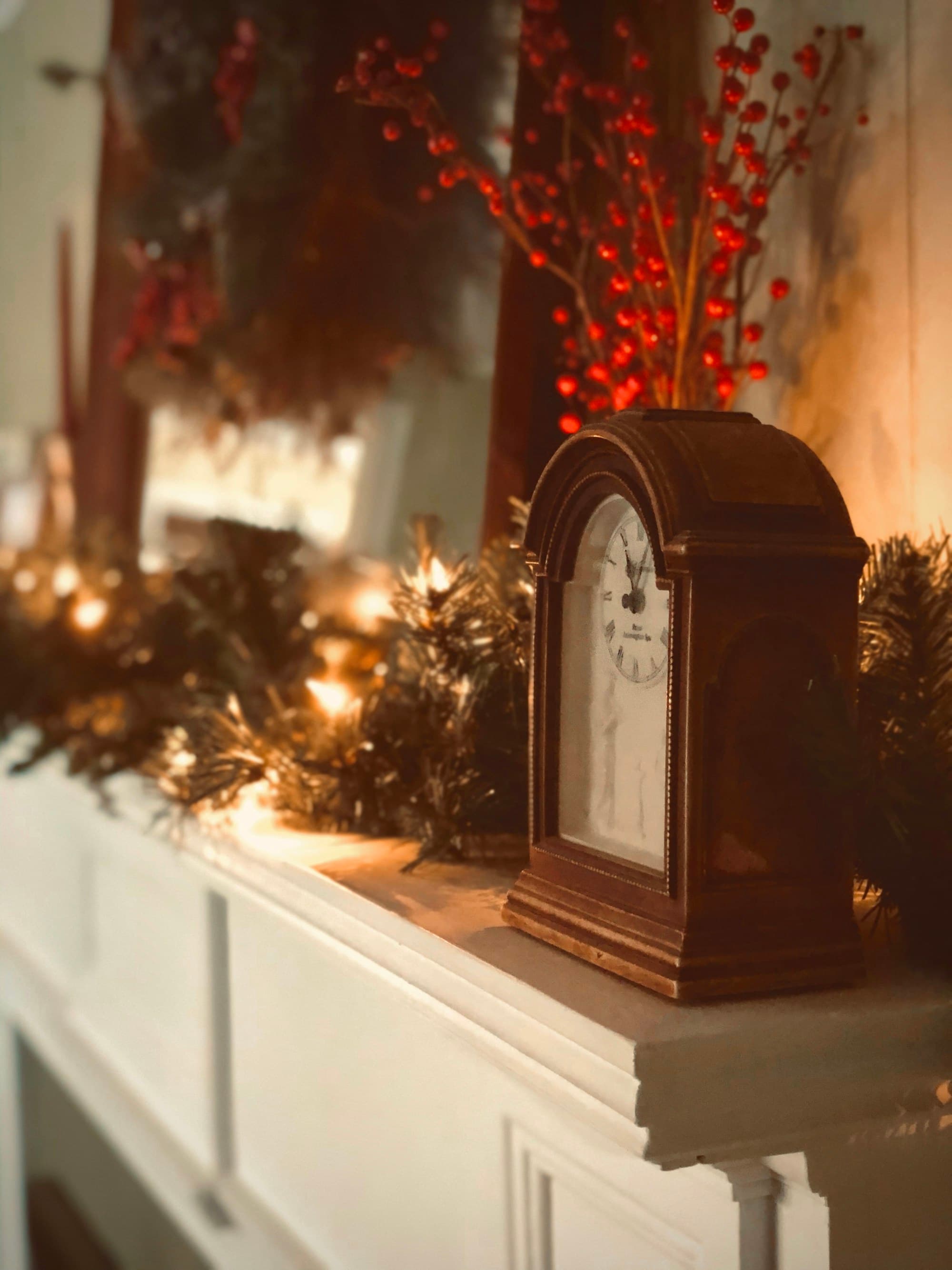
The mantel is the only interior Christmas surface that's on display every day, all season, from every angle of the room. The tree is a destination, where people gather around it and then leave it. The dining table is dressed for dinner and reset by morning. The mantel sits at eye level above the fireplace, in the line of sight of every couch, chair, and doorway in the living room. It's the single most-seen square footage of Christmas decor in most homes.
The trouble is that most mantel advice treats every mantel the same. A "20 Christmas mantel ideas" Pinterest roundup will show you a heavily-styled mantel on a Victorian, then the same treatment on a Craftsman, then on a Cape Cod, never noting that the right mantel for one is wildly wrong on the others. A low brick ranch mantel rewards horizontal restraint. A formal painted Colonial mantel rewards classical symmetry. A Craftsman's heavy oak rewards earth-toned naturalism. Treating them all the same is why so many mantels end up looking like a catalog page rather than part of a styled room.
This guide covers the five universal rules that apply to every mantel, then mantel decorating ideas for the six house styles most readers actually live in: ranch, two-story colonial, Cape Cod, Craftsman bungalow, Victorian, and modern farmhouse. Plus the most common mistakes, the lighting moves that make a mantel photograph well, and a realistic starter shopping list.
Not sure what style of home you have? Take the free house style identifier quiz. Eight questions, 60 seconds, then jump to the section of this guide written for your style.
The 5 universal mantel rules
These apply regardless of house style. Get these right and the by-style decisions become easier; get them wrong and no amount of "good decor" will save the composition.
Rule 1: Scale to the mantel, not the room
The single biggest visual failure on Christmas mantels is wrong-scale decor. A 22-inch wreath above a 7-foot mantel looks like an afterthought. A 36-inch wreath above a 4-foot Cape Cod mantel looks comical. A 6-foot garland on a 7-foot mantel looks puny; an 8-foot garland with no drape looks stuffed.
The default rule: garland 12-18 inches past each end of the mantel. A standard 60-inch mantel wants a 90-inch garland. A 72-inch mantel wants a 100-inch garland. An 84-inch mantel wants 110-120 inches. The extra length is what creates the graceful drapes at each end. Without them, the garland looks like a hat sitting flat on a head.
The wreath or art above should be roughly the width of the mantel's center third, so a 60-inch mantel takes a 20-24 inch wreath, a 72-inch mantel takes a 26-30 inch wreath. Candlesticks need to be tall enough to be seen over the garland, typically 8-14 inches taller than the garland's highest point.
Rule 2: Layer at three depths
Successful mantels work at three depths from the wall outward:
- Back layer: wall art, mirror, oversized wreath, or a piece of greenery mounted to the wall above the mantel. This is the dominant focal point.
- Middle layer: candlesticks, vases, a small tree, brass objects, framed photos, anything with vertical presence sitting on the mantel surface.
- Front layer: the garland drape, small ornaments resting on the mantel's lip, ribbon trailing forward, tiny tabletop houses or a small nativity scene.
Skip any of these and the mantel looks incomplete. The most common skip is the front layer, where people place the wreath above and the candles in the middle but leave the mantel's front edge bare. The result feels like the composition stops a few inches short of where it should land. Garland with a forward drape, even a sparse one, fixes this almost every time.
Rule 3: Anchor the composition
Every mantel needs one clearly dominant element. Without an anchor, the whole composition floats, and five small things on a mantel just look scattered rather than styled.
The anchor is almost always above the mantel: a large wreath, an oversized mirror (already there year-round on most mantels), a substantial piece of art, or in some cases a single very tall greenery arrangement. Everything else on the mantel arranges itself in relationship to that anchor. Candlesticks step down from it in graduated heights. Garland frames it. Ornaments echo its palette.
If your mantel still feels "busy" no matter how much you simplify, the real problem is usually missing anchor, not too much stuff. Adding one large element above almost always solves what seemed like a clutter problem.
Rule 4: One palette, varied textures
Pick two or three colors and repeat them at every layer. A traditional red-green-gold mantel works. A neutral cream-and-cedar mantel works. A burgundy-and-forest mantel works. What doesn't work is a red bow, a silver candlestick, a navy ornament, a gold mirror frame, and a forest green garland all on the same mantel. That's five colors with no relationship.
Within that two-or-three-color palette, vary the textures. Matte ornaments next to shiny brass next to raw pinecones next to velvet ribbon. The texture variation is what keeps a tight palette from going flat. A mantel with five reds is fine if one is a matte cranberry ornament, one is a silk burgundy ribbon, one is a glossy red bauble, one is a vintage red book spine, and one is a sprig of holly berries. Same family, different finishes.
For palette inspiration that complements the rest of your living room, the color palette extractor tool reads the colors in an uploaded photo and suggests a Christmas palette that matches what's already in the room.
Rule 5: Empty space is part of the composition
The bare wood (or stone) of the mantel between the styled pieces is what makes the styled parts read as intentional. Resist the urge to fill every inch. Editorial mantel photography almost always leaves 30-50% of the mantel surface bare. The eye needs the negative space to rest, and the absence is what creates the rhythm.
A test: photograph your finished mantel head-on from across the room, then convert the image to black and white and squint. If you can still see distinct grouped objects with breathing room between them, you nailed it. If the whole mantel collapses into one undifferentiated blob, you've over-decorated and need to subtract.
Mantel decor by house style
Below: the mantel material and proportions, the signature decorating move, the most common mistake, and the right palette and lighting for each of the six most common American house styles.
Ranch homes
The mantel: Low and horizontal. Ranch mantels are typically brick, stone, or simple painted wood, often 6-8 feet wide with shallow depth, set above a wide low fireplace. The proportions are emphatically horizontal, and height is rarely the strong axis.
The signature move: Horizontal everything. Match the mantel's long low silhouette by decorating in horizontal lines. A long, full cedar garland centered with relaxed drapes at each end. A single oversized piece of art or a wide horizontal mirror above (skip the vertical wreath if the mantel is wider than 7 feet and go with art instead). Three to five graduated candlesticks in a horizontal line. The composition should echo the home's own horizontal sweep.
Palette: Warm earth tones: cedar green, cranberry red, cream, brass. Avoid icy whites and cool silvers; ranches photograph warm. Skip multi-color string lights inside the garland; warm white only.
Common mistake: Decorating a ranch mantel vertically. Tall narrow wreaths, vertical pillar candles taller than they are wide, towering Christmas trees flanking the mantel all fight the home's horizontal soul. Keep the eye moving sideways, not up.
For the full ranch Christmas treatment beyond just the mantel, see Ranch House Christmas Decorating Ideas.
Two-story Colonial
The mantel: Formal, painted wood (usually white or cream), with classical detailing like dentil moldings, fluted pilasters, and a substantial center keystone. Colonial mantels run 60-72 inches wide and roughly 48-54 inches off the floor. Symmetry is in the architecture; the decor should honor it.
The signature move: Matched everything in classical symmetry. Five to seven brass or silver candlesticks in graduated heights, mirrored on each side of a centered wreath or mirror above. Garland with symmetric drapes that match exactly in length, ornament density, and ribbon placement on each side of center. A single statement wreath above (24-26 inches), centered to the inch.
Palette: Burgundy, cream, deep forest green, and gold or brass. This is the most traditional Christmas palette and Colonial architecture is the home that holds it best. Add velvet ribbon (not satin) and real taper candles in brass holders. The formality is the point.
Common mistake: Asymmetry. A casual swooping garland that drapes longer on one side, an off-center wreath, mismatched candlesticks all read as unstudied on a formal Colonial mantel. The home was built on symmetry; the mantel should reinforce it.
See the full Colonial guide at Two-Story Colonial Christmas Light Ideas, and the deeper palette guidance at Traditional Christmas Color Schemes.
Cape Cod
The mantel: Small, often painted white wood, sometimes with simple bead-board or shiplap surround. Cape Cod mantels typically run 48-54 inches wide and sit relatively low. These are cottage proportions, not formal ones. Restraint is the architectural ethic.
The signature move: Less, well-chosen. One garland of cedar or pine (no second swag layer), three candles in graduated heights (not five, not seven, just three), a single small wreath at 18-22 inches above the mantel, and a small ribbon detail at the garland's center. That's the entire composition.
Palette: White, navy, evergreen, and a single warm accent, usually a deep red ribbon or cranberry berry sprigs. The palette mirrors classic Cape Cod coastal interiors: crisp, restrained, with the warmth coming from natural greenery rather than busy ornaments.
Common mistake: Over-decorating. A Cape Cod mantel buried under multi-layer garlands, a large wreath, and seven candlesticks comes across as forced, because the small mantel can't carry that volume. The decor stops looking charming and starts looking compressed. When in doubt, remove one thing.
See Cape Cod Christmas Decorating Ideas for the full cottage treatment.
Craftsman bungalow
The mantel: Heavy quartersawn oak or other dark wood, often built-in with bookcases or cabinetry flanking, set above a tile or brick surround. Craftsman mantels feel substantial. They're built furniture, not applied trim. Earth tones and natural materials are the architectural language.
The signature move: Natural materials only. Magnolia, cedar, or mixed-evergreen garland (not the ornate ribbon-heavy kind), copper or aged brass candle holders, dried orange slices, raw pinecones, a small bowl of nuts, and a single piece of art or a wreath of dried botanicals above. No glitz, no plastic ornaments, no metallic ribbon. The whole composition should look like it could have been assembled from a winter walk.
Palette: Cedar green, copper, cream, earthen red, deep brown. Black accents work too. Craftsman interiors often have black iron and dark wood, and a black-and-cedar mantel is one of the most underrated Christmas looks for this style. Add a single earthen red ribbon (think dried-rose red, not Coca-Cola red) at the garland's center.
Common mistake: Anything shiny. Glossy ornaments, glittered picks, silver candlesticks, and white string lights woven into the garland all fight the home's matte natural ethic. Switch to warm-white string lights only if any, and prefer matte candles and matte ornaments throughout.
See Craftsman Bungalow Christmas Decorating Ideas for the full Craftsman treatment.
Victorian
The mantel: Ornate, often painted in a deep color or stained dark, with carved detailing, sometimes with a marble or tile surround. Victorian mantels are theatrical by design. They were built to hold a lot, and they reward abundance in a way no other house style does.
The signature move: Layered abundance. Multiple garlands at different depths (one along the mantel top, a second swag draped below or along the wall above), velvet ribbon trailing down the sides of the mantel, multiple wreaths or framed pieces above rather than one, candles in both candlesticks and votives at the mantel's front edge. This is the one house style where "more" is the right answer.
Palette: Burgundy, deep forest, antique gold or brass, ivory cream. Add jewel-tone accents (emerald, sapphire, amethyst) sparingly through ornaments. Real candles in real candlesticks; the warmth of actual flame is part of the Victorian visual language.
Common mistake: Restraint. A minimalist mantel on a Victorian looks wrong. The architecture is asking for fullness and a sparse mantel fights it. If you want a clean modern aesthetic, this isn't the house for it. Lean in.
See Victorian Christmas Decorating Ideas for the full Victorian treatment.
Modern Farmhouse
The mantel: Simple wood beam or reclaimed-wood plank, often above a shiplap or whitewashed brick surround. Modern farmhouse mantels are deliberately rustic-simple, with no detailing, no fluting, just a substantial single piece of wood.
The signature move: Restraint with materials. A cedar or eucalyptus garland with a single drape (no ribbon, or one strip of unbleached linen ribbon at the center), one or two galvanized lanterns with battery candles inside, a fresh greenery wreath above, and maybe a single sprig of dried wheat or cotton bolls. Greenery and natural fiber are the materials, while galvanized metal and matte black are the accents.
Palette: Cedar green, cream, oatmeal, galvanized gray, matte black. The palette is essentially a barn palette: earth tones and the materials you'd find in a working farm building. Avoid anything jewel-toned or shiny.
Common mistake: Over-cute. Modern farmhouse decorating slides into "Live Laugh Love" territory fast, with wooden signs in "Joy" or "Merry" stencils, decorative truck-with-Christmas-tree figurines, and mason jars filled with cranberries. The mantel should read as restrained and material-driven, not as a Hobby Lobby aisle.
See Modern Farmhouse Christmas Decorating Ideas for the full modern farmhouse treatment.
If your aesthetic is closer to clean and contemporary than any of the six above, the Modern Minimalist Christmas Mantel Ideas guide goes deeper on that specific style.
Common Christmas mantel mistakes
The eight failures that show up most often in real homes, most of them solvable with one specific change rather than a whole redo.
Garland too short. A 60-inch garland on a 60-inch mantel sits flat with no drape and looks skimpy. Re-measure and add 30-50% to the length. The drapes at each end are doing more visual work than the garland itself.
Garland too long. A 110-inch garland on a 60-inch mantel either spills onto the hearth and competes with the fireplace tools, or has to be wadded up at the ends. Length should match Rule 1's 12-18 inch overhang, not exceed it.
No anchor. Six small things on a mantel with nothing dominant above just look scattered. Add one large element, whether a wreath, a mirror, or a piece of art, and the rest of the composition snaps into place.
Same-height candles. Two matched candlesticks centered on a mantel looks like a wedding altar. Use three to seven in graduated heights instead. The variation creates rhythm.
No empty space. The mantel buried under continuous decor with no breathing room feels cluttered, not abundant. Subtract 30% of what's on it.
Living-room palette mismatch. A burgundy-and-gold mantel in a coastal blue living room fights the room. The mantel doesn't have to match the room exactly, but it has to relate to it. Pull one color from the existing room palette into the mantel.
Battery-operated everything. LED votive candles, battery garland lights, plastic flameless tapers all have a place (especially with kids or pets), but stacking all of them on one mantel kills the warmth. At least one real flame element, somewhere on or near the mantel, makes everything else feel less synthetic.
Skipping the hearth and floor below. A beautifully styled mantel above a bare hearth and an empty corner looks unfinished. Add stockings, a small basket of pinecones at the hearth's edge, a single floor lantern, or a small tree to the side. The floor and hearth are part of the mantel's composition, not a separate zone.
Mantel lighting and candle composition
Lighting is what separates a daytime-photo mantel from a winter-evening one. The mantel does its best work between 4:30 and 6:00 PM in December, at first dusk, when the warm interior light reads against the fading blue outside the windows.
Real candles vs LED. Real candles produce a quality of warmth that LED can't quite match: the slight flicker, the small heat halo, the way the flame catches on adjacent brass or glass. For homes without small children or pets, real tapered candles in real candlesticks should be the default for at least two or three of the candle positions on the mantel. Use long matches and never leave them lit when leaving the room. For households where open flame isn't safe, the best battery-operated alternatives use real wax with an LED flicker insert, and these read as real from across the room in a way that solid-plastic LED tapers don't.
Candlestick spacing. For a stately formal look (Colonial, Victorian), space candlesticks 10-14 inches apart, in graduated heights moving outward from the center wreath. For a more relaxed abundance look (Craftsman, modern farmhouse), cluster them closer, 4-6 inches apart, in tighter groupings of three or five. The closer the cluster, the more intimate; the wider the spacing, the more formal.
Battery-op string lights woven into garland. These work brilliantly in cedar or pine garland, about 50-75 warm-white micro-lights per 9 feet of garland, woven from back to front so the light source is hidden. Skip incandescent C7 or C9 bulbs inside garland; they run hot in dense greenery, and they're scaled for exteriors anyway. For exact light counts based on your specific mantel dimensions, plug your numbers into the Christmas Light Calculator.
The fireplace itself. A lit fire below a freshly-decorated fresh garland is a beautiful photo and a terrible idea, because the rising heat dries out the greenery in days. Decorate the mantel, then enjoy the fire on a Saturday night for the ambiance, but accept that frequent fires shorten the lifespan of real garland from six weeks to two. Faux garland is the right call for households that use the fireplace regularly.
Starter mantel decor shopping list
A realistic first-year list of mantel decor for a standard 60-inch mantel, with rough cost ranges. Skip what you already have, scale up for larger mantels.
- Fresh cedar or mixed-evergreen garland (9 ft): $30-80. Real garland is non-negotiable for the first few years until you decide if you want to invest in a high-quality faux replacement.
- Statement wreath or piece of art above (20-24 inch): $50-100, or use a mirror or piece of art already there year-round.
- Three to five candlesticks in graduated heights: $40-120. Mismatched brass candlesticks from estate sales work better than matched sets for most styles except Colonial.
- Tall taper candles, set of 6: $15-25. Beeswax burns longer and warmer than paraffin; either works visually.
- One or two statement accents (brass clock, lantern, ceramic vase, small tree): $50-150.
- Ribbon, 3-yard length, 2-4 inches wide: $15-30. Velvet for Colonial and Victorian, linen for modern farmhouse, grosgrain for everything else.
- Small ornaments to scatter (set of 6-10): $20-50. Pick from the same palette as the rest of the mantel.
Starter total: roughly $220-555 depending on style and what you already own.
For a fuller picture of total Christmas decorating costs, see How Much Does It Cost to Decorate Your House for Christmas, and to plan the mantel as a line item inside your broader budget, the Christmas Decoration Budget Planner breaks the season into categories with industry benchmarks.
What actually makes a mantel work
The right Christmas mantel depends on the mantel's architecture, not on the Pinterest aesthetic of the moment. A low ranch mantel rewards horizontal restraint. A formal Colonial rewards classical symmetry. A heavy Craftsman rewards natural materials. A small Cape Cod rewards subtraction. A Victorian rewards layered abundance. A simple modern farmhouse mantel rewards material discipline.
Once the universal rules are in place (scale, three-depth layering, an anchor, a tight palette, and respect for empty space), the by-style decisions become straightforward. Pick your house style. Match the signature move. Skip the common mistake. Light it warmly. Photograph it at first dusk.
Then go work on the rest of the house. The Christmas front porch guide is the exterior companion to this piece, with the same five-universal-rules-plus-six-styles structure, written for the porch. Together they cover the two highest-visibility surfaces in most homes. If you haven't identified your house style yet, the house style identifier quiz takes about a minute and links to the right deep-dive guide for each style.
Share this guide
Frequently asked questions
What's the best length for a Christmas mantel garland?
How do you decorate a Christmas mantel without a fireplace?
Should the mantel garland match the wreath on the front door?
How many candles belong on a Christmas mantel?
When should I put up Christmas mantel decorations?
Keep reading
Modern Minimalist Christmas Mantel Ideas for 2026
A modern minimalist Christmas mantel works on restraint, not abundance. Here are 14 ideas (plus the styling rules behind them) for a mantel that feels intentional instead of cluttered.
Outdoor Christmas Decorating Ideas That Read From the Street
How to compose the outside of your house for Christmas as one picture instead of a pile of parts: the three layers that matter, the one color decision that makes or breaks it, ideas sorted by what your house actually gives you to work with, and the daytime layer almost everyone skips.
Christmas Front Porch Decorating Ideas (by House Style)
How to decorate your Christmas front porch by the architectural style of your home. Six styles (ranch, colonial, Cape Cod, Craftsman, Victorian, modern farmhouse), the five universal rules, common mistakes, and a starter shopping list.
Prefer pen & paper?
The Christmas Planner
A 25-page printable kit covering budget, gifts, hosting, and decor, built on the same planning logic as this tool. Print it once, keep it in a binder, and reuse it every year.
Or grab 3 pages free first.
Decor that suits the home you have.
Seasonal decorating tips and the occasional new tool, straight to your inbox. One list, no spam.