By Holiday Home Ideas Editorial Team · April 27, 2026
The Best Christmas Color Schemes for Traditional Homes
Traditional Christmas colors aren't just red and green, there's significant range within the classic palette. Six color schemes that work for traditional homes, with the layering rules behind each.
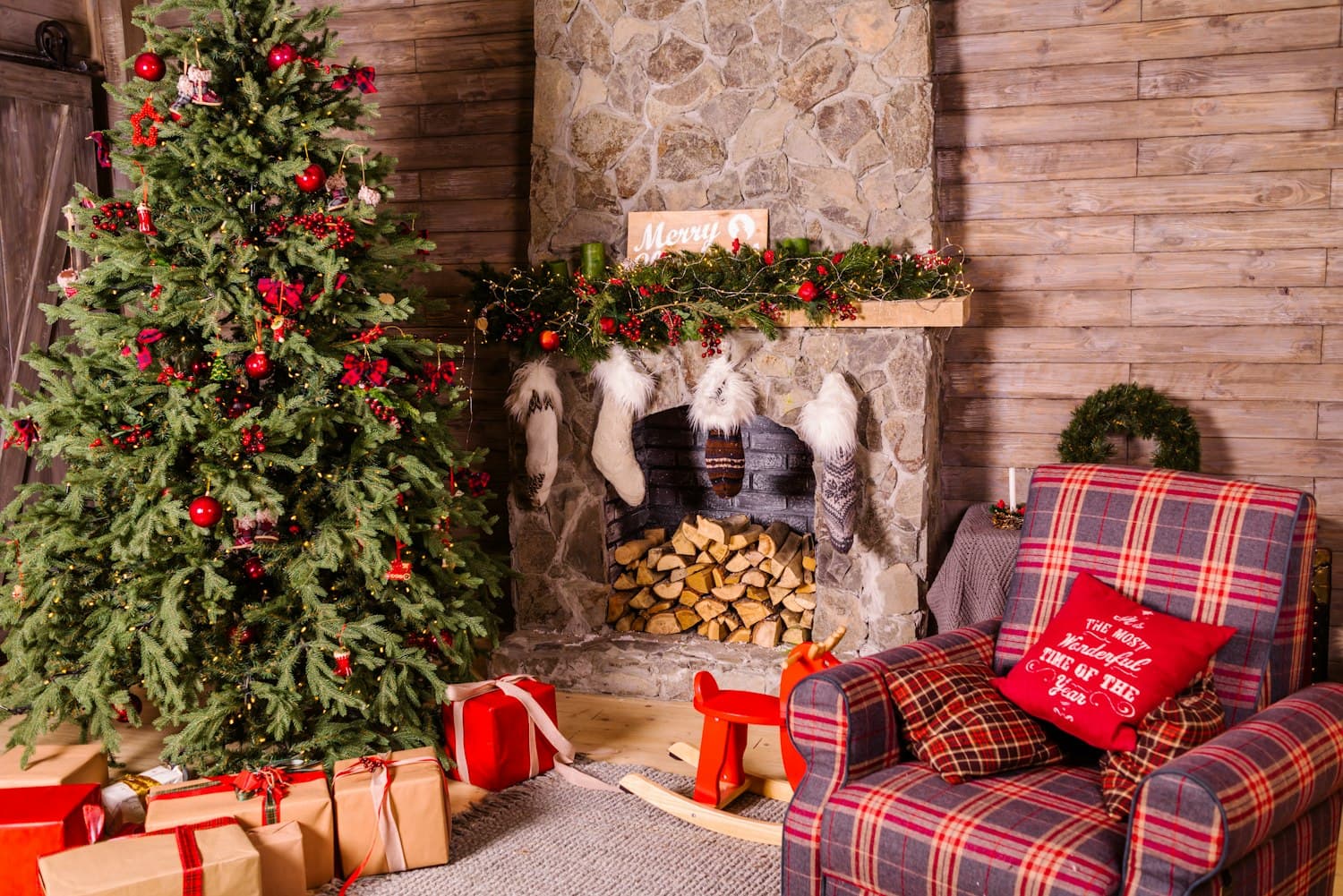
Traditional Christmas color schemes have endured for centuries because they actually work. Red, green, and gold aren't a tired cliché. They're a tested combination that flatters classical architecture, layers beautifully year over year, and never feels dated. The goal isn't to replace traditional colors with something more modern. What matters is understanding which traditional palette fits your home, and how to layer it with intention instead of dumping every red ornament you own onto the tree at once.
This guide covers six traditional Christmas color schemes that work, where each one fits best, and the styling rules behind a polished traditional look.
Why Traditional Homes Reward Traditional Colors
Before getting into the palettes, it helps to understand why "matching the architecture" matters.
- Architecture sets the framework. A Victorian's busy ornamental detailing wants colors that flatter it; loud modern palettes fight the trim. A Federal-style colonial expects restraint and historical reference. A craftsman bungalow leans toward earth tones. Each style was designed in a specific aesthetic context, and traditional Christmas colors were developed within those same contexts.
- Traditional combinations have proven longevity. Gold and red won't go out of style. The trendier palettes ("dusty pink millennial Christmas," "cool blue minimalist") feel dated within a decade. Pick a traditional scheme and you can use the same wreaths, garlands, and ornaments for fifteen years without looking out of date.
- They're easier to layer year over year. Adding new pieces to a consistent traditional palette is straightforward. Adding new pieces to a chaotic mixed palette means everything looks slightly off forever.
If your home is traditional (colonial, Cape Cod, Victorian, Federal, Tudor, craftsman), pick a traditional palette and commit. The rest of this guide is about which one.
Palette 1: Classic Red, Green, and Gold
The Christmas-card palette. The look that defines what most Americans picture when they hear "traditional Christmas decor."
Why it works: red is a stop color that draws the eye, green is calming and natural, gold elevates without going garish. Together they cover the visual hierarchy you need for a fully decorated tree, mantel, and table.
Where to use it:
- Tree: dominant red ornaments, green ribbon as connective tissue, gold accents (bows, beads, topper)
- Mantel: green garland with red berries and gold candle holders
- Front door: red velvet bow on a magnolia or mixed evergreen wreath, gold accents
- Dining table: green runner, red napkins, gold flatware
Variations within the palette:
- Cranberry red is more elegant than fire engine red. It calls to mind dried berries and pairs better with antique furniture.
- Forest green is more grounded than emerald. Emerald feels modern; forest feels classical.
- Antique gold is warmer than champagne gold. Pick antique for traditional homes, champagne for transitional/modern.

Palette 2: Red and Green Only (No Metallics)
A simpler, more naturalistic version of the classic. Drop the gold and let the red and green stand on their own.
Why it works: the absence of metallic feels more authentic, more "country church" than "department store window." Particularly suited to compact traditional homes (colonials, Cape Cods, simple farmhouses) where the third color creates clutter rather than depth.
Where to use it:
- Tree: green tree with red ornaments and red velvet ribbon. That's it. The simplicity is the design.
- Mantel: fresh pine garland with red velvet bow accents. Skip the gold candle holders; use brass or matte black instead.
- Front door: classic balsam wreath with red bow.
Variations:
- Add cream or off-white as the "third color" if you need relief. Works without breaking the scheme.
- Use plaid (red-and-green check) as a textile accent, but only one piece (a single throw or table runner) to keep it from getting busy.
This is the quietest of the traditional palettes. Good for restrained, smaller, or more rural traditional homes.
Palette 3: Tartan and Plaid Foundations
Traditional tartans take a multi-color combination (usually red, green, navy, gold, and cream) and lock them into a pattern. That pattern then becomes your foundation, with solid colors picked from within it.
Why it works: the pattern does the color-coordination for you. You can't accidentally mismatch reds when the plaid is doing the matching itself.
Common tartans for Christmas:
- Royal Stewart: the tartan most people picture. Bright red base with navy, green, white, and yellow stripes. Most "Christmas-feeling" of the tartans.
- Black Watch: dark green and navy with thin black lines. Reads more refined and less Santa-Claus-jolly.
- Rob Roy: the simple red-and-black buffalo check. Looser, country feel.
Where to use:
- Tree skirt: the easiest entry point
- Ribbon on the tree (1.5- to 2.5-inch wired ribbon)
- Throws on chairs and sofas
- Table runner with matching plaid napkins
- Stockings
Critical layering rule: use only ONE plaid pattern throughout the house. Mixing different tartans fights instead of harmonizing. Pick Royal Stewart OR Black Watch, not both.
Palette 4: Burgundy, Forest, and Cream
A more sophisticated take on traditional, more "old money" than "Christmas card." This is the palette for Federal-style homes, formal Victorian parlors, and traditional homes with antique furniture.
Why it works: burgundy is the deep cousin of red. Wine-toned, less primary, more elegant. Pairing it with forest green and cream (instead of true white) creates a richer, more layered traditional palette.
Where to use:
- Tree: cream-colored ribbon, burgundy ornaments, forest green pine with no red-red pieces. Minimal gold.
- Mantel: cream stockings with subtle burgundy embroidery, forest pine garland with burgundy berries, cream candles in dark brass holders.
- Dining table: cream runner, burgundy napkins, forest green chargers if you have them.
Variations:
- Add a touch of antique gold for warmth. It disappears into the burgundy/forest combo without dominating.
- Use velvet textures (burgundy velvet ribbon, cream velvet stockings) to lean further into the "old money" aesthetic.
This palette ages incredibly well. A burgundy-forest-cream Christmas in 2026 will look just as appropriate in 2040.
Palette 5: Navy, Red, and White
A coastal-traditional blend that draws from Federal-era American design and looks particularly good on white-painted homes (Cape Cods, colonials with white trim, Federal farmhouses).
Why it works: navy provides depth where green would normally go. Red and white feel naval-flag-American. The combination lands as patriotic-traditional rather than purely Christmas-traditional, which is a nice differentiator.
Where to use:
- Tree: white or flocked tree (this palette doesn't work as well on green pine), navy and red ornaments, white ribbon.
- Mantel: navy ribbon, red berries on white candle holders, navy stockings with red trim.
- Dining table: navy runner with white plates and red details.
Variations:
- Adding a single tartan accent (Black Watch tartan blends navy and green beautifully) bridges this palette toward the more traditional reds and greens.
- Brass accents work better than gold in this palette.
This is a palette to consider if you want a traditional foundation but the standard red/green/gold feels overdone. It stays firmly classic while feeling distinct.
Palette 6: Gold and Cream with Green Accents
The most elegant of the traditional palettes. Leans glam-adjacent without quite getting there. Right for traditional homes with formal living rooms, large dining rooms, or homes where Christmas dinner is a real event.
Why it works: gold and cream are quiet luxury. Adding fresh green (magnolia, fir, eucalyptus) as the only secondary color gives natural relief and keeps the look from feeling cold or hotel-lobby.
Where to use:
- Tree: champagne gold and ivory ornaments, cream ribbon, no red. The green pine itself is the green accent.
- Mantel: magnolia leaves with gold candle holders, cream stockings with gold lettering or trim.
- Dining table: gold flatware, cream tablecloth, green magnolia leaf table runner.
Variations:
- Add a single touch of red (one ornament cluster, one ribbon) if the all-cream-and-gold feels too cold. The red becomes the accent moment.
- For a more rustic edge, swap champagne gold for antique gold (less shiny, more aged-brass).
Closest to a "wedding aesthetic" of the six. Use this palette if your home has formal architecture and you want Christmas to feel slightly upscale.
How to Layer Colors Successfully
Whichever palette you pick, follow the 60-30-10 rule, common in interior design and equally relevant for Christmas decor:
- 60% dominant color: the largest swaths of color in the room. Usually the green of the tree, garlands, and fresh greenery.
- 30% secondary color: significant but supporting. Usually red, burgundy, or navy depending on your palette.
- 10% accent color: small, eye-catching pops. Usually gold, cream, or a metallic.
The mistake most people make: equal-thirds distribution. When red, green, and gold are each 33% of the visual weight, nothing leads. The eye doesn't know where to go and the whole arrangement feels chaotic.
Pick your dominant first (usually the largest piece, the wreath color or the tree's overall feel), build the secondary around it, then add the accent sparingly.
Where Each Color Naturally Goes
Some surfaces want certain colors. Don't fight it:
- Front door: highest-saturation moment. Lead with the dominant color here.
- Mantel: more restrained. Secondary color leads, with accents.
- Dining table: matches the mantel's energy.
- Tree: the full color story plays out here, with all three colors weighted in 60-30-10.
- Stockings: uniform. All the same color, no mismatched stockings. Dominant or secondary works; not the accent.
- Window candles: always warm white. They're a separate visual category and don't need to fight your palette.
Common Traditional Color Mistakes
Six failure patterns to avoid:
- Mixing red shades that don't match. Cool red (raspberry, magenta-leaning) and warm red (fire engine, scarlet) look accidental together. Pick one temperature of red and stay there.
- All-gold without cream or white as relief. Gold against gold gives you a hotel lobby: pretty but cold. Always have cream or fresh green to break it up.
- Patterns that fight. Plaid + paisley + stripe + floral is too much. Pick one pattern as your accent and use solids everywhere else.
- Forgetting the green. Even the "Burgundy and Cream" palette needs fresh evergreen. Without it, the colors feel disconnected from Christmas.
- Switching palettes mid-house. Red-and-gold living room, navy-and-white dining room, burgundy guest bath: picks that fight each other. Choose one palette and use it throughout.
- Buying color-coordinated sets every year. Department store "complete tree decor sets" change palettes every season, which means your tree never builds layered character. Buy ornaments individually within your locked palette and let them accumulate.
How to start if you're rebuilding from scratch
If you're committing to a traditional palette for the first time:
- Pick one palette from the six above that fits your architecture and personal taste.
- Buy a foundation set: a wreath, garland for the mantel, ornaments in the dominant color, stockings.
- Add patterns in one place only. If you want plaid, use it for a tree skirt OR a runner OR ribbon, but not all three the first year.
- Layer year over year. Every December, buy 2-3 new pieces in the same palette. After three years you'll have deeply layered, intentional Christmas decor that improves each season instead of resetting.
Traditional Christmas color schemes are cumulative. The pieces you buy this year will still work in 2030. Pick a palette and let it build.
Related guides:
- How to Decorate a Victorian House for Christmas: traditional palette in its natural architectural habitat
- Christmas Decorating Ideas for Cape Cod Style Homes: restrained traditional, navy-and-cranberry-friendly
- How to Decorate a Craftsman Bungalow for Christmas: earth-tone palette guide for the Arts-and-Crafts era home
- Christmas Light Ideas for Two-Story Colonial Homes: exterior lighting playbook for the symmetric-traditional facade
- Modern Minimalist Christmas Mantel Ideas: the opposite-direction style for comparison
- Christmas Color Palette Finder: upload a room photo and get a Christmas palette tailored to your existing decor
- Christmas in Italy: the full deep-dive into the Feast of the Seven Fishes, the presepe nativity scene, La Befana, and the burgundy-cream-gold palette in its cultural home
- Christmas in Germany: the full deep-dive into Christmas markets, the Adventskalender, St. Nicholas Day, Krampus, and the traditional German tree decorating language
- Christmas in the United Kingdom: the full deep-dive into Christmas crackers, the King's Christmas message, the traditional red-and-green-and-gold British dinner table, and Boxing Day
- Christmas in France: the full deep-dive into Le Réveillon, the bûche de Noël, Provençal santons and the crèche, and the burgundy + gold + champagne French Christmas palette
- Christmas in Spain: the full deep-dive into El Gordo lottery, Los Reyes Magos, turrón and polvorones, and the deep-red plus warm-cream Spanish Christmas table
Share this guide
Frequently asked questions
What is the most traditional Christmas color scheme?
Is burgundy or red better for traditional Christmas decor?
What is the 60-30-10 rule for Christmas color schemes?
Can I mix different tartan patterns at Christmas?
How do I keep my Christmas decor from looking dated in a few years?
Keep reading
The Best Christmas Lights to Buy (by What You're Lighting)
How to choose Christmas lights and what's actually worth buying, by use case: roofline, trees, shrubs, the indoor tree, garland, and pathways. LED vs incandescent, bulb types, and color temperature explained.
The Best Christmas Gifts (by Who You're Shopping For)
An editorial Christmas gift guide organized by recipient: the host, the hostess, the new homeowner, the teacher, the cook, the hard-to-shop-for person, the minimalist, and the kid who has everything. Specific picks with reasoning, not generic listicles.
Scandinavian Christmas Decor: A Complete Hygge Guide
How to decorate for a Scandinavian Hygge Christmas. Fifteen specific ideas built around the principles that actually define the style: warmth, restraint, natural materials, and a lot of candles.
Prefer pen & paper?
The Christmas Planner
A 25-page printable kit covering budget, gifts, hosting, and decor, built on the same planning logic as this tool. Print it once, keep it in a binder, and reuse it every year.
Or grab 3 pages free first.
Decor that suits the home you have.
Seasonal decorating tips and the occasional new tool, straight to your inbox. One list, no spam.