By Brian · April 27, 2026
Christmas Decorating Ideas for Cape Cod Style Homes
Cape Cod homes are built on symmetry and restraint. Decorating one for Christmas works best when you lean into those qualities instead of fighting them. 14 ideas designed around the Cape style.
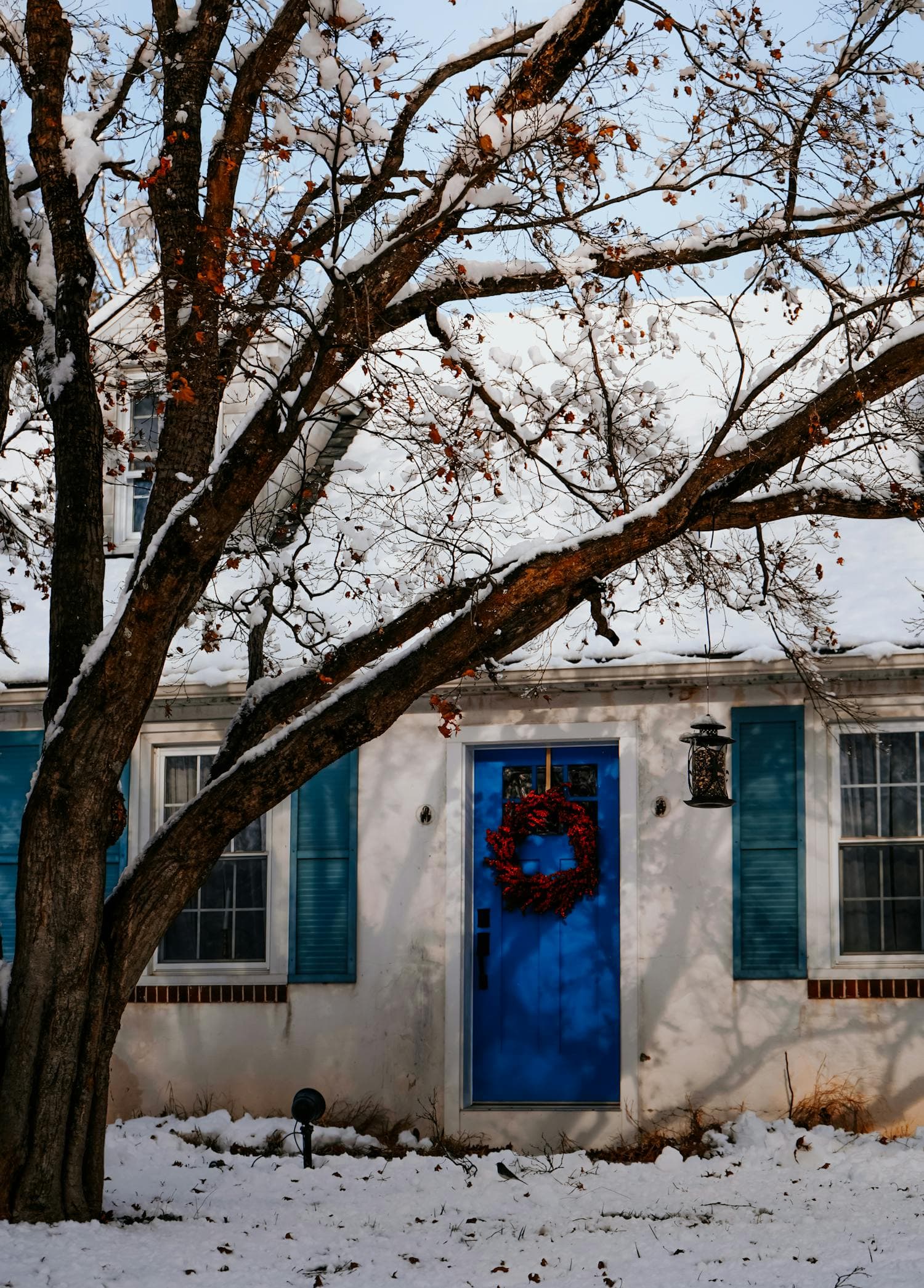
Cape Cod homes are one of the most enduring architectural styles in America for a reason: the proportions are quietly perfect. Steep central roof, symmetric facade, modest single-and-a-half stories, a chimney rising right through the middle. The whole style is built on restraint and balance, which makes it deceptively tricky to decorate for Christmas. Cape Cods don't reward big, busy displays. They look stunning when you commit to the symmetry the architecture is already doing for you.
This guide covers 14 ideas specifically designed for Cape Cod homes, plus the principles behind them. Whether yours is an original 18th-century Cape, a 1950s Cape revival in a New England suburb, or a modern reinterpretation, the same logic applies: work with the symmetry, not against it.
Not sure your home is actually a Cape Cod versus a Colonial or a saltbox? The house style identifier quiz settles it in about a minute.
Why Cape Cods Need Specific Christmas Logic
A few architectural realities shape what works on a Cape:
- The facade is symmetric, almost always. A central front door flanked by two windows on each side is the classic 5-bay Cape. Some are 3-bay (door + 1 window each side). Either way, the symmetry is rigid, and Christmas decor that doesn't honor it looks immediately wrong.
- Ceilings are low. Most Cape Cod interiors have 7.5 to 8-foot ceilings. Vertical statement pieces (chandeliers heaped with garland, towering trees) feel cramped. Horizontal scale is your friend.
- The central chimney is the heart of the house. Both inside (mantel) and outside (visible from the road), the chimney is a focal point. Decorate it deliberately.
- Shingle siding limits your color contrast. Cedar shingles weather to silver-gray over time. Pure white decorations pop; deep colors get muted. Plan accordingly.
- The dormer windows on a 1.5-story Cape are charming and tricky. They're set into the steep roof and demand their own small acknowledgment without overpowering the main facade.
Those five constraints do most of the deciding for you, which is why Cape decorating is easier than it looks once you stop fighting the house.
Exterior Ideas
1. Hang a Wreath in Every Front-Facing Window
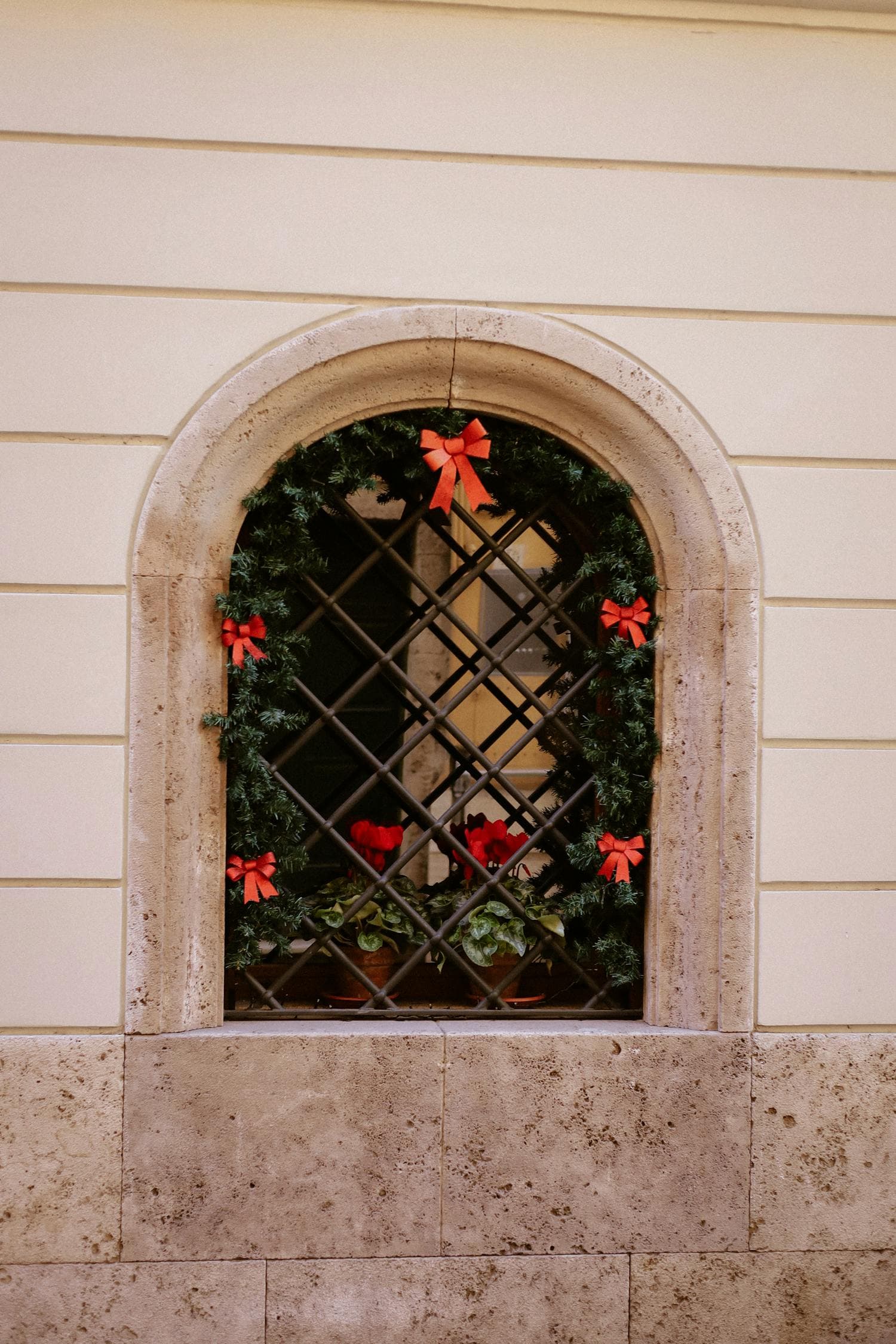
This is the signature Cape Cod Christmas move, and it's almost unfair how good it looks for how simple it is. Every front-facing window (typically four on a 5-bay Cape) gets the same wreath, hung centered with red ribbon or simple jute twine.
Pick a fresh or high-quality faux pine wreath about 14 to 18 inches in diameter. Bigger overwhelms the window; smaller looks lost. The repetition is the point. Uniform wreaths create the rhythm that makes a Cape facade glow.
2. Anchor the Front Door with One Grand Wreath
The central front door is the visual heart of the facade, and it deserves a wreath that's noticeably larger and more elaborate than the window wreaths. Aim for 28 to 32 inches in diameter on a standard Cape Cod door.
Materials should match the architectural mood: fresh balsam, magnolia, boxwood, or a mix. Add berries for warmth and a single wide red velvet bow if you want a traditional look. Skip the glittery picks and oversized bows. Capes reward restraint.
3. Flank the Door Symmetrically
Add matching planters, urns, or pre-lit topiaries to either side of the front door. The key word is matching. Cape Cod symmetry punishes any mismatched element. Two identical 4-foot pre-lit boxwood topiaries are the easiest no-fail option.
If you want to lean rustic, swap the topiaries for two matching whiskey-barrel planters filled with fresh evergreen branches and birch logs. Either way, mirror images.
4. Run Lights in Symmetric Scallops Along the Eaves
Plain straight-line roofline lights work, but the more characteristically Cape Cod move is to drape the lights in gentle scallops between equally spaced points. The dips should be uniform (typically 8 to 10 inches deep) and the spacing should match the rhythm of your windows.
Warm white C9 bulbs work best on Capes. Multi-color reads too busy against the muted shingle palette.
5. Light the Dormers Without Overwhelming Them
Dormer windows on a 1.5-story Cape are charming details that benefit from a small acknowledgment, not a full decorating treatment. Two options work well:
- A single small wreath in each dormer window: same idea as the main floor windows, just at smaller scale (8 to 10 inches)
- A miniature line of warm-white lights along each dormer's roofline, matching the main eaves
Don't add both. That's overkill for the small architectural element. Pick one.
6. Place Battery-Operated Candles in Every Window
This is the New England classic. Every front-facing window glows with a single warm-white candle, lit from inside. On a Cape, where the window-to-wall ratio is high and the windows themselves are small, the effect of all candles on at once is genuinely beautiful.
Use battery-operated candles with built-in dusk-to-dawn timers. Place each candle centered in the lower pane. Plug-in versions exist but are a hassle on Capes since the cords are visible against the small windows.
Our pick
Battery window candles with dusk-to-dawn sensor (4 pack)
7. Use the Central Chimney as an Outdoor Focal Point
Most Cape Cod homes have a brick chimney that runs through the center of the house and is visible above the roofline from the street. Wrap the base (where it meets the roof) with a simple line of warm-white lights, or place a small lit deer or evergreen tableau at the foot of the chimney on the front lawn.
The point is to acknowledge the chimney, not decorate it heavily. The chimney's brick warmth is already doing the work; you're just framing it.
8. Keep the Pathway Lit but Restrained
Cape Cod walkways are usually short and direct. Plant solar pathway lights (warm white only) at 4-foot intervals along both sides of the walk. Skip the candy cane stakes and inflatable snowmen. They fight the architectural mood.
For special nights, line the walkway with paper-bag luminaries (real or battery-operated). The flickering glow against the shingles is exactly the New England feel Capes were designed to capture.
Interior Ideas
9. Place One Tree as the Central Statement
The compact, often-open layout of a Cape Cod home means the tree is visible from multiple rooms simultaneously. Don't fight that. Stage one well-decorated tree in the natural focal point (often the front sitting room or where the central staircase opens up) instead of trying to fit a smaller tree in each room.
A 7-foot pre-lit tree is the standard for Cape ceilings. Going taller risks brushing the ceiling or looking cramped. The tree should clear the ceiling by at least 6 inches once the topper is on.
Not sure what size will actually fit? The free Christmas Tree Size Calculator recommends the right height and shape based on your ceiling and the floor space available.
10. Anchor the Mantel on the Central Chimney
The mantel above the central fireplace is the most important interior surface in a Cape. Symmetric layout works best here: a centered anchor (mirror, large wreath, or framed art), garland draped evenly across the full width, candles in matching pairs at the ends, and stockings hung at uniform spacing.
Avoid the asymmetric draping that works on more architecturally complex homes. Capes prefer mirror-image balance.
For a deeper how-to on mantel composition, see Modern Minimalist Christmas Mantel Ideas. The symmetry-and-restraint principles translate beautifully to Cape Cod interiors.
11. Run Garland Along the Central Staircase
Cape Cod homes typically have a central staircase visible from the front door. Wrap the banister with a continuous pre-lit garland, either fresh or high-quality faux. Add red velvet ribbon at evenly spaced points for traditional, or leave it plain greenery for a more cottage-y feel.
The staircase is one of the few places where vertical decoration works on a Cape; use it.
12. Treat Window Candles as the Interior Story
The same window candles you placed for the exterior view also serve as the dominant interior decoration on a Cape. From inside, the candles in every window create rhythm across the front of the house, a quiet glow that makes the whole space feel decorated even before you add anything else.
Don't compete with the window candles by adding heavy curtain treatments. Sheer or simple curtains (or none at all) let the candles do their job.
13. Set the Dining Room Once and Leave It
Cape Cod dining rooms are typically small. That actually helps for Christmas: a fully styled tablescape feels intentional rather than excessive when the room scale is right. Set the table at the start of December with a runner, a low centerpiece (don't block sight lines across a small table), and either chargers or seasonal placemats. Leave it set all month.
A long, low arrangement of mixed evergreens and white candles works better than a tall floral centerpiece, both for sight lines and for the horizontal scale Cape interiors prefer.
14. Don't Overlook the Half-Story Bedrooms
The 1.5-story Cape has bedrooms tucked under the steep roof, with sloped ceilings and small dormer windows. These spaces are easy to forget but reward small touches: a pencil garland over a dresser, a wreath on the inside of the bedroom door, a battery-operated candle in the dormer window. Twenty minutes of work, and the upstairs feels as decorated as the main floor.
Common Cape Cod Christmas Mistakes
A few specific failure modes to avoid:
- Asymmetric exterior decorating. Wreath on three of four windows, lights only on half the eaves, planters of different sizes flanking the door. Capes punish asymmetry harder than any other house style.
- Decorations sized for a colonial. A 36-inch front door wreath that works on a colonial overwhelms a Cape door. Size everything down by 10–20% from what you'd put on a larger traditional home.
- Multi-color lights against shingle siding. The cedar tones flatten the color, so what looks "festive" on a white-painted home turns "muddy" on a Cape. Stick to warm white outside.
- Inflatables on the front lawn. A Cape's whole architectural ethos is restraint. A bouncy snow globe in front of it breaks the visual contract. Save the inflatables for the backyard if you must have them.
- Heavy farmhouse styling. Burlap, plaid everywhere, galvanized metal: all good farmhouse moves, but the wrong vernacular for Cape Cod. Capes are coastal-vernacular; lean into white, blue, natural, and restrained instead.
If you're decorating a Cape for the first time
A no-fail starter set:
- Wreath in every front-facing window (Idea 1), uniform size, simple jute twine
- One generous wreath on the front door (Idea 2)
- Two matching pre-lit boxwood topiaries flanking the door (Idea 3)
- Warm-white C9 lights in scallops along the front eaves (Idea 4)
- Battery-operated candles in every window, exterior view AND interior (Idea 6)
That's five moves. They cover the most-photographed elements of the house and read as fully decorated from the street. Add the interior ideas (tree, mantel, garland) over the next two weeks of December. Don't try to do it all in one weekend. Capes look better when each layer is added thoughtfully than when everything is dumped on at once.
If there's one principle to remember, it's respect the symmetry. Capes look stunning at Christmas because the architecture is already doing most of the work. Your job is to underline what's there, not to add visual noise to it.
Related guides:
- Christmas Front Porch Decorating Ideas (by House Style): porch-specific decor with a Cape Cod section, restraint-first treatment for small stoops
- Christmas Mantel Ideas (by House Style): the interior mantel companion, where the Cape Cod section emphasizes "less, well-chosen" for small painted mantels, with a white-navy-evergreen palette
- Christmas Light Ideas for Two-Story Colonial Homes: the lighting playbook for the related symmetric-architecture style
- Scandinavian Christmas Decor: A Complete Hygge Guide: the Northeast-friendly cousin aesthetic that pairs well with Cape Cod interiors
- The Best Christmas Color Schemes for Traditional Homes: palette guide for Cape Cods and other traditional architecture
- Modern Minimalist Christmas Mantel Ideas: restraint-first mantel composition
- Christmas Tree Size Calculator: pick a tree that fits Cape Cod's typical lower ceilings
Share this guide
Frequently asked questions
How do you decorate a Cape Cod house for Christmas?
What color Christmas lights work best on a Cape Cod home?
How do you decorate a Cape Cod front door for Christmas?
Are Cape Cod homes hard to decorate for Christmas?
Should I put a candle in every window of a Cape Cod?
Keep reading
Outdoor Christmas Decorating Ideas That Read From the Street
How to compose the outside of your house for Christmas as one picture instead of a pile of parts: the three layers that matter, the one color decision that makes or breaks it, ideas sorted by what your house actually gives you to work with, and the daytime layer almost everyone skips.
Christmas Light Ideas for Ranch-Style Homes: The Complete Guide
How to light a ranch home for Christmas: the layering system, the right bulb types, the exact color temperature, and the five-layer plan that flatters the horizontal silhouette instead of fighting it.
How to Decorate a Ranch House for Christmas: 15 Ideas That Actually Work
Ranch homes have a low, horizontal silhouette that calls for specific Christmas decorating moves. Here are 15 ideas (exterior, interior, and lighting) designed to flatter the ranch style instead of fighting it.
Prefer pen & paper?
The Christmas Planner
A 25-page printable kit covering budget, gifts, hosting, and decor, built on the same planning logic as this tool. Print it once, keep it in a binder, and reuse it every year.
Or grab 3 pages free first.
Decor that suits the home you have.
Seasonal decorating tips and the occasional new tool, straight to your inbox. One list, no spam.