By Brian · April 22, 2026
Christmas Light Ideas for Two-Story Colonial Homes
Two-story colonials are built on symmetry, and Christmas lights look incredible when you decorate with that symmetry instead of against it. Here's a complete plan for lighting a colonial home, from roofline to walkway.
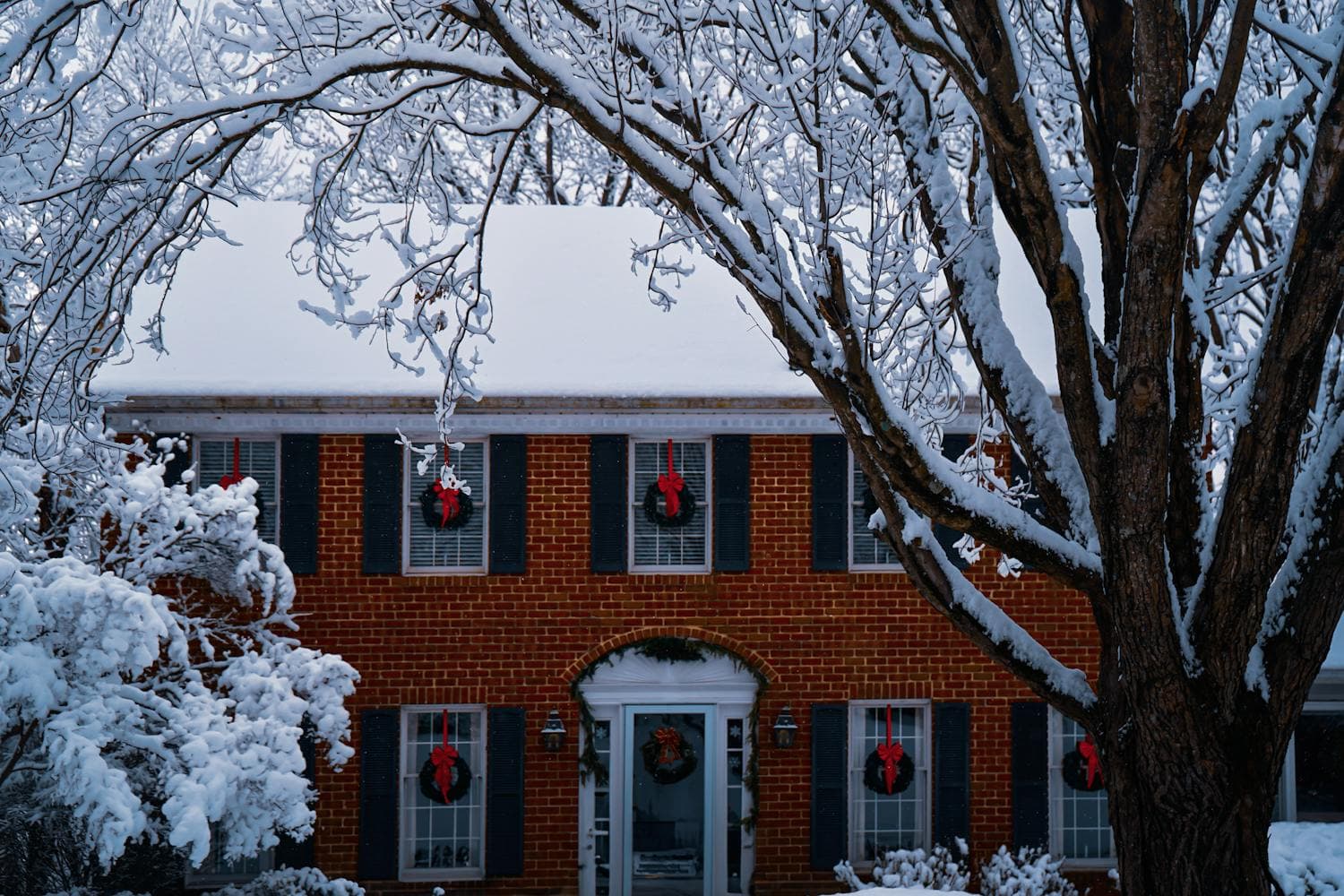
Two-story colonials are arguably the easiest house style in America to light for Christmas. Whether yours is a true center-hall colonial, a Georgian, a Federal, or one of the modern colonial-revival builds in nearly every suburban neighborhood, the architecture is built on a principle that happens to be exactly what holiday lighting needs: symmetry.
Most decorating mistakes on colonials come from breaking that symmetry. A wreath on one window but not the others. Lights on one side of the porch but not the matching side. A single tree by the door instead of two. Get the symmetry right and the house practically lights itself.
This guide covers how to plan and execute Christmas lights on a two-story colonial, with specific product types, placement strategies, and the small mistakes that separate a polished colonial from one that just looks cluttered.
What Makes Colonials Different
If you've decorated a ranch or a craftsman before, you'll find a colonial both easier and harder.
Easier:
- The grid of windows on the front facade gives you a built-in template to repeat decorations across.
- The roofline tends to be straight and uninterrupted along the front, making roofline lighting a clean run.
- A center-hall layout means the front door is naturally the focal point, no guessing where to anchor the design.
Harder:
- Two stories means you're working at heights that require a real ladder, an extension pole with a hook, or hiring out the install.
- Symmetry is unforgiving. A burned-out window candle on a colonial looks broken in a way the same candle on a ranch wouldn't.
- The scale is bigger overall, which means you'll buy more lights, typically 160–230 feet for the front facade once you count the roofline and gables.
The plan below is built to lean into the easier parts and minimize the harder ones.
Step 1: The Roofline
The roofline of a colonial is the strongest single line in the design. Lighting it well sets the tone for everything else.
Choose Warm White, Not Multi-Color
Multi-color C9 bulbs work great on Victorian homes, where the architecture is busy and ornamental. Colonials are the opposite (clean lines, symmetrical mass, restrained detailing) and they look best with restrained lighting.
Warm white (around 2700K) feels classic and timeless. Cool white (4000K and up) looks blue and cold against the typical colonial palette of brick, white trim, or muted clapboard. If you only do one thing right on a colonial, make it this.
Use C9 Bulbs, Not Mini Lights
Mini lights disappear from the street on a two-story home, they're sized for trees and shrubs, not architecture. C9 bulbs are roughly the size of a small candle flame and read clearly from 50+ feet away, which is the distance your house is being viewed from when neighbors drive past.
For a typical colonial with 50 feet of front roofline, you'll need:
- 50 feet of C9 bulb spacing (one bulb every 12 inches = ~50 bulbs)
- An outdoor extension cord rated for the bulb count
- A photocell timer (turns lights on at dusk, off at a set hour)
Not sure about the exact count for your house? Use the free Christmas Light Calculator, plug in your roofline length and it'll tell you exactly how many C9s and how many strands to buy.
Plan to install with bulbs facing forward (visible from the street) not upward into the soffit. Forward-facing reads brighter and shapes the silhouette of the roofline cleanly.
Don't Skip the Dormers
Many two-story colonials have dormer windows on the upper level. If yours does, run a smaller line of the same warm-white C9s along each dormer roofline. The repetition reinforces the colonial's grid pattern and makes the upper story feel decorated rather than ignored.
Step 2: Window Candles in Every Window
No move is more distinctively colonial, and it's almost embarrassing how much visual impact it creates for how little effort it takes.
One Candle Per Window, No Exceptions
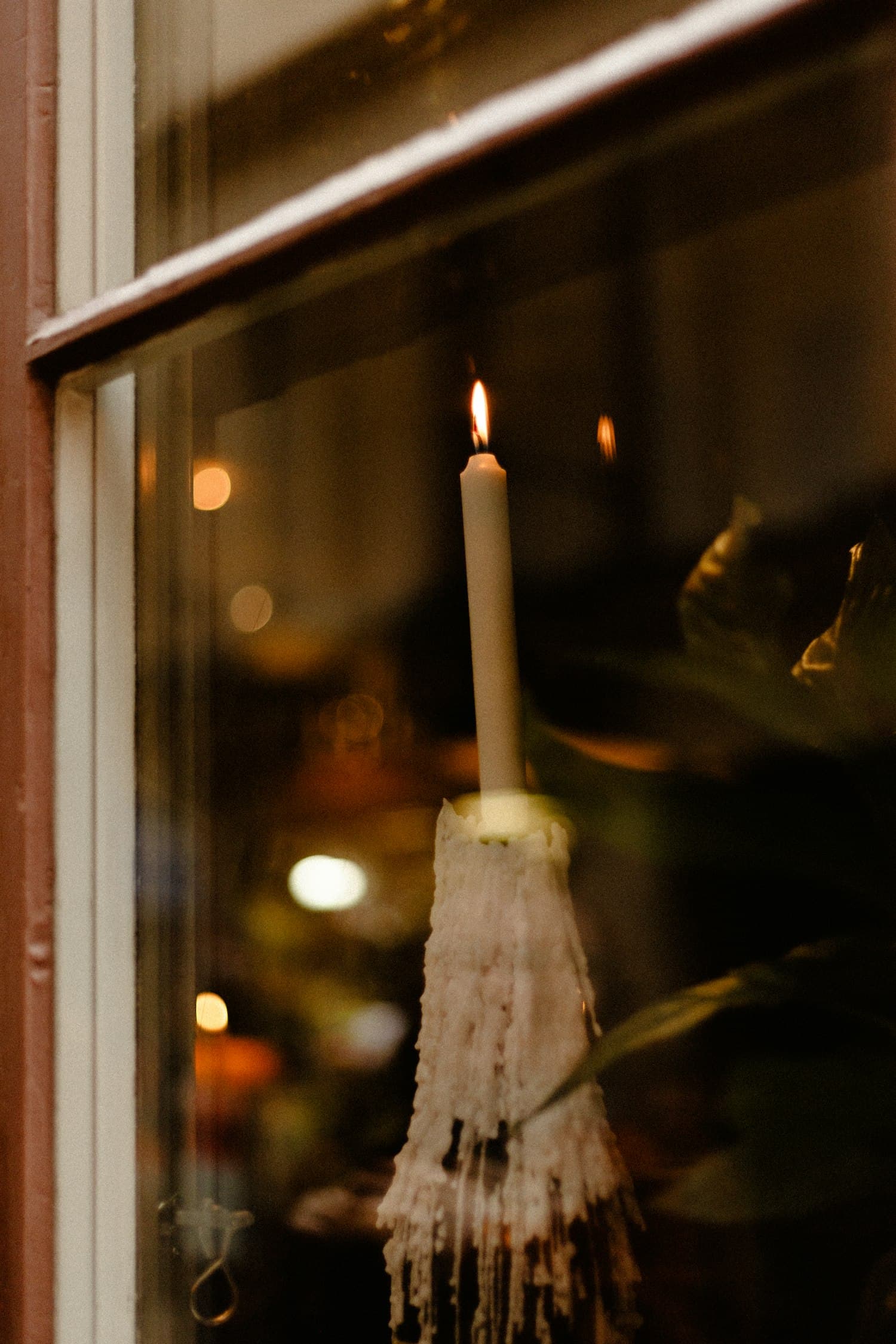
The rule is rigid because that's what makes it work. Every front-facing window (top floor and bottom floor) gets a single battery-operated candle, centered in the bottom pane.
Skipping the bathroom window or the upstairs hallway window because "no one notices" is exactly how the look fails. Drive past a perfect colonial Christmas display and you'll see candles in every window, including the ones in rooms no one uses.
Our pick
Battery window candles with dusk-to-dawn sensor (4 pack)
Pick the Right Candle Type
Three options, in order of preference:
- Battery-operated with built-in dusk-to-dawn timer. Set them in the windows once and forget them for the whole season. Replace batteries every 4–6 weeks if you're running them all evening.
- Plug-in with timer. Brighter and more reliable, but requires running cords to every window, practical for ground floor, much harder upstairs.
- Smart bulb candles (Wi-Fi or Zigbee). Highest setup cost, but gives you scheduled on/off times and color temperature control via phone. Worth it if you're already in a smart home ecosystem.
Whichever you choose, pick a single type for the whole house. Mixing battery-operated upstairs with plug-in downstairs creates a slight color and brightness mismatch that's surprisingly visible from the street.
Match the Candle Color to the Roofline
If the roofline is warm white, the window candles should be warm white. Most window candles default to a slightly yellower "amber" or "flame" color, that's fine and reads as candlelight, but make sure it's not the cool blue-white that some cheap LED candles produce. The temperature mismatch is the dead giveaway of a hastily decorated colonial.
Step 3: The Front Door
The front door of a colonial sits in the dead center of the facade. Whatever happens there will be seen first, every time.
A Single Statement Wreath
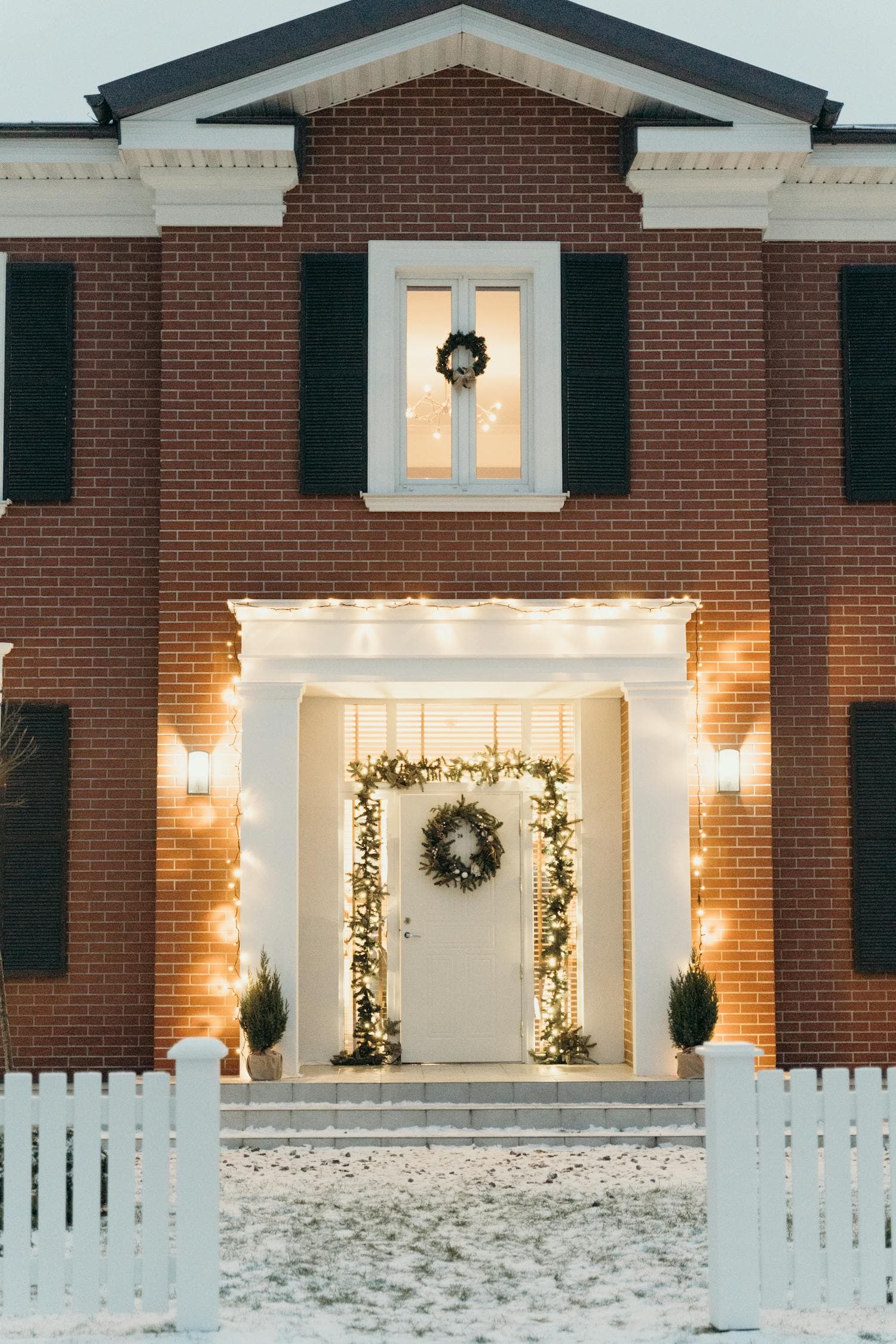
Not three. Not a wreath plus garland plus a "Welcome" sign plus a doormat. One wreath, sized appropriately to the door, typically 26 to 32 inches for a standard 36-inch-wide colonial front door. Bigger looks confident; smaller looks forgotten.
A pre-lit wreath with built-in warm-white lights and a battery timer is the right move for a colonial. The lit wreath becomes the focal point of the entire facade after dark.
Flank with Matching Topiaries or Trees
Symmetry, again. Two matching planters on either side of the door (pre-lit boxwood topiaries, small Christmas trees, or simple urns with greenery) establish the symmetric anchor that the rest of the design hangs on.
Match these exactly. Two 4-foot lit boxwoods. Two identical urns. Two matching wrought iron lanterns. A mismatch on either side of a colonial door reads instantly as a mistake, even if the viewer can't put a finger on what's wrong.
Our pick
boxwood ball topiaries, set of 2 (add a strand of mini lights)
Garland Above and Around
Run a pre-lit garland across the top of the door frame, draping slightly down on each side. If your colonial has a portico with columns, wrap the columns with the same garland, same pine type, same light color, same berry or ribbon accents.
The colonial portico is one of the most rewarding architectural details in residential American design when it comes to Christmas decorating. A wrapped column is a small project (15 minutes per column with floral wire) and makes a big difference to the look.
Step 4: Pathway and Yard
A colonial's front walk is usually a straight, formal path from the street or driveway to the front door. Treat it formally.
Symmetric Pathway Lighting
Place pathway lights in matching pairs along both sides of the walk, evenly spaced, typically every 4 to 5 feet. The repetition matters as much as the brightness.
For a colonial, choose path lights with classic shapes: lantern-style, cap-top, or simple cylinder. Avoid ornate or whimsical designs (curlicue snowflake stakes, candy-cane stakes) which fight the architectural restraint of the house.
Skip the Yard Inflatables
Hard rule for colonials: no inflatables on the front lawn. The entire visual logic of a colonial is restraint and symmetry, and an inflatable Santa or snow globe disrupts both. Save the inflatables for a different house style, or for the backyard where the kids can enjoy them without compromising the front facade.
If you want yard decoration beyond the lighting, the colonial-appropriate move is lit topiary deer or formal lit trees, placed symmetrically on either side of the front walk. Two matching elements; nothing freestanding in the middle.
Step 5: Connecting It All Visually
You now have lights at five layers: roofline, dormers, windows, door, and walkway. Stepping back from the curb, the whole composition should read as one decorated house, not five separate lighting projects.
Three checks before you call it done:
- One color temperature throughout. Walk to the street at dusk and look. If anything reads cooler or warmer than the rest, swap it.
- Symmetry holds top to bottom. Each upstairs window should mirror the downstairs window directly below it. Each side of the door should mirror the other.
- No gaps in the facade grid. Every window has a candle. Every roofline has lights. Every column has garland.
Smart Lights for a Two-Story Reach
Climbing a 24-foot ladder twice a season is how lighting projects get abandoned by year three. If your budget allows, the single best upgrade for a two-story colonial is smart lights with permanent installation.
Permanent eave lights (Govee, Twinkly Pro, Trimlight, Jellyfish) install once on a track under the soffit and stay there year-round, controlled from a phone. For Christmas they show as warm white C9s. The rest of the year they stay off, or turn on subtly for Halloween orange, July 4th red-white-blue, or accent lighting on summer evenings.
The upfront cost is real (typically $1,500–$4,000 for professional install on a colonial). But you'll never put up Christmas lights again, and the resale impact on the house is generally positive.
A first-year plan that won't burn you out
Trying to hit every layer in one year is how good intentions become unfinished projects. A reasonable first-year colonial plan:
- Warm-white C9 lights along the front roofline (Step 1)
- Battery-operated candles in every front-facing window (Step 2)
- One pre-lit wreath on the front door (Step 3)
- Two matching planters or topiaries flanking the door (Step 3)
That's it. Four moves, achievable in a single weekend, and your colonial will already look more polished than 90% of decorated homes on the block. Add dormer lights, garland-wrapped columns, and pathway lighting in years two and three.
The instinct to overdo it on a colonial is strong because the house is so symmetric and so primed for decoration. Resist it. The architecture is doing most of the work. Your job is mostly to underline it.
If you want to see the principle at full scale before you commit, our city-by-city guides to the best Christmas light displays map the famous free neighborhoods in 40 US cities. The houses that stop traffic are almost never the busiest ones; they are the ones where every line has a reason.
Related guides:
- Christmas Front Porch Decorating Ideas (by House Style): porch-specific decor including the colonial section, with matched-pairs symmetry for the formal portico
- Christmas Mantel Ideas (by House Style): the interior mantel companion. The Colonial section covers formal painted mantels with classical symmetric composition, graduated brass candlesticks, and burgundy-cream-gold palette
- How to Decorate a Ranch House for Christmas: the opposite-style decorating playbook, single-story and horizontal
- Christmas Light Ideas for Ranch-Style Homes: the lighting deep-dive for the other dominant US house style
- The Best Christmas Color Schemes for Traditional Homes: palette guide for colonial and other traditional architecture
- Christmas Light Calculator: figure out the exact bulb count before you buy
- How Much Does It Cost to Decorate Your House for Christmas?: full budget breakdown by category
Share this guide
Frequently asked questions
How do you light a two-story colonial for Christmas?
How many feet of Christmas lights do I need for a two-story colonial?
Should I put a candle in every window of a colonial for Christmas?
What color Christmas lights look best on a colonial home?
Where do you hang a wreath on a colonial house?
Keep reading
Christmas Light Ideas for Ranch-Style Homes: The Complete Guide
How to light a ranch home for Christmas: the layering system, the right bulb types, the exact color temperature, and the five-layer plan that flatters the horizontal silhouette instead of fighting it.
Christmas Lights Not Working? Find the Fault in Ten Minutes
The four ways a Christmas light string fails, how to tell them apart in about a minute, and the fixes that actually work. Includes the fuse door most people never open, why half a string goes dark, and the point where a strand is not worth saving.
How to Hire a Christmas Light Installer (7 Questions to Ask First)
A homeowner's guide to hiring a Christmas light installer: when to book, the seven questions that separate a good pro from a bad one, red flags to walk away from, and how quotes really work.
Prefer pen & paper?
The Christmas Planner
A 25-page printable kit covering budget, gifts, hosting, and decor, built on the same planning logic as this tool. Print it once, keep it in a binder, and reuse it every year.
Or grab 3 pages free first.
Decor that suits the home you have.
Seasonal decorating tips and the occasional new tool, straight to your inbox. One list, no spam.