By Brian · April 30, 2026
How to Decorate a Craftsman Bungalow for Christmas
Craftsman bungalows are built around natural materials, earth tones, and handcrafted detail. Decorating one for Christmas works best when you lean into those qualities. 14 ideas for the Craftsman style.
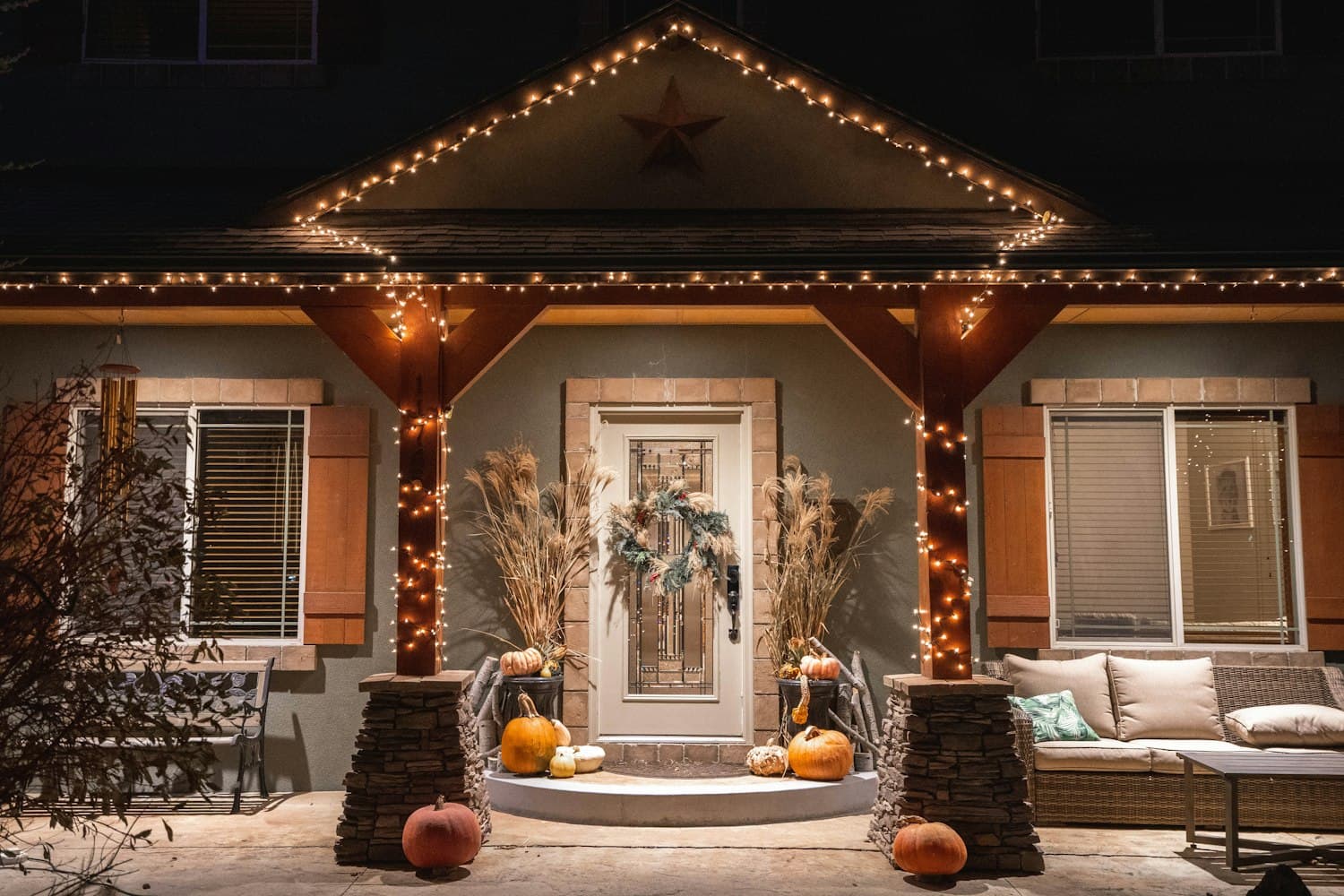
Craftsman bungalows are arguably the warmest house style ever built in America. Designed in the early 1900s as a reaction against ornate Victorian excess, they were specifically built around the idea of natural materials, honest craftsmanship, and handcrafted detail. Earth tones, exposed rafter tails, tapered columns, deep covered porches, brick chimneys, stained glass: every element of a Craftsman is meant to feel handmade and grounded.
That makes Christmas decorating a Craftsman both easier and harder than other styles. Easier because the architecture is forgiving. The deep porch alone is a natural decorating zone that other house types don't have. Harder because Craftsmans punish the kind of generic, glittery Christmas decor that works on a colonial or a modern home. Glitz fights the whole aesthetic.
This guide covers 14 ideas built specifically for Craftsman bungalows, plus the principles behind them. Whether yours is an original 1910s Craftsman in California, a 1920s Sears-kit bungalow in the Midwest, or a modern Craftsman revival, the same logic applies: earth tones, natural materials, warm white only, and honor the architecture's handcrafted soul.
Not sure your home is actually a Craftsman versus a similar style like a Tudor or a Foursquare? The house style identifier quiz confirms in 60 seconds.
Why Craftsmans Decorate Differently
A few architectural realities shape what works:
- The deep front porch is the star. Most Craftsmans have a deep, covered front porch supported by tapered columns. This is your primary decorating zone: covered from weather, wired for outlets, viewable from the street.
- Exposed rafter tails are an invitation. The decorative beam-ends under the eaves are unique to Craftsman style. They reward small acknowledgments (lights, evergreen sprigs) and reject ornate dressings.
- Tapered columns ask to be wrapped. Whether square stone-based columns or tapered wooden ones, the columns demand attention and look incredible with garland and lights.
- The palette is earth-toned. Craftsmans typically come in greens, browns, rusts, mustards, and creams, not white. Decor in primary red-and-green or silver-and-blue clashes.
- Ceilings are typically lower. Most original Craftsmans have 8 to 9-foot ceilings. Compact horizontal scale matters more than vertical drama.
- The whole aesthetic is anti-glitz. Craftsman style is rooted in the Arts and Crafts movement: handmade, honest, restrained. Glittery, plastic, mass-produced decor feels like a violation. Stick to materials that look hand-touched.
Hold those six things in mind and the ideas below feel like a system rather than a list.
Exterior Ideas
1. Wrap the Tapered Porch Columns with Pre-Lit Garland
This is the defining Craftsman Christmas move. The columns are already a focal feature; wrapping them with pre-lit garland transforms them into glowing structural elements that frame the porch.
Use cedar or mixed-evergreen garland (not pine, which is too thin to hold the column shape). Secure with floral wire every 6 inches so it doesn't sag. Add small clusters of dried orange slices, eucalyptus stems, or pinecones along the wrap for an Arts-and-Crafts feel.
2. Use the Deep Porch as the Primary Display Zone
Most house styles have a flat front facade where decoration sits on the building. Craftsmans have a deep covered porch that decoration sits inside. Use it.
Stage on the porch:
- A pair of matching planters flanking the front door, filled with fresh evergreen branches and birch logs
- A wood-frame bench (if you have one) layered with a wool blanket and pillow in earth tones
- One large lantern with a battery-operated candle inside, glowing on the porch floor
- A doormat in natural fiber (jute, sisal) layered under a smaller seasonal mat
The porch becomes a destination from the street. Visitors see a fully composed scene before they reach the door.
3. Light the Exposed Rafter Tails
The decorative beam-ends under your eaves are unique to Craftsman style. Acknowledge them with a single line of warm-white C9 bulbs running along the underside of the eaves, with bulbs spaced to match the rhythm of the rafter tails.
Don't add ornaments or accents to the rafter tails. That fights the architectural detail. Just clean lights that highlight the rhythm already there.
4. Skip Multi-Color in Favor of Warm Whites and Ambers
Craftsmans are designed in earth tones. Multi-color Christmas lights (bright reds, electric blues, kelly greens) fight the entire palette. The result looks cheap and dated.
Stick to:
- Warm white (~2700K) for any roofline, column wrap, and accent lighting
- Amber (slightly more orange) for porch lanterns or garland tucked under the eaves
- Edison-style filament bulbs for festoon lighting if you want a more visible bulb shape
The warm color temperature complements the earth tones; cooler whites or multi-colors fight them.
5. Stack Birch Logs Near the Front Door
A small, low-effort detail that signals "we read the room of this architecture": a stack of birch logs on the porch beside the door. Three to five logs, banded loosely with twine.
Birch signals Pacific Northwest / Arts and Crafts, native to the period. It's also a tactile, handmade element that fits the Craftsman ethos. If you can't find birch, white-painted logs work as a substitute.
6. Hang Lanterns from the Porch Beams
Mission-style and Arts-and-Crafts lantern lighting is one of the period's signature design moves. Hang two to four matching wrought-iron, copper, or oil-rubbed bronze lanterns from the porch beam by chains.
Use battery-operated flickering candles inside for safety and ease. The lanterns can stay up year-round (with the flickers off in the off-season), so this is a one-time investment that gives you Christmas decoration AND year-round porch ambiance.
7. Choose Natural-Material Wreaths
Craftsmans punish synthetic wreaths. The cheap plastic shine clashes with the wood, brick, and stone. Choose:
- Magnolia leaf wreaths (the deep green leaves with bronze undersides match Craftsman palettes perfectly)
- Mixed evergreen with pinecones and dried orange slices (warm and handmade-feeling)
- Eucalyptus wreaths if you want a more modern, less pine-heavy look
- Grapevine wreaths wrapped with greenery and copper bells for a more rustic option
Skip glittery wreaths, mesh ribbon wreaths, and anything with plastic berries that catch the light incorrectly.
8. Use Copper or Wrought-Iron Pathway Lanterns
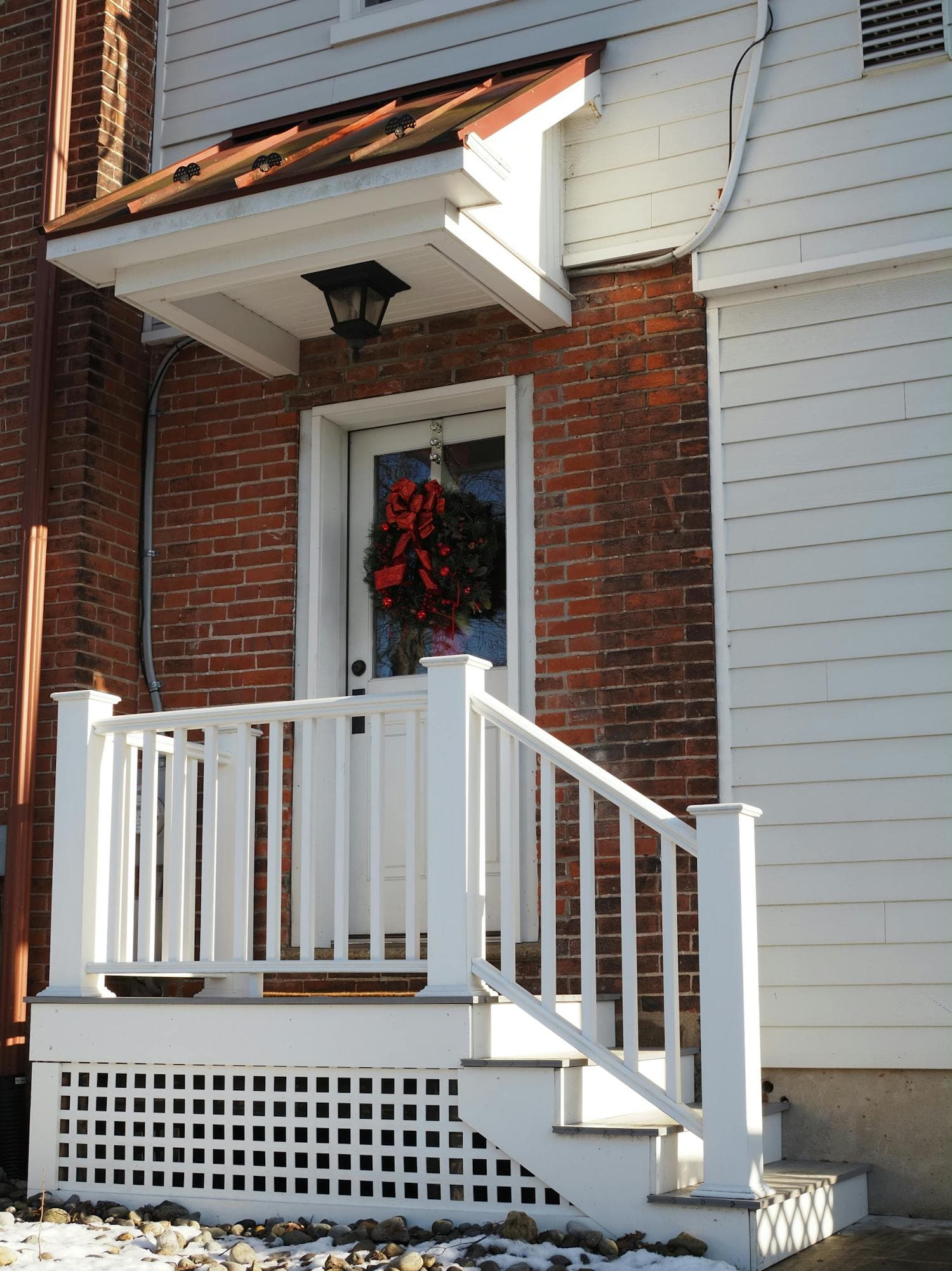
Skip the plastic candy-cane stakes. The walkway leading to a Craftsman should feel handmade. Place two or three matching copper, brass, or oil-rubbed bronze pathway lanterns along the walk: at the steps, at the turn, at the porch entry.
Battery-operated candles inside (or solar tops if your lanterns support them) glow against the natural materials. The lanterns also work three seasons a year as ambient garden lighting, so they earn their keep.
Interior Ideas
9. Anchor the Tree Near the Stone or Brick Fireplace
Most Craftsmans have a stone or brick fireplace as the central architectural feature in the living room. Place the tree to the side of the fireplace, not directly across the room. From the doorway, the fireplace and tree should look like a single composed Christmas scene.
A 7-foot pre-lit tree is the standard for Craftsman ceilings (typically 8.5 to 9 feet). The fireplace mantel acts as a horizontal anchor; the tree provides the vertical complement.
Not sure what size tree fits? Use the Christmas Tree Size Calculator to plug in your ceiling height and floor space.
10. Decorate Built-Ins with Restraint
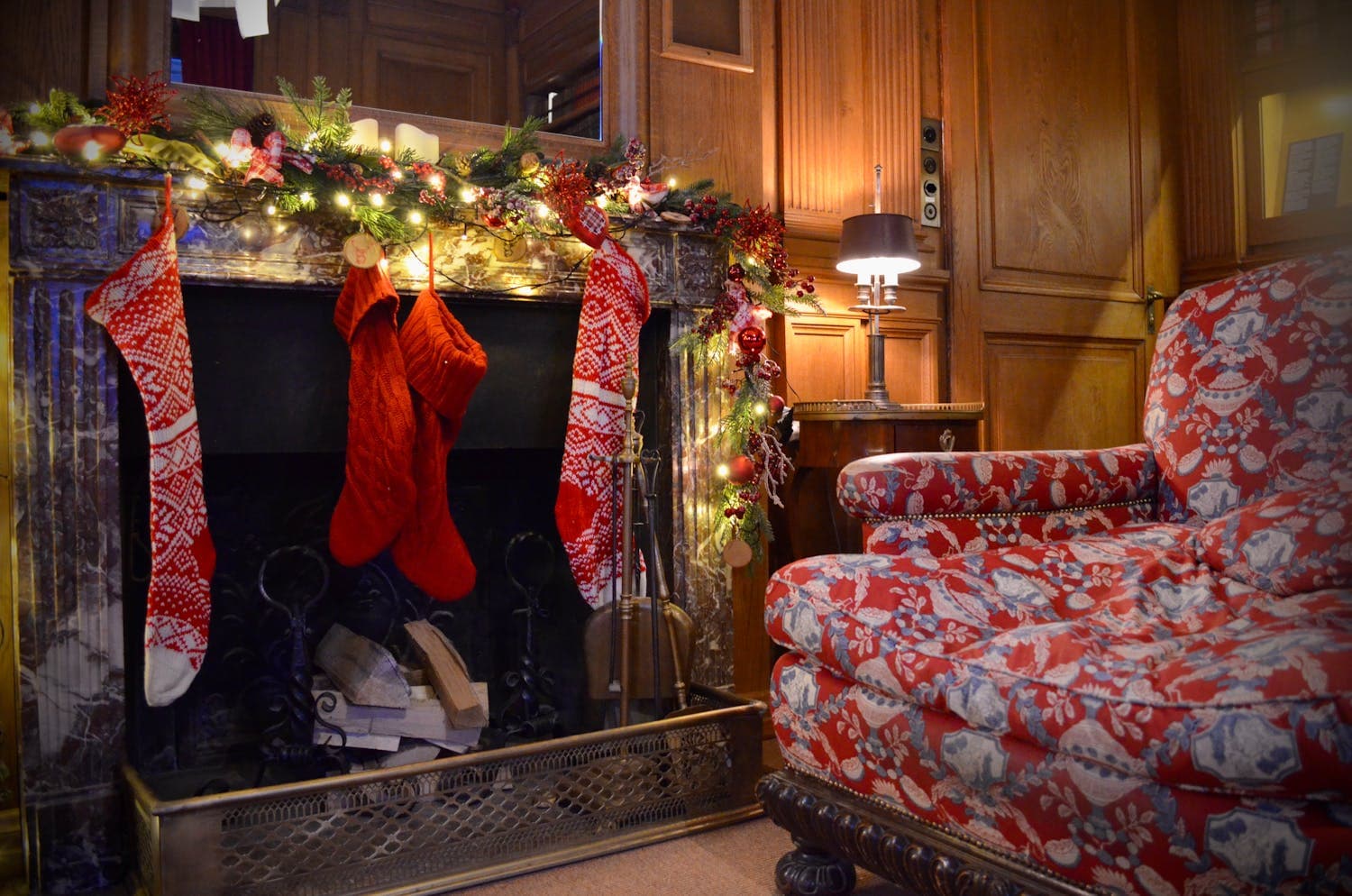
Many Craftsmans have built-in bookcases, china cabinets, and inglenook benches flanking the fireplace. These are decorating opportunities, but the rule is restraint.
Each built-in shelf can hold:
- A small piece of greenery (single sprig of cedar or eucalyptus, not a full garland)
- One small Christmas object (a ceramic deer, a brass candleholder, a pinecone)
- Books or existing decor stays put
Don't pile garland and ribbon on every shelf. The built-ins are already architectural Christmas; they just need a small acknowledgment.
11. Run Garland Along Beams, Trim, and Picture Rails
Many Craftsmans have visible interior beams (especially in living rooms with coffered ceilings), heavy wood trim, and picture rails high on the walls. These linear architectural elements are perfect for garland.
Use fresh or high-quality faux mixed evergreen. Pine and cedar are best for the Arts-and-Crafts aesthetic. Avoid pre-decorated garland with plastic ornaments; the cleaner the greenery, the better it complements the wood.
12. Backlight Stained Glass with Christmas Tree Lights
If your Craftsman has stained glass windows (many do; the era's Arts and Crafts and Prairie architects made art-glass windows a signature), and the window faces a room with a Christmas tree, the tree lights backlit through the glass create one of the most beautiful Christmas effects possible.
Position the tree so that, viewed from outside, the warm tree lights filter through the stained glass colors. The effect at twilight is stunning. No additional work needed: the tree does it for you.
13. Use Earth-Tone Ornaments
Most Christmas ornament collections are designed in primary colors (red and green) or modern minimalist (white and gold). Both fight a Craftsman.
Build your tree palette from:
- Rust, mustard, and burnt orange
- Deep forest green and brown
- Cream and antique gold
- Cranberry red as the only true red note
Look for handmade, salt-glazed, ceramic, wood, or felt ornaments. Avoid: plastic, glittery, sequined, or mass-produced novelty ornaments.
14. Set the Dining Nook with Fresh Evergreen and Natural Materials
Many Craftsmans have built-in breakfast nooks with bench seating. These small, semi-enclosed spaces are perfect for a fully-decorated dining moment.
A simple Craftsman dining setup:
- Linen or natural-fiber runner (cream or oatmeal)
- Mixed evergreen branches laid down the center as a low garland
- Two or three small terracotta pots holding miniature trees or candles
- Cloth napkins in earth tones (rust, mustard, deep green)
- Mismatched ironstone or stoneware plates
Set it once at the start of December and leave it through the season. The nook becomes a quiet Christmas moment that's used daily.
Common Craftsman Christmas Mistakes
A few specific failures to avoid:
- Multi-color exterior lights. Wrong era entirely; too 1990s-suburban for an architecture grounded in 1910s Arts-and-Crafts ethos. Stick to warm white only.
- Plastic anything. Plastic wreaths, plastic ornaments, plastic flameless tea-light votives, plastic deer. The whole architecture is built around honest materials. Plastic violates the ethos.
- White-and-silver palette. Pure modern glam, which is the opposite of Craftsman. The decor and the home will fight each other. Earth tones win every time.
- Inflatable yard decor. Same logic as plastic. A bouncing snow globe in front of a hand-built Craftsman bungalow is a cultural mismatch.
- Too much. Craftsmans were built in deliberate reaction to Victorian excess. Maximalist, every-surface-decorated styling is genetically wrong for the architecture. Less is more.
A no-fail first-year setup
For a Craftsman you've never decorated before, this is the shortest path to a finished look:
- Garland-wrapped tapered porch columns (Idea 1)
- Magnolia or mixed-evergreen wreath on the front door (Idea 7)
- Hanging lanterns from the porch beam (Idea 6)
- Warm-white C9 lights along the eaves, highlighting the rafter tails (Idea 3)
- One central tree near the fireplace (Idea 9)
Five moves, achievable in one weekend. The deep porch alone, once it's wrapped with garland and lit with lanterns, looks fully decorated to anyone driving past.
Build the rest over the next few weeks of December as you find pieces that fit the earth-tone palette.
If there's one principle to remember, it's honor the handcrafted ethos. Craftsman bungalows were built deliberately, with attention to materials and proportion. Christmas decor that respects that intention (natural, restrained, earth-toned) looks stunning. Decor that fights it never quite works, no matter how much money is spent on it.
Related guides:
- Christmas Front Porch Decorating Ideas (by House Style): porch-specific decor with the Craftsman section's signature move, garland-wrapped tapered columns
- Christmas Mantel Ideas (by House Style): the interior mantel companion, where the Craftsman section covers natural materials only (magnolia or mixed-evergreen garland, copper candleholders, dried orange slices) for the heavy quartersawn oak mantel
- How to Decorate a Modern Farmhouse for Christmas: the natural-material cousin style with overlapping decorating principles
- The Best Christmas Color Schemes for Traditional Homes: palette guide that includes Craftsman-friendly earth-tone variants
- Scandinavian Christmas Decor: A Complete Hygge Guide: another restraint + natural-materials style that pairs with Craftsman architecture
- Modern Minimalist Christmas Mantel Ideas: for the fireplace-with-stone-surround moment specifically
- Christmas Tree Size Calculator: pick a tree that fits Craftsman's typical 8.5-9 foot ceilings
Share this guide
Frequently asked questions
What style of Christmas decorations work best on a Craftsman bungalow?
What color Christmas lights work best on a Craftsman house?
How do you decorate a Craftsman front porch for Christmas?
Should I use real or artificial garland on a Craftsman house?
What's the most common mistake decorating a Craftsman for Christmas?
Keep reading
How to Decorate a Victorian House for Christmas
Victorian-era homes were built to be decorated. Their ornate architecture rewards Christmas abundance in a way no other style does. 14 ideas designed for the houses that invented modern Christmas.
How to Decorate a Ranch House for Christmas: 15 Ideas That Actually Work
Ranch homes have a low, horizontal silhouette that calls for specific Christmas decorating moves. Here are 15 ideas (exterior, interior, and lighting) designed to flatter the ranch style instead of fighting it.
How to Decorate a Modern Farmhouse for Christmas
Modern farmhouses sit at the intersection of rustic and clean-lined. Christmas decor works when it honors both sides of that equation. 14 ideas built for the modern farmhouse style, from black metal accents to magnolia garland.
Prefer pen & paper?
The Christmas Planner
A 25-page printable kit covering budget, gifts, hosting, and decor, built on the same planning logic as this tool. Print it once, keep it in a binder, and reuse it every year.
Or grab 3 pages free first.
Decor that suits the home you have.
Seasonal decorating tips and the occasional new tool, straight to your inbox. One list, no spam.