By Holiday Home Ideas Editorial Team · May 7, 2026
Christmas Tree Types Compared: Fraser, Balsam, Noble, Douglas Fir (and 6 Others)
A side-by-side guide to the 10 most common real Christmas tree species, what each smells like, how long the needles last, which holds heavy ornaments, and what each typically costs in 2026.
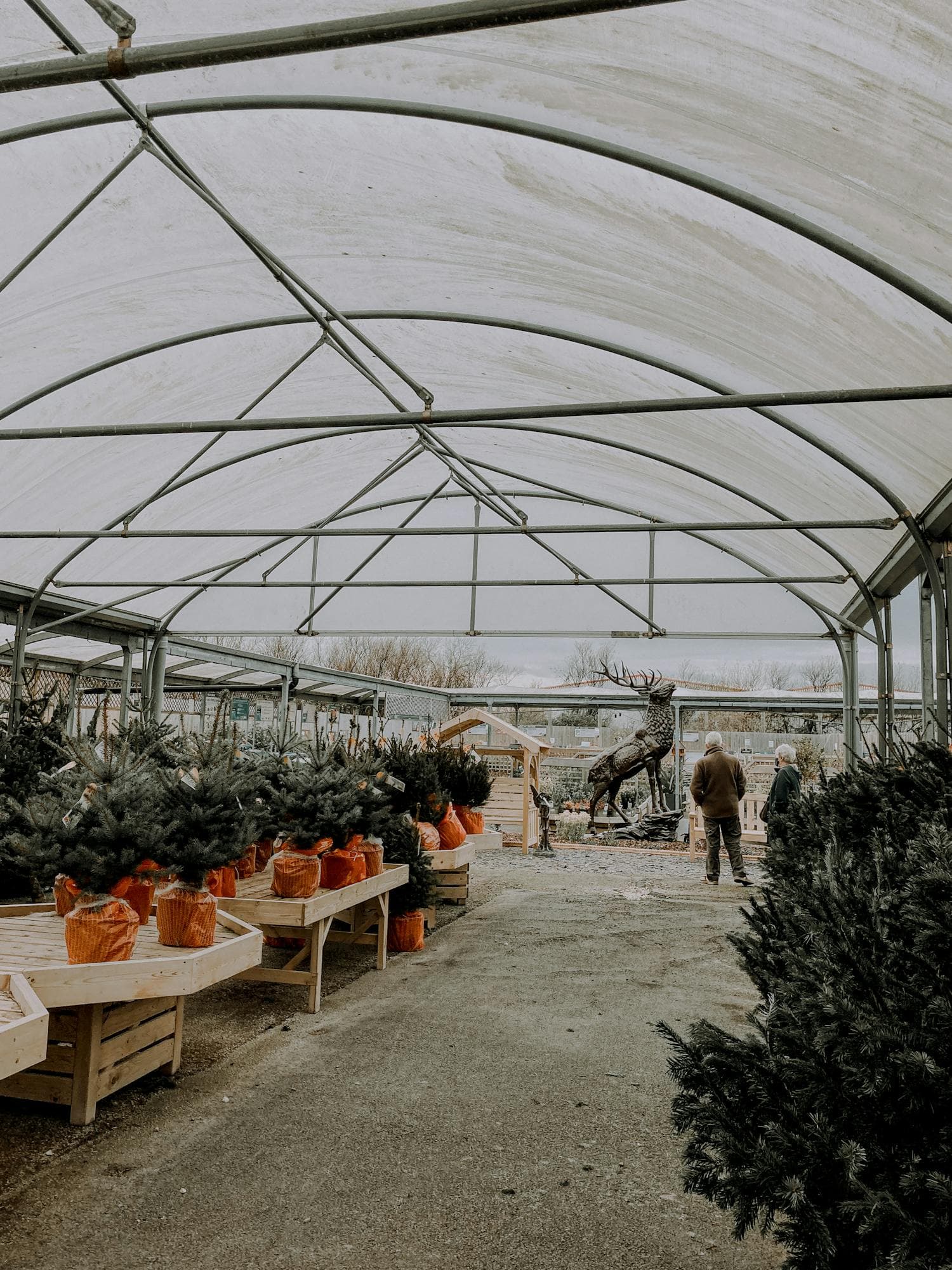
The species you pick changes everything about a real Christmas tree: how long it lasts, how strong it smells, which ornaments it can hold, and how much it costs.
There are roughly ten species you'll see at a tree lot in the United States. Most lots carry two or three of them. Knowing which is which (and which fits your room, your decor, and your patience for vacuuming needles) saves you from the most common mistake: buying whatever's tallest at the front of the lot and regretting it three weeks later.
This guide compares the ten most common Christmas tree species on the four things that actually matter: needle retention, scent, branch strength, and price. Plus the regional availability that often makes the choice for you.
If you haven't picked a tree height yet, start with the free Christmas Tree Size Calculator. It recommends the right height and shape for your ceiling and floor space before you head to the lot.
The quick-reference comparison table
If you want the answer fast: this is the at-a-glance summary. Detail on each species follows.
| Species | Needle retention | Scent | Branch strength | Typical 6–7' price | Best for |
|---|---|---|---|---|---|
| Fraser fir | Excellent (4–5 wks) | Mild evergreen | Strong | $90–$150 | Most homes, ornament-heavy decorating |
| Noble fir | Excellent (4–5 wks) | Light, fresh | Very strong | $100–$160 | Heavy ornaments, traditional looks |
| Balsam fir | Good (3–4 wks) | Strong, classic Christmas | Moderate | $60–$110 | Scent-first decorators, traditionalists |
| Douglas fir | Good (3 wks) | Sweet, mild | Soft | $60–$110 | Soft, full look; light ornaments |
| Concolor (white) fir | Good (3–4 wks) | Citrus-orange | Moderate | $80–$130 | Unusual scent, blue-green color |
| Scotch pine | Excellent (4+ wks) | Mild | Stiff | $50–$90 | Budget, holds ornaments well |
| White pine | Good (3–4 wks) | Faint | Very soft | $45–$85 | Soft layered look; light ornaments only |
| Blue spruce | Fair (2–3 wks) | Sharp, pungent | Stiff | $70–$120 | Striking blue color, formal decor |
| Norway spruce | Poor (1–2 wks) | Mild | Moderate | $45–$75 | Old-world tradition, late-buy budget |
| Leyland cypress | Good (3–4 wks) | None | Soft | $50–$90 | Allergy sufferers, Southern climates |
The four firs (the most common picks)
These four account for the majority of real Christmas trees sold in the U.S. If you've been to a tree lot in the last decade, you've probably been picking between them.
Fraser fir
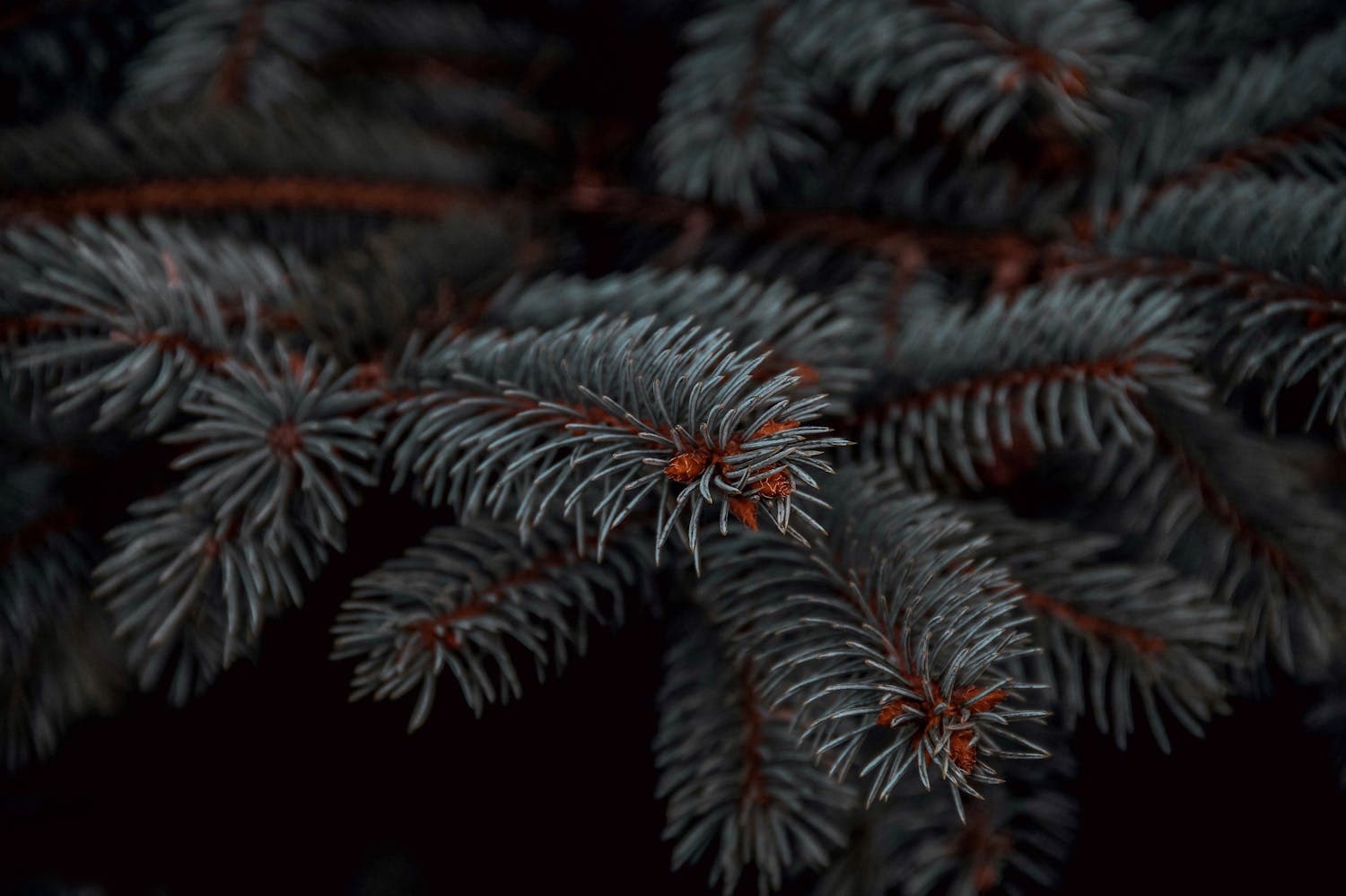
The bestseller, and for good reason. Fraser fir has short, dense, dark-green needles with a silvery underside, strong branches that hold heavy ornaments, and outstanding needle retention. A fresh-cut Fraser kept watered routinely lasts 4–5 weeks indoors. The scent is mild evergreen rather than the classic "Christmas tree" smell most people remember from childhood (that's Balsam).
Fraser firs are grown commercially across the Appalachian highlands of North Carolina, which supplies most of the country. Availability is excellent nationwide. The tradeoff is price: Fraser sits at the top of the range at most lots, typically $90–$150 for a 6–7 foot tree.
Pick Fraser if: you want the safest all-around choice, you have heavy ornaments, or you tend to put your tree up early and want it to last through New Year's.
Noble fir
The West Coast standard. Noble fir has stiff, blue-green needles arranged so the branches form distinct horizontal "tiers." Each branch can hold significant weight, making Nobles the go-to species for collectors with heavy glass or metal ornaments. Needle retention rivals Fraser at 4–5 weeks. Scent is light and fresh, less aromatic than Balsam but more present than Fraser.
Nobles are grown primarily in Oregon and Washington, so they're easy to find on the West Coast and increasingly available nationwide as shipping has improved. They're often the most expensive species at the lot, typically $100–$160 for a 6–7 foot tree.
Pick Noble if: you collect heavy ornaments, prefer the more open architectural branch structure, or want a tree that visibly holds its shape under decoration weight.
Balsam fir
The traditional Christmas tree scent comes from this species, and nothing else really competes. Balsam firs have noticeably longer needles than Fraser, a more open form, and the strongest aromatic punch of any common species. Cut a Balsam tree, walk into the room three days later, and the smell is unmistakable.
The tradeoff is branch strength and needle retention. Balsam branches are sturdier than Douglas but weaker than Fraser or Noble. Heavy ornaments will sag the limbs. Needle retention runs 3–4 weeks, a step below Fraser.
Balsams are grown primarily in the upper Midwest and New England, and they're the dominant species at lots in those regions. Pricing is moderate at $60–$110.
Pick Balsam if: the smell of a real Christmas tree matters more than anything else, you live in the Northeast or Upper Midwest, or you grew up with this species and the nostalgia is part of the point.
Douglas fir
The softest needles of any common species, arranged in a full, bushy shape that fills more visual space than its actual diameter. Douglas needles point in every direction along the branch (vs the flat sprays of true firs), giving the tree a dense, layered look. Scent is sweet and mild, often described as "fruity" by people who notice.
The catch: Douglas branches are soft. Heavy ornaments will pull them down hard. And needle retention is shorter than the true firs at about 3 weeks.
Doug firs are abundant in the Pacific Northwest where they're a native species, with strong availability nationwide. Pricing is moderate at $60–$110.
Pick Douglas if: you like a soft, full silhouette, your ornaments are light (bows, paper, lightweight glass), or you live in the Pacific Northwest where they're plentiful and affordable.
The other six worth a look
These show up at tree lots regionally and sometimes win out for specific uses.
Concolor (white) fir
The wild card. Concolor firs have long, soft, blue-green needles and a distinct citrus-orange scent when crushed, unmistakable and surprisingly pleasant. Branch strength is moderate; needle retention is good at 3–4 weeks. They're less common than the four major firs but worth seeking out if you've smelled one and want something different.
Concolor is grown primarily in the Rocky Mountain region. Pricing runs $80–$130.
Scotch pine
The pine that built the modern Christmas tree industry. Long stiff needles, very strong branches, and excellent needle retention. Scotch pine famously holds its needles even after the tree has dried out. The downside: those needles are pointy. Hanging ornaments takes more care, and stripping a Scotch pine after Christmas is the toughest cleanup of any species.
Pricing is friendly at $50–$90, and Scotch pine is widely available nationwide.
White pine
Long, very soft, blue-green needles arranged in delicate tufts. White pine has the most graceful, ethereal look of any species, but the branches are too soft for heavy ornaments. Bows, ribbons, lightweight glass, and string lights work; substantial ornaments don't.
White pine pricing is among the cheapest at $45–$85, common in the Eastern U.S.
Blue spruce (Colorado blue spruce)
The most striking color of any Christmas tree species: silvery blue-green needles that photograph beautifully and give the tree a formal, almost regal presence. Branches are stiff and hold ornaments well.
The catches are real, though: needles are sharp (gloves recommended for decorating), the scent is pungent and divisive (some love it, some find it too sharp), and needle retention is only 2–3 weeks.
Pricing runs $70–$120.
Norway spruce
The traditional European Christmas tree. Soft, deep-green needles arranged on a classic conical shape, and the species featured in many old-fashioned Christmas illustrations. The fatal flaw: needle retention is poor, often only 1–2 weeks before significant drop.
Norway spruce is the cheapest commonly-available species at $45–$75. The right pick only if you're buying mid-December for a quick 7–10 day display, not for a tree that goes up Thanksgiving weekend.
Leyland cypress
The Southern alternative. Leyland cypress is the dominant tree at lots in Florida, Georgia, the Carolinas, and Texas because it grows well in warmer climates where firs and spruces struggle. It has soft, scale-like foliage (no needles in the traditional sense), no scent, and produces no allergens, making it the species of choice for allergy sufferers.
Branches are soft, so light ornaments only. Pricing is moderate at $50–$90.
How to pick: the three-question shortcut
Most readers don't need to memorize ten species. Three questions narrow it to one or two:
1. How heavy are your ornaments?
- Heavy (collected glass, ceramic, metal): Noble fir, Fraser fir, Blue spruce, Scotch pine
- Mixed: Fraser fir, Balsam fir, Concolor fir
- Light only: Douglas fir, White pine, Leyland cypress
2. Does the smell matter?
- Strong classic Christmas scent: Balsam fir
- Distinct citrus scent: Concolor fir
- Mild but present: Fraser fir, Noble fir, Douglas fir, Scotch pine
- Sharp and divisive: Blue spruce
- Negligible: White pine, Leyland cypress
3. How early are you putting it up?
- Right after Thanksgiving (5+ weeks): Fraser fir, Noble fir, Scotch pine
- Early-to-mid December (3–4 weeks): Balsam, Douglas, Concolor, White pine
- Mid-late December only (1–2 weeks): Blue spruce, Norway spruce
Regional availability shapes the choice
Most U.S. tree lots carry the species their region grows, plus one or two shipped-in premium options. Rough regional defaults:
- New England & Upper Midwest: Balsam fir dominant, Fraser available
- Mid-Atlantic & Southeast (above Florida): Fraser fir dominant, Douglas + Scotch pine available
- Pacific Northwest: Noble fir, Douglas fir, Grand fir
- Mountain West: Concolor fir, Douglas fir, Blue spruce
- Texas, Florida, Deep South: Leyland cypress, Virginia pine, shipped-in Fraser
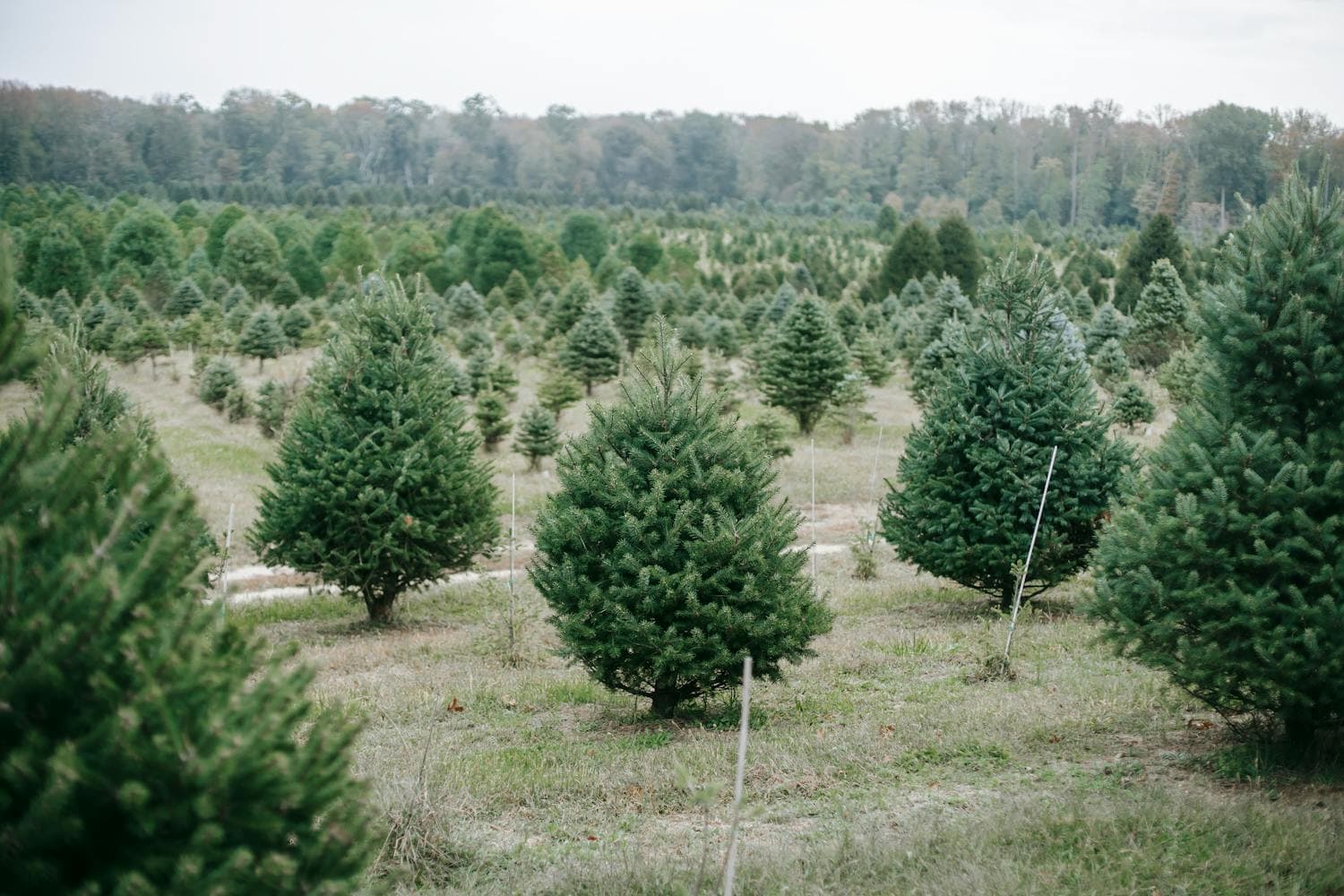
If you have a strong species preference but it's not local, pre-order from a tree farm in mid-November. Cut-your-own farms within a 2-hour drive are also worth investigating, most have one or two species you can't find at urban lots.
How to keep any tree fresh longer
Species matters, but so does care. The difference between a Fraser fir lasting 5 weeks vs 3 weeks is almost entirely about water and placement.
- Fresh cut at home. When you get the tree home, saw 1/2 inch off the bottom of the trunk before putting it in the stand. The cut surface seals over within an hour or two of cutting; a fresh cut lets the tree drink.
- Water within an hour. A dry trunk reseals fast. Get it into water within an hour of the fresh cut.
- A gallon a day, easily. A 6–7 foot tree drinks roughly a gallon of water per day for the first week. Check the stand twice daily.
- Away from heat sources. Fireplaces, heating vents, and direct sun will dry a tree out in days regardless of species.
- Cool nights help. Lowering the room temperature 5–10°F at night extends needle life noticeably.
A well-cared-for Norway spruce can outlast a neglected Fraser. Don't blame the species when the cause was the placement.
Real vs artificial: a brief reality check
Worth saying once: a quality artificial tree from a brand like Balsam Hill or King of Christmas costs $400–$800 once and lasts 8–12 years before lights fail or branches sag. A real cut tree at $80–$150 every year ends up costing more over a decade. The decision isn't usually about money. It's about whether the smell, ritual, and tradition of cutting a real tree are part of why you celebrate. That tradition is older and stranger than it looks, and our history of the Christmas tree traces it from pagan evergreens to the modern living room.
For the cost breakdown across all decorating categories (not just the tree), see How Much Does It Cost to Decorate Your House for Christmas?
For what it's worth, the country has already voted: about 83 percent of American households that put up a tree now use an artificial one, and that share climbs every year. We pulled the full picture, including how many real trees still get cut and what the farms behind them look like, in The American Christmas Tree, by the Numbers.
The honest answer for most homes
If you're not sure where to start, the boring-but-correct answer is Fraser fir. Strong needle retention, sturdy branches that hold whatever you hang, mild scent that doesn't overwhelm a small room, available almost everywhere, and pricing that (while not cheap) reflects the quality.
The tree most people remember is Balsam. The tree most people should buy is Fraser. If both options are at the lot and you're paralyzed by the choice: get the Balsam if the tree is going up December 10 and coming down December 26, get the Fraser if it's going up Thanksgiving weekend.
Either way, measure your ceiling first. A tree that's six inches too tall is a problem you discover at the worst possible moment.
Related guides:
- Christmas Tree Size Calculator: what height and shape fits your room
- How Much Does It Cost to Decorate Your House for Christmas?: full budget breakdown by category
- How to Plan Your Christmas Decorations: A Month-by-Month Checklist: when to buy your tree for the best selection
- Modern Minimalist Christmas Mantel Ideas: pairs well with a Noble fir or White pine
Share this guide
Frequently asked questions
What is the most popular Christmas tree type?
Which Christmas tree has the best needle retention?
What is the difference between Fraser fir and Balsam fir?
Which Christmas tree holds the heaviest ornaments?
Which Christmas tree smells the strongest?
How much does a real Christmas tree cost in 2026?
Keep reading
How to Pick a Real Christmas Tree (Without Regretting It in Week Two)
A complete guide to buying a fresh-cut Christmas tree: where to buy, the three freshness tests that take ten seconds each, how to measure your room before you go, what to check on the trunk, and the watering math that keeps a tree alive to Christmas.
The Best Christmas Tree Skirts and Collars to Buy (by Style)
How to choose a Christmas tree skirt or collar and what's actually worth buying, by style and situation. Skirt vs collar, the right diameter for your tree, materials that last, and picks for pets, real trees, and big trees.
The Best Artificial Christmas Trees to Buy (by Your Space and Budget)
How to choose an artificial Christmas tree and what's actually worth buying for your space and budget. PE vs PVC needles, pre-lit vs unlit, slim vs full, flocked vs unflocked, and tip count explained.
Prefer pen & paper?
The Christmas Planner
A 25-page printable kit covering budget, gifts, hosting, and decor, built on the same planning logic as this tool. Print it once, keep it in a binder, and reuse it every year.
Or grab 3 pages free first.
Decor that suits the home you have.
Seasonal decorating tips and the occasional new tool, straight to your inbox. One list, no spam.