Christmas / Ideas / Buying Guides
By Holiday Home Ideas Editorial Team · July 12, 2026
The Best Christmas Stockings to Buy (by Style)
How to choose Christmas stockings and what's actually worth buying, by style: classic velvet, cozy knit, farmhouse check, modern neutral, personalized, and pet. Plus how to hang them beautifully even with no mantel.
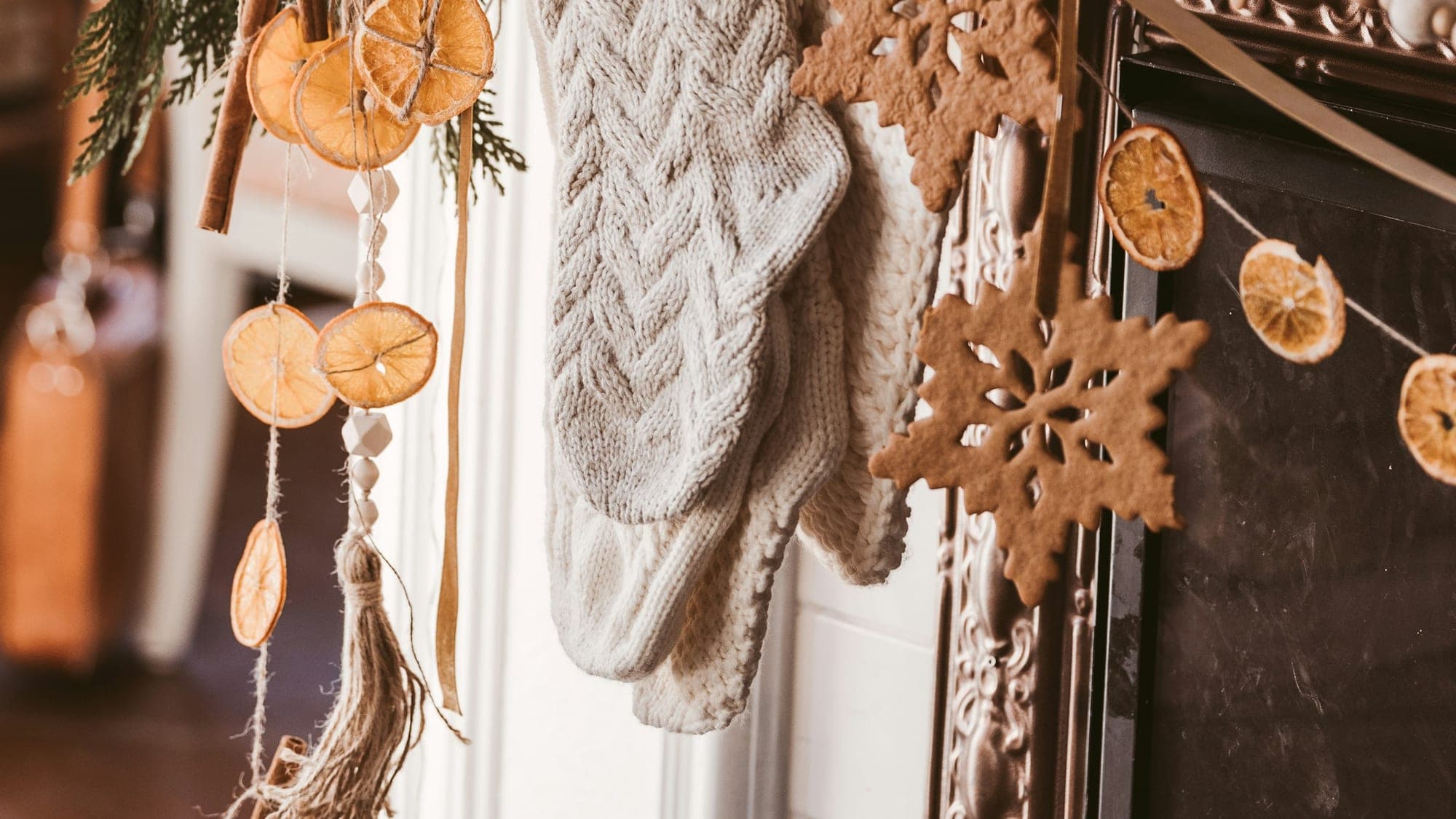
Stockings are the one Christmas decoration that has a job to do. Everything else on the mantel is there to look good; the stockings look good and hold the gifts, which means they're handled, stuffed, and photographed more than almost anything else in the room. They're also hung right at eye level, in the spot guests look first. And yet most people buy them the way they grab wrapping paper: one mismatched stocking at a time, off whatever's left at the store, until the family "set" is a jumble of sizes and materials that never quite looks intentional.
Getting stockings right isn't complicated, and it isn't expensive. It comes down to buying a coordinated group rather than one-offs, choosing a material that suits your room, sizing them big enough to actually fill, and, the part almost everyone forgets until December, having a real plan for how you'll hang them. Sort those out and a modest set of stockings does more for a mantel than a much pricier centerpiece.
This guide covers the handful of things that matter when you're buying, then exactly what's worth buying for each style: classic and traditional, cozy and Scandinavian, farmhouse and rustic, modern and neutral, personalized family sets, and pets. It finishes with the question that trips up half of buyers, which is what to do when you don't have a mantel at all.
Stockings are only half of a finished mantel. Once they're hung, the mantel styling guide covers the garland, candles, and layering that pull the whole ledge together.
The things that actually matter
Four decisions determine whether the row looks designed. Ignore them and every December means re-hanging a sagging, mismatched lineup.
1. A set, not one-offs
More than anything else, what separates a mantel that looks styled from one that looks accidental is whether the stockings hang together as a group. That doesn't mean identical. It means they share a material, a palette, or a common detail so the eye takes them in as belonging together. A matched set of four is the safest polished look. A group that's all cable-knit in different neutrals, or all in a red-green-cream palette with varied patterns, feels collected and personal. What to avoid is a truly random mix, one velvet, one felt, one novelty character, in three sizes, which always looks like leftovers.
2. Material
Material sets the whole tone, so match it to your room rather than to what's on sale.
- Velvet reads rich and traditional, and it catches warm light beautifully. The classic mantel choice.
- Chunky / cable knit is cozy and textural, at home in Scandinavian, modern-neutral, and hygge rooms.
- Buffalo check, ticking stripe, burlap, linen are the farmhouse and rustic workhorses.
- Needlepoint is the heirloom option: hand-detailed, built to last, and the kind of thing that gets passed down.
- Felt is cheap and fine for kids' craft stockings, but it pills and flattens fast, so skip it for the main display.
Whatever the fabric, look for a lined or backed stocking. Lining is what keeps it in shape when it's stuffed; an unlined one sags and creases the moment there's anything inside.
3. Personalized or blank
For families, a name on the cuff turns a decoration into a keepsake and ends the yearly "which one's mine" shuffle. The trade-offs are real: embroidery adds cost, adds shipping time (order by early December), and commits you to that name as the family grows. A flexible middle path is a coordinated set with removable name tags or letter charms, so you get the personal touch without embroidering it in forever.
4. Size
Decide up front whether these are for looks or for filling.
- 18–20 inches (cuff to toe) holds real stocking stuffers without straining. Buy this size for anyone who'll actually get gifts in theirs.
- 12–15 inches are purely decorative: charming on a small mantel or a bookshelf, or for pets, but a letdown to anyone expecting to find much inside.
Buying a family set? Keep them all the same size so the row hangs even, and size up rather than down if you tend to overfill.
5. How you'll hang them
This is the step people skip until Christmas Eve, and it's the one that most affects how the finished mantel looks. Decide before you buy whether you're using weighted mantel holders, a freestanding stand or ladder (if you have no mantel), or wall hooks, because that choice affects how many stockings fit and how heavy each can safely be when filled. A stuffed stocking weighs a surprising amount, and a holder rated only for an empty one will slide right off the shelf on Christmas morning. There's a whole section on the no-mantel case below.
What to buy, by style
Shop by your room and the "look for" spec, not by whatever tops the bestseller list. The velvet set that finishes a traditional mantel is the wrong call for a pared-back modern room.
Classic and traditional
A velvet stocking with a faux-fur or cuffed top, in cranberry, forest green, or deep ivory, is the timeless choice. Buy them as a matched set so the row reads clean, and look for a lined body that holds its shape when filled. This is the stocking that pairs naturally with a ribbon-and-garland mantel, and velvet is the exact materials trick our under-$50 expensive-look guide is built on.
Our pick
Red velvet stocking with plush cuff
Sold singly, so buy one per hook and the row comes out matched.
For a true heirloom, a needlepoint stocking is worth the splurge: hand-stitched, one per person, added to over the years. It's the one category where buying individually (rather than as a set) is the point.
Cozy and Scandinavian
A chunky cable-knit stocking in cream, oatmeal, grey, or a soft Fair Isle pattern suits a hygge, layered-texture room, the same warm, simple language as a Scandinavian tree. Knit brings texture to the mantel without competing with the rest of the decor.
Our pick
chunky cable-knit Christmas stocking, cream
Farmhouse and rustic
Buffalo check, ticking stripe, or burlap stockings finish a farmhouse room. As with all farmhouse decor, restraint is everything: pick one pattern and let it repeat, rather than mixing check and burlap and plaid on the same mantel.
Our pick
buffalo-check / ticking-stripe Christmas stocking
Modern and minimalist
A matte, solid-color knit in a single neutral (cream, charcoal, deep green) keeps a modern mantel calm. Skip glitter, appliqué, and busy patterns; here the stocking is a quiet texture, not a focal point.
Personalized family sets
For families and kids, a name-embroidered stocking is the keepsake move: everyone has their own, it looks custom, and it settles the annual debate. Order early, since personalization adds shipping time.
Our pick
personalized name Christmas stocking (embroidered cuff)
Pets
Yes, the dog and cat get one too, and a pet stocking (often smaller, sometimes paw-print or bone-detailed) is an easy, inexpensive add that completes the family lineup for photos.
Our pick
pet Christmas stocking (dog / cat)
No mantel? Where to hang them
Plenty of homes don't have a fireplace, and a stocking with nowhere to go is the most common stocking problem there is. You have three good solutions, and none of them look like a compromise.
A freestanding stocking stand or ladder. A weighted metal base with hooks (or a decorative wooden ladder) sits on the floor, a console, or a sideboard and needs no wall at all. It's the tidiest no-mantel answer and doubles as a real display piece. It's also the sturdiest option for heavy, filled stockings.
Adhesive wall hooks. Rated, removable wall hooks let you create a clean row on any flat wall and peel off in January without a mark, which makes them the renter's best friend. The one rule: buy hooks rated for the filled weight, not the empty stocking, and press them firmly a day before you hang anything.
Our pick
adhesive wall hooks for stockings (renter-safe)
A mantel you do have, done right. If you do have a mantel, skip the lightweight decorative hooks that tip over and buy weighted stocking holders, a set in one finish (brass, black, or pewter) so they match. Weight is the whole point: it's what keeps a stuffed stocking on the shelf.
Our pick
weighted mantel stocking holders, set of 4
Filling them
The stockings themselves are only half the fun. For what to actually put inside, our gift guide by who you're shopping for has stocking-stuffer ideas for every person on the list. A rule of thumb: a few small useful things, one little indulgence, and something to eat, sized to the stocking so it looks full without bulging.
What to avoid
- Buying one at a time. The fastest route to a mismatched mantel. Buy the set (or commit to a unifying material/palette) from the start.
- Too small to fill. A 12-inch decorative stocking disappoints anyone expecting gifts inside. Go 18–20 inches for real use.
- Unlined, thin stockings. They sag and crease the moment they're stuffed. Look for lining or a backing.
- Lightweight mantel hooks. They slide off under a filled stocking. Buy weighted holders.
- Felt for the main display. Fine for kids' crafts; it pills and flattens too fast for the mantel.
- Mixing three patterns. One pattern, repeated, always beats a clash of check, plaid, and burlap.
The stocking shortlist
Buy the set, not the one-offs. Choose a material that suits your room, size them big enough to fill (18–20 inches), and, before you buy, decide how you're hanging them, weighted holders on a mantel, or a stand, ladder, or rated wall hooks if you don't have one. Get those right and a modest lineup of stockings becomes the warmest, most-photographed corner of the house.
Then finish the rest of the room: the mantel guide styles the whole ledge above the stockings, the tree skirts and collars guide does the same job for the base of the tree, ornament ideas by style and the artificial trees guide handle the tree itself, and stocking ideas by style has more on arranging and decorating once yours are hung.
Share this guide
Frequently asked questions
What are the best Christmas stockings to buy?
Should Christmas stockings match?
Are personalized Christmas stockings worth it?
How do you hang stockings without a mantel?
What size Christmas stocking should I get?
What material is best for a Christmas stocking?
Keep reading
Christmas Stockings: How to Choose, Hang, and Fill Them (by Style)
The most personal piece of Christmas decor, done right. How to choose stockings by decorating style, the heirloom and needlepoint options worth keeping, how to hang them with or without a mantel, and what to actually put inside.
The Best Christmas Lights to Buy (by What You're Lighting)
How to choose Christmas lights and what's actually worth buying, by use case: roofline, trees, shrubs, the indoor tree, garland, and pathways. LED vs incandescent, bulb types, and color temperature explained.
The Best Christmas Movies of All Time (27 Picks, Sorted by Mood)
A curated, honest guide to the best Christmas movies: the undisputed classics, modern favorites, family picks, the funny ones, the romantic ones, and the underrated gems. Plus the eternal Die Hard question, settled.
Prefer pen & paper?
The Christmas Planner
A 25-page printable kit covering budget, gifts, hosting, and decor, built on the same planning logic as this tool. Print it once, keep it in a binder, and reuse it every year.
Or grab 3 pages free first.
Decor that suits the home you have.
Seasonal decorating tips and the occasional new tool, straight to your inbox. One list, no spam.