Christmas / Ideas / Buying Guides
By Brian · July 8, 2026
The Best Christmas Tree Skirts and Collars to Buy (by Style)
How to choose a Christmas tree skirt or collar and what's actually worth buying, by style and situation. Skirt vs collar, the right diameter for your tree, materials that last, and picks for pets, real trees, and big trees.
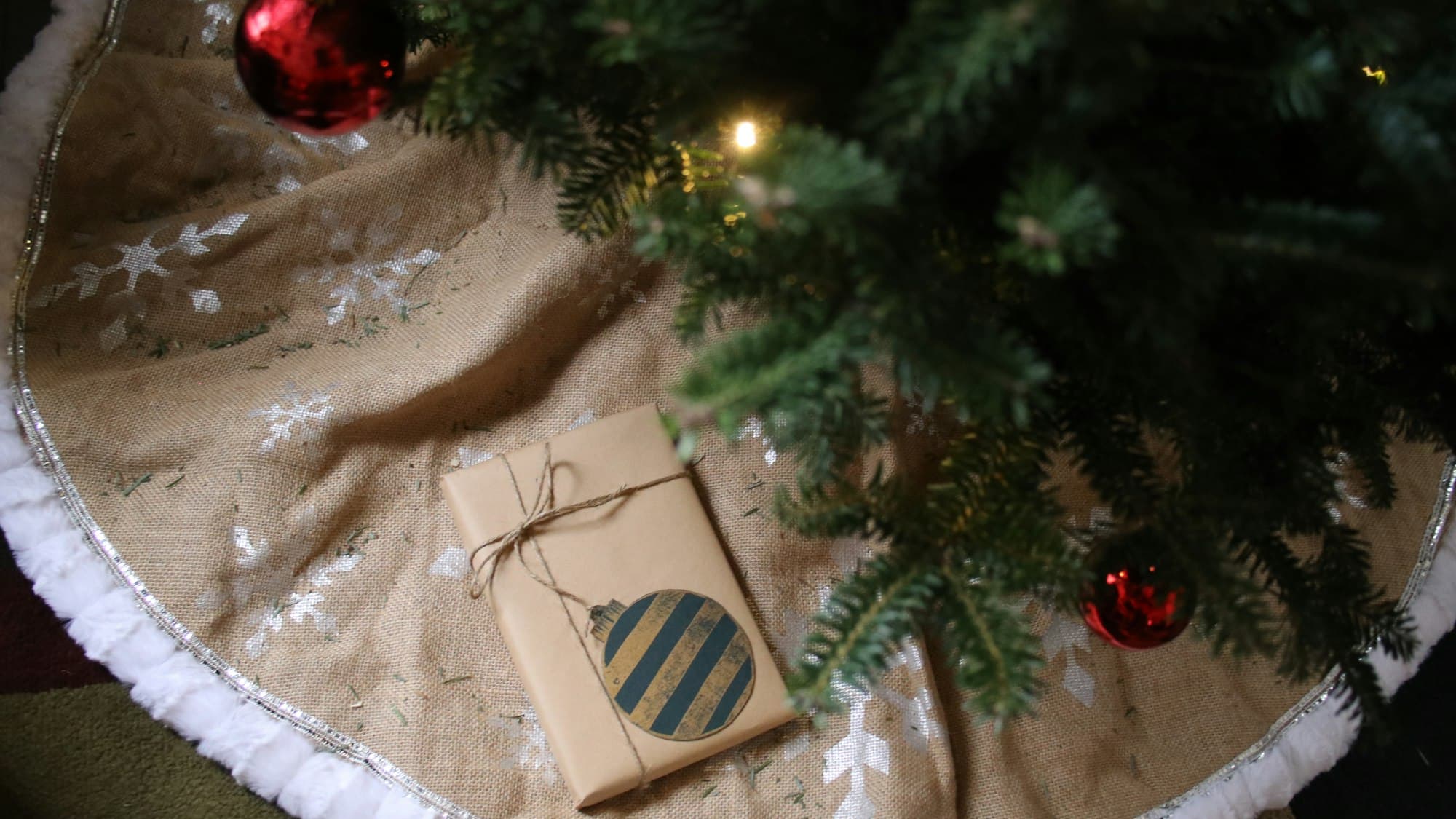
The base of the tree is the one part of your Christmas display almost everyone gets to eye level with, when they're setting down gifts, plugging in the lights, or sitting on the floor on Christmas morning. And yet it's the part most people leave as an afterthought: a bare metal stand, a plastic tree bag still poking out, or a limp felt skirt that's been bunched and flattened for six Decembers running.
Finishing the base well is one of the cheapest upgrades in the whole room. The right skirt or collar hides the stand, grounds the tree visually, and pulls the trunk into the rest of your decor instead of leaving it floating over bare floor. The choice really comes down to two questions: skirt or collar, and what style and size suits your tree and your household. Get those right and the base looks intentional instead of unfinished.
This guide covers the handful of things that actually matter when you're buying, then exactly what's worth buying for each style and situation: classic and traditional rooms, modern and minimalist ones, cozy and Scandinavian looks, farmhouse spaces, homes with pets and kids, real trees, and big trees.
Not sure what size tree you're working with in the first place? The free Christmas Tree Size Calculator matches a tree to your room by height and floor footprint, and the base width it lands on is exactly the number you'll use to size a skirt or collar here.
The things that actually matter
Nail these and the base looks finished. Skip them and you'll be nudging a bunched-up skirt back into place every time someone walks past.
1. Skirt vs. collar
This is the first fork, and it's mostly about look and household.
- Tree skirt. A flat, round piece of fabric that lays on the floor and wraps the base, opening on one side to fit around the trunk. Softer, cheaper, available in far more styles and colors, and the traditional choice. The trade-off: it can bunch, shift, and get pawed or kicked out of shape.
- Tree collar. A rigid or semi-rigid band (metal, woven rattan, wood) that stands up around the base like a short basket or bucket. Looks more built-in and modern, hides the stand more completely, and stays put all season. Costs a little more and comes in fewer decorative styles.
If you love a classic, layered, gift-piled look, lean skirt. If you want tidy, architectural, and low-fuss (especially with pets or kids), lean collar.
2. Size, the mistake almost everyone makes
People size a skirt to the tree's height, when what matters is the width of the assembled base. Measure the widest point of your tree and stand once it's set up, then buy to that:
- 30–36 inches for slim or tabletop trees.
- 48 inches for most standard 6–7.5 ft trees.
- 56–60 inches for full or 8–9 ft trees.
When in doubt, size up. A slightly large skirt drapes and pools; a too-small one leaves the stand and tree bag showing, which is the whole thing you're trying to hide. For a collar, the number that matters is the inner diameter: it has to clear your stand's legs, so measure the stand's footprint before you buy.
3. Material and build quality
Match the material to the room, but check the build regardless of style. The tell of a skirt that'll last is a proper backing and a bound or lined edge rather than raw-cut felt, which pills, sheds, and flattens after a season or two. For collars, welded or solidly woven construction beats thin bent wire that bends out of round. This is a piece you reuse for years, so a little more here pays off every December.
4. Real tree vs. artificial
If it's a real tree, you need daily access to the water reservoir. Choose a skirt that lays fully flat and open (most do) so you can lift a flap to top up, or a collar with an open top and room to pour. Avoid anything that cinches tightly shut around the trunk. If it's artificial, you have a free hand: pick purely on looks and how completely it hides the stand.
5. Pets and kids
A loose fabric skirt is an invitation for a cat to burrow under and a dog or toddler to drag around. A rigid collar stays composed and puts a small barrier around the trunk, the lowest branches, and (on real trees) the water. If you're set on the softer look of a skirt, a weighted or pinned one is the compromise.
What to buy, by style and situation
Buy for your room and your household rather than chasing one bestseller. The velvet skirt that finishes a traditional room is the wrong call for a house with a curious kitten.
Classic and traditional
A velvet tree skirt is the timeless pick: rich, deep-piled, and it photographs beautifully under warm lights. Cranberry, forest green, or a deep ivory all read classic. Look for a lined back and a bound edge so it drapes cleanly and holds up. This is the one that pairs naturally with a ribbon-and-bow tree and traditional ornaments.
Our pick
lined velvet Christmas tree skirt, 48-inch
Modern and minimalist
Skip the fabric and go with a woven or metal tree collar. A rattan or seagrass basket collar reads warm-modern; a matte galvanized or black metal one reads clean and architectural. Either hides the stand completely and gives the tree a deliberate, built-in base with no drape to fuss over.
Cozy and Scandinavian
A chunky knit or cable-knit skirt in cream, oatmeal, or grey suits a hygge, layered-textures room, the same soft-and-simple language as a Scandinavian tree. It brings warmth to the base without competing with pared-back decor.
Our pick
chunky cable-knit tree skirt, cream
Farmhouse and rustic
Burlap, linen, or a buffalo-check skirt finishes a farmhouse room, or step up to a galvanized metal collar / bucket for the industrial-rustic look that's become a farmhouse signature. The metal collar doubles as the most durable option here.
Our pick
buffalo-check / burlap farmhouse tree skirt
Homes with pets or kids
Go rigid collar, full stop. A sturdy metal or thick-woven collar stays put when it's nudged, discourages climbing and chewing on the lowest branches, and (on a real tree) walls off the water reservoir. It's the piece you'll be glad you bought by mid-December.
Our pick
sturdy metal tree collar (pet- and kid-resistant)
Real trees
Choose for watering access. A skirt that lays fully open lets you lift a flap to top up the stand, and a collar made for real trees has a taller wall and an open top you can pour into without soaking anything. Keep the fabric up off any standing water so it doesn't wick and stay damp all season.
Big and full trees
For an 8–9 ft or extra-full tree, a standard 48-inch skirt disappears under the branches. Go 56–60 inches so the finished base reads in proportion to the tree above it. Measure the widest point of the assembled base and buy to it, sizing up rather than down.
What to avoid
- Sizing to tree height instead of base width. The number that matters is how wide the assembled base is. Measure it.
- Buying too small. A too-small skirt leaves the stand and tree bag showing, which defeats the point. Size up.
- Raw-cut felt skirts. They pill, shed, and flatten after a season. Look for a backing and a bound or lined edge.
- A cinch-shut skirt on a real tree. You need to reach the water. Choose an open-lay skirt or an open-top collar.
- A loose skirt in a house with a cat. It will end up under the tree in a heap. Use a collar or weight it down.
- A collar that doesn't clear the stand. Check the inner diameter against your stand's footprint before buying.
Finishing the base, in short
Finish the base and the whole tree looks intentional. Decide skirt or collar first (soft and traditional vs. tidy and built-in, with a collar the smart call for pets and kids), size it to the assembled base width and size up when unsure, and buy the material that suits your room with a proper edge or solid construction so it lasts. For a real tree, keep watering access in mind.
Then dress the rest of the tree to match: the artificial trees buying guide covers the tree itself, the lights buying guide and ornament ideas by style handle what goes on it, the ribbon and bows guide adds the cascades, the wreaths and garland guide carries the greenery through the rest of the room, and stocking ideas by style finish the mantel nearby.
Share this guide
Frequently asked questions
What's the difference between a tree skirt and a tree collar?
What size Christmas tree skirt do I need?
Are tree collars better than tree skirts for pets and kids?
Can you use a tree skirt with a real Christmas tree?
What material is best for a Christmas tree skirt?
How do you keep a tree skirt from looking messy?
Keep reading
The Best Artificial Christmas Trees to Buy (by Your Space and Budget)
How to choose an artificial Christmas tree and what's actually worth buying for your space and budget. PE vs PVC needles, pre-lit vs unlit, slim vs full, flocked vs unflocked, and tip count explained.
How to Pick a Real Christmas Tree (Without Regretting It in Week Two)
A complete guide to buying a fresh-cut Christmas tree: where to buy, the three freshness tests that take ten seconds each, how to measure your room before you go, what to check on the trunk, and the watering math that keeps a tree alive to Christmas.
The History of the Christmas Tree (from Pagan Evergreens to Pre-Lit)
How the Christmas tree really came to be: ancient evergreen worship, the medieval Paradise tree, the 16th-century German invention, the Victorian engraving that made it fashionable, and how it lit up and went artificial.
Prefer pen & paper?
The Christmas Planner
A 25-page printable kit covering budget, gifts, hosting, and decor, built on the same planning logic as this tool. Print it once, keep it in a binder, and reuse it every year.
Or grab 3 pages free first.
Decor that suits the home you have.
Seasonal decorating tips and the occasional new tool, straight to your inbox. One list, no spam.