Christmas / Ideas / Buying Guides
By Holiday Home Ideas Editorial Team · June 8, 2026
The Best Artificial Christmas Trees to Buy (by Your Space and Budget)
How to choose an artificial Christmas tree and what's actually worth buying for your space and budget. PE vs PVC needles, pre-lit vs unlit, slim vs full, flocked vs unflocked, and tip count explained.
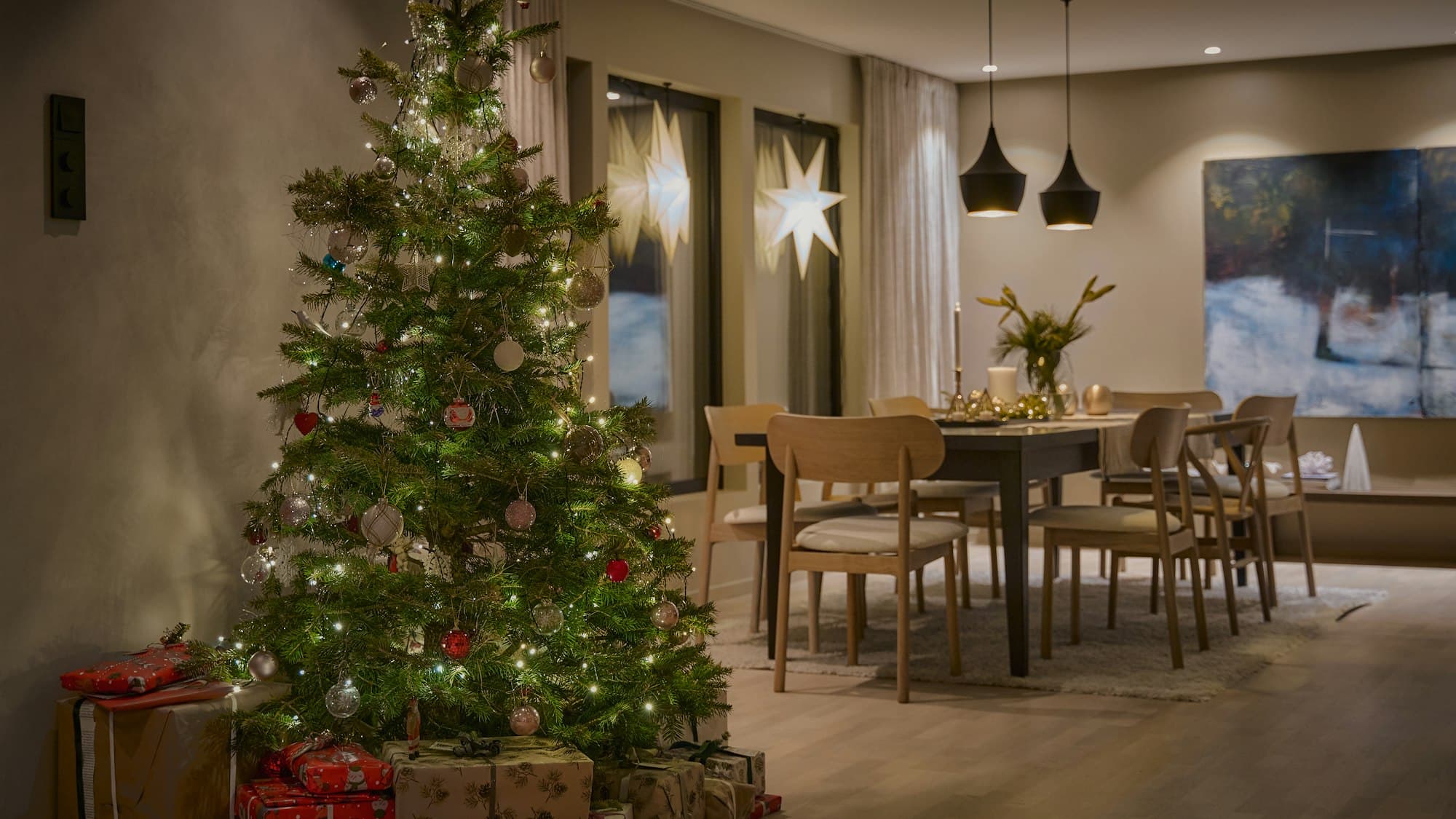
An artificial Christmas tree is the single biggest, longest-lived decorating purchase you'll make. It anchors the room for the entire month, it's the first thing guests see, and a good one lasts 5 to 10 years, which means the choice you make this year is one you'll live with for the better part of a decade. And yet most people buy a tree the way they'd buy paper towels: by the price tag, in a hurry, off whatever's stacked highest at the warehouse club. Then they spend ten Decembers with a tree that's too sparse, too wide for the room, or lit in a cold blue-white they never wanted.
The good news is that a great artificial tree isn't really about spending the most. It's about matching the right tree to your actual ceiling, your actual floor space, and how much realism you care about, and knowing the four or five specs that separate a tree that looks expensive from one that looks plastic. Get those right and a mid-priced tree can look better than someone else's splurge. Artificial trees themselves have a longer history than most people realize, from Victorian goose-feather trees to the aluminum craze of the 1960s, which our history of the Christmas tree traces.
This guide covers what actually matters when you're choosing an artificial Christmas tree, then exactly what's worth buying for each kind of space and budget: small apartment, standard living room, high-ceiling statement, the most realistic money can buy, and the best value.
Before anything else, figure out what size your room can take with the free Christmas Tree Size Calculator, height clearance and floor footprint both, then come back here for what to buy. Buying the wrong size is the one tree mistake you can't decorate your way out of.
The things that actually matter
Nail these and the rest is easy. Skip them and you'll be looking at the same regret every December.
1. Needle material: PE vs PVC
This is the realism fork. Artificial trees are made from two materials, and most trees mix them.
- PVC. Flat needles cut from plastic film, the classic "fake tree" look. Cheaper, lighter, and perfectly fine from a distance, but up close it reads as obviously artificial.
- PE (polyethylene). Needles molded from real branches, so they're rounded and three-dimensional. This is what "feel real" and "true needle" trees use, and it's what makes a tree look convincing close up.
The most realistic trees use a smart combination: mostly-PE tips on the outer, visible branches where your eye lands, with cheaper PVC fill deeper inside near the pole where no one looks. A pure-PVC tree is the budget pick; a high-PE-percentage tree is the realistic one. When a listing brags about being "PE/feel-real," check what percentage of tips are PE. The good ones tell you.
2. Pre-lit vs unlit
A real convenience-versus-control decision.
Pre-lit trees come with lights factory-installed and evenly spaced. You assemble, plug in, done. No annual battle with tangled strands. The trade-offs: if a built-in section fails (more likely on cheaper trees), it's fiddlier to fix than swapping your own strand, and you're committed to whatever color temperature it shipped with. If you go pre-lit, insist on warm white unless you specifically want color, and favor trees with individually-wired bulbs (so one bulb out doesn't kill the section).
Unlit trees cost less, have nothing to electrically fail, last longer, and let you choose, layer, and replace your own lights. The cost is the yearly effort of stringing them.
For most people, a quality pre-lit warm-white tree is worth the convenience. If you like changing your look year to year, or you want maximum longevity, buy unlit and add your own. (Our Christmas lights buying guide covers exactly which mini lights to use on a tree.)
3. Size and shape: height and width
Everyone checks height. Almost no one checks width, and width is what ruins rooms.
- Height: measure your ceiling and subtract about 12 inches for the topper and the stand. An 8-foot ceiling comfortably takes a 7 to 7.5-foot tree. Going right up to the ceiling makes the room feel cramped and leaves no room for a star or angel.
- Width / profile: a 7.5-foot full tree can be 55-65 inches wide at the base, more than five feet of floor it eats. The same height in a slim profile is far narrower, and a pencil tree narrower still. Match the profile to your floor space, not just the height.
This is the single most common and most expensive tree mistake, and it's the one the Tree Size Calculator exists to prevent. It sizes both the height clearance and the floor footprint to your room.
4. Tip count and branch construction
Tip count, the total number of branch tips, is the best single proxy for how full and realistic a tree looks. A sparse tree might have 1,000-1,500 tips on a 7.5-foot frame; a lush, premium one has 2,500-4,500+. More tips means denser foliage, fewer gaps showing the pole, and a better silhouette (at the cost of weight, storage bulk, and price). Comparing two same-height, same-price trees, the higher tip count is usually the better tree.
Branch construction matters for how long it survives:
- Hinged branches (folded down, swing into place) are far better than hook-on (you insert each branch by color-coded tip): faster setup, better shape retention, and the standard on any decent tree now.
- Metal hinges and heavier-gauge branch wire outlast plastic. This is what separates a tree that's still full in year eight from one that sags by year three.
5. Flocked vs unflocked
Flocked trees are coated to look snow-covered. The upside: they're striking and need almost no ornaments, since the snow is the decoration. The downsides are real: quality flocking still sheds some "snow" the first season and during setup, it's messier to store, and the look is a strong commitment. If you love the wintry aesthetic and don't mind a little cleanup, flocked is worth it. If you reinvent your theme each year, plain green is more flexible.
6. The stand
Easy to overlook, annoying when it's bad. Look for a sturdy metal stand with a wide footprint (a top-heavy tree on a flimsy base is a hazard with kids and pets), and ideally a foot-pedal or cord-management feature on pre-lit models. A solid stand also stores better and lasts the life of the tree.
What to buy, by your space and budget
Here's the part the warehouse-club endcap can't tell you: the best tree depends entirely on your room and what you care about. Buy by category and the "look for" spec rather than chasing one model. Trees get renamed and re-released constantly, but "7.5-foot full PE pre-lit warm white" is a spec that always delivers.
Small apartment or tight corner
Go slim or pencil profile, PE tips, 6 to 7 feet. A slim tree gives you real height and presence without surrendering five feet of floor. Pre-lit warm white saves space-constrained storage hassle too. (For the whole small-space approach, see small-apartment Christmas decorating.)
Our pick
slim flocked pencil Christmas tree, 6 ft
Standard living room
The sweet spot for most homes: a 7.5-foot full PE pre-lit tree in warm white, with a tip count in the 2,000+ range. Full enough to look lush, sized for an 8-foot ceiling, and the most popular configuration for a reason.
Our pick
7.5 ft full pre-lit PE Christmas tree, warm white
High ceiling or statement room
If you've got the height and want the wow, go 9 feet or taller, full profile, high tip count. At this size, tip count and a sturdy stand matter most. A sparse 9-footer looks worse than a lush 7.5. Budget accordingly; this is the splurge category.
The most realistic (budget no object)
For maximum realism, buy a high-PE-percentage "feel real" tree with a very high tip count and a realistic multi-tone green. These run several hundred dollars and up, but they're the trees people mistake for real, and amortized over 5-10 years, the per-season cost is modest.
Best value
The smart-money pick: a mixed PE/PVC 7.5-foot tree, with PE on the outer branches for realism where it shows and PVC fill inside to keep the price down. You get most of the realistic look for a fraction of the premium price.
The snowy look
If you want winter-wonderland, buy a flocked full tree and keep ornaments minimal. Favor quality flocking that's well-adhered to reduce shedding.
Tabletop or second tree
For an entryway, a kid's room, or a second tree, a 2 to 4-foot pre-lit tabletop tree adds the holiday touch without floor space. A great low-commitment add-on.
Our pick
2-4 ft pre-lit tabletop Christmas tree
What to avoid
The mistakes that turn into a decade of mild regret:
- Buying on height alone. The width is what overwhelms a room. Measure your floor footprint, not just your ceiling.
- Chasing the lowest price on a pure-PVC tree. It looks fine in the box and obviously fake in the room. A mid-priced PE-blend tree is a far better long-run value.
- Ignoring tip count. Two trees at the same height and price can look completely different; the sparse one shows its pole and disappoints. Compare the numbers.
- Cool-white pre-lit lights you didn't choose. Many budget pre-lit trees ship in a cold blue-white. Confirm warm white before you buy, or buy unlit.
- Hook-on branches and plastic hinges. A pain to set up and the first thing to sag and fail. Buy hinged with metal hinges.
- Skipping the storage bag. A crushed, damp-stored tree ages fast. Budget for a proper bag or box.
Frequently asked questions
What is the most realistic artificial Christmas tree?
The most realistic trees use molded PE (polyethylene) tips, often called "feel real" or "true needle," which are cast from real branches for rounded, 3D needles instead of flat plastic. The most convincing combine a majority of PE tips on the visible outer branches with cheaper PVC fill inside, plus a high tip count and a realistic mix of greens. Expect to pay a premium, but it's a one-time buy you'll use for 5-10 years.
Are pre-lit or unlit artificial Christmas trees better?
Pre-lit saves real time and the lights are evenly placed, but a failed built-in section is harder to fix and you're locked into one color temperature. Unlit costs less, lasts longer, and lets you choose and replace your own lights. For most people a quality pre-lit tree in warm white is worth the convenience; for maximum flexibility or longevity, go unlit and add your own.
What size artificial Christmas tree should I get?
Measure your ceiling and subtract about 12 inches for the topper and stand, and an 8-foot ceiling fits a 7 to 7.5-foot tree. Width matters just as much: a "full" tree can be 55-65 inches wide and dominate a small room, while a "slim" or "pencil" tree of the same height takes far less floor. Measure both, or use the free Christmas Tree Size Calculator.
What does tip count mean?
Tip count is the total number of branch tips, and it's the best single proxy for fullness and realism. A sparse tree has 1,000-1,500 tips on a 7.5-foot frame; a premium one has 2,500-4,500+. Comparing two trees of the same height and price, the higher tip count is usually the better tree.
Is a flocked Christmas tree worth it?
A flocked tree looks striking and needs almost no ornaments, since the snow is the decoration. The downsides: some shedding (especially the first season), messier storage, and a stronger aesthetic commitment. Worth it if you love the snowy look and don't mind a little cleanup; skip it if you change themes year to year.
How long do artificial Christmas trees last?
Roughly 5-10 years of normal use, longer for well-made PE trees with metal hinges. Lifespan depends mostly on build quality and storage: heavier branch wire, metal hinges, and a proper storage bag add years, while bargain trees sag and shed sooner.
Buy it like a decade-long purchase
Because that's what it is. Measure the space first (height and width), decide how much realism you care about, then pick the spec that fits: PE tips for realism, a high tip count for fullness, warm-white pre-lit for convenience, hinged metal branches for longevity. Get those right and the price almost doesn't matter; a well-chosen mid-range tree outshines a careless splurge.
A few next steps to get it right:
- Christmas Tree Size Calculator: match a tree to your ceiling height and floor space before you buy.
- Christmas Tree Types Compared: real vs. artificial and the trade-offs, if you're still deciding.
- The Best Christmas Lights to Buy: if you go unlit (or want to add to a pre-lit tree), exactly which mini lights to use.
- The Best Christmas Tree Skirts & Collars: finish the base once the tree's up, skirt vs. collar and how to size it.
- Christmas Decoration Budget Planner: fit the tree into the season's overall spend.
Share this guide
Frequently asked questions
What is the most realistic artificial Christmas tree?
Are pre-lit or unlit artificial Christmas trees better?
What size artificial Christmas tree should I get?
What does tip count mean on an artificial Christmas tree?
Is a flocked Christmas tree worth it?
How long do artificial Christmas trees last?
Keep reading
The Best Christmas Tree Skirts and Collars to Buy (by Style)
How to choose a Christmas tree skirt or collar and what's actually worth buying, by style and situation. Skirt vs collar, the right diameter for your tree, materials that last, and picks for pets, real trees, and big trees.
How to Pick a Real Christmas Tree (Without Regretting It in Week Two)
A complete guide to buying a fresh-cut Christmas tree: where to buy, the three freshness tests that take ten seconds each, how to measure your room before you go, what to check on the trunk, and the watering math that keeps a tree alive to Christmas.
The History of the Christmas Tree (from Pagan Evergreens to Pre-Lit)
How the Christmas tree really came to be: ancient evergreen worship, the medieval Paradise tree, the 16th-century German invention, the Victorian engraving that made it fashionable, and how it lit up and went artificial.
Prefer pen & paper?
The Christmas Planner
A 25-page printable kit covering budget, gifts, hosting, and decor, built on the same planning logic as this tool. Print it once, keep it in a binder, and reuse it every year.
Or grab 3 pages free first.
Decor that suits the home you have.
Seasonal decorating tips and the occasional new tool, straight to your inbox. One list, no spam.