Christmas / Ideas / Buying Guides
By Holiday Home Ideas Editorial Team · June 8, 2026
The Best Christmas Lights to Buy (by What You're Lighting)
How to choose Christmas lights and what's actually worth buying, by use case: roofline, trees, shrubs, the indoor tree, garland, and pathways. LED vs incandescent, bulb types, and color temperature explained.
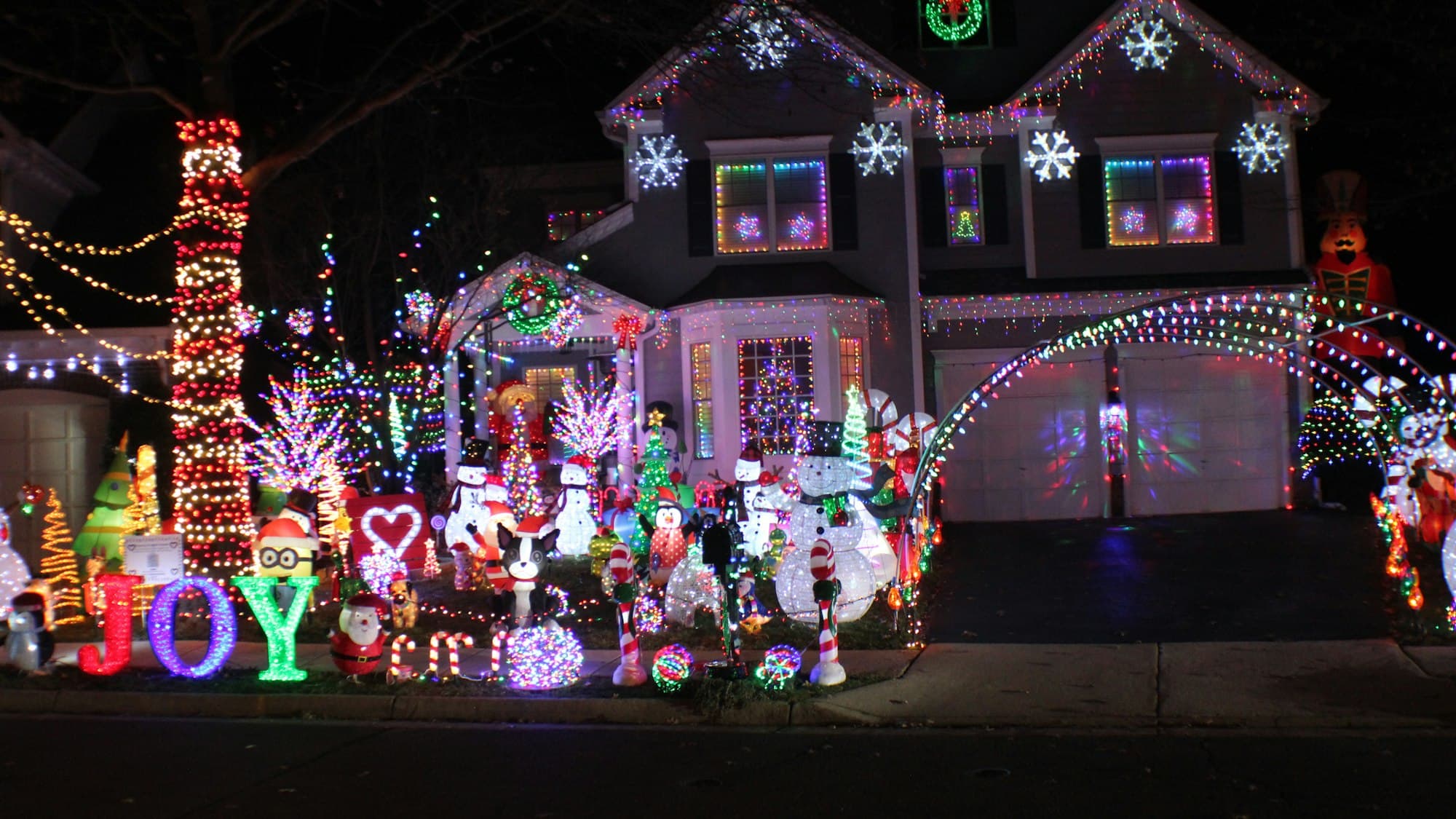
Most people buy Christmas lights the same way: grab whatever's stacked on the endcap at the hardware store, take it home, and discover halfway up the roofline that they're three strands short, or that the "white" lights they bought for the porch are a cooler blue than the "white" lights already on the tree. Lights are the single highest-impact exterior decorating decision you'll make all season. They're also the most-botched.
The problem isn't the lights. It's that the buying decision has five variables most people never think about until they're standing on a ladder in the cold, and the endcap doesn't explain any of them. A little planning up front, knowing what to buy for each part of the house, is the difference between a display that looks intentional and one that looks like it was assembled in a panic on December 1st.
This guide does two things. First, it covers the five things that actually matter when you're choosing Christmas lights, so you can buy confidently instead of guessing. Then it walks through exactly what's worth buying for each part of the house (roofline, yard trees, shrubs, the indoor tree, garland, and pathways) because the right light for one job is the wrong light for another.
First, figure out how many lights you need with the free Christmas Light Calculator. Measure your roofline and trees, get exact counts, then come back here for what to buy. Buying the right number once beats a second trip to a sold-out shelf.
The 5 things that actually matter
Get these five right and every other decision gets easier. Get them wrong and no amount of money spent will make the display look good.
1. LED vs incandescent
This is the first fork in the road, and for almost everyone the answer is LED.
LED Christmas lights use roughly 85% less power than incandescent, which matters more than it sounds. If you're running a few hundred feet of lights for a couple of months, the difference shows up on the bill. They run cool to the touch, which makes them dramatically safer on a real, drying-out Christmas tree and against siding. They last 8-10 times longer, so a quality set bought this year should outlive several rounds of incandescent replacements. And because they draw so little current, you can safely run far more LED strands end-to-end on a single circuit than you ever could with incandescent, which is exactly what you want on a long roofline.
The honest case for incandescent is aesthetic, not practical. Some people genuinely prefer the warmer, slightly irregular glow of old-style bulbs, the way the color sits a touch warmer and each bulb varies a hair from the next. If that specific look is what you're after, incandescent still delivers it. But modern warm-white LEDs have closed most of that gap, and for the roofline, the yard, and a real tree, LED is the clear default.
Curious what your display actually costs to run? The free Christmas Lights Electricity Cost Calculator shows your season's cost, and puts a dollar figure on the LED-vs-incandescent difference for your exact setup.
2. Bulb type: match the bulb to the job
"Christmas lights" isn't one product. The bulb shape determines what a set is good for, and using the wrong shape is why some displays look off even when everything's lit.
- C9: the large, bold bulbs (about the size of a nightlight). The classic choice for outlining a roofline so the shape of the house reads from the street. One per foot, evenly spaced, is the look.
- C7: a smaller version of the same shape. Good for windows, smaller rooflines, and indoor accents where C9 would feel oversized.
- Mini / fairy lights: the small bulbs, the workhorses. Use them to wrap tree trunks and branches, fill shrubs, run along garland, and light the indoor tree, where you want many small points of light, not a few big ones.
- Net lights: a mesh of mini lights you drape over a shrub or bush to light it evenly in seconds instead of weaving a strand by hand.
- Icicle lights: strands with hanging drops, made to line eaves and gutters with a dripping effect.
The shortcut: C9 for roof outlines, mini for anything you're wrapping or filling, net for shrubs, icicle for eaves. Our Christmas Light Calculator explains the spacing densities for each of these if you want to dial in the count.
3. Color temperature, and the one rule that matters most
White is not one color. Christmas lights come in:
- Warm white (around 2700K): the safe default. It reads like candlelight and old incandescent bulbs, feels cozy, and flatters brick, wood, and warm-toned siding.
- Cool / pure white: crisp and modern, sometimes sold as "bright white." It looks great on contemporary homes but can read clinical or faintly blue against a traditional house.
- Multicolor: the nostalgic, playful option; a deliberate choice rather than a default.
There's no wrong answer here. Warm and cool white are both legitimate looks. But there is a cardinal rule: commit to one. The single most common exterior lighting mistake is mixing warm and cool whites in the same display, a warm-white roofline next to a cool-white tree next to a warm-white wreath. Each set looks fine in the box; together they make the whole house look mismatched. Pick your white, buy everything in that white, and check the box every time, because manufacturers label inconsistently.
4. Wire color: the detail that separates "pro" from "obviously DIY"
Almost nobody thinks about wire color, which is exactly why getting it right makes a display look professional. The rule is simple: the wire should disappear into whatever it's attached to.
- Green wire on greenery: wrapped trees, shrubs, garland, wreaths.
- White or brown wire on the house, running along white trim, gutters, or wood.
- Black wire for modern installs and anything at ground level.
A warm-white strand on green wire wrapped around a bare winter tree looks like floating light. The same strand on white wire looks like someone stapled a cord to a tree. It's a small thing that does a lot of work.
5. Consumer vs commercial grade
The lights the pros hang aren't the same ones on the big-box shelf. Commercial-grade sets use heavier-gauge (often coaxial) wire, replaceable bulbs, and better-sealed sockets, so they survive weather and seasons of being put up and taken down. They cost more and are usually sold by the spool with separate bulbs rather than as a finished strand.
For most homeowners, quality consumer-grade LED is plenty for the tree and the shrubs. Commercial-grade earns its price on the roofline, the run that's hardest to reach, takes the most abuse from wind and ice, and that you least want to re-climb a ladder to fix mid-December. If there's one place to spend up, that's it.
This is also the natural point where a lot of people decide the roofline isn't a DIY job at all. Professional installers supply and hang commercial-grade lights, store them in the off-season, and take the ladder work off your hands entirely.
What to buy, by what you're lighting
Here's the part the endcap never explains: the best light genuinely depends on where it's going. These are the category-and-spec recommendations for each part of the house. Buy by category and the "look for" spec rather than chasing one specific model. Products get discontinued, but a "warm-white C9 LED, one-per-foot" never goes out of style.
Roofline
The defining line of the whole display. Use warm-white C9 LED bulbs, spaced one per foot, on a wire color that matches your trim. This is the spot to consider commercial-grade. It's the highest, hardest run to service, and the one most exposed to weather. Buy enough to do the full perimeter in one color temperature; running short here is the mistake that ruins the look.
Our pick
warm-white C9 LED roofline set
Measure your roofline first. The Christmas Light Calculator turns your linear footage into an exact C9 count so you buy the right amount once.
Yard trees and wrapping
For wrapping trunks and branches, use warm-white mini LED lights on green wire, in long runs so you're not joining a dozen short strands. Green wire is non-negotiable here. It's what makes the light look like it's floating in the branches rather than taped on. Plan on 100-200 lights per vertical foot of trunk and major limbs for a full, dense wrap; sparse wrapping looks unfinished.
Our pick
warm-white mini LED, green wire, long run
Shrubs and bushes
You have two options. Net lights drape over a shrub and light it evenly in seconds, by far the fastest approach, and the right call for a row of foundation bushes. Mini lights give you more control if you want to shape the light, but take much longer. For most people, net lights on shrubs are the biggest time-saver in the whole display.
Our pick
warm-white LED net lights
The indoor tree
Use warm-white mini LED lights, and count by tree height: roughly 100 lights per foot for a full look (so 700-800 on a 7-8 foot tree, more if you like it dense). Warm white is almost always right indoors; it makes ornaments and tinsel glow rather than washing them out. If you run lights and a topper or other plug-in decor, an LED set's low draw means you won't trip a strand limit.
Our pick
warm-white mini LED indoor tree lights
Not sure how many strands your tree needs? The Christmas Light Calculator sizes it by tree height.
Mantel and garland
For garland on a mantel, banister, or doorway, use plug-in or battery micro-LED on bendable wire, the very fine "fairy" wire that tucks invisibly into greenery. Battery sets are worth it where there's no nearby outlet (a banister, a centerpiece), so you're not running a visible cord. Warm white, every time, to match the candle-glow of an indoor display.
Our pick
warm-white micro-LED fairy lights, battery-powered, 12-pack
For the rest of the mantel styling around those lights, our Christmas mantel guide by house style covers how to compose the whole ledge.
Pathways and walkways
To light a path, use low-voltage stake lights or pathway markers rather than trying to run string lights along the ground. They're made for it: staked into the ground, evenly spaced, and rated for foot-level exposure. A lit walkway is one of the highest-impact, lowest-effort touches in an exterior display.
Our pick
low-voltage LED pathway / stake lights
Smart lights
If you want app- and voice-controlled lights you can program (color changes, schedules, scenes), smart Christmas lights (the Govee- and Twinkly-style permanent or seasonal sets) deliver that, at a real premium over standard strings. They're a great fit for the tech-forward and for a tree or single feature you want to reprogram on a whim, but they're overkill (and over-budget) for simply outlining a roof in warm white. Treat them as a feature splurge, not the backbone of the display.
Our pick
smart / app-controlled Christmas lights (Govee, Twinkly)
What to avoid
The mistakes that quietly ruin otherwise good displays:
- Mixing color temperatures. The cardinal sin. One warm-white set next to one cool-white set makes the whole house look mismatched. Pick one white and check every box.
- Buying too few. Running short mid-install means a second trip, often to a picked-over shelf, and a mismatched top-up set. Run the calculator before you buy.
- Cheap, thin-gauge sets. The bargain strands fail after a season or two, and they fail in the worst place: the middle of a run you've already hung. Buying a better set once is cheaper over five years.
- Indoor-only lights used outdoors. The rating matters. Indoor sets aren't sealed for weather and will fail (or worse) outside. Check for an outdoor rating on anything exposed.
- Multicolor and warm-white mixed without commitment. Multicolor is a great look as a choice. A few colored strands scattered into a warm-white display just looks like a mistake. Go all-in or not at all.
Frequently asked questions
How many Christmas lights do I need?
It depends on what you're lighting and how dense you want the look. Rough starting points: roofline runs use about one C9 bulb per foot; a wrapped yard tree takes 100-200 mini lights per vertical foot of trunk and major branches; and an indoor tree wants roughly 100 lights per foot of height. Rather than estimate, measure and run the numbers through the free Christmas Light Calculator so you buy once instead of making a second trip.
Are LED Christmas lights worth it?
For almost everyone, yes. LEDs use about 85% less power, run cool to the touch (much safer on a real tree), and last 8-10 times longer, so a set bought now should outlive several incandescent replacements. They cost more up front and pay it back over a few seasons. The one case for incandescent is aesthetic, the warmer and slightly irregular glow purists prefer, and modern warm-white LEDs have largely closed that gap.
What's the difference between C9, C7, and mini lights?
They're different bulb sizes for different jobs. C9 bulbs are large and are the classic choice for outlining a roofline. C7 bulbs are a smaller version of the same shape, good for windows and indoor accents. Mini lights are the small bulbs you use to wrap trees and shrubs, run along garland, and light an indoor tree. Match the bulb to the job: C9 for roof outlines, mini for wrapping.
Warm white or cool white: which is better?
Warm white (around 2700K) is the safe default: candlelight-like, cozy, flattering on brick and wood. Cool/pure white is crisp and modern but can read clinical against a traditional house. Neither is wrong; what matters most is committing to one. The most common exterior mistake is mixing warm and cool whites in the same display.
Can I leave Christmas lights up all winter?
Outdoor-rated LED lights can physically stay up through winter without harm. They're sealed for weather and use very little power. Many people leave the lights up but stop turning them on after the season. If you do leave them up, make sure every set (and the timers and connectors) is rated for outdoor use, and avoid leaving cheap thin-gauge sets exposed for months.
How long do LED Christmas lights last?
Quality LED Christmas lights are rated for roughly 25,000-50,000 hours, which across a normal season translates to many years. Real-world lifespan depends more on build quality than on the LEDs themselves. Heavier-gauge wire and sealed sockets last far longer than the cheapest big-box sets.
Buying it right the first time
Buy Christmas lights the way a pro does: choose by use case, commit to one color temperature, go LED, and match the wire to what it's attached to. Get those right and the display looks intentional whether you spend $80 or $800. The roofline is the one place worth spending up, whether for commercial-grade lights or for handing the ladder work to someone else entirely.
Three next steps to put this to work:
- Christmas Light Calculator: measure your roofline, trees, and shrubs and get exact light counts before you buy.
- How to Hire a Christmas Light Installer: rather not climb the ladder? The questions to ask before you sign, and what a fair quote includes.
- See the look applied to specific homes: ranch-style light ideas, two-story colonial light ideas, and the front porch decorating guide by house style.
And once the lights are handled, the outdoor Christmas decorations guide covers the rest of the yard: lit figures, inflatables, pathway lights, and projectors, organized by where each goes.
Share this guide
Frequently asked questions
How many Christmas lights do I need?
Are LED Christmas lights worth it?
What's the difference between C9, C7, and mini lights?
Warm white or cool white Christmas lights: which is better?
Can I leave Christmas lights up all winter?
How long do LED Christmas lights last?
Keep reading
The Best Outdoor Christmas Decorations to Buy (by Where They Go)
What outdoor Christmas decorations are actually worth buying, organized by where they go in your yard: the front lawn, pathways, trees and shrubs, the roofline, and the porch. Inflatables, lit figures, projectors, and the practical gear that makes it all work.
Christmas Light Ideas for Ranch-Style Homes: The Complete Guide
How to light a ranch home for Christmas: the layering system, the right bulb types, the exact color temperature, and the five-layer plan that flatters the horizontal silhouette instead of fighting it.
The Best Christmas Movies of All Time (27 Picks, Sorted by Mood)
A curated, honest guide to the best Christmas movies: the undisputed classics, modern favorites, family picks, the funny ones, the romantic ones, and the underrated gems. Plus the eternal Die Hard question, settled.
Prefer pen & paper?
The Christmas Planner
A 25-page printable kit covering budget, gifts, hosting, and decor, built on the same planning logic as this tool. Print it once, keep it in a binder, and reuse it every year.
Or grab 3 pages free first.
Decor that suits the home you have.
Seasonal decorating tips and the occasional new tool, straight to your inbox. One list, no spam.