Christmas / Ideas / Buying Guides
By Holiday Home Ideas Editorial Team · July 12, 2026
The Best Christmas Storage to Buy (Trees, Ornaments, Lights & More)
How to store Christmas decorations so they last, and what storage is actually worth buying: tree bags, ornament boxes, light reels, wreath and garland storage, and gift-wrap organizers. Plus what to buy in the January sales.
Taking Christmas down is where all the damage happens. The tree that looked perfect in December gets shoved back in a sagging cardboard box; the lights go into a bin in a loose tangle that becomes next year's twenty-minute knot; the ornaments you've collected over years crack against each other in an unlined tote. Then it all sits in a hot garage or a damp basement for eleven months, quietly degrading, until you haul it out next December and discover half of it needs replacing.
None of that is inevitable, and fixing it is cheap. The right storage does two jobs at once: it makes your decorations last for years instead of a season or two, and it turns next year's setup from a frustrating archaeology dig into an hour of pulling clearly labeled boxes off a shelf. A good tree bag, a divided ornament box, and a handful of light reels cost a fraction of what they protect, and they pay for themselves the first time you don't have to re-buy a strand of lights or untangle anything.
This guide covers the handful of things that matter when you're storing Christmas, then exactly what's worth buying for each thing you own: the tree, ornaments, lights, wreaths and garland, gift wrap, and everything else. It ends with the single best-value tip of the whole season.
Before you buy storage, take stock of what you actually own. The Christmas Planner has a Decor Inventory page for exactly this: log what you have, its condition, and what to replace, so you store the keepers and buy the right-size bins the first time.
The things that actually matter
Get these right and everything comes out next year in the shape it went in.
1. Store by category, not by cramming
The fastest route to broken ornaments and tangled lights is throwing everything into a few big bins. Store by category in the container built for it: ornaments in an ornament box, lights on reels, the tree in a tree bag. It costs a little more up front and saves the decorations (and your patience) every year after.
2. Rigid vs. soft
Match the container's rigidity to what's inside.
- Rigid boxes (hard-sided) protect anything fragile or shape-sensitive: ornaments, wreaths, ceramic villages.
- Soft zippered bags are right for bulky, crushable-but-not-fragile things: the artificial tree, garland, faux greenery, inflatables.
3. Size to what you own
Buy for your actual collection, not a guess. Measure the assembled tree's height (and check a bag's stated capacity in feet), roughly count your ornaments and light strands, and size bins so things sit snug rather than shifting loose. Too big and everything slides around; too small and you crush it forcing the lid.
4. Where it lives: attic, garage, or basement
Storage location does real damage over eleven months. Heat (attics especially) degrades light wiring, warps candles, and ages plastic. Damp (basements) invites mildew and rust. Pests love cardboard anywhere. Put the most heat- and moisture-sensitive items (lights, candles, fabric) in the most climate-stable spot you have, and get everything up off the floor on shelves.
5. Label and inventory
The difference between a smooth setup and a chaotic one is labels. Mark every container by contents, and ideally by room or setup order ("1 - tree + base," "2 - mantel," "3 - outdoor lights"). Pairing this with the inventory page in the Christmas Planner means you know what you own, where it is, and what to grab in the January sales, without opening a single box.
What to buy, by what you're storing
Buy the right container for each category rather than one giant bin for all of it.
The artificial tree
The tree is the biggest, most storage-sensitive thing you own, and a proper bag is what makes a good one last a decade. Two approaches, depending on how you take it down:
- Disassemble it: a zippered tree storage bag sized to your tree's height is the cheapest good option. Match the bag's stated capacity (in feet) to your tree, with a little room to spare.
Our pick
zippered artificial tree storage bag (sized to tree height)
- Roll it away whole: an upright rolling tree bag or tree cart lets a pre-fluffed tree go straight into a closet or garage corner and come back out ready, no re-fluffing every year. Worth it if you have the floor space and hate reassembly.
Whichever you choose, store the tree fully dry, off a damp floor, and skip the original cardboard box, which collapses and draws pests. (Buying the tree itself this year? The artificial trees guide covers what to look for.)
Ornaments
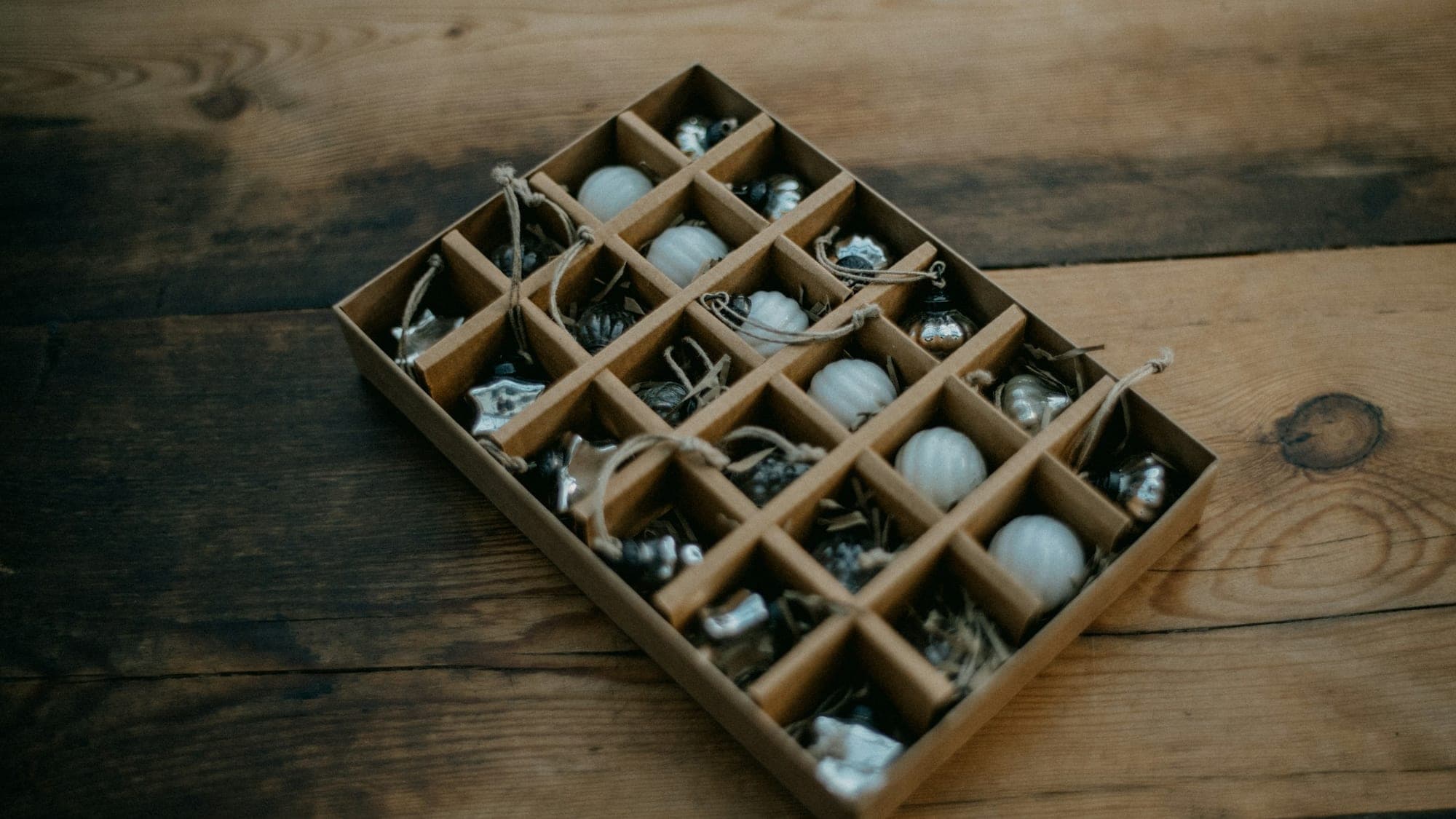
Ornaments crack when they knock together, so the fix is a cell for each one. A divided ornament storage box with adjustable dividers keeps everything separated; wrap fragile or heirloom pieces in tissue first and pack the heavy ones on the bottom. This is the single highest-value storage buy for anyone with a collection built over years.
Our pick
adjustable divided ornament storage box (holds 128)
Lights
The annual tangle is entirely preventable. Wind each strand onto a light storage reel or flat wrap, then set the wound strands into a bin so they can't shift and knot. Label each reel with where that strand goes (roofline, tree, shrubs) so next year is plug-and-hang.
Our pick
Christmas light storage reels / wraps (set)
Wreaths and garland
A wreath crushed in storage never fully recovers its shape, so wreaths want a rigid, round wreath storage box or hard-sided bag. Garland and faux greenery, which are bulky but not fragile, do fine coiled loosely into a zippered garland bag rather than folded tight.
Our pick
zippered round wreath storage bags, 2-pack
(Buying wreaths or garland this year? The wreaths and garland guide covers sizing and fresh-vs-artificial.)
Gift wrap
Rolls of wrapping paper get crushed, torn, and scattered. An upright gift-wrap organizer (a tall zippered bag or bin that holds rolls vertical, with pockets for ribbon, tape, and tags) keeps a year's supply together and undamaged in a closet corner. Short on closet space? A flat box that holds full-length rolls slides under a bed instead.
Our pick
flat gift-wrap storage box (fits 40-inch rolls, slides under a bed)
Everything else
For the rest, standard clear, labeled storage totes in a matching size beat mismatched cardboard boxes: they stack evenly, keep out pests and damp, and let you see what's inside. Buy a set in one size so they shelve neatly, and label every lid.
What to avoid
- Cardboard boxes. They collapse under weight, wick moisture, and attract pests. Rigid plastic every time.
- The loose-tangle light bin. Coiling lights loose into a tote guarantees next year's knot. Reel them.
- Cramming ornaments in a tote. They crack. A divided box is cheap insurance for a collection you can't replace.
- Storing anything damp. A tree or wreath put away wet grows mildew over eleven months. Dry first.
- No labels. An unlabeled pile turns setup into a guessing game. Mark contents (and setup order) on every box.
- The hottest corner of the attic for lights. Heat ages the wiring. Give lights and candles your most stable spot.
Pack it once, pack it right
Store by category in the right container, size it to what you own, label everything, and keep it climate-stable and dry. A tree bag, a divided ornament box, and a few light reels cost a fraction of what they protect and pay for themselves the first year nothing breaks or tangles. And the single best-value move of the season: buy your storage in early January, when it's all on clearance and you're packing up anyway.
Then it's set for next year. When you're ready to buy or replace anything, the Christmas buying guides cover what's actually worth it for the tree, the lights, wreaths and garland, and the tree base, and the Christmas Planner keeps your inventory, so you always know what you have before you buy more.
Share this guide
Frequently asked questions
What's the best way to store Christmas decorations?
How do you store an artificial Christmas tree?
How do you store Christmas lights without tangling them?
How should you store Christmas ornaments?
Where should you store Christmas decorations, the attic, garage, or basement?
When is the best time to buy Christmas storage?
Keep reading
The Best Artificial Christmas Trees to Buy (by Your Space and Budget)
How to choose an artificial Christmas tree and what's actually worth buying for your space and budget. PE vs PVC needles, pre-lit vs unlit, slim vs full, flocked vs unflocked, and tip count explained.
The Best Christmas Lights to Buy (by What You're Lighting)
How to choose Christmas lights and what's actually worth buying, by use case: roofline, trees, shrubs, the indoor tree, garland, and pathways. LED vs incandescent, bulb types, and color temperature explained.
The Best Christmas Tree Skirts and Collars to Buy (by Style)
How to choose a Christmas tree skirt or collar and what's actually worth buying, by style and situation. Skirt vs collar, the right diameter for your tree, materials that last, and picks for pets, real trees, and big trees.
Prefer pen & paper?
The Christmas Planner
A 25-page printable kit covering budget, gifts, hosting, and decor, built on the same planning logic as this tool. Print it once, keep it in a binder, and reuse it every year.
Or grab 3 pages free first.
Decor that suits the home you have.
Seasonal decorating tips and the occasional new tool, straight to your inbox. One list, no spam.