Christmas / Ideas / Buying Guides
By Brian · June 12, 2026
The Best Christmas Wreaths and Garland to Buy (by Where It's Going)
How to choose Christmas wreaths and garland and what's actually worth buying, by where it goes: the front door, interior doors, the mantel, the staircase, and the porch. Fresh vs artificial, lit vs unlit, and sizing explained.
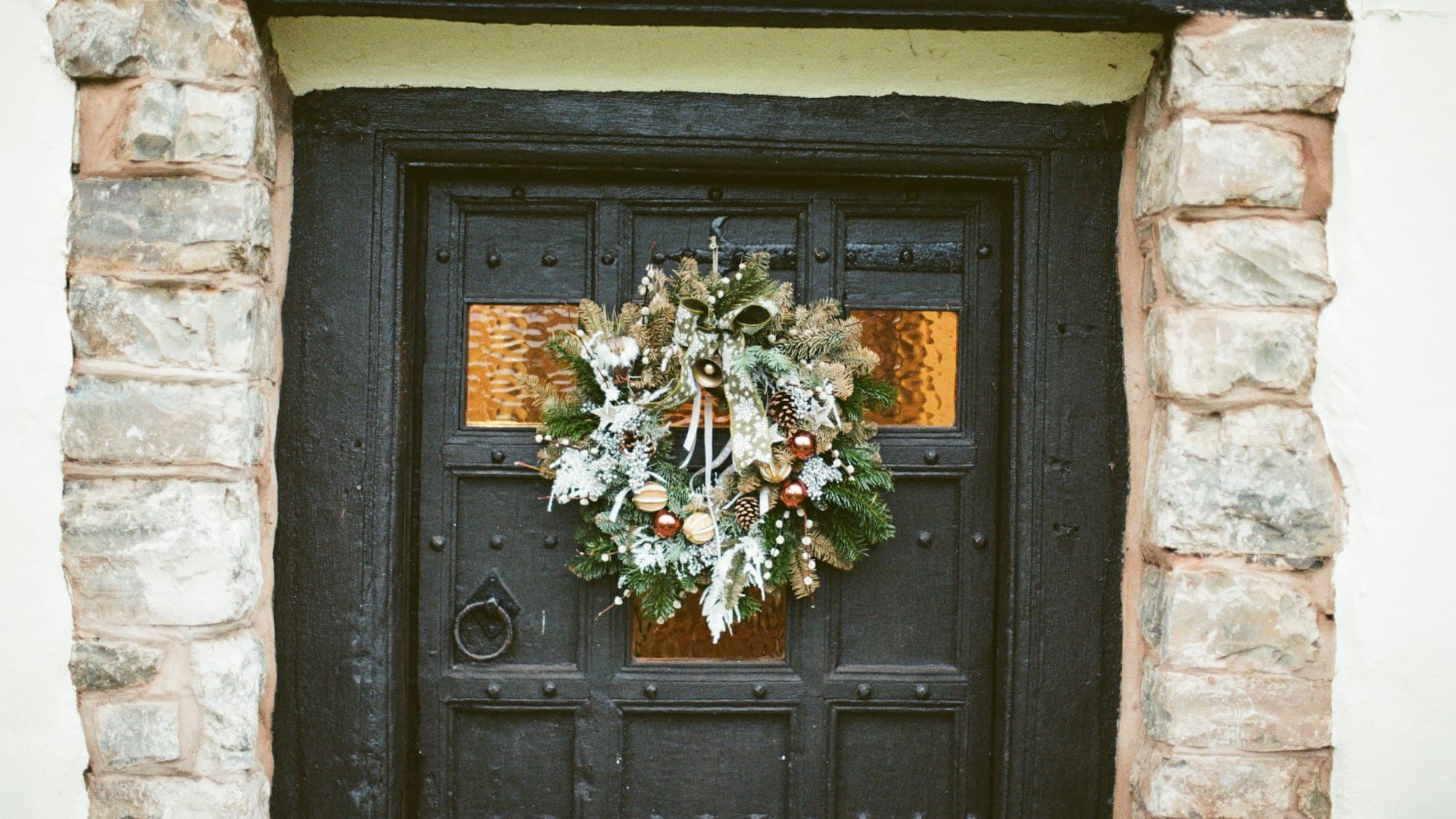
A wreath on the door and garland on the mantel are the two pieces of Christmas decor that do the most work for the least effort. They instantly read as "decorated" without a tree's commitment or a light display's ladder. But most people buy them the same haphazard way they buy lights: grab whatever's at the front of the store, in whatever size is stacked highest, and end up with a too-small wreath floating in the middle of a big door, or a single thin run of garland stretched flat across the mantel.
Choosing well isn't complicated. It comes down to a few decisions (fresh or artificial, lit or unlit, and above all the right size for the spot) and then matching the piece to where it's actually going. A door wreath, a staircase garland, and a mantel swag are three different jobs.
This guide covers the handful of things that actually matter when you're buying, then exactly what's worth buying for each location: the front door, interior doors and windows, the mantel, the staircase, and the porch.
Prefer to make rather than buy? A fresh wreath is one of the most satisfying DIY projects there is, and our Christmas crafts guide has the full how-to. This guide is for what to buy.
The things that actually matter
1. Fresh vs. artificial vs. preserved
- Fresh smells unbeatable and looks alive, but dries out (3–5 weeks outdoors in cool weather, far less in a warm room) and is an annual cost.
- Artificial is a one-time buy that looks identical all season and for years, never sheds, and comes pre-lit if you want, but has no scent.
- Preserved (real greenery treated to last) splits the difference, at a premium.
The most practical approach for most homes: a quality artificial base, refreshed each year with a new bow, a few real pinecones, or fresh sprigs tucked in for scent and life.
2. Size, the mistake almost everyone makes
People buy wreaths and garland too small and too short. A front-door wreath should fill the upper-middle third of the door (a 22–24 inch wreath for a standard door; 28–36 inches for tall or double doors). Garland should be bought at roughly 1.5× the length you're covering so it drapes in swags instead of stretching flat. The draping is what makes it look full. When in doubt, size up.
3. Realism (for artificial pieces)
Same rule as artificial trees: favor molded PE (polyethylene) tips over flat PVC, a high tip count for fullness, and a mix of greenery types (fir, pine, cedar) rather than one uniform texture. A high-PE wreath reads convincingly real even up close on the door; a cheap flat-PVC one looks plastic from across the yard.
4. Lit vs. unlit
Pre-lit garland is genuinely worth it on a mantel or staircase. No threading a separate strand through the greenery every year, and the lights sit evenly. Go warm-white LED, and choose battery-operated for anywhere without a nearby outlet (banister, centerpiece) so there's no visible cord. For a front door, many people skip lights since door batteries die mid-season. Whatever you choose, keep one consistent color temperature across the whole display.
5. Indoor vs. outdoor rating
Anything on the door, porch, or exterior needs to handle weather. Sun, cold, and damp will fade and degrade an indoor-only piece fast. Check that exterior wreaths and garland (and any lights on them) are rated for outdoor use.
What to buy, by where it's going
Buy by location and the "look for" spec rather than chasing one model. The right piece for the door is the wrong piece for the banister.
Front door
The highest-impact spot. A 24-inch mixed-evergreen wreath (PE tips, with pinecones and a few berries woven in), finished with one wide velvet or linen bow or left clean. Outdoor-rated. Sized up rather than down. This single piece does more for curb appeal than almost anything else.
Our pick
24-inch PE mixed-evergreen front-door wreath
For sizing and styling it to your specific door and house style, see the front porch guide.
Interior doors and windows
Smaller wreaths, 12–18 inches, for interior doors, kitchen cabinets, or hung in windows on ribbon. Buy a coordinated set so they read as intentional rather than scattered, and keep them simpler than the front-door statement piece.
Our pick
Mini wreaths with bows, 15 in (set of 4)
The mantel
A 9-foot garland (or two, for a wide mantel), full and PE-tipped, draped with end tails hanging down each side. Pre-lit warm-white is the convenient choice here since an outlet is usually close. Layer it with your own touches, and the mantel guide covers composing the whole ledge.
Our pick
9-ft pre-lit mantel garland with pine cones, warm-white battery LEDs
The staircase / banister
Measure the banister and buy about 1.5× that length so it swags. The garland calculator does that math for you across the mantel, staircase, and doorways at once. Battery-operated pre-lit garland avoids a visible cord running up the stairs. Secure it with floral wire or zip ties hidden under the greenery, and let it drape between fixing points.
Our pick
battery pre-lit garland for staircases (buy to 1.5× banister length)
Doorways and archways
Garland framing an interior doorway or archway frames the room beautifully. Use a fuller garland and anchor the top corners so it arches rather than sags flat. Unlit or battery-lit depending on outlet access.
The porch / exterior columns
Wrapping porch posts or columns in garland is a high-impact exterior move. Use outdoor-rated garland, plan on plenty of length (wrapping eats more than you'd think, so measure the column height and multiply), and secure it well against wind.
What to avoid
- Buying too small. The cardinal wreath-and-garland sin. Size up: a wreath should fill the door, garland should drape.
- Stretching garland tight. Flat, taut garland looks sparse. Buy extra length so it swags.
- Cheap flat-PVC pieces. They look plastic. A PE-tipped wreath costs a little more and reads real.
- Indoor pieces used outside. Weather destroys non-rated greenery and lights fast.
- Mixing light temperatures. A cool-white garland next to warm-white lights looks mismatched, so pick one white.
- One wreath, one strand. A single thin run on a big mantel looks like an afterthought. Go full.
Frequently asked questions
What's the best artificial Christmas wreath to buy?
Look for mostly PE (molded) tips, a high tip count, and a mix of greenery types, in a size up from what feels right (most people buy too small). A 24-inch PE wreath with pinecones and berries suits a standard door and reads real from the street. Outdoor-rated if it's exposed. It's a one-time buy that looks the same in year eight as year one.
How big should a front door wreath be?
For a standard 36-inch door, 22–24 inches; for tall or double doors, 28–36 inches; size up for porches viewed from the street. The wreath should fill the upper-middle third of the door, centered a little above eye level.
How much garland do I need for a staircase?
Buy about 1.5× the banister length so it drapes in swags, usually two to three 9-foot sections for a standard flight. For a mantel, the width plus 12–18 inches of tail per side. Always err slightly overfull.
Fresh or artificial: which is better?
Fresh wins on scent and look but dries out and recurs as a cost; artificial is a one-time buy that lasts years and won't shed. The popular middle path is a quality artificial base refreshed each year with fresh sprigs, a new bow, or real pinecones.
Are pre-lit garlands worth it?
On a mantel or staircase, yes: even, no-threading lights every year. Choose warm-white LED, battery-operated where there's no outlet, and keep one color temperature across the display.
How do you store wreaths and garland?
Flat or hanging in a dedicated wreath bag/box so the tips don't crush, with garland coiled loosely in a bin (not folded tight). Good storage is most of what makes an artificial piece last fifteen years instead of five.
Before you check out
Choose by location and size up: a generous PE wreath that fills the front door, full garland bought at 1.5× length so it drapes, pre-lit warm-white where an outlet allows, and everything outdoor-rated if it's exposed. Buy a good artificial base once and refresh it each year with a fresh bow and real sprigs, and it'll look intentional for a decade.
Then put it to work on the surfaces guests actually see: the front porch and the mantel guides cover styling each one, the crafts guide shows how to make a fresh wreath yourself, the lights buying guide handles everything that lights up, the ribbon and bows guide finishes the wreath and the mantel, and the outdoor decorations guide covers the rest of the yard.
Share this guide
Frequently asked questions
What's the best artificial Christmas wreath to buy?
How big should a front door wreath be?
How much garland do I need for a staircase?
Fresh or artificial Christmas wreath: which is better?
Are pre-lit garlands and wreaths worth it?
How do you store Christmas wreaths and garland?
Keep reading
The Best Artificial Christmas Trees to Buy (by Your Space and Budget)
How to choose an artificial Christmas tree and what's actually worth buying for your space and budget. PE vs PVC needles, pre-lit vs unlit, slim vs full, flocked vs unflocked, and tip count explained.
The Best Christmas Lights to Buy (by What You're Lighting)
How to choose Christmas lights and what's actually worth buying, by use case: roofline, trees, shrubs, the indoor tree, garland, and pathways. LED vs incandescent, bulb types, and color temperature explained.
The Best Christmas Movies of All Time (27 Picks, Sorted by Mood)
A curated, honest guide to the best Christmas movies: the undisputed classics, modern favorites, family picks, the funny ones, the romantic ones, and the underrated gems. Plus the eternal Die Hard question, settled.
Prefer pen & paper?
The Christmas Planner
A 25-page printable kit covering budget, gifts, hosting, and decor, built on the same planning logic as this tool. Print it once, keep it in a binder, and reuse it every year.
Or grab 3 pages free first.
Decor that suits the home you have.
Seasonal decorating tips and the occasional new tool, straight to your inbox. One list, no spam.