By Brian · May 1, 2026
Outdoor Christmas Decorations That Work in Warm Climates (Florida, Arizona, Texas)
Christmas decorations designed for snowy New England don't work when it's 80°F in December. Here's how to do outdoor Christmas right in Florida, Arizona, Texas, and other warm-climate states.
Most Christmas decorating advice is written for places that get snow. The Pinterest boards full of evergreen wreaths, hot cocoa imagery, and frosted windows don't translate when it's 80°F in December and your front yard has a saguaro instead of an oak tree. If you live in Florida, Arizona, Texas, Southern California, the Gulf Coast, or any warm-climate part of the country, the standard Christmas decor playbook actively works against your environment. Fresh evergreen browns by mid-December, inflatables overheat in the sun, plastic warps, and snow imagery just feels weird.
Warm-climate Christmas can be spectacular when you stop fighting the climate and start working with it. You just can't buy what's in the front of Home Depot and call it a day.
This guide covers 14 specific ideas designed for warm-climate Christmas decorating, plus the principles behind what works and what doesn't.
Why Warm-Climate Christmas Needs Different Logic
A few realities that change the rules:
- Heat destroys most plastic decor. Inflatables overheat in direct sun and burst seams. Plastic figures warp. Lawn ornaments fade in 6 weeks of UV. Anything built for a 4-week New England winter dies fast in Phoenix.
- Fresh evergreen has a shelf life of about 10 days, not 6 weeks. A pine wreath bought December 1 is brown by December 15 in 80°F weather. Real evergreen Christmas trees last barely two weeks indoors with AC running.
- The visual context is different. A snow-themed display with snowflake cutouts and "Let It Snow" signage looks weird against palm trees and a 75°F sunset. The dissonance hurts the design.
- You're decorating for evening, not all day. Bright daylight makes most lights and metallic decor look washed out and gaudy. Warm-climate Christmas displays come alive specifically after sunset; design with that in mind.
- Native plants matter. Palms, citrus trees, agaves, cacti, banana plants, hibiscus: these are your decoratable elements, not ignored as "non-Christmasy." They become uniquely yours when you light them well.
All five of those constraints show up again and again in the ideas below.
Exterior Ideas
1. Wrap Palm Trees with Warm-White String Lights
The most iconic warm-climate Christmas move there is. Wrap the trunk of a palm tree (and the bases of the fronds, if you can reach) with warm-white mini lights. The contrast of tropical tree against classic Christmas glow is the entire aesthetic statement.
For a typical 15-foot palm:
- Trunk wrap: ~150-200 mini lights (1 strand per 6-8 feet of trunk)
- Frond bases: ~50 lights total tucked into the lower fronds
Use commercial-grade outdoor lights, not cheap residential strands. Florida and Arizona sun destroys consumer-grade lights in one season. Spending $40–60 on commercial-grade gets you 5+ years of use.
2. Use Heat-Rated, Commercial-Grade Lights Only
The standard residential mini lights at Walmart aren't designed for sustained heat plus UV exposure. They'll yellow, crack, and fail by year two if your decorations stay up Nov-Jan in 80°F weather.
Buy from commercial-grade Christmas light vendors: Wintergreen Lighting, Christmas Designers, Holiday Bright Lights. Costs roughly 2x retail but lasts 5x as long. The math is heavily in favor of commercial.
Look for: outdoor-rated, heavy-duty wire (22 gauge minimum), bulbs with sealed sockets to prevent water/heat ingress, color temperature 2700K (warm white).
3. Skip the Inflatables. They Don't Survive.
This is the hardest no in warm-climate Christmas: those huge inflatable Santas, snow globes, and reindeer that work fine in northern yards do not work in Florida, Arizona, or south Texas.
Why they fail:
- Direct sun heats internal air; pressure builds; seams burst
- UV degrades the vinyl in weeks, not seasons
- Heat plus humidity grows mold inside the fabric
- The motor that keeps them inflated runs hotter and burns out
Replace them with:
- Lit metal figures (wrought iron deer, lit topiary animals)
- Wood-frame nativity scenes
- Lit acrylic sculptures (the modern, sleek versions)
- Native plant sculptures (lit cacti, lit palms)
Anything rigid and weather-sealed beats anything inflatable.
4. Adopt a Coastal or Desert Christmas Palette
Bright primary red-and-green Christmas decor turns garish in 80°F daylight against a tropical background. The palette that actually works:
Coastal warm-climate palette:
- Crisp whites
- Pale sea-glass blues
- Soft sand and cream
- Silver and pearl accents
Desert warm-climate palette:
- Deep terracotta and rust
- Sage green (matches local vegetation)
- Warm gold and brass
- Cream and bone
Both palettes look intentional in warm climates and don't fight the environment. The standard red-green-gold trio works for indoor decor but underperforms outside.
5. Decorate with Citrus Instead of Red Berries
Red berries (holly, cranberry) look wintry. Citrus (oranges, lemons, limes, grapefruit) comes across as warm-climate-native AND seasonal. Both are technically Christmas (oranges in stockings, citrus in the hot toddy), but citrus speaks to your specific environment.
Where to use citrus:
- Wreaths: halved citrus slices dried and wired into a wreath frame
- Front porch: a wood crate of fresh oranges as a side accent
- Garland: citrus slices threaded onto twine, alternating with cinnamon sticks
- Front door: a single fresh whole orange tied with twine, hung on a nail (a Spanish-Portuguese tradition)
Citrus also performs beautifully in heat. Fresh oranges last 2-3 weeks outdoors in 80°F weather; dried slices last all season.
Our pick
Dried orange slices for crafting
6. Use Cypress, Magnolia, or Eucalyptus Instead of Pine
Fresh pine and fir don't survive warm climates. The needles brown, drop, and the wreath looks dead by December 15. Substitutes that hold up better:
- Cypress (the foliage, not the tree itself): more heat-tolerant than pine, holds color longer, has a similar evergreen feel
- Magnolia leaves: dark green tops with bronze undersides, stay fresh-looking for a full month, deeply Southern aesthetic
- Eucalyptus: silver-gray-green, dries beautifully even in heat, lasts the entire season
- Olive branches: Mediterranean-feeling, hold their color, perfect for Spanish/Italian-style homes
For a "looks fresh through January" wreath in warm climates, choose cypress or magnolia over pine every time.
7. Lean Into Cacti, Agaves, and Yucca (Don't Pretend They're Not There)
Desert states like Arizona, New Mexico, and west Texas have spectacular native vegetation that most Christmas decor pretends doesn't exist. Wrap your saguaros and agaves with warm-white lights and they become some of the most distinctive Christmas displays in America.
Specific moves:
- Saguaro arms can hold lights wrapped around each arm. Looks like glowing cactus arms reaching skyward.
- Agave bases look stunning with a single ring of lights at the base
- Yucca and prickly pear can hold light strings draped between leaves
Bonus: the local plants are already adapted to your climate, so the lights stay effective for the entire season.
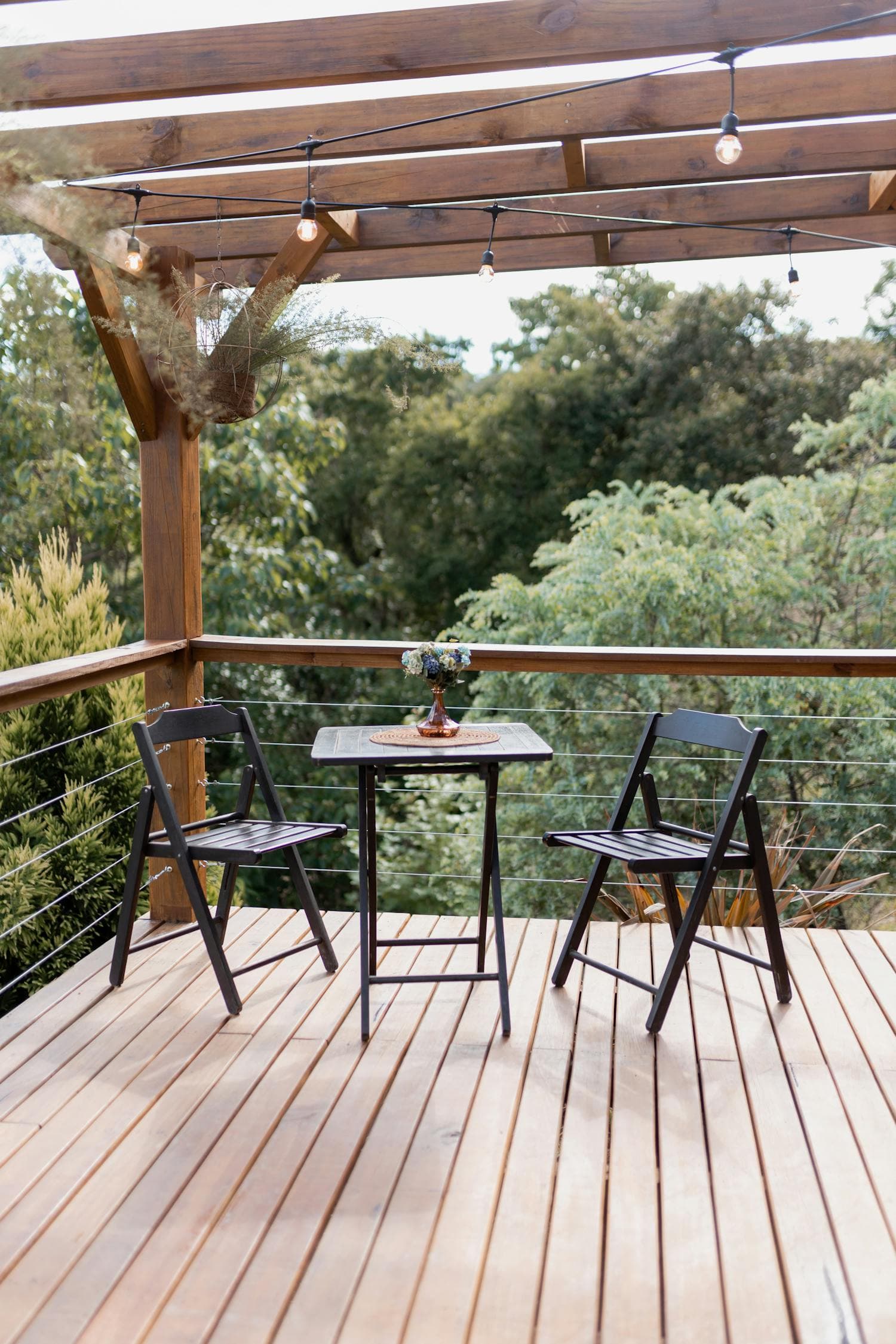
8. Use Patio Covers and Pergolas as Your Roofline
Many warm-climate homes have low roofs (single-story stucco, ranch, Spanish revival) that don't lend themselves to dramatic roofline lighting. But most also have outdoor living spaces (patio covers, pergolas, ramadas, lanai roofs) that absolutely do.
Wrap or drape lights along the patio cover, pergola beams, or pool pavilion. The result is a Christmas-decorated outdoor living space that you can actually use during December (because you're not snowed in). This is uniquely a warm-climate strength.
9. Use Outdoor Lanterns Instead of Battery Candles
Battery-operated candles fail in heat. The plastic warps, the LED flicker mechanism overheats and stops, the batteries die fast. They're built for cold-weather windows.
Replace them with real outdoor metal lanterns with either:
- Real beeswax pillar candles (set them only when you're outside; they melt fast in heat)
- Solar-rechargeable LED tea lights designed for outdoor use (heat-rated; some are filled with mineral oil for thermal stability)
- Citronella candles in glass jars (double duty: Christmas atmosphere and bug deterrent for warm December evenings)
Place lanterns along walkways, on patio tables, at the porch entry. They handle heat and weather correctly.
10. Embrace Mexican and Latino Christmas Traditions
If you live in Texas, New Mexico, Arizona, Southern California, Florida, or anywhere with strong Latino cultural presence, Las Posadas and Mexican Christmas traditions offer beautifully climate-adapted options that beat generic American Christmas:
- Luminarias / farolitos: paper bags weighted with sand, with a candle inside, lining walkways. Adobe-style architecture's perfect Christmas accent.
- Papel picado: colorful punched-paper banners strung between posts. Adds movement and color outdoors without the inflatable problem.
- Poinsettias outdoors: native to Mexico, they thrive in warm-climate winters as living plants, not just floral arrangements.
- Lit star piñatas as porch ornaments.
These traditions were developed by people decorating for Christmas in 70-80°F weather. They handle the climate beautifully.
11. Make Wreaths from Tropical Greenery
Pine wreaths brown by mid-December. Magnolia wreaths last longer. But wreaths made from native tropical greenery can be the most distinctive Christmas decoration in your zip code:
- Banana leaves woven into a wreath frame, accented with red flowers or citrus
- Palm fronds trimmed and arranged radially, looking like a sun-burst wreath
- Monstera leaves (tropical, dramatic) wired onto a base
- Eucalyptus and olive branches mixed with dried cypress
These can hang outdoors all season without browning. They're also unmistakably warm-climate; they tell viewers exactly where you are.
12. Decorate the Pool Area as a Christmas Destination
Most warm-climate homes have backyard pools. Most pool areas go undecorated for Christmas because it doesn't fit the snowy aesthetic. But December is prime pool weather in Florida, Arizona, and Texas. Your pool deck is more useful in December than July.
Decorate it like the destination it is:
- Floating waterproof candles in the pool itself
- String lights wrapped around pool umbrellas
- Lit topiary trees flanking the pool entry
- Cushions in coastal Christmas colors (cream, sea-glass blue, white) on pool loungers
- A small lit Christmas tree at the pool bar (yes, really)
Makes the pool a December destination, not a forgotten summer space.
13. Switch from Velvet Bows to Natural-Fiber Ties
Velvet ribbon retains heat and moisture. In Florida or Gulf Coast humidity, velvet decor outdoors gets sticky, attracts bugs, and grows mildew. Plus the visual association with winter feels off.
Substitute with:
- Linen ribbon (light-colored, natural-feeling)
- Sisal or jute twine (rustic, works in heat)
- Burlap ribbon (holds up well in humidity)
- Cotton macramé cord (coastal feel)
Tied in simple knots rather than fancy bow-shapes, they look right for a warm climate.
14. Don't Try to Manufacture Winter. Embrace the Climate.
The biggest mistake in warm-climate Christmas decorating: trying to recreate a Vermont snow scene in Tampa. Faux-snow yard sprays, polyester snow blankets on the porch, plastic snowflake cutouts in 80°F weather. It's always going to fail.
The opposite move, leaning into your specific climate, produces the most distinctive Christmas displays in the country. A palm-tree-and-string-light Florida Christmas. A saguaro-and-warm-white Arizona Christmas. A coastal-blue-and-citrus Tampa Christmas.
These look uniquely like your home, your climate, your Christmas, not a failed attempt at someone else's.

Common Warm-Climate Christmas Mistakes
- Putting up the same decor you'd buy in Wisconsin. The standard big-box Christmas decor is built for cold/snow climates and dies fast in heat.
- Inflatables in direct sun. Bound to fail. Save for indoor displays only.
- Multi-color blinking lights at full saturation. Turns garish in 80°F evening light. Tone down or switch to warm white.
- Fresh pine wreaths bought December 1. Brown by December 15. Buy magnolia, cypress, or eucalyptus instead.
- Velvet, plush, and faux fur decor outdoors. Holds humidity, attracts bugs, looks soggy by mid-month.
- Snow imagery and "Let It Snow" signage. Always feels off when there's no snow. Lean into the climate instead.
A no-fail first-year setup
For a warm-climate Christmas display that looks intentional and survives the season:
- Wrap one or two palm trees (or saguaros / agaves) with warm-white commercial-grade mini lights
- Hang a magnolia or citrus wreath on the front door (lasts 4+ weeks in heat)
- Line the walkway with luminarias or wrought-iron lanterns
- String festoon lights along the patio cover or pergola
- Add a few fresh poinsettias as living plants near the front door
Five moves, one weekend. Looks unmistakably warm-climate, holds up through January, and skips every category of decor that fails in heat.
If there's one principle to remember, it's stop fighting the climate. Warm-climate Christmas, done right, is one of the most beautiful holiday aesthetics in America. Done wrong (importing northern decor wholesale), it just looks tired by December 15. Lean into where you live and the rest comes together.
Related guides:
- How to Decorate a Modern Farmhouse for Christmas: the warm-climate-friendly farmhouse style guide
- Christmas Decorating Ideas for Cape Cod Style Homes: coastal-adjacent style that translates to Gulf Coast and Florida-Spanish-Revival homes
- Christmas in Mexico: the full deep-dive into Las Posadas processions, the Cena de Nochebuena dinner, La Rosca de Reyes, and the poinsettia's Mexican origins
- Christmas in Australia: the full deep-dive into Christmas Day at the beach, Carols by Candlelight, the Sydney-Hobart yacht race, and pavlova
- Christmas in the Philippines: the full deep-dive into the world's longest Christmas season (September through January), Simbang Gabi dawn masses, Noche Buena, and the iconic parol lantern
- Christmas in Brazil: the full deep-dive into Ceia de Natal in summer heat, amigo secreto, Rio's Lagoa floating Christmas tree, Copacabana Réveillon, and the panettone-heavy Brazilian dessert table
- Christmas Around the World: interactive map of 41 countries' Christmas traditions, including all the warm-climate ones
- Christmas Light Calculator: calculate the exact light count for palm trees, festoon zones, and warm-climate exteriors
Share this guide
Frequently asked questions
How do you decorate for Christmas in Florida, Arizona, or Texas?
What outdoor Christmas decorations don't work in warm climates?
Do real Christmas trees work in warm climates?
What kind of Christmas lights work best in warm climates?
How can you make Christmas feel festive in 80-degree weather?
Keep reading
How to Plan Your Christmas Decorating (So Nothing Gets Bought Twice)
A Christmas decorating plan is five decisions made in the right order: where, what look, how much, what to buy, and when. Here is the order, the math behind the quantities, and a free tool that does the whole thing from photos of your house.
Your First Christmas in a New Home: What to Buy, Skip, and Plan
Decorating a home for its first Christmas is a different job than decorating one you know. A realistic first-year plan: the four things worth buying well, the traps that waste a moving-year budget, and what to deliberately leave for year two.
The Best Outdoor Christmas Decorations to Buy (by Where They Go)
What outdoor Christmas decorations are actually worth buying, organized by where they go in your yard: the front lawn, pathways, trees and shrubs, the roofline, and the porch. Inflatables, lit figures, projectors, and the practical gear that makes it all work.
Prefer pen & paper?
The Christmas Planner
A 25-page printable kit covering budget, gifts, hosting, and decor, built on the same planning logic as this tool. Print it once, keep it in a binder, and reuse it every year.
Or grab 3 pages free first.
Decor that suits the home you have.
Seasonal decorating tips and the occasional new tool, straight to your inbox. One list, no spam.