By Brian · September 4, 2026
Christmas Lights by the Numbers: Energy, Cost, and Safety Statistics
How much power American Christmas lights actually draw, what a display costs to run, what professionals charge to hang one, and what the injury and fire data really say. Every figure sourced.
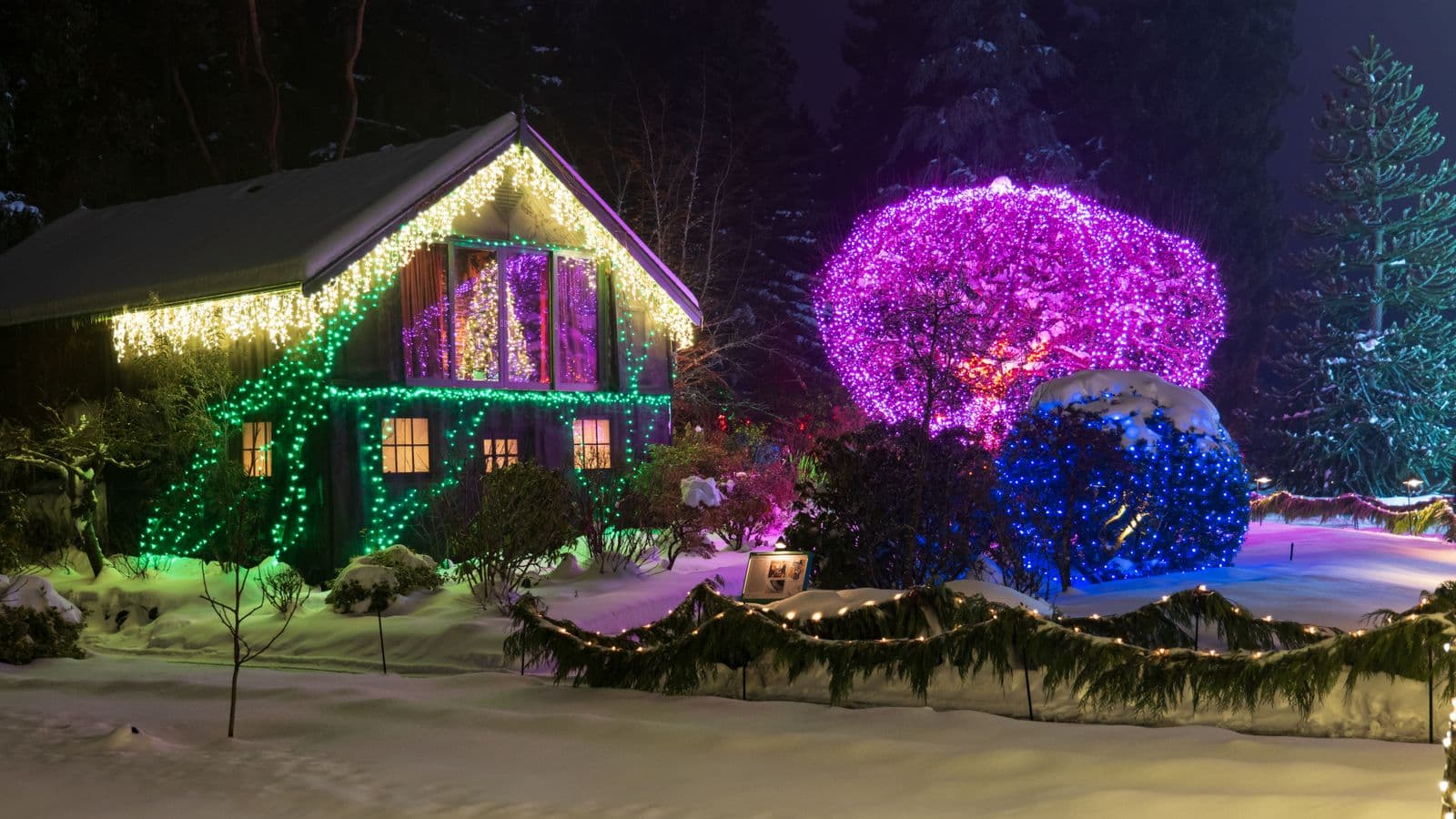
Every December, American houses collectively switch on one of the stranger energy events on Earth, and almost nobody involved has any idea what it adds up to.
This is the data study for that. What the lights draw nationally, what a display costs to run, what professionals charge to hang one, and what actually shows up in the injury and fire statistics. Every figure is sourced, and where a number is older or softer than we would like, we say so instead of rounding up the drama.
The national picture: 6.6 billion kilowatt hours
The standard estimate for American seasonal decorative lighting is about 6.6 billion kilowatt hours per season, from US Department of Energy data. Researchers at the Center for Global Development made the number famous by pointing out that it is more electricity than El Salvador uses in an entire year.
An honesty note that most articles skip: the underlying DOE figure dates to 2008, and no comparably rigorous national estimate has replaced it since. The real number today is probably lower per household thanks to the LED takeover, even with displays getting bigger. Treat 6.6 billion as the reference point it is, a well-sourced snapshot from the incandescent era, rather than a live reading.
What your own display actually draws
The national number sounds enormous. Your share of it is probably tiny, and the reason is the technology switch of the last fifteen years.
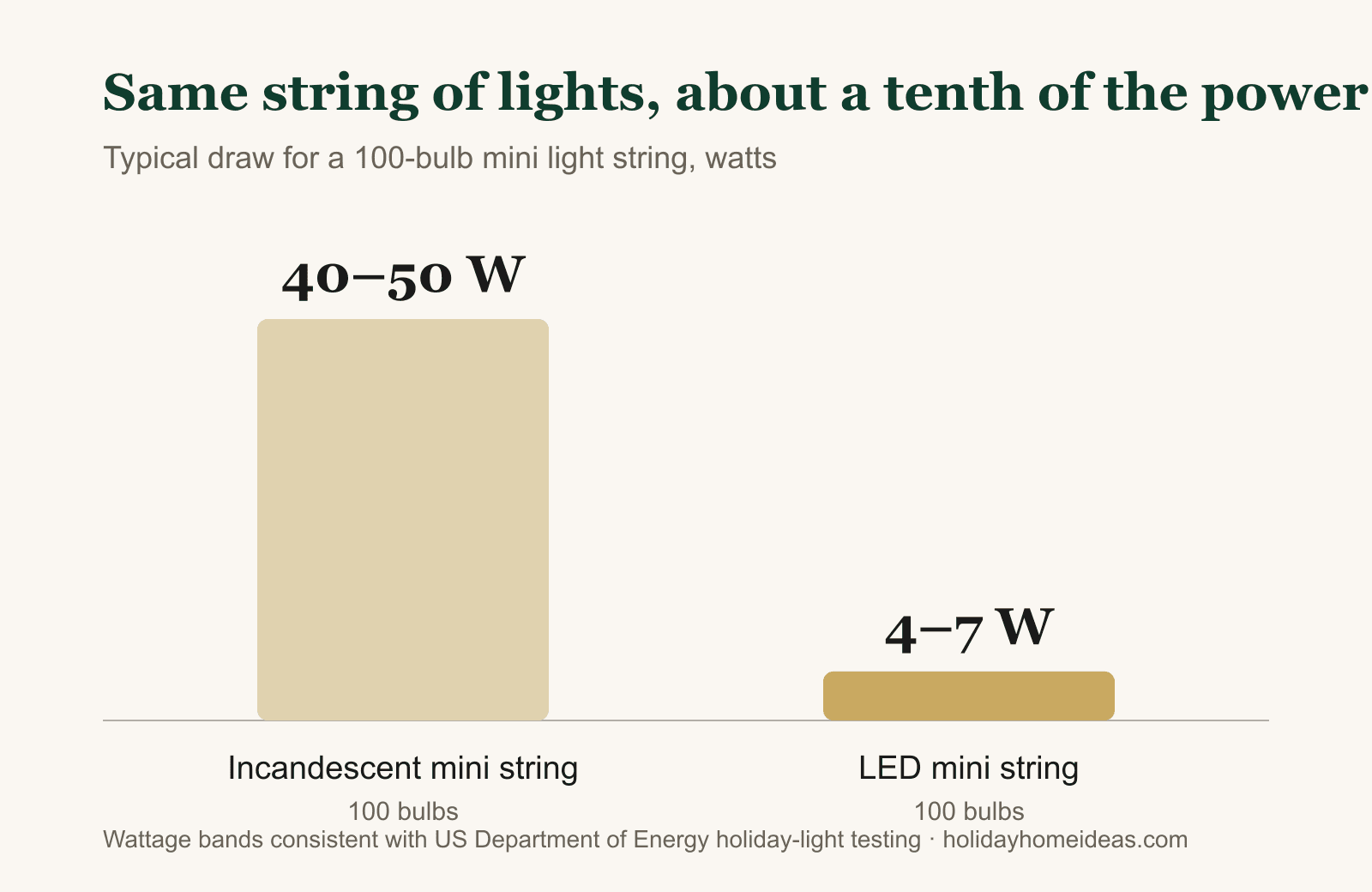
A traditional 100-bulb incandescent mini string draws about 40 to 50 watts. The equivalent LED string draws 4 to 7 watts, roughly a tenth of the power for the same length of light. That ratio holds across styles, which is why the LED versus incandescent guide calls this the rare upgrade with no real tradeoff.
Worked example, with the assumptions stated: a healthy display of ten 100-bulb strings, run six hours a night from Thanksgiving through New Year's (36 nights), at a national-ballpark 17 cents per kilowatt hour. In LED, that is a season total of about $1.50 to $2.60. The identical display in incandescent runs about $15 to $18. Bigger bulbs change the math fast, though: old-style incandescent C9 bulbs draw about 7 watts each, which is why a long C9 roofline in incandescent can quietly out-consume everything else on the house. Those big bulbs were the whole look in the 1950s: one strand of colored C9s along the roofline. The Christmas Time Machine shows your own house decorated that way, next to 1985 and today. The same math at every state's 2026 electricity rate is in what it costs to run Christmas lights in every state. The free electricity cost calculator runs your exact display, and how many lights you need works out the string count the math starts from.
What professionals charge
Hiring out the roofline is a real industry now, and the pricing data is consistent. Industry cost guides put typical professional installation between $220 and $683, with a national average around $443. The near-universal quoting convention is per linear foot: $2.50 to $7, usually including takedown and often mid-season fixes. Elaborate installations, multi-story homes, wrapped trees, full custom designs, run $900 to $2,500 and up.
Whether that is worth it depends mostly on your roofline and your ladder tolerance, which is exactly the line our DIY versus professional guide helps you find. If the answer is "hire it," how to hire an installer covers vetting.
The safety numbers nobody hangs lights thinking about
The Consumer Product Safety Commission counts about 14,900 emergency-department-treated holiday decorating injuries in a recent season, which works out to roughly 160 injuries a day through November and December. Nearly half involve falls.
Read that again with a ladder in mind. The most dangerous part of Christmas lighting is not electrical at all; it is a person on a ladder in the cold, reaching. It is the single best argument for the boring rules in how to hang Christmas lights: move the ladder instead of leaning, and stay off the roof entirely when it is wet or icy.
The fire data tells a more specific story:
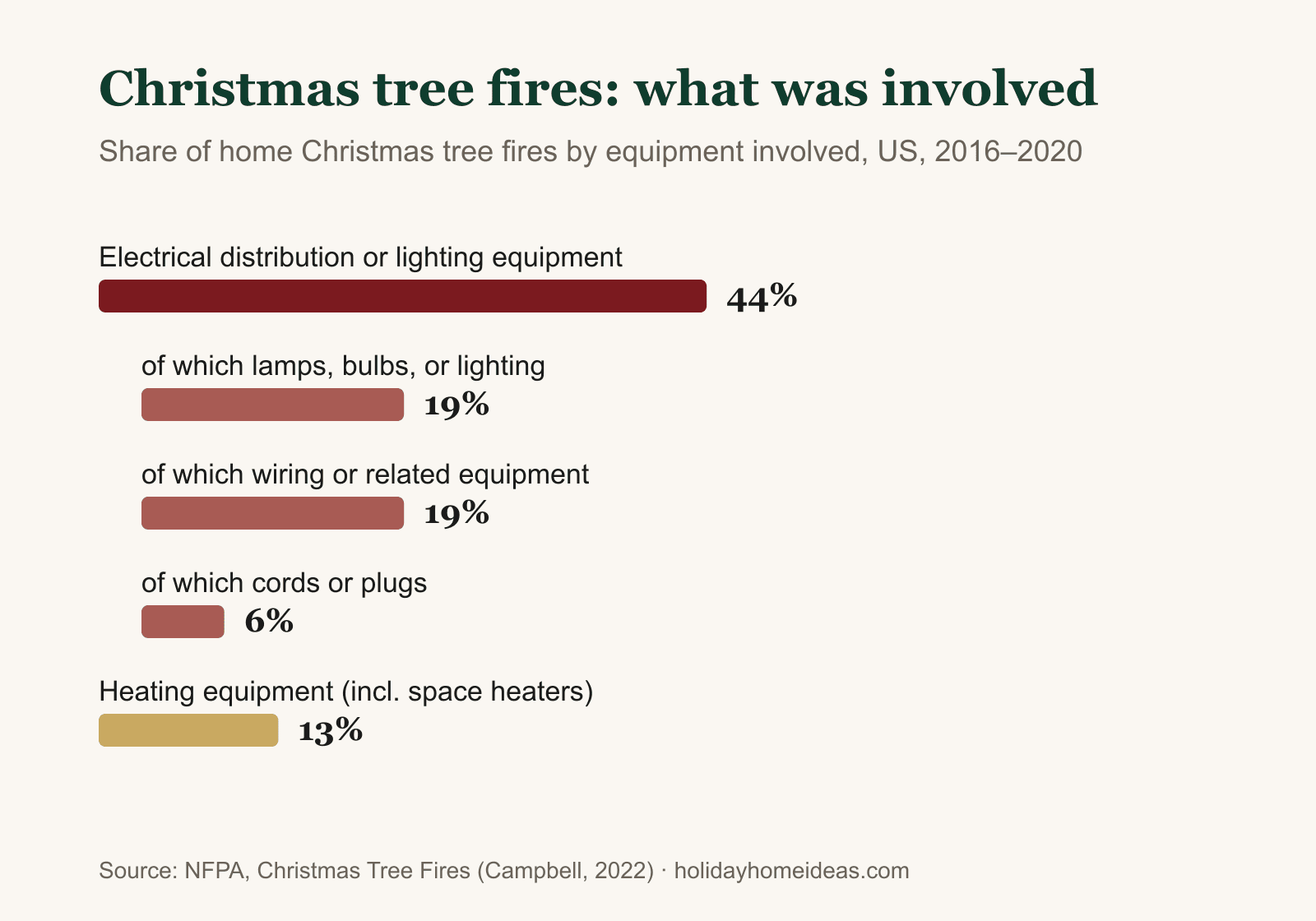
Per the National Fire Protection Association, US fire departments respond to an average of about 160 home fires a year that begin with a Christmas tree (2016 to 2020 data), causing an annual average of two deaths, 11 injuries, and $12 million in property damage. Electrical distribution or lighting equipment is involved in 44 percent of those fires, split between lamps, bulbs, or lighting (19 percent), wiring (19 percent), and cords or plugs (6 percent). Electrical failure or malfunction is the leading contributing factor at 34 percent, with heat sources placed too close to the tree at 20 percent.
Two practical readings. First, inspect strands before they go up; the failure mode is damaged wiring, not lights working as designed. Second, three-quarters of tree fires happen in December or January, and a drying tree is fuel, which makes keeping a real tree watered a fire-safety measure wearing a decorating hat. The longer arc is genuinely good news: tree fires have fallen from about 850 a year in 1980 to the 130 to 180 range in recent years.
When the lights go up
There is no gold-standard national survey of light-hanging dates, but the tree data is a strong proxy: 46 percent of tree households have theirs up before December begins, per the polling in our Christmas tree statistics study, and lights typically go up in the same weekend burst. The practical scheduling advice in when to put up Christmas decorations leans into a fact the injury numbers support: outdoor lights are best hung on a mild, dry November day, lit whenever you like, and taken down before the January ice arrives.
The numbers, in one place
- 6.6 billion kWh: estimated US seasonal decorative lighting use (DOE data, 2008; the standard reference)
- 40–50 W vs 4–7 W: incandescent versus LED draw for the same 100-bulb mini string
- ~$2 vs ~$16: worked-example season cost of a ten-string display, LED versus incandescent
- $220–$683: typical professional installation range; $443 average; $2.50–$7 per linear foot
- 14,900: emergency-department-treated holiday decorating injuries in a recent season; ~160 a day; nearly half falls
- 160: average annual home fires starting with a Christmas tree; 44% involve electrical or lighting equipment
- 850 → ~150: annual tree fires, 1980 versus recent years
Sources
- US Department of Energy / Energy Information Administration data (2008) on seasonal decorative lighting consumption, as analyzed by the Center for Global Development (2015).
- US Department of Energy holiday-light testing, consistent with the wattage bands shown for LED and incandescent mini strings.
- HomeAdvisor / Angi 2025 cost guides for professional Christmas light installation.
- US Consumer Product Safety Commission, 2025 holiday safety release (injuries treated in emergency departments, Nov 1, 2022 through Jan 31, 2023 season).
- National Fire Protection Association, "Christmas Tree Fires" (Richard Campbell, 2022), covering 2016 to 2020.
- Holiday Home Ideas electricity cost methodology: six hours per night for 36 nights (Thanksgiving through New Year's), at 17 cents per kilowatt hour; assumptions stated inline.
Figures reflect the most recent data available from each source as of publication. Where an estimate is dated, notably the national consumption figure, we have said so rather than presenting it as current.
Share this guide
Frequently asked questions
How much electricity do Christmas lights use in the US?
How much does it cost to run Christmas lights for a season?
How much do professionals charge to install Christmas lights?
How dangerous is holiday decorating?
Do Christmas lights cause fires?
Are LED Christmas lights worth it?
Keep reading
What It Costs to Run Christmas Lights in Every State (2026)
What a season of Christmas lights costs to run in all 50 states and DC, from the latest EIA electricity rates: LED versus incandescent, a typical display and a big one.
How to Decorate a Christmas Tree (Like You Hired Someone)
The professional method for decorating a Christmas tree, step by step: fluffing, lights first (with real per-foot counts), ribbon technique, ornament layering, the topper, and the skirt.
What Clark Griswold's 25,000 Christmas Lights Would Cost to Run Today
We ran the numbers on the Griswold house from Christmas Vacation: what 25,000 incandescent lights cost to run in 1989, what they would cost at Illinois rates today, and what Clark would pay if he switched to LED. Plus a calculator to see how Griswold your own house is.
Prefer pen & paper?
The Christmas Planner
A 25-page printable kit covering budget, gifts, hosting, and decor, built on the same planning logic as this tool. Print it once, keep it in a binder, and reuse it every year.
Or grab 3 pages free first.
Decor that suits the home you have.
Seasonal decorating tips and the occasional new tool, straight to your inbox. One list, no spam.