By Brian · July 15, 2026
How to Hire a Christmas Light Installer (7 Questions to Ask First)
A homeowner's guide to hiring a Christmas light installer: when to book, the seven questions that separate a good pro from a bad one, red flags to walk away from, and how quotes really work.
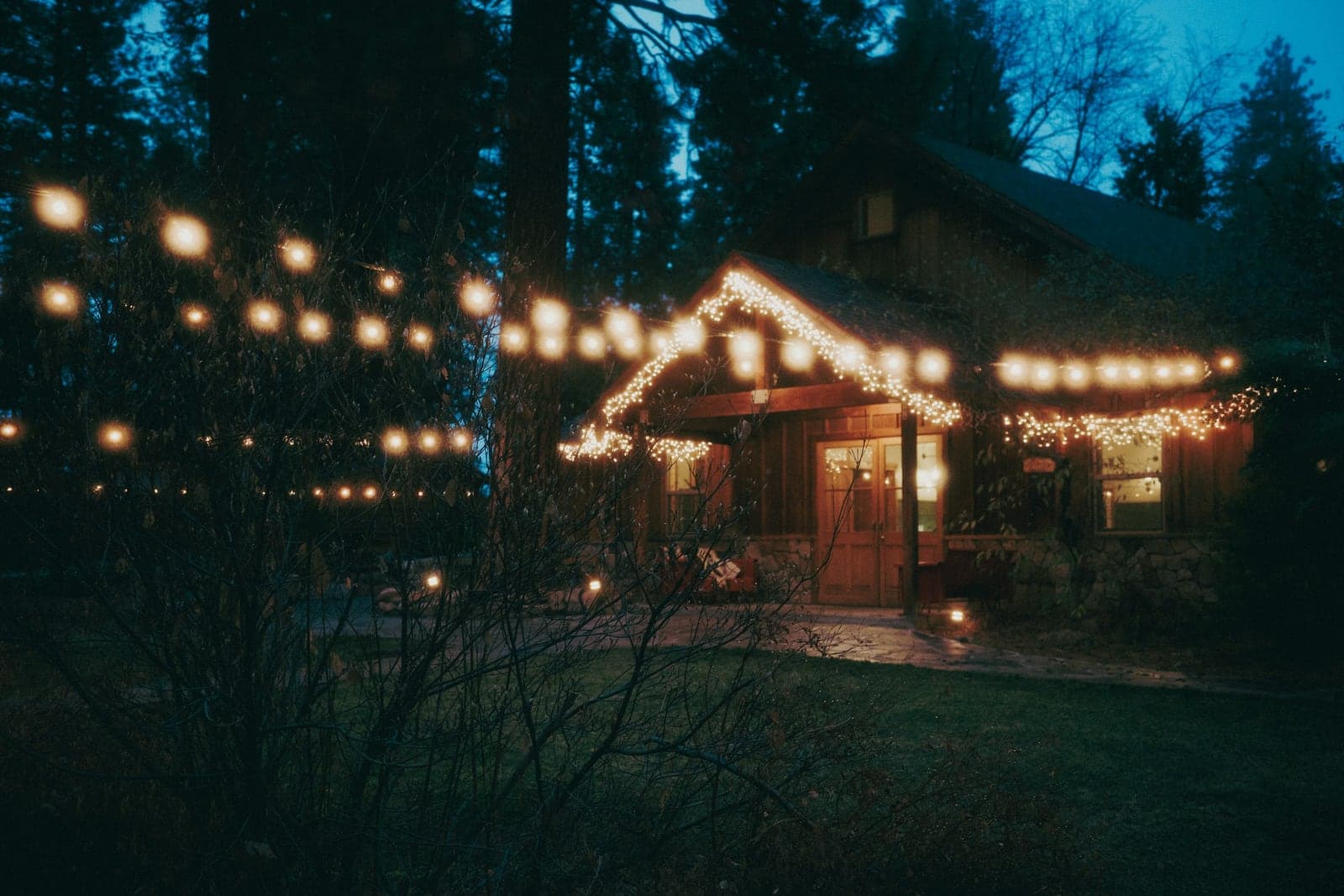
Somewhere around the second week of a cold November, a lot of people arrive at the same conclusion: the roofline lights are not worth another year of ladders, cold fingers, and one strand that won't light no matter what. Hiring a professional to hang your Christmas lights is one of the better money-for-time trades of the season. It is also surprisingly easy to get wrong, because "Christmas light installer" is not a licensed trade, and the gap between a real professional and someone with a ladder and a seasonal side hustle is wide.
The good news is that the questions that sort one from the other are simple, and you can ask all of them in a five-minute phone call. This guide covers when to book, the seven questions that matter before you hand anyone a deposit, the red flags worth walking away from, and how quotes actually work, so the person on your roof is insured, the display looks the way you pictured, and the whole thing comes down cleanly in January.
First: is hiring the right call at all?
Not every home needs a pro. If you're stringing a few bushes and a porch railing at ground level, that's a Saturday afternoon, not a contract. Where hiring earns its keep is height and roofline: two-story eaves, steep pitches, and long runs are the hardest, most weather-exposed, most dangerous part of the job to do yourself, and the part most worth handing off.
If you're still weighing it, two things help. Our DIY vs professional cost breakdown lays out what each route really costs once you count ladders, replacement strands, and your own time. And if you decide to do the roofline yourself after all, the guide to hanging Christmas lights walks through clips, timing, and the safe way up. Either way, the Christmas light calculator tells you how many feet you actually need before anyone quotes you.
When to book
Book in October or early November. This is the single most common mistake homeowners make: they wait until they see a neighbor's lights go up, call around the third week of November, and discover the good installers are already booked solid through the season.
Installers have a finite number of install days between mid-November and mid-December, and they fill from the top down. Booking early doesn't just guarantee you a slot; it gets you the choice of dates, so your lights are up before Thanksgiving or the first big snow instead of two weekends into December.
The 7 questions to ask before you hire
Ask these before you agree to anything. A real professional will have crisp answers and won't be annoyed you asked. Anyone who gets cagey is telling you something.
1. Are you licensed and insured?
This is the one that matters most, and it's non-negotiable. Someone is going up a ladder onto your roof in cold, often wet conditions. You want general liability insurance (covers damage to your home) and workers' compensation (covers the crew if someone is hurt on your property). Without workers' comp, an injury on your roof can become your problem.
Ask them to email you a certificate of insurance, not just say "yes, we're covered." A legitimate operator produces it in about thirty seconds. This single question eliminates most of the weekend-hustle crowd.
2. Do you provide the lights, or install mine?
There are two models, and you want to know which one you're buying.
- Full-service (they provide the lights): The installer supplies commercial-grade LEDs, hangs them, maintains them through the season, and takes them down. Commercial-grade lights are brighter, more color-consistent, and far more weatherproof than store-bought strings, and because the installer stores them, your display looks identical every year. You're essentially leasing it.
- Labor-only (you provide the lights): Cheaper up front, but you buy and store the lights, and a mid-season failure is on you.
For most homeowners the full-service package is the better value once you count the store-bought strings you'd otherwise replace every couple of years. But ask, because a quote that looks low might be labor-only.
3. What exactly does the quote include?
"Christmas lights, $900" is not a quote. Get it itemized. A complete package usually covers:
- Design (what gets lit, and how)
- Installation (labor, clips, timers, extension runs)
- Mid-season maintenance (they come back if something fails)
- Takedown in January
- Storage until next year, on full-service jobs
Whatever's included should be in writing. The number itself matters less than knowing precisely what it buys.
4. Do you handle takedown and storage?
Takedown is the part people forget to ask about, and it's the part you least want to do yourself in January. Most professional packages include it, usually in the first few weeks of the new year. With full-service providers who own the lights, takedown and storage are typically baked in.
Confirm it explicitly. A quote that quietly excludes takedown isn't the deal it looks like.
5. Can I see recent local work and references?
Any established installer has photos of homes they've done and customers who'll vouch for them. Ask for both, and ask specifically for work in your area from this season or last. Local matters: an installer who regularly works your town knows the housing stock, the HOA rules, and how the weather behaves. Reviews on Google or a similar platform are a useful cross-check, but recent local references are the stronger signal.
6. What happens if a strand or bulb fails mid-season?
Lights fail. Weather, squirrels, a bad connector. The question is what happens next. A professional package includes mid-season maintenance: you call, they come back and fix it, usually at no extra charge. Ask how fast they respond and whether it costs anything. If the answer is "you'd have to buy a service call," factor that in.
7. What's the install date, and how far ahead do you book?
Pin down an actual date, not "sometime before Thanksgiving." This also surfaces how busy they are, which is its own quality signal: the best installers book out earliest. If someone has wide-open availability the week before Thanksgiving, ask yourself why.
Red flags worth walking away from
If you see these, keep calling:
- No proof of insurance. The dealbreaker. Never let an uninsured crew on your roof.
- Cash only, no written contract. A real business gives you something in writing.
- A vague, all-in number that won't itemize what's included or whether takedown is covered.
- High-pressure "book today or lose the price" tactics. Legitimate installers are busy, not desperate.
- No local references and no photos of recent work.
- A quote far below everyone else's. It usually means labor-only, no insurance, or no takedown, and you'll find out which in December.
How the pricing works
Start with the split that explains most quotes: a basic labor-only install of lights you supply averages around $450 nationally, while full-service jobs, where the installer provides commercial-grade lights, land somewhere between $500 and $2,500 for most homes. Within that, the number moves with roofline length, how many stories you're lighting, and how much of the property you cover (roof only, versus roof plus trees, shrubs, and walkways). Multi-gable rooflines and elaborate custom displays run higher.
Don't shop on the headline number alone. A $700 labor-only quote and a $1,400 full-service quote that includes commercial-grade lights, maintenance, takedown, and storage are not the same product. Our DIY vs professional cost breakdown walks through what's actually behind the numbers so you can compare like for like.
The short version
Hiring out your Christmas lights is a great trade, and vetting a good installer takes one phone call. Book early, get proof of insurance, make them itemize the quote, confirm takedown is included, and ask to see recent local work. Do that and the worst part of your December becomes someone else's job, one that comes with a ladder, a certificate of insurance, and a plan for January.
Share this guide
Frequently asked questions
How do I choose a good Christmas light installer?
When should I book a Christmas light installer?
What questions should I ask a Christmas light installer before hiring?
Should the installer provide the lights or should I?
How much should Christmas light installation cost?
Keep reading
Christmas Light Installation: DIY vs Professional (Cost Breakdown)
An honest cost breakdown of DIY vs professional Christmas light installation, including the hidden costs of doing it yourself and what a pro package actually includes.
Christmas Lights Not Working? Find the Fault in Ten Minutes
The four ways a Christmas light string fails, how to tell them apart in about a minute, and the fixes that actually work. Includes the fuse door most people never open, why half a string goes dark, and the point where a strand is not worth saving.
Christmas Light Ideas for Two-Story Colonial Homes
Two-story colonials are built on symmetry, and Christmas lights look incredible when you decorate with that symmetry instead of against it. Here's a complete plan for lighting a colonial home, from roofline to walkway.
Prefer pen & paper?
The Christmas Planner
A 25-page printable kit covering budget, gifts, hosting, and decor, built on the same planning logic as this tool. Print it once, keep it in a binder, and reuse it every year.
Or grab 3 pages free first.
Decor that suits the home you have.
Seasonal decorating tips and the occasional new tool, straight to your inbox. One list, no spam.