By Holiday Home Ideas Editorial Team · July 7, 2026
Christmas Light Installation: DIY vs Professional (Cost Breakdown)
An honest cost breakdown of DIY vs professional Christmas light installation, including the hidden costs of doing it yourself and what a pro package actually includes.
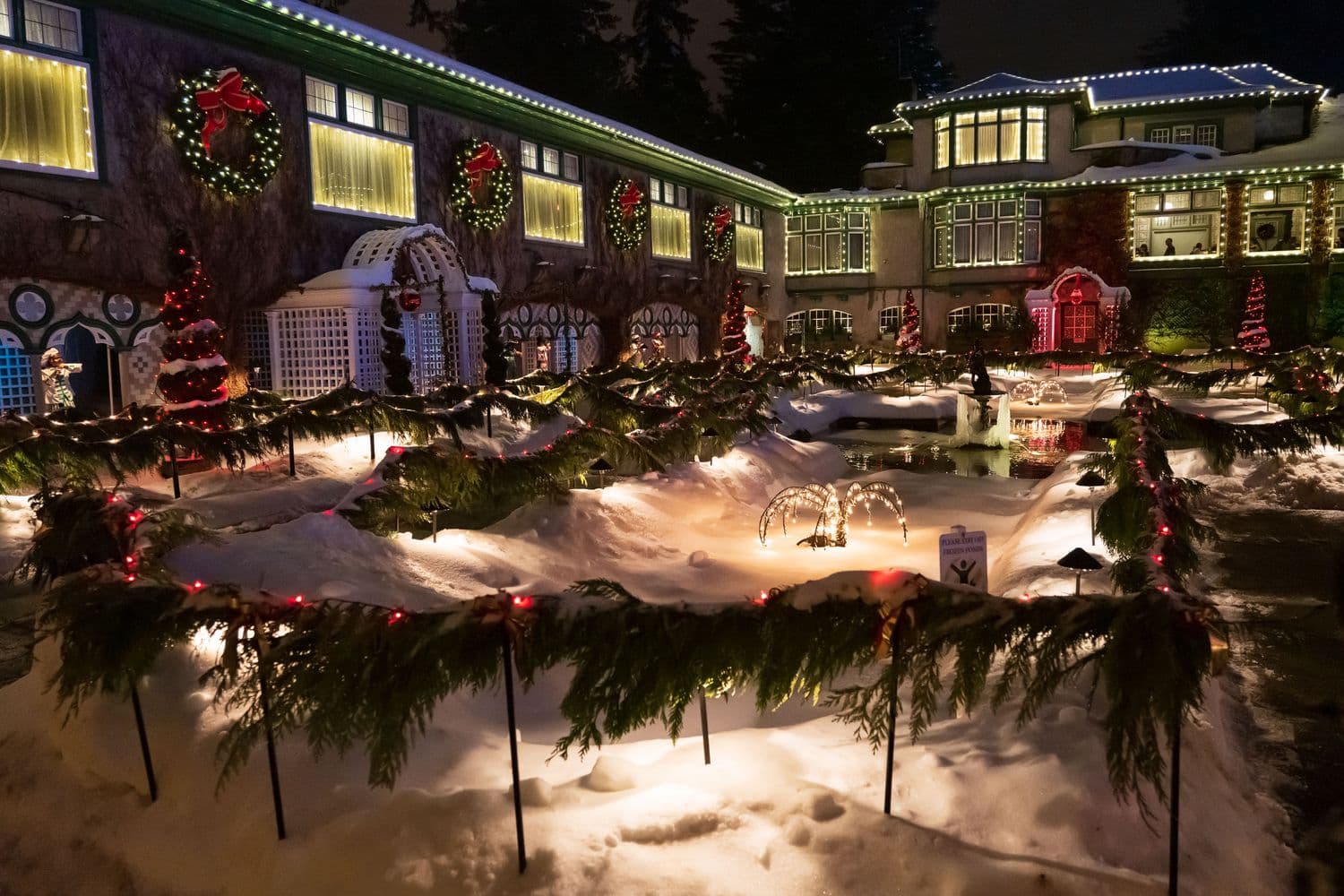
Every December, the same question splits the neighborhood into two camps. One group is up on a ladder the weekend after Thanksgiving, clips in one pocket and cold fingers on the gutters. The other group comes home to find a crew already finishing the roofline, gets handed an invoice, and never touches a strand.
Both camps are making a reasonable choice. The DIY route really is cheaper in dollars, and for a lot of homes it's the obvious call. But the honest comparison isn't lights-versus-a-crew. It's the full cost of doing it yourself, time and takedown and storage included, against the full cost of a professional package, materials and service and peace of mind included. Once you lay both out side by side, the right answer for your house usually becomes clear.
Here's the real breakdown, with dollar ranges you can plan against.
What DIY actually costs
The sticker cost of DIY is just the lights, and that's where most people stop counting. The real cost has four more line items hiding behind it: the gear you need to hang them safely, your time, the takedown in January, and storing everything for eleven months. Add those up and the "free labor" starts to look less free.
The materials
For a straightforward single-story roofline plus a couple of shrubs, the first-year materials run $150–$400. That covers:
- Lights. Warm-white commercial-grade C9 or C7 bulbs for the roofline, plus mini lights or net lights for shrubs. Commercial-grade costs roughly twice what big-box mini lights cost, but lasts five times as long, so it's the right buy if you decorate every year. Not sure how many strands you need? The Christmas light calculator takes your roofline length and shrub count and tells you the exact bulb count and type before you spend a dollar.
- Clips. All-in-one gutter and shingle clips run $10–$25 for a pack that covers a typical roofline. Skip the staple gun and the nails. Clips are what keep this from becoming a roof-damage story.
- A timer or smart plug. $15–$40. Set it and forget it so you're not walking out in the cold every night.
- A good ladder. This is the line item people already own or badly underspend on. A quality extension ladder that reaches a two-story eave runs $150–$300 if you're buying one. A wobbly borrowed ladder is exactly how the safety section below happens.
The important thing about materials is that they're mostly a first-year cost. In year two and beyond, you're reusing the lights and clips, so DIY drops to near-zero in dollars: a few replacement bulbs and a new timer battery. That's the DIY trump card, and it's a real one.
The time
This is the line item that never shows up on a receipt and quietly dominates the whole comparison.
A single-story roofline that you can reach from the ground or a short ladder takes two to four hours for someone who's done it before, longer the first time while you're figuring out spacing and running extension cords. A two-story home, with the ladder repositioning, the trips up and down, and the tree and shrub wrapping, is realistically a full day. Add tree wrapping and it can spill into a second afternoon.
Then there's the part everyone forgets: takedown in January. It's the same hours, in worse weather, with none of the anticipation that made hanging them fun. Plenty of DIY displays stay up until February for exactly this reason.
And finally, storage. Tangled strands, a labeled bin or two, and a spot in the garage or attic for eleven months. Not a cost exactly, but a hassle that the professional route erases entirely.
If you enjoy the process, none of this is a downside. Hanging your own lights is a deeply satisfying weekend ritual for a lot of people. But if you're counting the true cost, put an honest number on your Saturday, add the January takedown, and the "cheap" option gets more expensive.
The DIY bottom line
| DIY cost item | First year | Renewal years |
|---|---|---|
| Lights (roofline + shrubs) | $100–$250 | $10–$40 (replacements) |
| Clips and connectors | $10–$25 | $0–$10 |
| Timer or smart plug | $15–$40 | $0 |
| Ladder (if buying) | $150–$300 | $0 |
| Materials total | $275–$615 | $10–$50 |
| Your time (install + takedown) | 4–12 hours | 4–12 hours |
So the pure-materials story is: a few hundred dollars up front, then almost nothing. The time story is: a chunk of two weekends every single year, forever. Which of those matters more to you is most of the decision.
What professional installation costs
Professional installation is priced very differently, and understanding the model is what keeps the quote from feeling like a shock.
Most reputable companies sell a full-service package, not just labor. A typical package includes a design consultation, commercial-grade lights (either leased for the season or purchased as part of the deal), professional installation with proper clips and timers, maintenance and repairs during the season if a section goes dark, takedown in January, and storage of your lights until next year. You hand over the roofline and get it back clean in spring, having touched nothing.
Pricing usually comes one of two ways: per linear foot or per project as a flat quote after a site visit. Per-foot rates split by who supplies the lights: roughly $2–$5 per foot for labor-only installation of lights you provide, and $5–$10 per foot when the installer provides commercial-grade lights, with two-story access and tree wrapping pushing either rate higher. Keep one anchor number in mind: a basic labor-only roofline install averages around $450 nationally. The ranges below describe full-service packages, which sit a tier above that. Here's how they shake out by home:
| Home type | Typical professional range | What's driving it |
|---|---|---|
| Modest single-story | $400–$800 | Short roofline, ground-reachable |
| Larger single-story or small two-story | $700–$1,400 | More linear feet, some ladder work |
| Full two-story | $1,000–$2,500 | Height, longer rooflines, more clips |
| Two-story with heavy tree wrapping and design | $2,000–$5,000+ | Labor-intensive wrapping, custom design |
Two things about these numbers matter.
First, the first year is usually the most expensive, because it includes the lights. Once the commercial-grade strands are bought and stored, renewal years drop that materials line and you're paying mostly for design, install, service, and takedown. It's common for year two and three to come in 20–40% below the first-year quote. When you compare a pro quote to DIY, compare the renewal-year price, not the first-year one.
Second, the wrapping is where the price climbs. Outlining a roofline is relatively quick. Wrapping the trunk and branches of several trees, spiral by spiral, is slow, hand-intensive work, and it's the main reason a two-story quote jumps from four figures low to four figures high. If a designed, wrapped-tree look is what you're picturing, that's the premium you're paying for, and it's hard to replicate yourself.
If you decide to hire out, the most useful thing you can do is ask each company exactly what's included, especially in-season repairs. A crew that hangs and disappears is not the same product as one that comes back when a strand fails on December 20th. (Our guide to hiring a Christmas light installer covers the seven questions to ask before you sign.) When you're ready, get two or three written quotes so you are comparing like for like instead of guessing.
When DIY makes sense
DIY is the right call more often than the professional-installer marketing would suggest. Reach for the ladder yourself when most of these are true:
- Your home is single-story and the roofline is reachable from the ground or a short, stable ladder.
- Your display is modest: a roofline, a wreath, a couple of lit shrubs. The kind of thing that takes an afternoon, not an engineering plan.
- You're budget-focused and decorate every year, so the first-year materials amortize into near-zero renewal cost.
- You actually enjoy it. For a lot of people this is a beloved ritual, not a chore, and no cost analysis should talk you out of something you look forward to.
A ranch, a bungalow, a Cape, or any home where your feet stay close to the ground is prime DIY territory. If that's you, the whole professional-versus-DIY debate is mostly moot: buy good commercial-grade lights once, hang them well, and enjoy the savings for years. Start with the best Christmas lights buying guide to pick strands that'll last, and use the how many Christmas lights do you need rules of thumb so you don't come up short halfway across the roof.
When a pro is worth it
The calculus flips when height, scale, or time enters the picture. Hire out when any of these describe your situation:
- Two-story or steep roof. This is the classic case. A two-story colonial with a tall, symmetrical roofline is beautiful lit and hard to reach safely. The moment you're on an extension ladder near the second-floor gutters, the math changes.
- A big or designed display. Multiple wrapped trees, layered shrubs, a coordinated color story across the whole facade. Achieving a "designed" look, rather than a "hung it myself" look, is a real skill, and it's most of what you're paying a good installer for.
- You don't have the time. A full free day in early December, plus another in January, is a lot to ask of a busy month. Buying that time back is a legitimate use of money.
- Safety is a real concern. Which brings us to the part of this decision that gets glossed over the most.
The safety honesty
Here's the thing the cost tables leave out. Falls from ladders and roofs are a genuine, common seasonal injury. Every year, emergency rooms see a spike in December from exactly this: someone up a ladder in cold weather, on a hard or icy surface, reaching a little too far to the side instead of climbing down and moving the ladder.
The dangerous combination is specific. Height plus cold plus ice is what turns a routine chore into a hospital visit. Numb hands grip worse. Frost on a shingle is invisible until your foot is already sliding. And the instinct to overreach, just to place one more clip without climbing down, is precisely the move that causes the fall.
This is the honest reason most people hire out a two-story job, and it's a good reason. It isn't about being incapable. It's that the marginal cost of a professional install is small next to the cost of a fall, and no roofline is worth that trade. If you do go DIY on anything above single-story, use a proper extension ladder rated for your height, have someone foot it, never work on an icy roof, and follow the cardinal rule: move the ladder, don't lean. If any of that gives you pause, that pause is information. Listen to it.
The verdict framework
Strip away the marketing on both sides and the decision comes down to a short checklist. Go DIY if:
- Your home is single-story and ground-reachable, and
- Your display is modest, and
- You have an afternoon to spare and don't mind the January takedown, and
- The idea sounds like fun, not a burden.
Hire a professional if any one of these is true:
- Your home is two-story or has a steep or complex roof, or
- You want a large, wrapped, designed look, or
- You truly don't have the time this December, or
- Working at height in cold weather worries you at all.
Notice the asymmetry. DIY needs all four boxes checked. A single "or" on the professional side is enough to tip the scale, and that's by design: the reasons to hire out (height, scale, time, safety) are each individually strong enough to justify the cost on their own.
For most single-story homes with a tasteful display, DIY is the clear winner: a few hundred dollars up front, near-free every year after, and a satisfying weekend. For most two-story homes, and for anyone who values their weekend or their footing, the professional package earns its price, especially when you compare against the discounted renewal-year rate rather than the first-year quote.
Whichever camp you land in, the goal is the same warm roofline at dusk. The only real question is whether you want to be the one on the ladder to get it. If you'd rather not be, getting two or three local quotes is the fastest way to find out what it'll actually cost for your house.
Related guides:
- How Many Christmas Lights Do You Actually Need?: per-foot rules so you buy the right amount before you climb
- Christmas Light Calculator: get your exact bulb count and light type in seconds
- Best Christmas Lights Buying Guide: pick commercial-grade strands that last for years
- Two-Story Colonial Christmas Light Ideas: the classic hire-a-pro case, with design ideas either way
- How to Hire a Christmas Light Installer: the questions to ask before you sign
- Rate My Christmas Lights: score a photo of your display out of 100, and see whether the judge thinks your roofline is a ladder job
Share this guide
Frequently asked questions
How much does professional Christmas light installation cost?
Is it cheaper to hang Christmas lights yourself?
How much does it cost to hang Christmas lights on a two-story house?
Why is the first year of professional installation more expensive?
What's included in a professional Christmas light installation package?
Is professional Christmas light installation worth it?
Keep reading
How to Hire a Christmas Light Installer (7 Questions to Ask First)
A homeowner's guide to hiring a Christmas light installer: when to book, the seven questions that separate a good pro from a bad one, red flags to walk away from, and how quotes really work.
How to Hang Christmas Lights on Gutters, Brick, and Rooflines
Hang outdoor Christmas lights without damaging the house: the right clips for gutters, shingles, brick, columns, and windows, plus planning and ladder safety.
What It Costs to Run Christmas Lights in Every State (2026)
What a season of Christmas lights costs to run in all 50 states and DC, from the latest EIA electricity rates: LED versus incandescent, a typical display and a big one.
Prefer pen & paper?
The Christmas Planner
A 25-page printable kit covering budget, gifts, hosting, and decor, built on the same planning logic as this tool. Print it once, keep it in a binder, and reuse it every year.
Or grab 3 pages free first.
Decor that suits the home you have.
Seasonal decorating tips and the occasional new tool, straight to your inbox. One list, no spam.