By Brian · July 6, 2026
How Many Christmas Lights Do You Actually Need? (Tree, Roofline, and Yard)
How many Christmas lights you need for a tree, roofline, bushes, and wrapped trees, with clear per-foot rules of thumb, a tree-size chart, how many strands you can safely connect, and why to buy 10-20% extra.
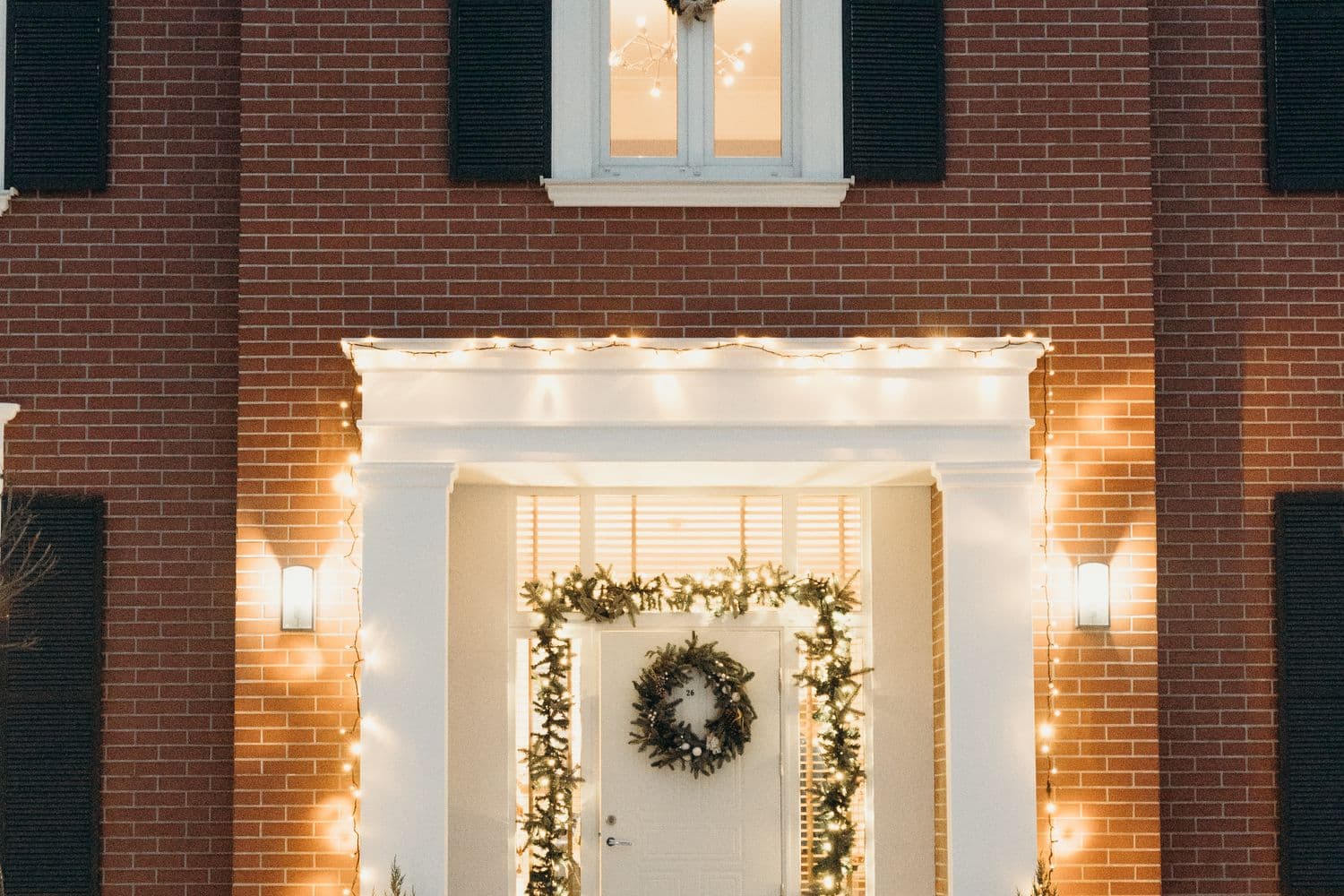
The single most common Christmas lighting mistake is not a tangled strand or a burned-out bulb. It's buying too few lights, getting halfway up the tree or across the roofline, and realizing you're going to come up short. A tree with too few lights looks sparse no matter how good the ornaments are, and a half-lit roofline is worse than no lights at all.
The good news is that lighting is one of the few parts of Christmas decorating with real rules of thumb. Once you know the per-foot numbers, you can plan the whole display before you buy a single strand. Here's how many you actually need, area by area. (If you'd rather skip the math, our Christmas light calculator takes your tree size, roofline, and shrubs and tells you the exact count and which type to buy.)
The quick answer
If you only remember a few numbers, remember these:
- Christmas tree: 100 lights per foot of height for a basic look, 150 for full, 200 for dense.
- Roofline (C7/C9 bulbs): 1 bulb per foot (they sit 12 inches apart).
- Roofline (mini lights): about 100 mini lights per 15-20 feet.
- Shrubs: 100-200 lights each.
- Garland: 100 lights per 9 feet.
- Wrapped outdoor tree: about 100 lights per vertical foot of trunk and branches.
Then add 10-20% extra on top of whatever the math says. More on why below.
Christmas tree lights, by height
The industry baseline is 100 lights per foot of tree height. That's the minimum for a tree that reads as "lit" rather than "sprinkled." Step up to 150 per foot for a full, magazine-looking tree, and 200 per foot for the dense, glowing look you see in showrooms and hotel lobbies.
| Tree height | Basic (100/ft) | Full (150/ft) | Dense (200/ft) |
|---|---|---|---|
| 4 ft (tabletop) | 400 | 600 | 800 |
| 6 ft | 600 | 900 | 1,200 |
| 7 ft | 700 | 1,050 | 1,400 |
| 7.5 ft | 750 | 1,125 | 1,500 |
| 9 ft | 900 | 1,350 | 1,800 |
Two adjustments. A slim or pencil tree has less volume, so you can shave 20-30% off these numbers. A very full or flocked tree hides light deep in the branches, so lean toward the higher end. And if you want the modern layered look, plan to push a good portion of those lights deep into the tree near the trunk rather than only on the branch tips, which is what creates dimension instead of a flat outline.
Outdoor: roofline and eaves
Outdoor counts start with a tape measure. Add up the linear feet of roofline, eaves, and peaks you want to outline, then apply the number for your bulb type:
- C7 and C9 bulbs (the classic large "storybook" bulbs) are strung 12 inches apart, so it's simple: 1 bulb per foot. A 150-foot run of roofline and eaves is about 150 bulbs, or six 25-foot strands.
- Mini lights pack more bulbs into less length. For outlining a roofline with a clean, continuous look, plan roughly 100 mini lights per 15-20 feet. A 150-foot roofline is about 8-10 strands of 100.
If you're not sure how to measure a two-story or complex roofline safely, our guides to Christmas lights for two-story colonials and ranch-style homes walk through the measuring and hanging by house shape.
Outdoor: wrapping trees, columns, and railings
Wrapping is where counts climb fast, because you're covering length and going around.
- Tree trunks and branches: plan about 100 lights per vertical foot of trunk and main branches for a moderate wrap. A small tree with just the trunk and a few limbs done might use 300-600 lights; a medium tree wrapped out along the branches can take 1,000-2,000 or more. Wrap with roughly 3-4 inches between passes for the dense glow; wider spacing stretches the strand but looks thin.
- Porch columns: about 100-150 lights per column, depending on height and how tightly you spiral.
- Railings and banisters: about 100 lights per 8-10 feet.
Shrubs, bushes, and garland
- Shrubs and bushes: 100 lights for a small shrub, up to 200-300 for a large one. Net lights sized to the bush are the shortcut here, they drape evenly in seconds instead of being woven by hand.
- Garland: the standard is 100 lights per 9 feet of garland, whether it's on the mantel, the staircase, or the front door. If you're lighting garland, our garland calculator will also tell you how much garland itself you need for each run.
- Wreaths: about 50 lights for a small wreath, 100 for a standard 24-inch one.
- Windows: about 100 mini lights to outline a standard window.
Always buy more than the math says
Whatever total you land on, add 10-20% on top, and buy it in the same purchase. Three reasons:
- Strands fail. A dead strand mid-display is far less painful when you have a spare in the box than when the store is sold out in mid-December.
- People underestimate. Almost everyone buys too few the first time. Rounding up is the safe error.
- Matching later is hard. Bulb color and warmth vary between production runs and brands. Buying your whole display at once keeps the color consistent.
For which lights are actually worth buying (LED vs incandescent, warm vs cool white, indoor vs outdoor rating), see our Christmas lights buying guide.
Don't overload the circuit
Buying enough lights is one limit. Powering them safely is the other, and it's the one that trips people (and fuses) up.
- How many strands you can connect end to end depends on the technology. Incandescent mini lights are typically limited to about 3 connected strands of 100, because they draw real power. LED strands sip a fraction of that, so you can often connect 20 or more end to end. The exact maximum is printed on the strand's tag, never exceed it.
- Per circuit, don't run more than about 1,440 watts on a standard 15-amp household circuit (that's the 80% safety margin electricians use). This is a big reason to go LED for a large display: the same circuit that maxes out on a few hundred incandescent bulbs can run thousands of LEDs. If you're deciding between the two, LED vs incandescent Christmas lights weighs up the cost, the look, and how long each lasts.
If you want to see what your display will actually cost to run for the season, and compare LED against incandescent for the same setup, our Christmas lights electricity cost calculator does the math.
The fastest way: let the calculator do it
The rules above will get you a solid estimate. But if you'd rather not add it all up by hand, plug your numbers into our free Christmas light calculator. Tell it your tree height, roofline length, and how many shrubs you're lighting, and it returns the exact number of lights, how many strands that is, and which type to buy, so you can order once and light the whole house without a second trip to the store.
Measure first, round up second, and you'll never be the house with the half-lit roofline again.
Share this guide
Frequently asked questions
How many lights do I need for a 7-foot Christmas tree?
How many Christmas lights do I need per foot?
How many Christmas lights do I need for outside?
How many strands of Christmas lights can you connect end to end?
Can you put too many lights on a Christmas tree?
How many lights do I need to wrap an outdoor tree?
Keep reading
Christmas Light Ideas for Ranch-Style Homes: The Complete Guide
How to light a ranch home for Christmas: the layering system, the right bulb types, the exact color temperature, and the five-layer plan that flatters the horizontal silhouette instead of fighting it.
Christmas Lights Not Working? Find the Fault in Ten Minutes
The four ways a Christmas light string fails, how to tell them apart in about a minute, and the fixes that actually work. Includes the fuse door most people never open, why half a string goes dark, and the point where a strand is not worth saving.
How to Decorate a Christmas Tree (Like You Hired Someone)
The professional method for decorating a Christmas tree, step by step: fluffing, lights first (with real per-foot counts), ribbon technique, ornament layering, the topper, and the skirt.
Prefer pen & paper?
The Christmas Planner
A 25-page printable kit covering budget, gifts, hosting, and decor, built on the same planning logic as this tool. Print it once, keep it in a binder, and reuse it every year.
Or grab 3 pages free first.
Decor that suits the home you have.
Seasonal decorating tips and the occasional new tool, straight to your inbox. One list, no spam.