By Brian · July 22, 2026
The American Christmas Tree, by the Numbers
Real Christmas tree statistics, sourced: how many Americans put up a tree, real vs artificial, when trees go up and come down, and the 16,000 farms growing the real ones.
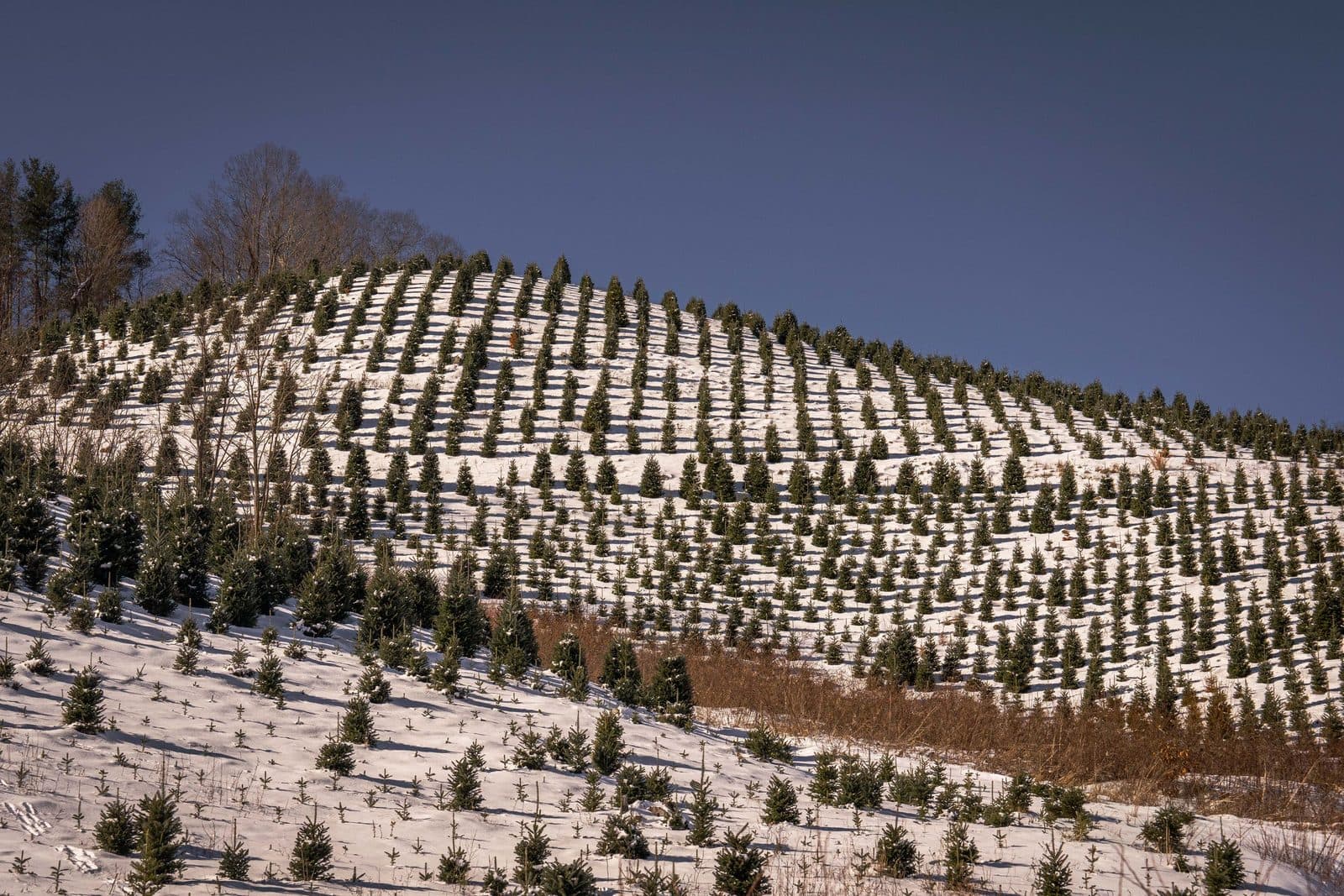
The Christmas tree is the most-photographed object in the American home for one month a year, and almost everything written about it is vibes. How many households actually put one up? Real or fake? When does it go up, honestly, and when does it come down?
We pulled the real numbers from the sources that actually count these things: YouGov's household polling, the American Christmas Tree Association's consumer surveys, the National Christmas Tree Association, and the USDA's Census of Agriculture. Every figure is sourced at the bottom. This piece pairs with our data study on what Americans spend on Christmas, which covers the money side of the season.
Three numbers to set the scene: 71 percent of American adults had a tree for the 2025 season. 83 percent of those trees were artificial. And 47 percent of them came down in the same seven-day window in early January.
Who puts up a tree at all
YouGov's December 2025 polling puts the answer at 71 percent of US adults. That makes the tree one of the most universal traditions in American life, comfortably ahead of most things Americans agree on.
One nuance worth knowing when you see bigger numbers elsewhere: industry surveys of holiday shoppers regularly report that 90-plus percent of respondents plan to display a tree. Those surveys are sampling people already in the holiday aisle, so we treat the population-wide 71 percent as the honest headline and use the industry surveys for what they are genuinely good at, which is tracking the real-versus-artificial split among the people who do decorate.
Real vs artificial: the fake tree keeps winning
Among households that display a tree, the artificial share has climbed steadily: about 77 percent in 2023, nearly 80 percent in 2024, and 83 percent in 2025, per the American Christmas Tree Association's annual consumer research.
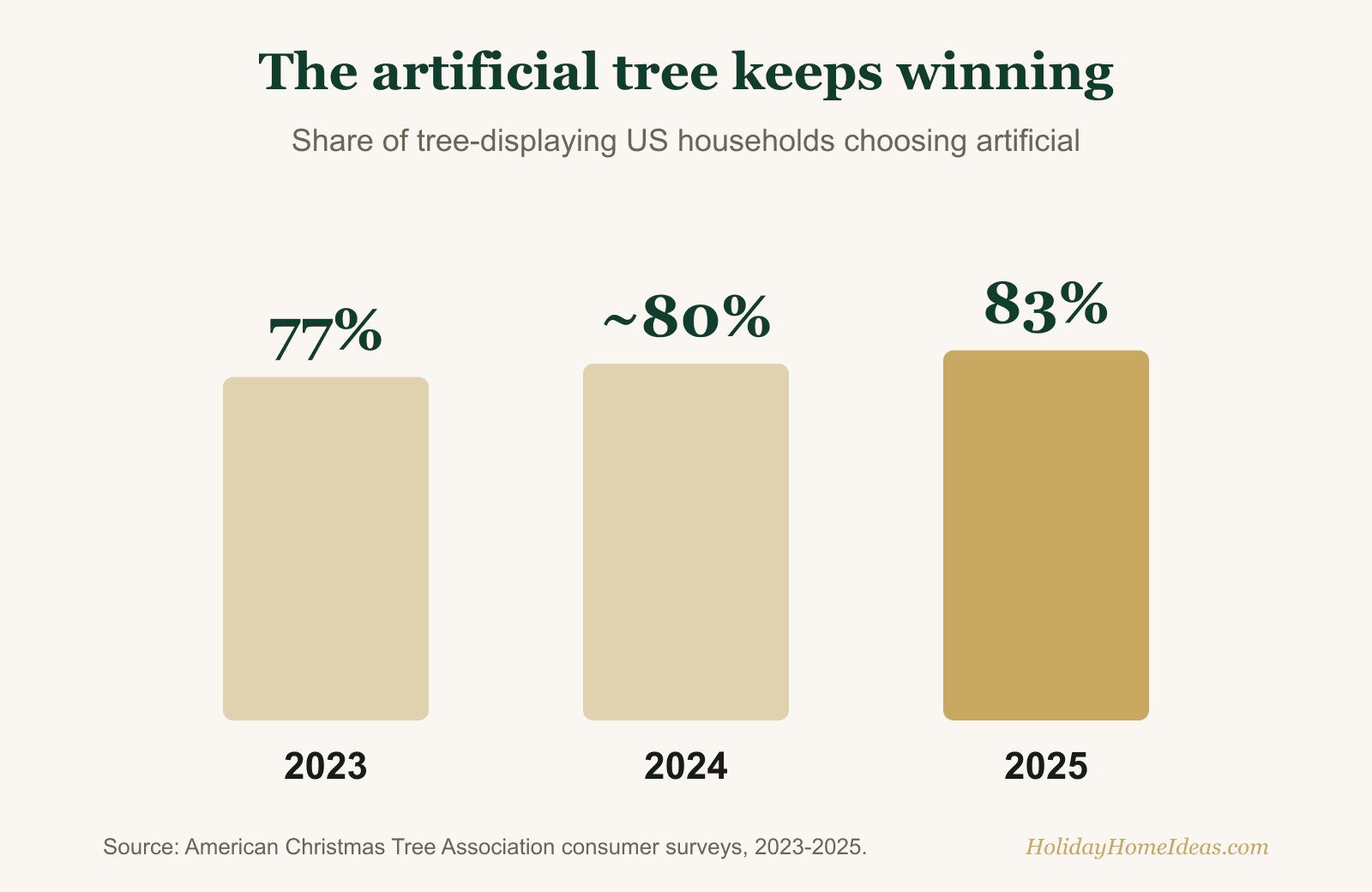
The economics explain most of it. A real tree is bought every year; an artificial tree is bought about once a decade (the industry's own research puts the average artificial tree's service life around 11 years, with the large majority of owners reusing last year's tree). Spread the purchase across those years and the artificial tree usually wins on cost, which is exactly the math we walk through in our real vs artificial comparison.
Two more artificial-tree facts worth knowing: about 80 percent of the world's artificial trees are manufactured in China, per the National Christmas Tree Association, which is why import tariffs show up in artificial tree prices. And if you are shopping for one, our buying guide to artificial trees covers what actually matters on the spec sheet.
When trees go up, and when they come down
This is the argument every household has, so here is the actual national data, from YouGov's 2025 poll of tree-displaying adults.
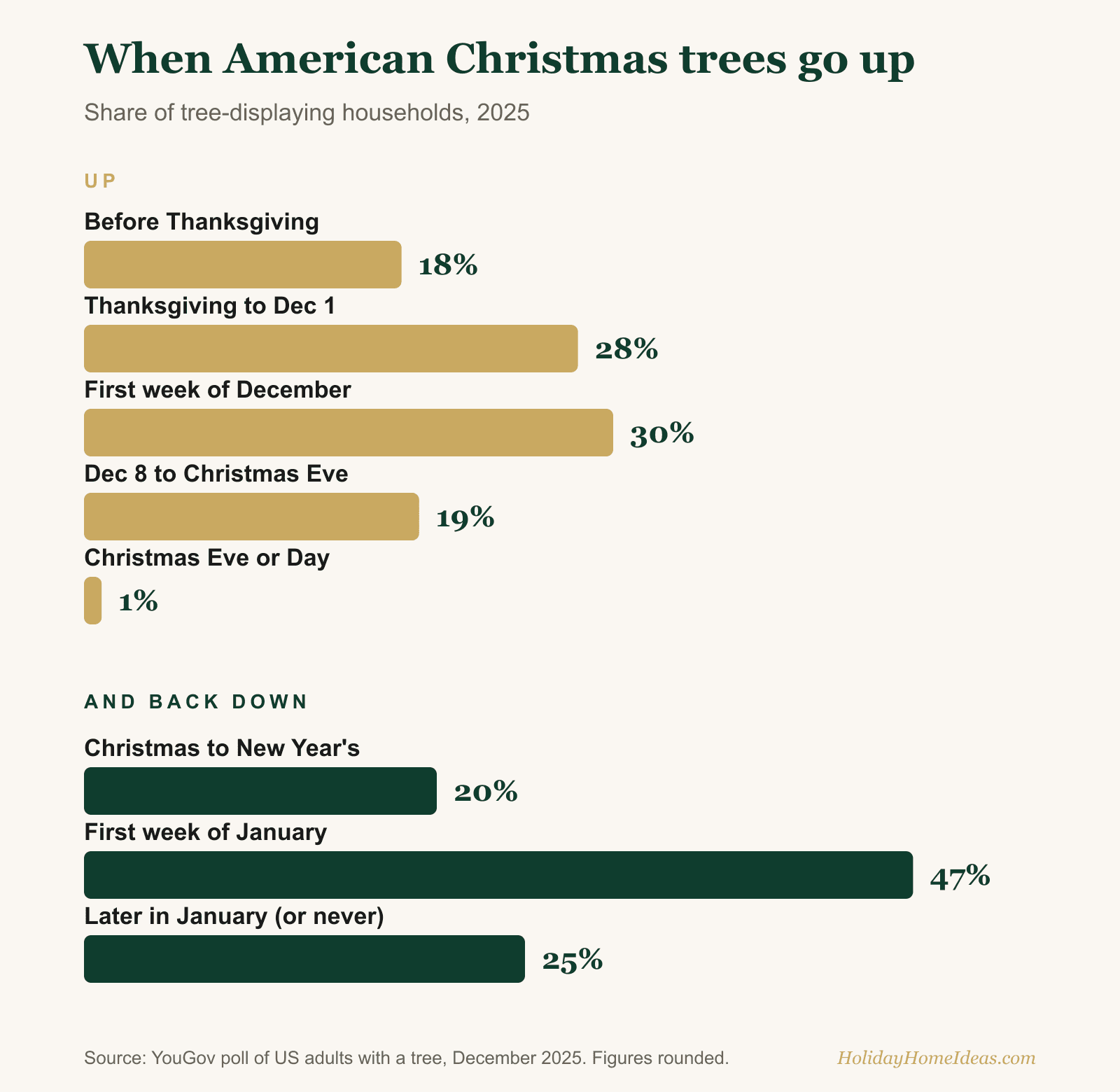
The headline: nearly half of American trees are up before December begins. Eighteen percent of tree households decorate before Thanksgiving, and another 28 percent do it over Thanksgiving weekend. The single most popular window is the first week of December, at 30 percent. Late decorators are a shrinking breed, and the storybook Christmas Eve tree is functionally extinct at 1 percent.
Coming down, there is a landslide winner: 47 percent of trees come down in the first week of January. About a quarter of households keep the tree up deeper into January, or, in the words of 1 percent of respondents, never take it down at all. We salute them.
If you have a real tree, the put-up date matters for more than tradition, because a cut tree has a freshness window. Our real tree care calculator works out the latest smart purchase date and watering plan from your own timeline.
The farms behind the real trees
The real Christmas tree is an agricultural product with a supply chain most people never think about, and the USDA counts it like any other crop.
- About 16,000 US farms grow Christmas trees, in all 50 states.
- 14.5 million trees were cut on American farms in 2022, per the Census of Agriculture, supplemented by roughly 3 million imported trees, mostly from Canada. The industry's consumer survey counted about 21.6 million real trees purchased in 2023, at a median price of $75.
- Oregon and North Carolina alone grow more than half of the nation's harvest, followed by Michigan, Washington, Pennsylvania, Wisconsin, and Virginia.
- Cut-tree sales reached $553 million in 2022, up 47 percent from 2017 even though the number of trees fell, which is the polite statistical way of saying prices went up.
- A tree takes about 7 years to reach the classic 6-to-7-foot height (the range runs 4 to 15 years), so farms keep roughly 350 million trees growing at any one time, planting 1 to 3 seedlings for every tree they harvest.
That seven-year lead time is worth sitting with for a second. The tree you buy this December was planted around 2019. The seedlings going into the ground this spring are aimed at Christmas 2033.
Where do people actually buy them? Choose-and-cut farms lead at 25 percent, followed by chain stores at 21 percent, nurseries at 16 percent, and retail lots at 15 percent, per the industry's 2023 consumer survey. And when the season ends, more than 4,000 local treecycling programs turn real trees into mulch and habitat rather than landfill.
The most famous tree in America, for scale
For a sense of the ceiling on all this: the Rockefeller Center tree, the most-watched single Christmas tree in the country, was reported in 2025 to be a 75-foot Norway spruce weighing around 11 tons, carrying more than 50,000 LEDs and a 900-pound Swarovski star. Your 7.5-footer with 1,000 lights is, proportionally, keeping respectable company. (If you want the pro method for making it look that good, here is how to decorate a tree like you hired someone, and the tree size calculator will tell you what actually fits your ceiling.)
And once it's decorated, you can settle the family argument properly: our AI tree judge scores any tree photo out of 100.
The numbers, in one place
| Statistic | Figure | Source |
|---|---|---|
| US adults with a Christmas tree | 71% | YouGov, 2025 |
| Artificial share (of tree households) | 83% | ACTA/Ipsos, 2025 |
| Artificial share trend | 77% → 80% → 83% | ACTA, 2023–2025 |
| Trees up before December | 46% | YouGov, 2025 |
| Most popular take-down window | First week of Jan (47%) | YouGov, 2025 |
| Real trees purchased | ~21.6 million | NCTA survey, 2023 |
| Median real-tree price | $75 | NCTA survey, 2023 |
| US trees cut | 14.5 million | USDA Census, 2022 |
| US Christmas tree farms | ~16,000 | USDA Census, 2022 |
| Top growing states | OR + NC, over half | USDA Census, 2022 |
| Years to grow a 6–7 ft tree | ~7 | NCTA |
| Trees growing on US farms | ~350 million | NCTA |
| Artificial tree service life | ~11 years | ACTA/Nielsen, 2015 |
| Treecycling programs | 4,000+ | NCTA |
Sources
- YouGov, December 2025 polling of US adults on holiday traditions (tree ownership, real vs artificial, put-up and take-down timing).
- American Christmas Tree Association, annual consumer surveys 2023–2025 (artificial share among tree-displaying households) and 2015 Nielsen research (artificial tree lifespan and reuse).
- National Christmas Tree Association (real-tree purchases and median price from its 2023 consumer survey; growing time, farm inventory, manufacturing share, and recycling program counts from its industry fact pages).
- USDA, 2022 Census of Agriculture via USDA Economic Research Service (trees cut, farm counts, sales value, state rankings, imports).
- Rockefeller Center tree specifications as reported by major news outlets for the 2025 tree.
Where sources disagree on a figure, we have said so in the text and used the most conservative, best-documented number. Survey years are stated throughout, since tree habits shift meaningfully year to year.
If you are here because of an argument rather than an interest in survey methodology, the Christmas Argument Settler turns these numbers into a verdict you can send to the other person.
Share this guide
Frequently asked questions
How many Americans put up a Christmas tree?
Are real or artificial Christmas trees more popular?
When do most people put up their Christmas tree?
When do people take their Christmas tree down?
How many real Christmas trees are sold each year in the US?
How long does it take to grow a Christmas tree?
Keep reading
The Best Artificial Christmas Trees to Buy (by Your Space and Budget)
How to choose an artificial Christmas tree and what's actually worth buying for your space and budget. PE vs PVC needles, pre-lit vs unlit, slim vs full, flocked vs unflocked, and tip count explained.
How to Decorate a Christmas Tree (Like You Hired Someone)
The professional method for decorating a Christmas tree, step by step: fluffing, lights first (with real per-foot counts), ribbon technique, ornament layering, the topper, and the skirt.
How to Pick a Real Christmas Tree (Without Regretting It in Week Two)
A complete guide to buying a fresh-cut Christmas tree: where to buy, the three freshness tests that take ten seconds each, how to measure your room before you go, what to check on the trunk, and the watering math that keeps a tree alive to Christmas.
Prefer pen & paper?
The Christmas Planner
A 25-page printable kit covering budget, gifts, hosting, and decor, built on the same planning logic as this tool. Print it once, keep it in a binder, and reuse it every year.
Or grab 3 pages free first.
Decor that suits the home you have.
Seasonal decorating tips and the occasional new tool, straight to your inbox. One list, no spam.