By Brian · July 7, 2026
LED vs Incandescent Christmas Lights: Which Should You Buy?
LED vs incandescent Christmas lights compared on cost, brightness, safety, and lifespan, plus a clear buy recommendation for every kind of display.
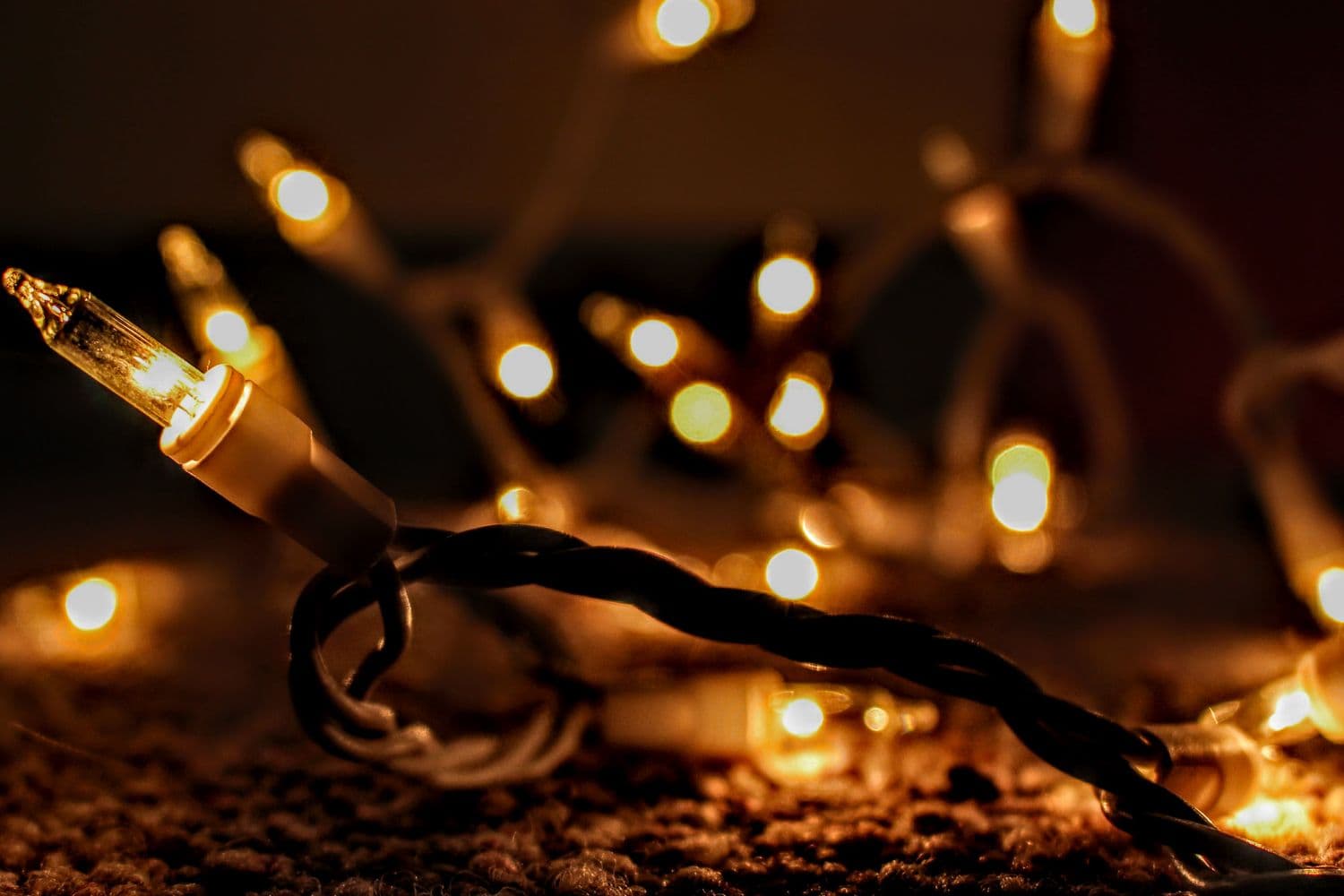
Stand in the Christmas lighting aisle and you'll face the same fork every year: two boxes of what look like nearly identical warm-white string lights, one meaningfully cheaper than the other. The cheaper box is incandescent. The pricier one is LED. And the gap between them is the single decision that shapes what your display costs to run, how safe it is, how long it lasts, and how many strands you can string together before you trip a breaker.
The short version, if you only want the headline: for almost everyone buying lights today, LED is the better buy. It uses far less power, runs cool, lasts several times longer, and lets you connect many more strands per outlet. Incandescent holds onto one real advantage (a warm, nostalgic glow some people simply prefer) and one apparent one (a lower price tag that mostly evaporates once you factor in running costs). But "almost everyone" isn't everyone, and the right answer depends on what you're lighting and what you care about. Here's the full comparison, followed by a clear verdict for each kind of buyer.
The quick comparison
Before the details, here's how the two stack up across the things that actually matter when you're deciding what to buy.
| LED | Incandescent | |
|---|---|---|
| Energy use | Roughly 80-90% less power | The baseline (uses far more) |
| Running cost per season | Dollars for a big display | Often 5-10x higher |
| Upfront price | Higher | Lower |
| Brightness | Crisp, very bright | Softer, warm |
| Warmth / color | Warm-white options close the gap | Naturally warm, candle-like |
| Lifespan | ~25,000-50,000 hours | A few thousand hours |
| Heat | Cool to the touch | Bulbs get hot |
| Strands connected end to end | Often 20+ | About 3 strands of 100 |
| Durability | No filament to break | Filament and glass can fail |
Almost every row favors LED. The two that don't (upfront price and a certain kind of warmth) are exactly where incandescent's remaining fans plant their flag. Let's go row by row so you can weigh them for your own situation.
Energy use and running cost: LED's biggest win
This is the difference that shows up on your power bill, and it's not close. LED Christmas lights use roughly 80-90% less electricity than incandescent to produce a comparable amount of light. An incandescent bulb makes light by heating a filament until it glows, which wastes most of its energy as heat. An LED converts far more of its power directly into light, so very little is lost.
What does that mean in dollars? A large incandescent display running a few hours a night through the season can quietly add tens of dollars to your December bill. Swap in LEDs for the same look and the same hours, and you're often talking about a few dollars for the whole season. The exact figure depends on your electricity rate, how many bulbs you run, and how long they're on each night, which is why guessing is a bad idea. Our Christmas light electricity cost calculator does the math for your specific setup and, more usefully, puts a side-by-side dollar figure on the LED-versus-incandescent difference so you can see exactly what you'd save.
For the actual numbers at your state's electricity rate, see what it costs to run Christmas lights in every state: 1,000 LED lights cost under $6 for the season everywhere in the country, while the same lights in incandescent run $12 to $45.
That running-cost gap is the heart of the case for LED. It's also why the "incandescent is cheaper" argument is weaker than it looks, which we'll come back to.
Upfront price: incandescent's biggest win
Here's where incandescent earns its keep. On the shelf, incandescent sets are usually noticeably cheaper, often a fraction of the price of a comparable LED set. If you're standing there comparing two boxes and only looking at the sticker, incandescent wins, plainly.
The honest way to think about it is total cost over time, not checkout price. A set you'll run for years has three cost components: what you pay for it, what you pay to run it, and how often you replace it. Incandescent wins the first and loses the other two, usually by enough that a quality LED set costs less over five seasons even though it cost more on day one. For a small display you barely run, the upfront saving can still be the deciding factor. For a big display, or one that's on for hours every night, the math flips toward LED.
Brightness, color, and warmth
This is the row people argue about, and it's more nuanced than the others.
Brightness: LEDs are crisp and can be strikingly bright, which is great for a roofline you want to read clearly from the street. Incandescent bulbs give a softer, more diffuse light.
Warmth: Incandescent's calling card is its color. It throws a warm, candle-like glow, and because each bulb varies a hair from the next, a strand has a slightly irregular, hand-strung character that a lot of people find cozier and more traditional. Early LEDs, by contrast, earned a bad reputation for a cold, bluish, almost clinical light. That reputation is out of date. Modern warm-white LEDs (look for around 2700K on the box) are specifically tuned to mimic the incandescent look, and on a lit tree or a roofline most people can no longer tell them apart.
The fair conclusion: incandescent still has a slight edge in pure warmth and character if you put the two side by side and stare. But warm-white LED has closed most of the gap, and it does so without any of incandescent's downsides. If the classic glow is your top priority, this is the one row where incandescent's case is real. For everyone else, warm-white LED gets you 95% of the look and keeps all the practical wins. If you're choosing a color temperature for the whole house, our Christmas lights buying guide covers warm versus cool white and the one rule that matters most: commit to a single white across the entire display.
Safety and heat
Incandescent bulbs get hot. That's not a minor detail. On a real Christmas tree that's slowly drying out over several weeks, hot bulbs pressed against needles are a genuine fire consideration, and the same heat against vinyl siding or near fabric matters outdoors. Incandescent sets have been used safely for generations, but the heat is real and it's a reason to be careful about placement and about leaving them on unattended.
LEDs run cool to the touch. You can hold a lit LED bulb without discomfort. That makes them dramatically safer against a drying tree, near greenery, and against siding, and it's a big part of why they've become the default for both indoor trees and long exterior runs. If safety is anywhere near the top of your list (and on a real tree it should be), this row alone is a strong argument for LED.
Lifespan and durability
Incandescent bulbs have a filament, and filaments burn out. A typical incandescent set is rated for a few thousand hours, and the glass bulbs are fragile in storage. LEDs have no filament to fail and are rated for roughly 25,000-50,000 hours, which across a normal holiday season (a few hours a night for a month or two) translates to many years of service.
The practical payoff is fewer dead strands and fewer replacement trips. A word of caution, though: with LED, real-world lifespan depends far more on build quality than on the LEDs themselves. Heavier-gauge wire, sealed sockets, and better construction outlast the cheapest big-box sets by a wide margin, and the weakest sets fail early no matter what technology is inside. Buying one good LED set is almost always cheaper over five years than replacing a bargain set every season.
How many strands you can connect
This one is easy to overlook until you're on a ladder realizing you've run out of outlets. Because incandescent bulbs draw so much power, you can only safely connect about 3 strands of 100 end to end before you risk overloading the run. LEDs draw a fraction of that, so you can often connect 20 or more strands end to end off a single outlet.
On a long roofline, that's the difference between one tidy run from one plug and a tangle of extension cords hunting for outlets. The exact maximum is always printed on the tag at the end of the strand, and you should never exceed it regardless of technology. If you're planning a big display and mapping out how many strands you'll need and how they'll connect, our how many Christmas lights do you need guide walks through the counts and the connection limits area by area, and the Christmas light calculator turns your measurements into an exact strand count.
Which should you buy? A verdict by situation
The comparison is clear, but the right choice still depends on what you're lighting. Here's the recommendation for each kind of buyer.
Big outdoor display: LED, without hesitation
If you're outlining a long roofline, wrapping yard trees, or lighting the whole exterior, LED is the obvious call and it isn't close. The running-cost savings are largest exactly where you have the most bulbs on for the most hours. The cool-running bulbs are safer against siding. And the ability to connect 20-plus strands end to end instead of 3 is a genuine, practical relief when you're wiring a big display. This is the scenario where every one of LED's advantages compounds.
Indoor tree: LED (especially a real one)
For the indoor tree, go LED, and lean into it if the tree is real. A drying tree plus hot incandescent bulbs is the exact fire-safety concern worth avoiding, and LED's cool operation removes it. Warm-white LED makes ornaments and tinsel glow beautifully, and the low power draw means you won't trip a strand limit when you add a lit topper or other plug-in decor. Plan the count by tree height (roughly 100 lights per foot for a full look) and our Christmas light calculator will size it for you.
Budget buyer watching the sticker price: it depends on scale
If the upfront number is what matters most, be honest about how much you'll run the lights. For a small display that's on a few evenings a season, incandescent's lower price can genuinely be the better deal, and the running cost is too small to worry about. But for anything large or anything you'll run every night for weeks, the cheaper box is a false economy. The electricity and replacement costs erase the saving, and often more. Run your numbers through the electricity cost calculator before you decide. Seeing the season-long dollar difference for your own setup is usually enough to settle it.
The classic warm-glow purist: warm-white LED first, incandescent if you must
If what you love is that soft, old-fashioned, candle-warm glow, you're the one buyer with a real reason to consider incandescent. But try warm-white LED (2700K) first. It's tuned specifically to reproduce that look, and it very likely gets you where you want to be with all the safety, cost, and longevity benefits intact. If you put them side by side and still prefer the extra warmth and hand-strung irregularity of true incandescent, that's a legitimate aesthetic choice, and incandescent still delivers it. Just go in knowing you're paying for that glow in higher running costs, a shorter lifespan, and a hard limit on how many strands you can connect.
The bottom line
LED wins the comparison on the things that affect your wallet, your safety, and your sanity on a ladder: it uses roughly 80-90% less energy, runs cool, lasts several times longer, and lets you connect far more strands per circuit. Incandescent keeps two cards. One is a lower upfront price that mostly disappears once you account for what it costs to run and replace. The other is a warm, characterful glow that some people prefer for good reason, and that's a fair basis to choose it, though modern warm-white LEDs have closed most of that gap.
So for the vast majority of displays (any big outdoor run, any real indoor tree, anything you'll run for hours across the season) buy LED, and buy warm-white if you want the traditional look. Reach for incandescent only if you're lighting something small and seldom-run where the upfront price is what matters, or if you've compared warm-white LED head to head and decided that specific old-bulb glow is worth the trade-offs.
Two next steps to make the call concrete:
- Christmas light electricity cost calculator: see the season-long running cost of your display and the exact dollar gap between LED and incandescent for your setup.
- Christmas lights buying guide: once you've picked LED, this covers what to buy for each part of the house, from roofline C9s to the indoor tree.
- Christmas lights by the numbers: the sourced national data behind this comparison, from the 6.6 billion kilowatt hour season to what the fire statistics say about old strands.
Get the technology right first, then the rest of the display gets easier. And if you're still working out how much you need, measure your roofline and trees and run the numbers through the Christmas light calculator before you buy a single strand.
Share this guide
Frequently asked questions
Are LED Christmas lights better than incandescent?
Do LED Christmas lights actually save money?
Is warm white LED as good as incandescent?
How much cheaper are incandescent Christmas lights to buy?
Can you connect LED and incandescent lights together?
How many LED strands can you connect end to end?
Keep reading
The Best Christmas Lights to Buy (by What You're Lighting)
How to choose Christmas lights and what's actually worth buying, by use case: roofline, trees, shrubs, the indoor tree, garland, and pathways. LED vs incandescent, bulb types, and color temperature explained.
Christmas Light Ideas for Ranch-Style Homes: The Complete Guide
How to light a ranch home for Christmas: the layering system, the right bulb types, the exact color temperature, and the five-layer plan that flatters the horizontal silhouette instead of fighting it.
What It Costs to Run Christmas Lights in Every State (2026)
What a season of Christmas lights costs to run in all 50 states and DC, from the latest EIA electricity rates: LED versus incandescent, a typical display and a big one.
Prefer pen & paper?
The Christmas Planner
A 25-page printable kit covering budget, gifts, hosting, and decor, built on the same planning logic as this tool. Print it once, keep it in a binder, and reuse it every year.
Or grab 3 pages free first.
Decor that suits the home you have.
Seasonal decorating tips and the occasional new tool, straight to your inbox. One list, no spam.