By Brian · August 5, 2026
The Best Time to Buy Christmas Decorations (and What to Buy When)
The same wreath costs three different prices depending on the month you buy it. Here is the honest buying calendar: what to grab in the January clearance, what to hunt in the summer off-season, when the good stuff actually sells out, and why Black Friday is the worst day of the year for Christmas decor.
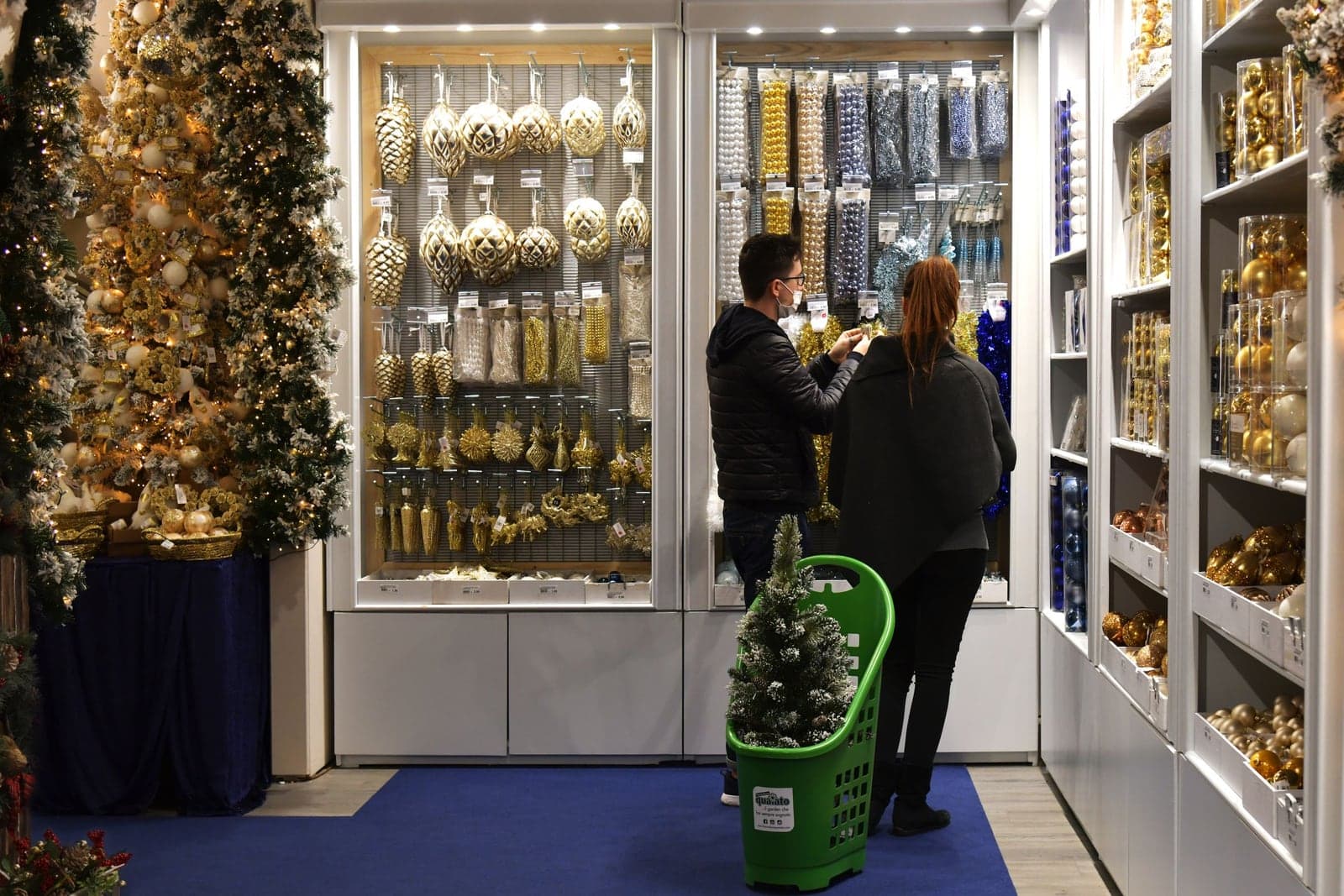
There is a wreath at a big-box store that costs $70 in early December, $17 on December 27, and about $40 in late September when it first hits the floor. It is the same wreath. Nothing about it changed except the date on the receipt.
That is the whole idea behind buying Christmas decorations well. The item barely matters. The calendar matters enormously, and most people shop the single worst two weeks of it, which is the stretch between Thanksgiving and mid-December when demand peaks, selection is thinning, and nobody has any leverage.
Here is the real buying calendar, month by month, with what each window is actually good for. Some of it will feel absurdly early. That is the point.
The rule that explains every price on this calendar
Retailers do not discount because shoppers want a deal. They discount because a shelf has to become something else.
Christmas decor is the most brutally seasonal category in retail. It has a hard expiration date, it eats enormous floor space, and on December 26 it becomes worthless inventory that is blocking the Valentine's Day set. Every markdown in the holiday calendar is a store solving a space problem, and every price increase is a store realizing it has something scarce.
Once you can see the space problem, the prices stop being random:
- After Christmas, the shelf has to clear. Prices collapse.
- In spring and summer, there is no shelf at all. Retail goes quiet and the action moves to the secondhand market.
- In late summer, the new season sets. Full assortment, full price, occasional coupon.
- In October, the shelf is complete and stores want early momentum. Selection peaks, first real sales appear.
- By late November, the good stock is gone and what remains gets a big percentage sign taped to it.
Everything below is just that cycle in detail.
December 26 to mid-January: the deepest discounts of the year
Nothing else comes close. Clearance typically opens around 50 percent off on the 26th, slides to 70 percent within a week, and lands at 75 to 90 percent by the second week of January when the last of it goes to an endcap in the back.
What is genuinely worth buying here:
- Wrapping paper, gift bags, ribbon, tissue, and cards. These are pure consumables with no styling risk. Buying a year ahead is free money.
- Plain glass ornaments in your palette. The base layer of a good tree is inexpensive balls in one or two colors, and January is when you stock up on 60 of them for the price of 15.
- Light strands. Buy sealed boxes of the exact bulb type and color temperature you already run, so next year's additions match. If you are still deciding what to standardize on, our LED versus incandescent comparison settles it before you commit.
- Storage. This is the single best-value purchase of the entire year, because you are buying it at the exact moment you know what you need. You just packed everything. You know the tree bag is torn and the ornament box is short two trays. Our Christmas storage guide covers what is worth owning.
- Artificial trees. Last season's models get cleared hard. If you are replacing a tree and are flexible on brand, this is the cheapest tree you will ever buy.
What to be careful with: anything trend-driven, anything sized to a space you have not measured, and anything you are buying purely because the sticker is satisfying. Clearance is where people accumulate decor they never use, which is how a garage fills up with bins of things that do not go together.
The discipline that makes January work is boring and it is the whole trick: shop a list you wrote in December. Leave a note taped inside the top storage bin the day you pack up, listing exactly what died, what you ran short of, and what you wished you had. Then buy that list, and close the app.
Late January through March: the long tail
Whatever survives the clearance gets consolidated onto a single sad rack somewhere near the back of the store, and it stays there until it sells. Prices do not really improve past mid-January, but the remnants shift to places worth checking: outlet stores, discount chains like Ollie's and Big Lots, and the online clearance sections of specialty retailers, where last season's overstock trees and wreaths quietly sit at half price.
This is also the honest moment to do the audit nobody wants to do in December. Pull the bins, plug in every strand, and count what you actually own. A free inventory pass in the Christmas Planner takes twenty minutes and turns next year's shopping from guesswork into a list.
April through July: the off-season, where the secondhand market wins
Retail is dead here. That is exactly why this window is good.
Spring and summer are when people clean out garages, downsize, and settle estates, and Christmas decor is always in the pile. The result is a resale market flooded with high-quality decor at prices no store will match, sold by people who mostly want the boxes gone:
- Estate sales are the best of the lot. Look for listings that mention a full basement or attic. Vintage glass ornaments, heavy brass candlesticks, and older ceramic villages show up constantly, and the second day of a sale is usually half price.
- Facebook Marketplace and OfferUp in June and July are full of complete decor sets from people who are moving. Search "Christmas" with a wide radius and sort by newest, and expect to pay a third of retail on premium artificial trees that were used twice.
- Thrift stores rotate seasonal goods to the sales floor as they receive them, and summer donations arrive when garages get cleaned. Goodwill and Habitat ReStore locations often have a dedicated shelf year-round.
- Specialty retailer summer events are real too. Several tree and wreath brands run Christmas in July promotions, and it is a legitimate discount because it is early demand they would not otherwise have. It is the only meaningful new-inventory sale before fall.
One caveat on secondhand lights: buy them only if you can plug them in first, and treat any strand with cracked insulation, a scorched socket, or a chewed section as trash. Save the bargain hunting for the things that cannot fail dangerously.
The off-season is also when to book labor if you use it. Installers set their season's schedule in summer and early fall, and the crews that fill up by October are often willing to lock a price in July. If a professional roofline is in your plans, our guide to hiring a Christmas light installer covers the questions to ask.
August and September: first pick, full assortment
Craft chains set their Christmas floor absurdly early, usually starting in late July and fully merchandised by mid-August. Big-box retailers follow in September. The reflex is to roll your eyes at Christmas ribbon next to the back-to-school display, but there is a real advantage buried in it.
This is the only moment when the assortment is complete and untouched. Every color of a ribbon line is in stock. Every size of a wreath is on the wall. The picked-through look that defines December shopping does not exist yet.
Craft stores also run rotating 40 to 50 percent off promotions on holiday categories through the fall, which means late August can genuinely beat November on ribbon, picks, floral stems, and DIY materials. If you build your own wreaths, garland, or bows, this is your season, full stop.
The one thing to do before you buy anything here: measure. Ceiling height where the tree goes, linear feet of roofline, the width of the mantel, the door opening for the wreath. Our Christmas light calculator turns those measurements into strand counts, and the tree size calculator handles ceiling clearance including the topper. Shopping in August without measurements is how people end up owning a 9-foot tree and an 8-foot ceiling.
October to mid-November: the sweet spot for anything expensive
If you only optimize one window, optimize this one.
By early October the premium retailers have their new collections live, early-season sales have started, and, critically, nothing is sold out yet. Balsam Hill, King of Christmas, and the other specialty brands run October promotions that are usually within a few percentage points of their Black Friday pricing, on stock that will not exist in three weeks. The same goes for commercial-grade C9 strands and permanent eave lighting, where the popular warm-white SKUs disappear first.
The big-ticket list belongs here: the tree, the outdoor light system, the pre-lit wreath and garland at the size you actually need, and anything personalized, since custom shops need two to three weeks of lead time and stop taking orders when their queue fills.
Before you commit real money, set the number. Our decoration budget planner lets you cap each category and see the running total against typical benchmarks, and our breakdown of what it costs to decorate a house for Christmas gives you honest ranges by home size. For the wider context of where holiday money goes, we pulled the national numbers in the cost of Christmas.
Black Friday and Cyber Monday: mostly theater
Here is the uncomfortable truth about the most hyped shopping weekend of the year, at least for this category: the decorations worth owning are largely gone by the time it arrives.
Premium trees in the popular heights sell out in early November. Quality wreaths in the sizes people actually want go with them. What gets marked down loudly on Black Friday tends to be either overstock of the models that did not sell or thin inventory that will be backordered into December, which does you no good on a December 6 install date.
Use the weekend for what it is genuinely good for: fill-in items and small electronics. Extra ornament multipacks, smart light controllers, timers, replacement bulbs, candles, and table linens are all fairly priced that weekend and are all things you cannot really buy wrong.
December: you are now a price taker
Once the season starts, you pay retail and take what is on the shelf. The only strategy left is substitution, which means being willing to redesign around what exists rather than hunting for the thing you pictured. Fresh greenery is the exception worth knowing: garden centers and tree lots cut prices on real garland and wreaths in the week before Christmas because it does not survive to next year, and a $12 armful of fresh cedar restyles a mantel better than anything else in that price range.
The whole calendar on one page
| What you are buying | Best window | Typical savings | Why |
|---|---|---|---|
| Wrap, ribbon, cards, tissue | Dec 26 to Jan 10 | 70 to 90% | Pure consumable, zero styling risk |
| Storage bins, tree bags, ornament boxes | Dec 26 to Jan 10 | 50 to 75% | You know exactly what you need that week |
| Plain glass ornaments, filler decor | Dec 26 to Jan 10 | 60 to 80% | Base layers are interchangeable |
| Artificial tree, budget conscious | First week of January | 50 to 70% | Last season's models get cleared |
| Vintage and high-quality secondhand | April to August | 60 to 90% | Estate sales and garage cleanouts |
| DIY materials, ribbon, picks, stems | August to September | 40 to 50% | Craft store promos, full assortment |
| Artificial tree, first choice | Last two weeks of October | 20 to 40% | Everything in stock, early sales live |
| Outdoor lights and roofline systems | October to early November | 15 to 30% | Popular SKUs sell out by late November |
| Personalized and custom pieces | Early October | Minimal | Lead times, not price, are the constraint |
| Controllers, timers, spare bulbs, accents | Black Friday weekend | 20 to 40% | The one thing the weekend does well |
| Fresh garland and wreaths | Third week of December | 30 to 50% | Perishable, cannot be carried over |
Three times waiting for a deal costs you money
Safety gear. Outdoor-rated extension cords, GFCI adapters, and light clips are cheap and the failure mode is a fire. Buy them new, buy them right, and never source them secondhand.
The tree, if you are hosting. Missing your window on a tree means either paying full price in December or displaying a tree you settled for, for four straight weeks, in front of everyone you invited over.
Anything with a name on it. Custom stockings, engraved ornaments, and monogrammed anything are made to order. The constraint is the maker's queue, not the price, and the queue closes in November.
Making the system work when the season is five months away
The reason most people never buy in the cheap windows is not discipline, it is memory. In July you genuinely cannot remember which strand died or how much ribbon the banister took.
Three habits fix that, and all three take a few minutes:
- The bin note. When you pack up in January, tape an index card inside the lid of the first bin listing what broke, what ran out, and what you wished you had. It is the shopping list for the entire following year.
- Measurements in your phone. One note titled "Christmas measurements" with ceiling height, roofline feet, mantel length, door width, and banister length. It converts every off-season sale from a guess into a decision.
- A cap you set in advance. Off-season buying only saves money if the total goes down. Set the number in the budget planner first, then spend it across the year instead of in one panicked November.
If you want the full seasonal version of this, including install and takedown timing rather than just purchasing, our month-by-month Christmas decorating checklist runs the whole calendar from October through January. And when it is time to actually choose products, our artificial tree buying guide and Christmas lights buying guide cover what is worth the money at each price tier.
The short version: buy consumables and storage the week after Christmas, hunt secondhand all summer, buy DIY materials in August, buy the expensive structural pieces in October, and treat Black Friday as a garnish. Do that for two years running and your decorating budget quietly drops by half while your house looks better, which is a rare combination in anything having to do with Christmas.
Share this guide
Frequently asked questions
When is the cheapest time to buy Christmas decorations?
Is Black Friday a good time to buy Christmas decorations?
When do stores start putting out Christmas decorations?
When should I buy an artificial Christmas tree?
Is it worth buying Christmas decorations in the off-season?
What should I never buy on Christmas clearance?
Keep reading
The Best Artificial Christmas Trees to Buy (by Your Space and Budget)
How to choose an artificial Christmas tree and what's actually worth buying for your space and budget. PE vs PVC needles, pre-lit vs unlit, slim vs full, flocked vs unflocked, and tip count explained.
When to Put Up Christmas Decorations (and When to Take Them Down)
The honest answer to the annual argument: what most American households actually do, what the traditional calendars say, why outdoor lights should go up weeks before you turn them on, and how to pick a start date that fits your house instead of somebody else's rule.
How to Pick a Real Christmas Tree (Without Regretting It in Week Two)
A complete guide to buying a fresh-cut Christmas tree: where to buy, the three freshness tests that take ten seconds each, how to measure your room before you go, what to check on the trunk, and the watering math that keeps a tree alive to Christmas.
Prefer pen & paper?
The Christmas Planner
A 25-page printable kit covering budget, gifts, hosting, and decor, built on the same planning logic as this tool. Print it once, keep it in a binder, and reuse it every year.
Or grab 3 pages free first.
Decor that suits the home you have.
Seasonal decorating tips and the occasional new tool, straight to your inbox. One list, no spam.