By Holiday Home Ideas Editorial Team · July 1, 2026
The Real History of Santa Claus (from St. Nicholas to Father Christmas)
How Santa Claus was assembled over 1,700 years: the real St. Nicholas of Myra, the Dutch Sinterklaas, the 1823 poem that gave him reindeer, the cartoonist who drew the North Pole, the Coca-Cola myth, and how the older English Father Christmas merged in.
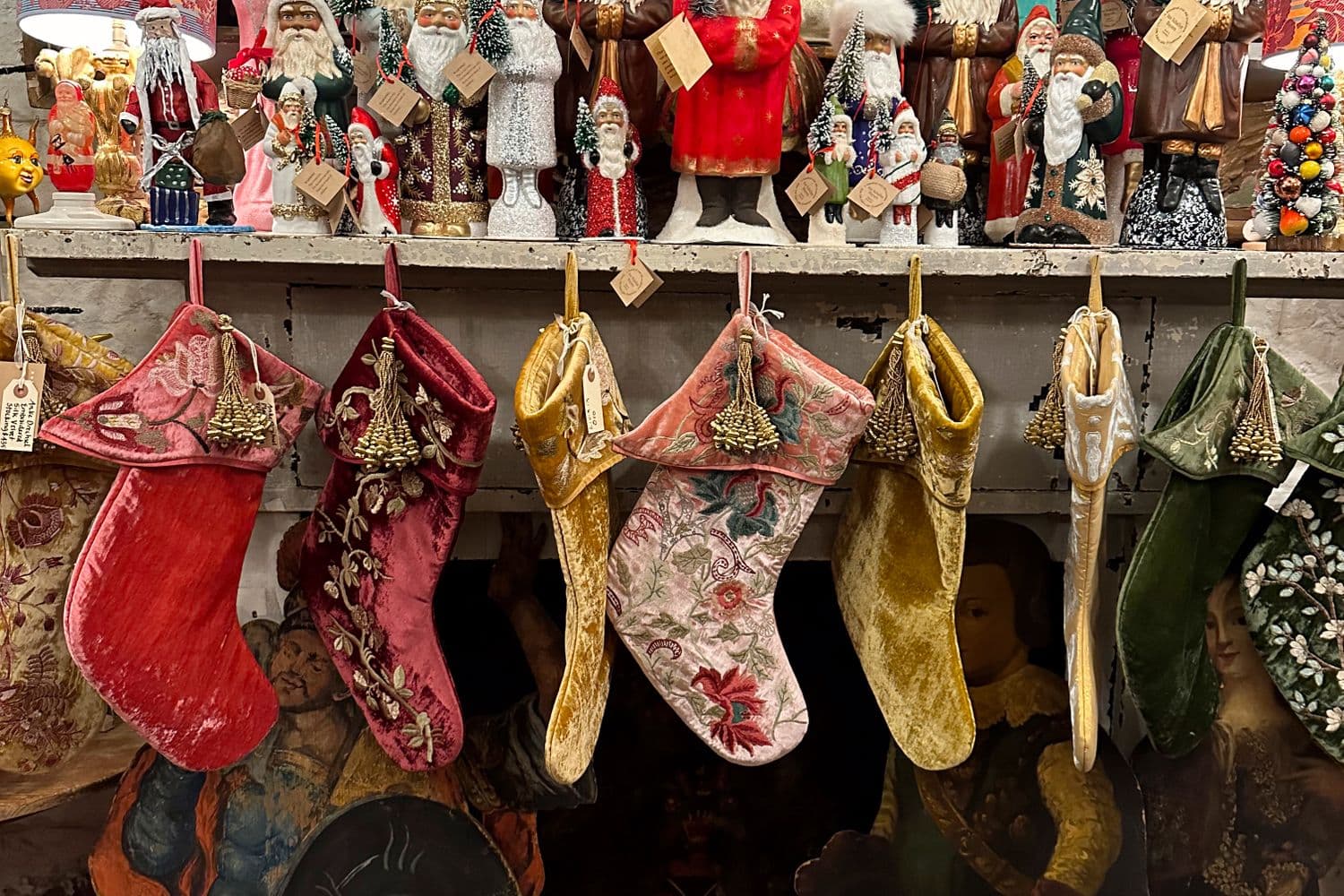
The Santa Claus we picture today, the round and rosy grandfather in a red suit who lives at the North Pole and slides down chimneys, did not arrive fully formed. He was assembled piece by piece over roughly 1,700 years, from a real Turkish bishop, a group of Dutch settlers, an anonymous New York poem, a political cartoonist, and eventually a soft-drink company. Pull the story apart and almost every detail we treat as ancient turns out to have a surprisingly specific origin, and a surprisingly recent one.
Here is where Santa actually comes from, one layer at a time.
The real man: St. Nicholas of Myra
The oldest root of the whole tradition is a genuine historical person. Nicholas was a Christian bishop in the 4th century, born in the Greek-speaking town of Patara and serving in Myra, on the southern coast of what is now Turkey. He died on December 6, probably around the year 343, which is why December 6 is still St. Nicholas Day across much of Europe.
Very little about his life is documented with certainty, but he became one of the most beloved saints in Christianity, and the reason is the stories of his generosity. The most famous tells of a poor man with three daughters who had no dowry, which in that era meant they were unlikely to marry and at risk of being sold into servitude. On three nights, so the legend goes, Nicholas secretly threw bags of gold through the family's window (some versions say down the chimney) to provide each daughter's dowry. In some tellings the gold lands in stockings or shoes left by the fire to dry.
That single detail, gifts left in stockings and shoes by the hearth, is the thread that runs all the way to the stockings hung on modern mantels. Nicholas became the patron saint of children, sailors, and gift-givers, and his feast day became an occasion for small presents left overnight. He was a bishop, which matters for one reason we'll come back to: bishops wore red.
How a Greek saint became a Dutch gift-bringer
For centuries St. Nicholas Day (December 6) was celebrated across Europe, but the direct line to Santa Claus runs through the Netherlands. In Dutch tradition he became Sinterklaas, a stately figure who arrives by steamboat from Spain each year, wears red bishop's robes and a tall mitre, and leaves gifts in children's shoes on the night of December 5. You can see the still-living version of this on our Netherlands Christmas guide, where Sinterklaas remains a separate and beloved figure to this day.
When Dutch settlers founded New Amsterdam, later renamed New York, they carried Sinterklaas with them. The name is the key piece of evidence: say "Sinterklaas" in a hurry and you land very close to "Santa Claus." The English-speaking colonists borrowed the figure and the word, and "Santa Claus" began appearing in American newspapers by the late 1700s.
Two early American writers then nudged the character toward the version we know. In 1809, Washington Irving (of Sleepy Hollow fame) published a satirical history of New York that portrayed St. Nicholas as a jolly, pipe-smoking Dutchman who flew over rooftops in a wagon to deliver gifts. It was playful and fictional, but it planted the idea of an airborne, good-natured Nicholas in the American imagination. The stage was set for the poem that would fix the image for good.
The poem that invented modern Santa
In 1823, a newspaper in Troy, New York published an anonymous poem titled "A Visit from St. Nicholas." You know it by its first line: "'Twas the night before Christmas." It is difficult to overstate how much of the modern Santa was invented, or at least locked into place, by this one short poem.
Before 1823, St. Nicholas had no sleigh and no reindeer. The poem gave him both, along with eight reindeer named individually (Dasher, Dancer, Prancer, Vixen, Comet, Cupid, and the pair originally called Dunder and Blixem, Dutch for thunder and lightning, later smoothed into Donner and Blitzen). It set the visit on Christmas Eve rather than St. Nicholas Day, sent him down the chimney, filled the stockings, and described him as a plump, twinkling, self-assured little figure with a sack of toys. Almost every mechanical detail of the Santa myth, the how of the operation, comes from these few stanzas.
The poem is traditionally credited to Clement Clarke Moore, a scholar who claimed authorship years later. That authorship is genuinely disputed, with some researchers making a strong case for a New York farmer named Henry Livingston Jr. Either way, the poem did the work, and it remains one of the most consequential pieces of writing in the history of the holiday. It is the reason the reindeer exist at all, a fact that makes a great entry in our Christmas trivia questions.
The cartoonist who drew in the rest
If the 1823 poem wrote modern Santa, a German-born American cartoonist named Thomas Nast drew him. Beginning in 1863 and continuing for more than twenty years in the pages of Harper's Weekly, Nast produced a long series of Christmas illustrations that filled in nearly everything the poem left out.
Nast gave Santa a permanent home at the North Pole. He drew the workshop full of toys and the ledger where Santa records which children have been good or bad. He drew children writing letters to Santa and Santa reading them. He settled the character's body type as the heavyset, full-bearded, fur-clad figure we recognize. Over two decades, a scattered folk character became a consistent, illustrated personality with an address, a job, and a filing system. (Nast, incidentally, is the same cartoonist who gave American politics the Republican elephant and popularized the Democratic donkey, so a remarkable amount of enduring visual shorthand came out of one man's pen.)
By the end of the 1800s, thanks to the poem and the cartoons together, Santa Claus was essentially complete as a character. What remained was the color.
The Coca-Cola myth
Here is the most stubborn myth in the whole story: the belief that Coca-Cola invented Santa Claus, or at least dressed him in red to match the company's branding. It gets repeated every December, and it is not true.
What actually happened is that in 1931, Coca-Cola commissioned the illustrator Haddon Sundblom to paint Santa for its holiday advertising. Sundblom's Santa, which ran for decades, was warm, life-sized rather than elf-sized, rosy-cheeked, and unmistakably grandfatherly. Those ads were so widespread and so consistent that they did lock in the definitive modern image of Santa for a global audience.
But red came first. St. Nicholas wore red bishop's robes centuries earlier. Thomas Nast drew a red-suited Santa in the 1800s. Other companies, including White Rock Beverages, used a red-suited Santa in ads in the 1910s and 1920s, before Coca-Cola ever did. Green, blue, and brown Santas had also appeared in the 1800s, so red was a choice rather than a rule. Coca-Cola's real contribution was not invention but standardization: it repeated one version of Santa so relentlessly that the alternatives faded away. The company popularized the modern Santa. It did not create him.
Meanwhile in England: the story of Father Christmas
While Santa Claus was being assembled in America, England had its own Christmas figure with a completely separate history, and only later did the two become one.
Father Christmas is older than the American Santa and began as something quite different. As far back as the 1400s and 1500s, English writing personified Christmas itself as a jolly, bearded man who stood for feasting, drinking, games, and adult merrymaking. He appears as "Sir Christmas" in a 15th-century carol and as "Old Christmas" or "Captain Christmas" in later works. Crucially, this figure had nothing to do with bringing presents to children. He was the spirit of the holiday season, a symbol of hospitality and good cheer.
When Puritan authorities cracked down on Christmas celebrations in the 1600s, Father Christmas became a kind of mascot for the old, banned festivities, appearing in pamphlets that defended traditional Christmas against those who wanted it abolished. When Charles Dickens wrote A Christmas Carol in 1843, the Ghost of Christmas Present, a large, generous, green-robed figure crowned with holly, drew directly on this older Father Christmas tradition.
Through the 1800s and into the 1900s, as the American Santa Claus grew popular in Britain, the two figures gradually merged. Father Christmas took on Santa's sleigh, red suit, and chimney routine, and Santa absorbed the name. Today "Father Christmas" and "Santa Claus" describe the same character, and the older meaning has mostly been forgotten. For most people it is the biggest surprise in the story, and one of the best answers in our Christmas trivia questions.
Santa's relatives around the world
The version most of the English-speaking world knows is only one branch of a much larger family. Because the tradition splits at St. Nicholas and the Christ Child, different countries kept different gift-bringers, and many of them are still going strong:
- Sinterklaas in the Netherlands, the direct ancestor of Santa, still arrives in mid-November and gives gifts on December 5, as a distinct figure from the Anglo-American Santa. See our Netherlands guide.
- The Christ Child (Christkind) in parts of Germany, Austria, and Switzerland. During the Protestant Reformation, reformers wanted to move gift-giving away from the veneration of a saint, so the gift-bringer became the Christ Child rather than St. Nicholas. The German "Christkindl" is where the American nickname "Kris Kringle" comes from, which means the name now attached to Santa originally referred to the baby Jesus. More on our Germany guide.
- La Befana in Italy, a kindly old witch who delivers sweets and gifts on the eve of Epiphany, January 5, riding a broomstick. Italy's gift-bringer is not Santa at all. See our Italy guide.
- Ded Moroz (Grandfather Frost) in Russia and much of the former Soviet world, a tall figure in a long robe who arrives with his granddaughter, the Snow Maiden, and traditionally gives gifts at New Year rather than Christmas. See our Russia guide.
That is only a sample. The full picture, from the Three Kings in Spain to the Yule Lads in Iceland, is laid out country by country on our Christmas around the world map.
Santa is a 1,700-year mashup
The reason Santa Claus feels timeless is that he is genuinely old, but the reason he feels so specific, the reindeer, the workshop, the list, the suit, is that each of those details was added by an identifiable person at an identifiable moment. A 4th-century bishop gave him his generosity and his stockings. Dutch settlers gave him his name. An 1823 poem gave him his sleigh and reindeer. A cartoonist gave him the North Pole and the workshop. Advertisers gave him his final, fixed red uniform. And an older English figure quietly lent him a second name.
He is not one tradition but a stack of them, which is exactly why he has been able to travel so far and mean so much to so many different people. For more of the surprising histories behind things we take for granted, the stories behind famous Christmas carols, the real meaning of the 12 Days of Christmas, and the history of the Christmas tree itself are cut from the same cloth, and the Christmas around the world map shows how the gift-bringer changes shape from one country to the next. If you want to know which of them would be filling your shoes in another country, the gift-giver quiz sorts you between Santa, La Befana, Ded Moroz, Sinterklaas, the Yule Lads, and three more.
Share this guide
Frequently asked questions
Was Santa Claus a real person?
Did Coca-Cola invent Santa Claus, or his red suit?
Where was St. Nicholas from?
What's the difference between Santa Claus and Father Christmas?
Why does Santa wear red?
Where did Santa's reindeer come from?
Keep reading
The History of the Christmas Tree (from Pagan Evergreens to Pre-Lit)
How the Christmas tree really came to be: ancient evergreen worship, the medieval Paradise tree, the 16th-century German invention, the Victorian engraving that made it fashionable, and how it lit up and went artificial.
The Best Christmas Storage to Buy (Trees, Ornaments, Lights & More)
How to store Christmas decorations so they last, and what storage is actually worth buying: tree bags, ornament boxes, light reels, wreath and garland storage, and gift-wrap organizers. Plus what to buy in the January sales.
The Stories Behind 13 Famous Christmas Carols (and Where Caroling Came From)
The surprising history behind the Christmas carols everyone knows: Silent Night written for a broken organ, Jingle Bells meant for Thanksgiving, Carol of the Bells's Ukrainian origin, and how caroling itself began. Plus the story of 10 more.
Prefer pen & paper?
The Christmas Planner
A 25-page printable kit covering budget, gifts, hosting, and decor, built on the same planning logic as this tool. Print it once, keep it in a binder, and reuse it every year.
Or grab 3 pages free first.
Decor that suits the home you have.
Seasonal decorating tips and the occasional new tool, straight to your inbox. One list, no spam.