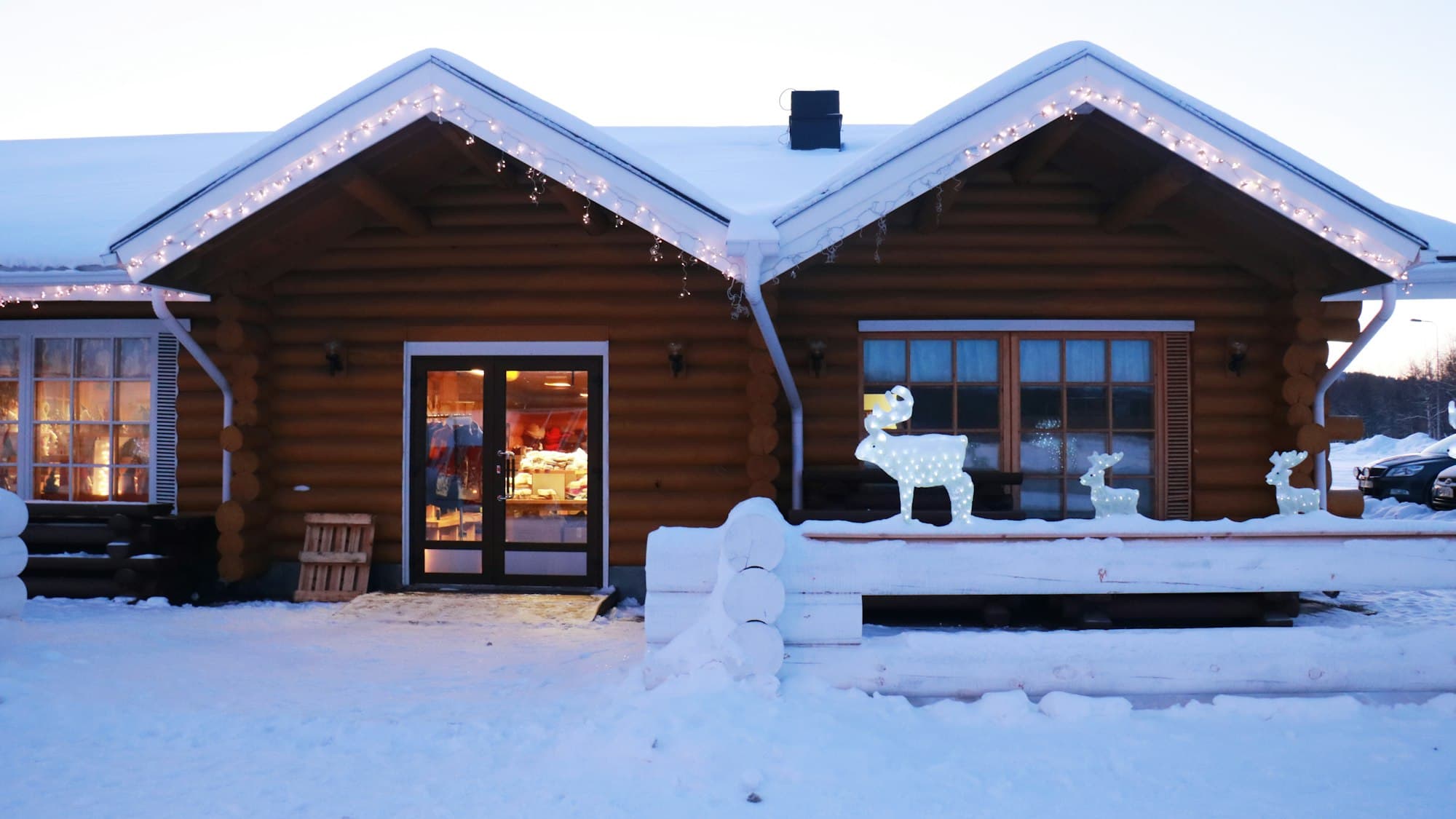
Christmas in
Finland
Celebrated: December 24 through December 26
Signature traditions
- 1.Christmas peace declaration broadcast nationally from Turku at noon on Christmas Eve, a tradition since the Middle Ages
- 2.A Christmas sauna in the afternoon, said to be visited by spirits, so it's quiet and reflective
- 3.Porridge with a hidden almond at breakfast, with the finder getting good luck
- 4.Visiting cemeteries to light candles at family graves
- 5.Joulupukki (the Yule Goat / Father Christmas) visits in person on Christmas Eve evening
What's on the table
Joulukinkku and casseroles
Christmas ham (joulukinkku) is the centerpiece, served with multiple oven-baked casseroles (carrot, rutabaga, and potato) plus rosolli (a beet salad) and gingerbread cookies.
The iconic decoration
Himmeli straw mobiles
Himmeli are intricate geometric mobiles woven from rye straw, hung from the ceiling. The largest hung over the dining table to bless the household with a good harvest the following year.
How gifts are given
Joulupukki (literally 'Yule Goat,' though now resembling Santa) visits homes in person on Christmas Eve and asks 'are there well-behaved children here?' before handing out gifts.
But who delivers yours?
Finland's gift-giver is Joulupukki. But there are eight cultural Christmas gift-givers worldwide — Santa, La Befana, the Yule Lads, Ded Moroz, Sinterklaas, the Three Kings, Christkind, and Joulupukki. Take the 6-question quiz to find your match.
Take the gift-giver quizDid you know?
Finland claims to be Santa Claus's official home, Joulupukki lives in Korvatunturi (Ear Mountain) in Lapland, and the Santa Claus Village in Rovaniemi receives mail from children worldwide year-round.
The shape of the season
Finland has a strong claim to being Christmas's home address. Santa Claus, by Finnish reckoning, lives here, and the Finnish celebration is quiet, deep, and unhurried in a way that fits a country of long dark winters. The main event is Christmas Eve, jouluaatto, December 24, which carries the dinner, the tree, the sauna, and the arrival of Joulupukki himself. Christmas Day and December 26 (St. Stephen's Day, tapaninpäivä) are for rest and visiting.
Two things make the Finnish season distinct before you even get to the food: a centuries-old public declaration of peace, and an afternoon in the sauna. Both are about the same thing: slowing down and marking the day as set apart.
The Declaration of Christmas Peace
At noon on Christmas Eve, the country stops to listen to the Declaration of Christmas Peace (Joulurauhan julistus), read aloud from the balcony of the Brinkkala mansion in the old capital of Turku. The tradition dates to the Middle Ages (it's believed to have been read in Turku almost every year since the 1320s, with rare interruptions such as 1939) and it formally asks everyone to keep a peaceful, lawful holiday, warning that disturbances will be punished more severely during the season. It's broadcast live on national radio and television, and millions of Finns listen to it the way other countries pause for a national anthem. After the words, the band plays Martin Luther's hymn and the season has officially, ceremonially begun.
The Christmas sauna
In the afternoon of Christmas Eve, before the meal and before Joulupukki, the family takes a Christmas sauna. This isn't a casual wash. It's a calm, almost reverent ritual. In older folk belief the sauna was home to the saunatonttu (sauna elf) and was visited by the spirits of departed ancestors after the living had bathed, so one behaved respectfully: no loud voices, no rowdiness, the sauna left clean and a little water on the stones for the spirits. Even in thoroughly modern, secular households the Christmas sauna keeps that hushed, reflective quality. You emerge clean, warm, and settled, ready for the evening.
At the table
Christmas Eve dinner (joulupöytä, "the Christmas table") is built around joulukinkku, a large roast ham, traditionally slow-roasted overnight and served with mustard. Around it sits a spread of warm oven-baked casseroles (laatikot) that is the soul of a Finnish Christmas: lanttulaatikko (rutabaga), porkkanalaatikko (carrot), and perunalaatikko (a slow-sweetened potato casserole). Add rosolli, a beetroot salad that turns everything on the plate pink, and cured or gravlax salmon.
For dessert and through the season: joulutorttu, star-shaped puff-pastry tarts with a spoon of prune jam in the center, and gingerbread (piparkakku). The drink is glögi: mulled, spiced, often non-alcoholic, served warm with raisins and slivered almonds in the cup. On the morning or midday of Christmas Eve, many families eat rice porridge (riisipuuro) with a single blanched almond hidden inside; whoever finds it gets good luck for the year (and, by custom, sometimes has to sing a song).
Joulupukki and Santa's home
Finnish children don't wait for a sleigh on the roof. Joulupukki comes to the door. On Christmas Eve evening, after dinner, he arrives in person (an uncle, a neighbor, a hired visitor) and asks the room, "Onko täällä kilttejä lapsia?", "Are there well-behaved children here?" The answer is always an emphatic yes, and he hands out the gifts from his sack on the spot. The name Joulupukki literally means "Yule Goat," a relic of an older, pre-Christian midwinter figure; the goat has long since merged with the red-suited Santa, but the name stuck.
And the address is specific. In Finnish lore, Santa lives at Korvatunturi ("Ear Fell") in Lapland, a remote fell shaped, conveniently, like an ear, which is how he hears children everywhere. Because Korvatunturi itself is inaccessible, the Santa Claus Village in Rovaniemi, right on the Arctic Circle, serves as his public workshop. It receives mail from children all over the world year-round and draws visitors who want to cross the Arctic Circle line painted across the ground.
Inside the home
Finnish Christmas decor is clean and natural. This is the land of restrained Nordic design. The most distinctive ornament is the himmeli, an intricate geometric mobile woven from lengths of rye straw and hung from the ceiling. The largest traditionally hung over the dining table; folk belief held that it blessed the coming year's harvest, and the bigger and more elaborate the himmeli, the better the crop. Candles are everywhere against the dark, and real or LED candles glow in windows through the long nights.
One of the most moving Finnish traditions happens outdoors: on Christmas Eve, families visit cemeteries to light candles at the graves of relatives. By nightfall the snow-covered graveyards are carpeted with thousands of flickering lights, one of the most beautiful sights of a Finnish Christmas, and a reminder that the season holds the departed close.
If you wanted to borrow this tradition
The Finnish idea worth taking home is the deliberate pause. The noon declaration and the quiet sauna both carve out a moment that says, explicitly, "the rush is over now." You don't need a balcony in Turku or a sauna in the backyard; the principle is to pick a single fixed moment on Christmas Eve when the household stops, turns off the noise, and marks the start of the holiday together. The candlelit cemetery visit also travels well as a way to remember relatives who've died, a small, warm ritual most American Christmases don't have a place for.
And the in-person Joulupukki, who asks whether the children have been good before handing over gifts, is a far more interactive ritual than presents simply appearing under the tree overnight.
Did you know
- Finland claims to be Santa Claus's official home: Joulupukki lives at Korvatunturi in Lapland, and the Santa Claus Village in Rovaniemi gets letters from children across the globe all year.
- The Declaration of Christmas Peace is believed to have been read in Turku nearly every year for around 700 years (with rare wartime interruptions), one of the longest-observed traditions in the world.
- The Christmas sauna's old etiquette of quiet voices and leaving the space clean for the spirits survives even in families who'd never describe themselves as superstitious. It's simply how you treat the sauna on Christmas Eve.
More from Europe



Bring a little of it home
Borrowing one tradition from somewhere else is how most of the traditions on this page started.
Free AI tool
See your own home decorated
Upload one photo and watch your room or house transform, before you buy anything.
Interactive map
All 41 countries
Gift-givers, feast tables, and the surprising customs most articles skip.
City guides
Lights worth the drive
The best displays in 40 US cities, including the free neighborhoods.
More Christmas traditions across Europe
Christmas ideas for your own home.
Seasonal decorating tips and the occasional new tool, straight to your inbox. One list, no spam.