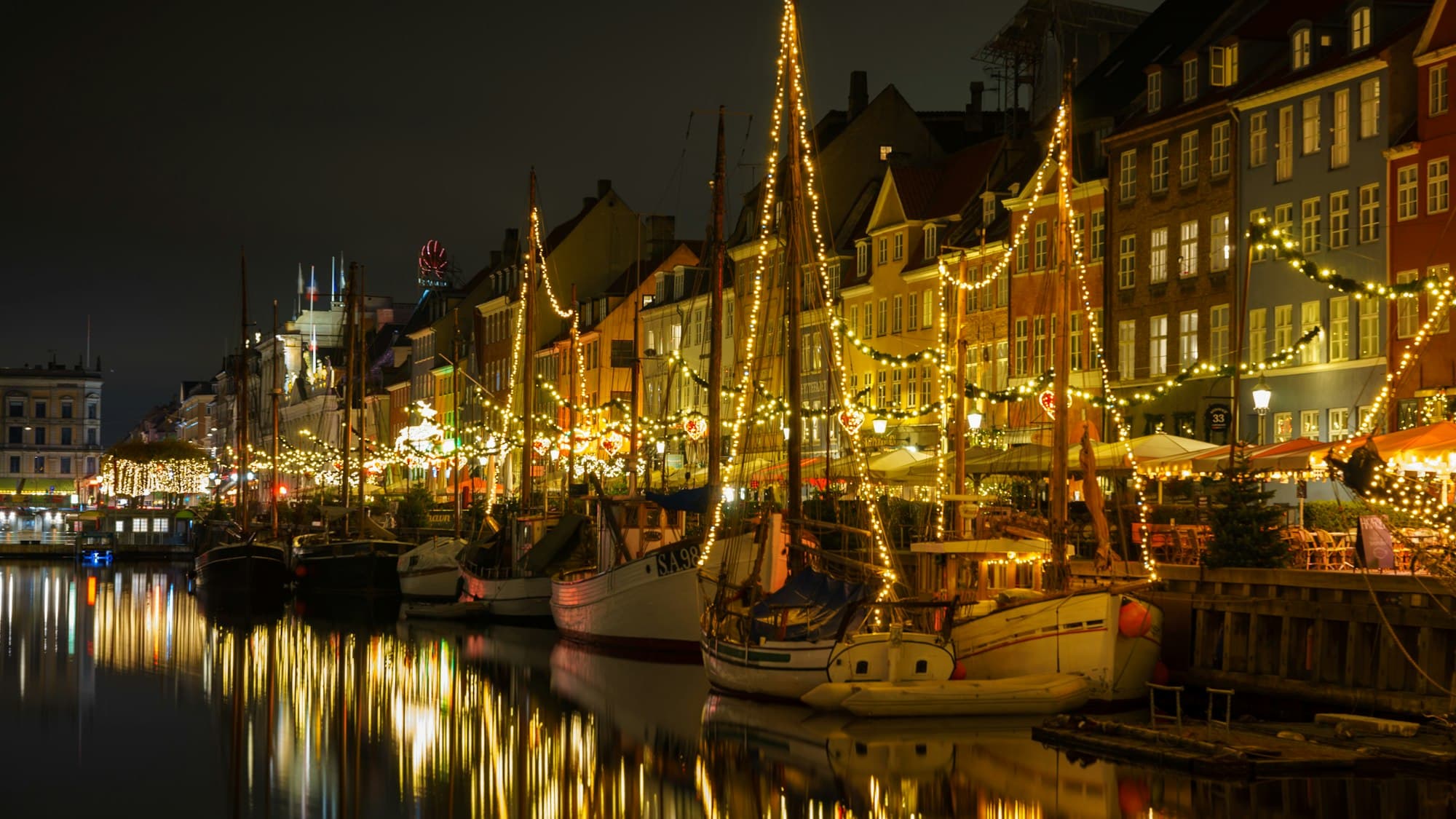
Christmas in
Denmark
Celebrated: December 24 (Juleaften), the main evening for dinner and gifts
Signature traditions
- 1.The family joins hands and dances around the lit Christmas tree singing carols before opening any gifts, a centuries-old ritual that's still standard practice in most Danish homes
- 2.Risengrød (rice porridge) eaten with cinnamon and butter at lunch on December 24, with one whole almond hidden inside; whoever finds it wins a marzipan pig
- 3.Hygge, the candlelit, woolen-blanket coziness Denmark is famous for, deployed at maximum intensity throughout December with mulled gløgg, æbleskiver, and dimmed lighting
- 4.Real wax candles on the Christmas tree on Juleaften, a tradition some families still keep despite the obvious fire risk (a bucket of water stays nearby just in case)
- 5.A daily 'pakkekalender' advent calendar of 24 small wrapped gifts, one opened each morning from December 1-24 in addition to the main Christmas Eve gifts
What's on the table
Flæskesteg and risalamande
Christmas Eve dinner is roast pork with crackling (flæskesteg) or roast duck, served with red cabbage, caramelized small potatoes, and brown gravy. Dessert is risalamande: cold rice pudding folded with whipped cream, vanilla, and chopped almonds, served with hot cherry sauce. One whole almond is hidden in the bowl and the finder wins the mandelgave, traditionally a marzipan pig.
The iconic decoration
Woven paper hearts, candles, and pixies
Danish trees are dressed with woven red-and-white paper hearts (julehjerter), small Danish flags strung on garlands, woven straw stars, and real beeswax candles. Around the house, 'nisser' (small red-capped Christmas pixies) appear in windows, on bookshelves, and tucked into gift baskets. A separate 'kalenderlys' candle, marked off with the numbers 1-24, is burned down a little each day through December.
How gifts are given
Julemanden (Father Christmas) is said to deliver gifts on Christmas Eve, but in practice the family opens them together after dinner, once the dancing-around-the-tree carols are done. Children in many households also leave a bowl of risengrød out for the household nisse (the resident pixie) to keep him friendly for the year ahead.
But who delivers yours?
There are eight cultural Christmas gift-givers around the world — Santa Claus, La Befana, the Yule Lads, Ded Moroz, Sinterklaas, the Three Kings, Christkind, and Joulupukki. Take the 6-question quiz to find out which one matches you.
Take the gift-giver quizDid you know?
Roughly one in five Danish homes still lights real candles on the Christmas tree on Juleaften, even as surveys show electric lights steadily taking over. Families who keep the tradition take the risk seriously: a bucket of water, a wet towel, or a fire blanket stays within arm's reach during the dancing-around-the-tree portion of the evening.
The shape of the season
Denmark does Christmas, jul, as a month-long exercise in coziness that peaks on a single, tightly choreographed evening. All of December is given over to hygge: candles, warmth, gløgg, and good company against the dark. But the celebration itself concentrates on Juleaften, Christmas Eve, December 24, when the dinner, the dancing around the tree, and the gifts all happen in one carefully ordered evening. The Danes have a clear sequence for that night, and most homes still follow it almost to the letter.
The dance around the tree
The defining Danish Christmas ritual happens after dinner and before anyone is allowed to touch a gift: the family joins hands and dances around the lit Christmas tree, singing carols. Round and round they go, working through the traditional songs, sometimes weaving through the house in a chain, until the carols are done. Only then are the presents opened. It's a centuries-old custom and it remains genuinely standard practice, not a quaint revival; for a Dane, gifts simply don't come before the dancing.
Hygge, deployed at maximum intensity
Denmark exports hygge, that hard-to-translate sense of warm, candlelit, woolen-blanket coziness, and December is when it runs at full power. Lighting is dimmed and replaced by an astonishing number of candles. Gløgg (mulled wine with raisins and almonds) is warmed on the stove. Æbleskiver (round, fluffy pancake-puffs dusted with sugar and dipped in jam) come out of their special dimpled pan. Wool socks, low light, slow evenings, people you like: the whole month is engineered for it. It's not decoration so much as an atmosphere the entire country agrees to maintain.
Risalamande and the hidden almond
Two rice dishes bracket the Danish Christmas. At midday on December 24, families eat risengrød, a warm rice porridge with cinnamon, butter, and sugar, and traditionally leave a bowl of it out for the household nisse, often carried up to the attic or out to the barn where he's said to live. Then, as the dessert that crowns the Christmas Eve dinner, comes risalamande: cold rice pudding folded with whipped cream, vanilla, and chopped almonds, served with hot cherry sauce. Hidden somewhere in the big bowl is a single whole almond, and whoever finds it in their serving wins the mandelgave, the "almond gift," traditionally a marzipan pig. The hunt produces a great deal of theatrical slow-eating and poker-faced concealment as people who've found the almond try not to give it away.
The nisse
The nisse is Denmark's resident Christmas pixie, a small figure in a red cap who lives in the attic or the barn and looks after the household, provided he's treated well. Leave him his bowl of risengrød on Christmas Eve and he keeps things running smoothly through the year; forget it, and the legend says he'll play tricks. Nisser appear everywhere in Danish Christmas decor, perched in windows, on bookshelves, tucked into gift baskets, and they're a beloved, slightly mischievous mascot of the season.
Real candles on the tree
Here is the tradition that makes fire marshals wince: roughly one Danish home in five still clips real wax candles to the Christmas tree and lights them on Juleaften, even as electric lights steadily take over. The warm, living flicker of real candlelight on the tree is, for Danes, irreplaceable. It's the look and feel of Christmas itself. The fire risk is openly acknowledged rather than denied: families simply keep a bucket of water, a wet towel, or a fire blanket within arm's reach during the candlelit dancing, and accept the small danger as the price of the real thing.
At the table
Christmas Eve dinner is hearty and specific. The main course is flæskesteg, roast pork with a layer of crackling so prized that getting it perfectly crisp is a point of honor, or, in many homes, roast duck or goose. Around it: red cabbage, brown gravy, and brunede kartofler, small potatoes glazed in melted sugar and butter until caramelized. Then the risalamande and its hidden almond. Through the month, the Danish tree of treats also includes pebernødder (little spiced cookies) and the ever-present gløgg and æbleskiver.
Inside the home
Danish trees are dressed simply and warmly: woven red-and-white paper hearts (julehjerter) the children make, small Danish flags strung as garland, straw stars, and the real candles. Many homes burn a kalenderlys, a single tall candle marked with the numbers 1 to 24, burned down one segment each day through December as a slow advent countdown, alongside a pakkekalender, an advent calendar of 24 small wrapped gifts, one opened each morning.
If you wanted to borrow this tradition
The most joyful Danish import is the dance around the tree before the gifts. Joining hands and singing your way around the lit tree, even just once or twice around, before anyone opens a present builds a moment of shared ceremony into the evening and slows down the gift-grab. It costs nothing and it changes the whole rhythm of Christmas Eve.
Risalamande with the hidden almond travels beautifully to any table: a make-ahead dessert with a built-in game and a small prize. And hygge itself is the most exportable Danish idea of all: dim the overhead lights, light a lot of candles, slow the evening down, and let coziness be the point. (The Danes would tell you it's the whole secret of surviving a dark December in good spirits.)
Did you know
- Roughly one in five Danish homes still lights real wax candles on the Christmas tree on Christmas Eve. Danish safety authorities run candle-safety campaigns every December, which is why a bucket of water is part of the ritual.
- The single almond hidden in the risalamande turns dessert into a quiet competition: people who find it early often hide the fact, dragging out the meal to keep everyone guessing.
- The household nisse is kept happy with a bowl of rice porridge on Christmas Eve. Skip it, the folklore warns, and he'll turn his mischief on you for the year.
More from Europe



Bring a little of it home
Borrowing one tradition from somewhere else is how most of the traditions on this page started.
Free AI tool
See your own home decorated
Upload one photo and watch your room or house transform, before you buy anything.
Interactive map
All 41 countries
Gift-givers, feast tables, and the surprising customs most articles skip.
City guides
Lights worth the drive
The best displays in 40 US cities, including the free neighborhoods.
More Christmas traditions across Europe
Christmas ideas for your own home.
Seasonal decorating tips and the occasional new tool, straight to your inbox. One list, no spam.