By Brian · November 11, 2026
Christmas Dinner: Build the Menu Around the Oven, Not the Recipes
Christmas dinner goes wrong for a scheduling reason, not a cooking one. How to work backward from one number, what genuinely can be done days ahead, and why the resting window is the most useful thirty minutes of the day.
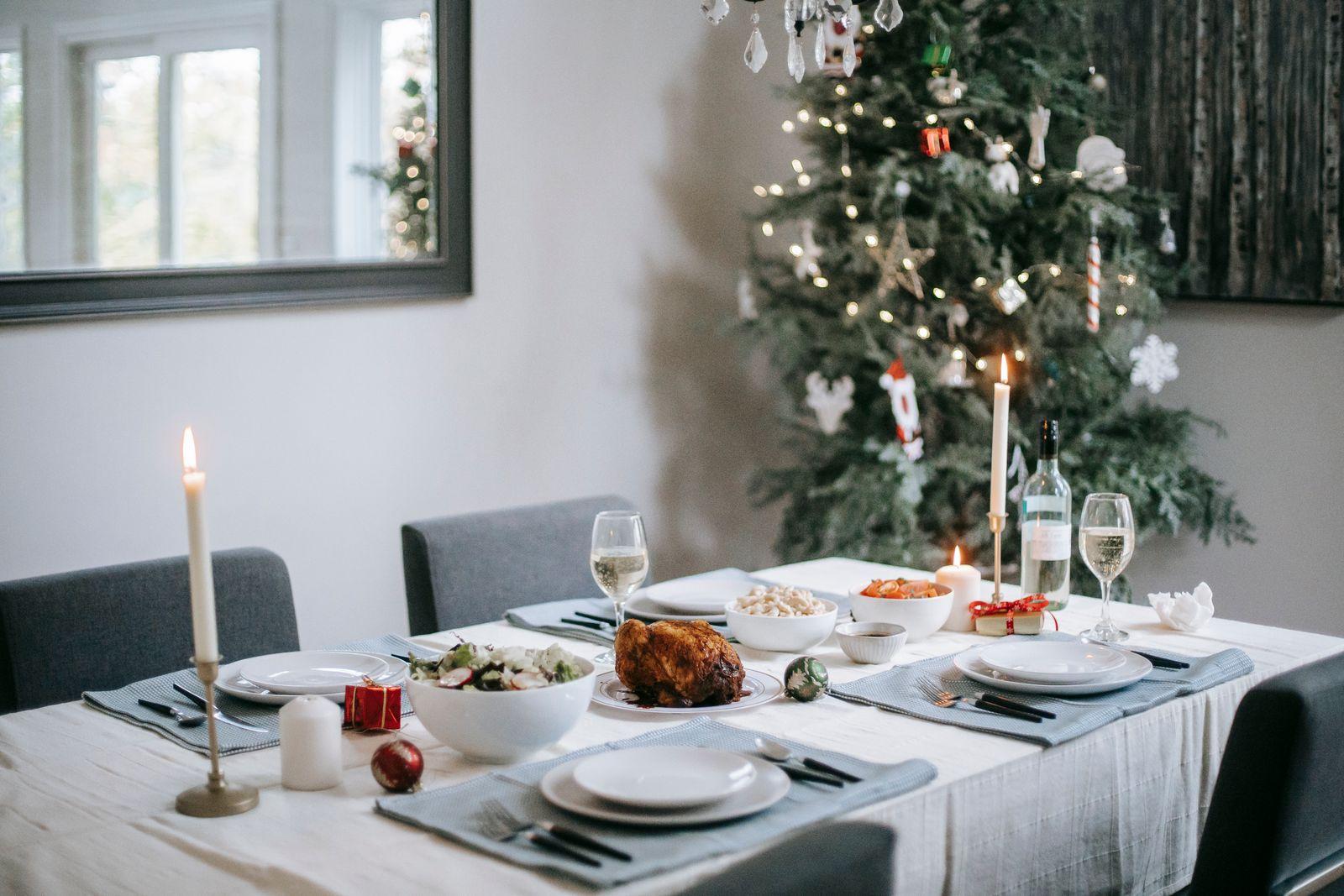
Christmas dinner is not a difficult meal to cook. Roast meat, roast potatoes, a few vegetables, gravy. Nothing on the table requires technique that a Sunday dinner does not.
It is a difficult meal to schedule, and that is a completely different problem. Eight or nine dishes, most of them wanting an oven, all of them needing to be hot at the same moment, in a kitchen containing one oven and a person who has been awake since six.
Nobody's Christmas dinner has ever been ruined by their gravy technique. It gets ruined by four things needing 425 degrees at 2:40.
Start from one number
Pick the time you want people sitting down. Write it on something. Everything else is subtraction.
Working forward from when you get up produces a day of vague urgency and a meal that lands whenever it lands. Working backward from the sit-down time produces a schedule, and a schedule means you can tell whether you are behind at eleven in the morning rather than discovering it at two.
The rough shape for a turkey dinner at 3:00pm:
| Time | What happens |
|---|---|
| The day before | Cranberry sauce, stuffing mix, dessert, peel potatoes and veg into cold water, make the gravy base |
| 9:30am | Turkey out of the fridge to take the chill off |
| 10:15am | Oven on |
| 10:45am | Turkey in |
| 1:45pm | Start checking temperature |
| 2:15pm | Turkey out, tented, resting. Oven to high. |
| 2:15pm | Roast potatoes and anything crisping go in |
| 2:30pm | Vegetables on the stovetop, gravy finished with the roasting juices |
| 2:45pm | Carve |
| 3:00pm | Sit down |
Adjust the roasting block to your bird and your oven. The structure is the part that matters.
If you would rather not do the arithmetic, the Christmas dinner timing calculator builds the whole backward schedule from your sit-down time and what you are cooking, and the portion calculator sizes the quantities before you shop.
The resting window is the whole trick
Here is the single most useful thing on this page.
A large roast has to rest for twenty to thirty minutes before carving. Most people know this and treat it as dead time to be endured while everything else goes cold.
It is not dead time. It is a half-hour block during which the oven is empty and can be turned up as high as you like.
That is precisely when the roast potatoes finish, when the bacon-wrapped sausages crisp, when the stuffing gets its top, and when anything that has been sitting warm gets brought back. The meal comes together in that window. Plan for it deliberately and the timing problem largely dissolves.
It also makes the meat better, because resting lets the juices redistribute instead of running out onto the board. And it makes carving dramatically easier, which matters if you are doing it in front of an audience.
What can genuinely be done ahead
More than most people attempt, and this is where the day is won.
Several days ahead. Cranberry sauce, which improves. Most stuffing mixtures, uncooked and refrigerated. Brandy butter. Anything frozen.
The day before. Peel every potato and root vegetable and leave them submerged in cold water in the fridge overnight, which is the biggest single time saving available and costs nothing. Make the gravy base from wings or a stock cube so that on the day you are only finishing it with the roasting juices. Trim sprouts. Make the dessert. Lay the table.
The morning. Anything assembled but not cooked. Bread sauce. Sides that reheat.
Not ahead, ever. The roast. Anything fried. Anything whose entire point is being crisp when it hits the table.
Laying the table the night before feels like a small thing and is not. It removes a twenty-minute job from the exact hour when you have the least capacity for it, and it looks better because you did it unhurried. If you want it to look genuinely composed rather than just laid, Christmas tablescape ideas by style covers the arrangement.
Cook to temperature, not to the clock
The single biggest cause of dry turkey is cooking it by a chart.
Charts assume a bird at a known starting temperature, a fully accurate oven, and no door-opening. None of those hold in a real kitchen on Christmas Day. Ovens run hot or cold by twenty degrees routinely, and every time the door opens the recovery costs minutes.
Buy an instant-read thermometer. 165°F in the thickest part of the thigh and again in the breast, not touching bone. Pull it at that reading, rest it, done.
Ignore the plastic pop-up timer that came with the bird. They are calibrated conservatively and generally pop well past the point the meat is done, which is exactly how a good turkey becomes a dry one.
Two other things worth knowing. A frozen turkey needs roughly 24 hours per four to five pounds to thaw in the refrigerator, which for a large bird means starting several days out and is the most commonly underestimated number of the entire holiday. And do not wash the raw bird: it does nothing useful and spreads bacteria around the sink and countertops.
Building a menu that fits one oven
Count the oven dishes before you commit to the menu. If the answer is more than three, something has to move.
Sides that need no oven at all:
- Braised red cabbage, on the stovetop, and better made a day ahead
- Any green vegetable, boiled or steamed at the last minute
- Mashed potato, made ahead and held warm
- Carrots, glazed in a pan
- Bread sauce, on the stovetop
- A sharp green salad, which almost nobody serves and which cuts through the whole plate
- Cranberry sauce, cold, made days ago
A slow cooker is worth remembering here. Red cabbage, mash held warm, or a ham can all live in one and it is effectively a second appliance you already own.
The other move is to reduce the count. A Christmas table with five things done properly beats one with nine things done at seventy percent, and nobody has ever left a Christmas dinner disappointed that there were only four vegetables. The number of dishes is usually inherited from a family template rather than chosen.
Feeding a crowd
Quantities are the other place this goes wrong, in both directions.
On the bone, plan for about a pound to a pound and a half of turkey per person. That sounds absurd and is mostly carcass. For a boneless roast, closer to half a pound each. Err upward, because cold turkey sandwiches on the 26th are arguably the best meal of the season and running out mid-table is not fixable.
For everything else, the honest rule is that people eat less at Christmas dinner than hosts imagine, because there have been snacks since eleven and there is dessert coming. The portion calculator works from your headcount and includes the leftovers question, and the dinner shopping list turns the result into something you can take to the store.
If the gathering is bigger than a dinner and closer to a party, how to plan a Christmas party deals with the drinks, the flow, and the part where thirty people need somewhere to put a glass.
The things that actually go wrong
Everything needs a different oven temperature. Solve at the menu stage, not on the day. Group dishes into two temperature bands and accept that the outliers get made another way.
The oven never recovers after the turkey comes out. Turn it up the moment the bird is out, and give it ten minutes before the potatoes go in. An oven full of cold trays takes longer to climb than people expect.
No plan for keeping things warm. Serving dishes in a low oven, or warmed in the sink with hot water. Food that was perfect at 2:50 and sat on a cold plate at 3:05 is not perfect anymore.
One person doing all of it. The most common failure and the least discussed. Give away the entire drinks job, the entire table job, and the washing up as you go. Delegating a whole task works. Delegating fragments of your task creates supervision, which is more work than doing it.
No breakfast. Whoever is cooking should eat properly at nine. The person who has been drinking coffee since seven and standing since eight is the person who forgets the bread sauce in the microwave, where it will be found on December 26.
The short version
Pick the sit-down time and subtract backward from it.
Do the potatoes, the cranberry sauce, the gravy base, the dessert, and the table the day before.
Cook the meat to 165°F on a thermometer, not to a chart, then rest it for half an hour and use that empty oven at full heat for everything that needs crisping.
Count your oven dishes at the menu stage and move at least two of them to the stovetop.
And eat breakfast. Christmas dinner is a logistics exercise wearing a chef's hat, and logistics goes badly on an empty stomach.
Share this guide
Frequently asked questions
What time should I start cooking Christmas dinner?
What can be made ahead for Christmas dinner?
How much turkey do I need per person?
What temperature should turkey be cooked to?
How long should the turkey rest?
How do I cook Christmas dinner in one oven?
Keep reading
How to Plan a Christmas Party (The Order It Actually Goes In)
A complete Christmas party plan: choosing the date and format, how many people your rooms hold, the food and drink math per guest, a realistic budget per head, and an eight-week timeline that ends with the host enjoying their own party.
The Best Time to Buy Christmas Decorations (and What to Buy When)
The same wreath costs three different prices depending on the month you buy it. Here is the honest buying calendar: what to grab in the January clearance, what to hunt in the summer off-season, when the good stuff actually sells out, and why Black Friday is the worst day of the year for Christmas decor.
How to Plan Your Christmas Decorations: A Month-by-Month Checklist
Christmas decorating doesn't have to be a frantic rush in late November. Here's a month-by-month checklist starting in October, when to plan, when to shop, when to install, and when to pack it up.
Prefer pen & paper?
The Christmas Planner
A 25-page printable kit covering budget, gifts, hosting, and decor, built on the same planning logic as this tool. Print it once, keep it in a binder, and reuse it every year.
Or grab 3 pages free first.
Decor that suits the home you have.
Seasonal decorating tips and the occasional new tool, straight to your inbox. One list, no spam.