Christmas in
India
Celebrated: December 24-25
Signature traditions
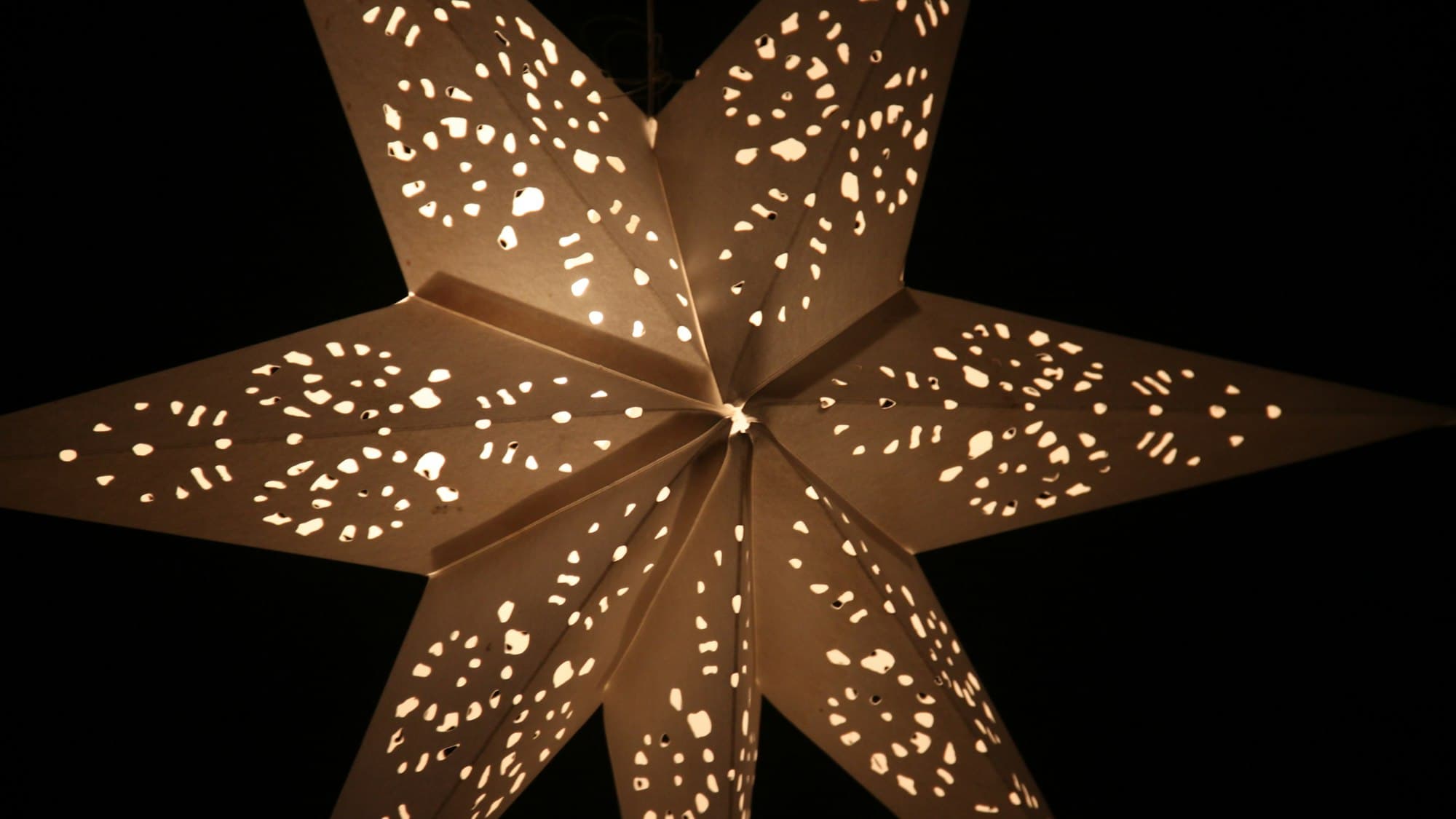
- 1.Multi-pointed paper star lanterns (illuminated from within) hung from balconies and homes from early December
- 2.Goa's Catholic community celebrates with carnival-style midnight Mass, fireworks, and Portuguese-influenced festivities
- 3.Decorating mango, banana, or local trees in lieu of evergreens in many regions
- 4.Plum cake (soaked in rum and brandy, baked weeks ahead) gifted to neighbors regardless of religion
- 5.Carolers visit Catholic neighborhoods singing in English and local languages
What's on the table
Plum cake and Goan vindaloo
Indian Christmas plum cake is a rich, alcohol-soaked fruit cake baked in November and aged for weeks before being gifted in cake-sized portions. In Goa, vindaloo, sorpotel (Portuguese-influenced spicy pork), and bebinca (a layered coconut dessert) are the Christmas classics.
The iconic decoration
The star paper lantern
Multi-pointed star lanterns made of colored paper, lit from within, are India's most distinctive Christmas decoration. Modeled on the Star of Bethlehem and popularized by Catholic communities, they now appear on millions of homes and over streets in Mumbai, Goa, Kerala, and Bangalore.
How gifts are given
Father Christmas (known regionally as Christmas Thaathaa (Tamil), Baba Christmas (Hindi), or simply Santa) delivers gifts overnight on Christmas Eve. Family exchange happens on Christmas Day morning.
But who delivers yours?
There are eight cultural Christmas gift-givers around the world — Santa Claus, La Befana, the Yule Lads, Ded Moroz, Sinterklaas, the Three Kings, Christkind, and Joulupukki. Take the 6-question quiz to find out which one matches you.
Take the gift-giver quizDid you know?
India is home to roughly 28 million Christians, about 2.3 percent of the population but still one of the world's larger Christian communities. Christmas in Goa, Kerala, and Mumbai blends European Catholic traditions (left from Portuguese and British colonial periods) with Indian celebration patterns to produce one of the most distinctive Christmas cultures in Asia.
The shape of the season
India is home to roughly 28 million Christians, only about 2.3 percent of the country but still one of the world's larger Christian populations, and where Christmas is celebrated, it's celebrated with a distinctly Indian warmth and color. Concentrated in Goa, Kerala, Mumbai, the northeast, and Tamil Nadu, and observed in some form by people of many faiths, an Indian Christmas blends European Catholic traditions left by Portuguese and British colonialism with local materials, climate, and hospitality. There's no snow and rarely an evergreen, but there is light, star-shaped and glowing, hung over millions of homes from early December.
The star lanterns
India's single most distinctive Christmas decoration is the star lantern, a large, multi-pointed paper star, lit from within, hung from balconies, doorways, shopfronts, and across streets from early December. In a season without pine trees or snow, the illuminated star is the visual heart of the celebration: a nod to the Star of Bethlehem, made in bright translucent paper in every color, swaying and glowing after dark. In Christian neighborhoods of Mumbai, Goa, Kerala, and Bangalore, whole lanes hang star after star until the streets are roofed in light. Buying and hanging the family star is, for many Indian Christians, the equivalent of putting up the tree.
Goa and the Catholic south
Goa, with its centuries of Portuguese Catholic heritage, keeps the most elaborate Christmas in the country. Churches are decorated and packed for a midnight Mass that spills into fireworks, music, and feasting; homes are scrubbed and lit; and the celebration has an almost carnival energy. Kerala, with one of the oldest Christian communities in the world, tracing its roots to the apostle Thomas, observes a deep and devout Christmas, as do the Christian-majority states of the northeast like Nagaland and Mizoram, where carol singing and community feasts are central. Across the south, carolers move through Christian neighborhoods in the evenings, singing in English, Konkani, Malayalam, Tamil, and Hindi.
Trees of mango and banana
With evergreens scarce, Indian families improvise the Christmas tree with whatever grows. In many regions, people decorate a mango or banana tree, or branches of local trees, with lights, ornaments, and cotton wool standing in for snow. Artificial trees are common in cities now, but the older custom of dressing a living local tree, or even a potted plant, captures the same spirit with the materials at hand, and is a lovely example of a global tradition naturalizing into a new place.
Plum cake for everyone
The great edible tradition of an Indian Christmas is plum cake, a dense, dark, richly spiced fruit cake, with the dried fruit soaked in rum and brandy for weeks (sometimes months) beforehand, baked in November and aged before being cut into portions. And here's the lovely part: it's shared widely, gifted to neighbors, colleagues, and friends regardless of their religion. Christmas plum cake circulates through Hindu, Muslim, Sikh, and Christian homes alike as a gesture of seasonal goodwill, one of the warmest expressions of India's pluralism.
At the table
The Christmas meal is regional and, in Goa, gloriously Indo-Portuguese. Goan Christmas tables feature vindaloo (the original, a fiery vinegar-and-garlic pork dish, quite different from its British-curry-house namesake), sorpotel (a tangy, spicy pork stew), and bebinca (a layered coconut-and-egg dessert baked one painstaking layer at a time). Across the country, the season's sweets include kulkuls (little curled fried-dough treats), neureos (sweet coconut pastries), and milk toffee, alongside the all-important plum cake.
How gifts are given
Father Christmas, known regionally as Christmas Thaathaa in Tamil, Baba Christmas in Hindi-speaking areas, or simply Santa, is said to deliver gifts overnight on Christmas Eve, with families exchanging presents on Christmas morning. In Goa and other Catholic strongholds, the night centers on the midnight Mass; the gifts and the feast follow.
If you wanted to borrow this tradition
The most beautiful Indian custom to adopt is the plum-cake-for-everyone spirit: bake or buy a rich fruit cake and give pieces of it to neighbors and friends across whatever lines usually divide a street, a small, edible act of goodwill that asks nothing in return. The star lantern is also a wonderful, space-saving alternative or complement to a tree: a single glowing paper star in a window carries the whole symbol of the season and looks magical after dark.
And the Indian habit of decorating whatever tree you have, whether a houseplant, a potted citrus, or a branch, is a freeing reminder that the Christmas tree was always about the gesture, not the species.
Did you know
- In December 2014, the Buon Natale celebration in Thrissur, Kerala set a Guinness World Record for the largest gathering of Santa Claus: 18,112 costumed Santas paraded through the city, recruited parish by parish over six months as a charity fundraiser. The record they broke had stood since 2007, when 13,000 Santas gathered in Ireland.
- Mumbai's Bandra neighborhood throws the city's most visible Christmas: Hill Road and Chapel Road become a canopy of stars, lights, and pop-up stalls from the first week of December, and the old East Indian Catholic lanes like Ranwar Village dress their colonial-era bungalows for the season.
More from Asia



Bring a little of it home
Borrowing one tradition from somewhere else is how most of the traditions on this page started.
Free AI tool
See your own home decorated
Upload one photo and watch your room or house transform, before you buy anything.
Interactive map
All 41 countries
Gift-givers, feast tables, and the surprising customs most articles skip.
City guides
Lights worth the drive
The best displays in 40 US cities, including the free neighborhoods.
More Christmas traditions across Asia
Christmas ideas for your own home.
Seasonal decorating tips and the occasional new tool, straight to your inbox. One list, no spam.