Christmas in
China
Celebrated: December 24-25 (commercial; not a national holiday)
Signature traditions
- 1.Giving 'peace apples' (ping guo / 平安果) wrapped in colored cellophane on Christmas Eve
- 2.Christmas Eve is called Ping'an Ye ('Peaceful Night') and is more celebrated than Christmas Day itself
- 3.Massive light displays in commercial districts, Shanghai's Nanjing Road, Beijing's Wangfujing, Hong Kong's Tsim Sha Tsui
- 4.Couples treat the holiday as a romantic date night, similar to Valentine's Day
- 5.Christmas isn't a public holiday, most people work on December 25 unless they're at a Christian community celebration
What's on the table
Peace apples and Western novelty meals
The peace apple (a single apple wrapped in elaborate decorative paper) is the iconic Chinese Christmas item. Beyond that, Christmas dinner usually means trying Western foods (turkey, roast goose, cake) at hotel restaurants, more for novelty than ongoing tradition.
The iconic decoration
Shopping district illuminations
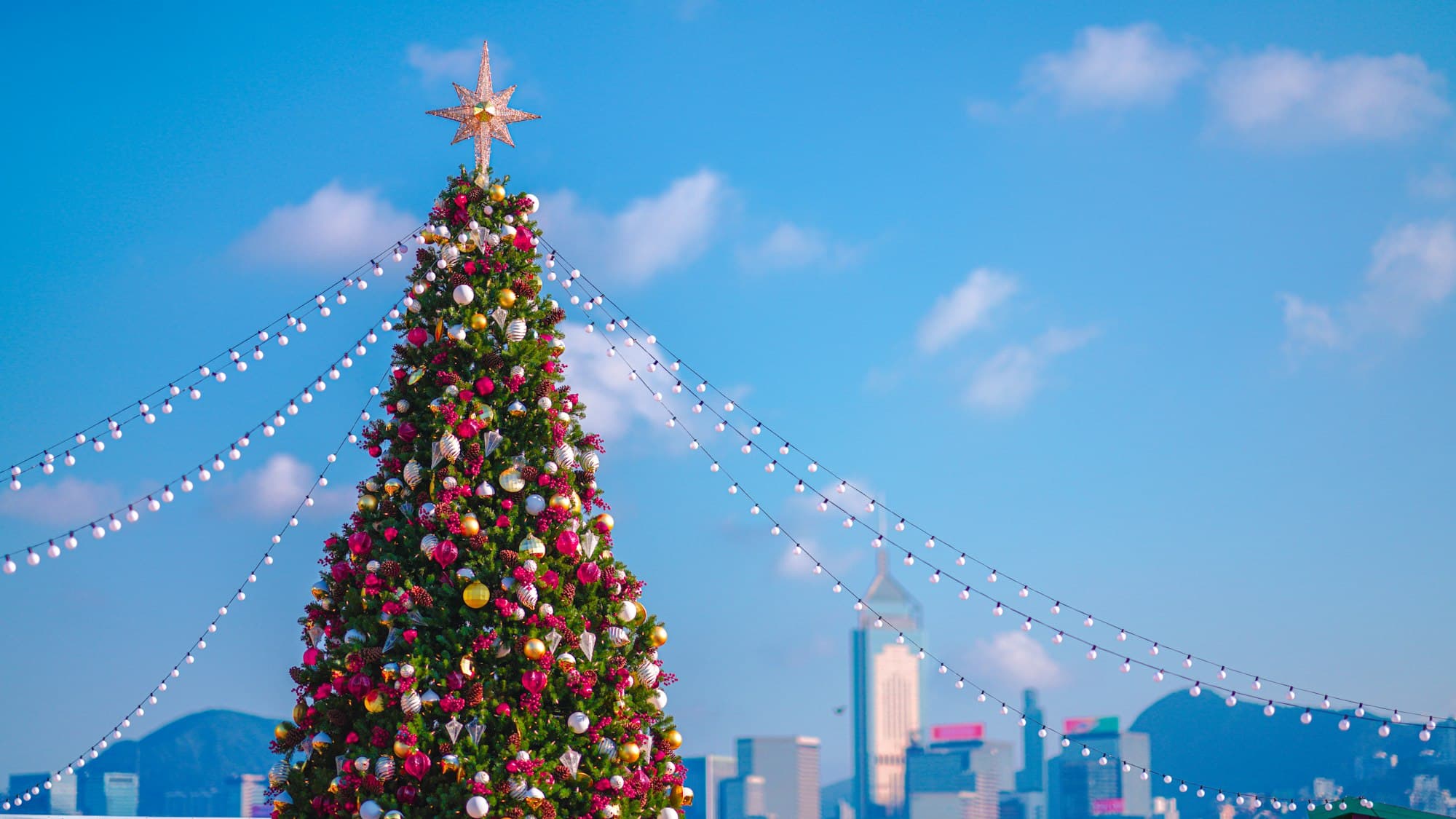
Chinese Christmas decoration is concentrated in commercial districts, massive trees, light displays, and Santa-themed window dressing in malls and luxury shopping streets. Home decorations remain uncommon outside Christian families.
How gifts are given
Among urban young adults, Christmas Eve gift exchange between couples and friends is increasingly common. The traditional family gift-giving event is Lunar New Year, not Christmas.
But who delivers yours?
There are eight cultural Christmas gift-givers around the world — Santa Claus, La Befana, the Yule Lads, Ded Moroz, Sinterklaas, the Three Kings, Christkind, and Joulupukki. Take the 6-question quiz to find out which one matches you.
Take the gift-giver quizDid you know?
China's tradition of giving wrapped apples on Christmas Eve emerged in the 2000s entirely from a pun. The Mandarin word for Christmas Eve, Ping'an Ye, contains 'ping an' (peace), and 'apple' (ping guo) starts with the same syllable. Today, tens of millions of decorative apples are exchanged annually on December 24.
The shape of the season
Christmas in China is a young, urban, almost entirely secular phenomenon, and a fascinating one, because it grew up in a country where, on the mainland, Christmas isn't a public holiday and only a small minority is Christian. (Hong Kong is the exception: December 25 and 26 are both public holidays there, a legacy of British rule.) On the mainland, December 25 is a normal workday for most people. Yet in the big cities, Christmas Eve (Ping'an Ye, "Peaceful Night") has become a genuine event: a night of dazzling shopping-district light displays, romantic dates, gift exchanges among friends, and one uniquely Chinese tradition involving a carefully wrapped apple. It's Christmas reinvented as a commercial and romantic occasion rather than a religious or family one.
The peace apple
China's most distinctive Christmas custom is the píng'ān guǒ, the "peace apple." On Christmas Eve, people give each other apples, often single apples wrapped in elaborate, colorful cellophane, ribbons, and printed boxes, sold for far more than an ordinary apple would ever cost. The whole tradition is a pun. Christmas Eve in Mandarin is Ping'an Ye (平安夜), "Peaceful Night," and the word for apple, píngguǒ (苹果), begins with the same píng sound as píng'ān (peace). So giving an apple on Ping'an night became a way of wishing someone peace and safety. It emerged in the 2000s entirely from that wordplay, and today tens of millions of decorative apples change hands every December 24. It is a Christmas tradition invented in China, for China, out of a homophone.
Ping'an Ye over Christmas Day
Tellingly, it's the Eve that matters, not the day. Ping'an Ye is far more celebrated than December 25 itself, which for most people is simply another working day. The action is concentrated on the night of the 24th: meeting friends or a date, walking the lit-up streets, exchanging apples and small gifts, and taking in the displays.
A romantic, commercial holiday
Without the family and religious framework it carries in the West, Chinese Christmas has settled into a role much like Valentine's Day. It's primarily a couples' and friends' occasion, a popular date night, with restaurants and bars busy and young people exchanging gifts. Retailers and shopping malls drive much of it: Christmas is, above all, a commercial season, embraced enthusiastically by stores as a reason to decorate, promote, and draw crowds. The traditional Chinese gift-giving holiday remains Lunar New Year, a few weeks later; Christmas is the fun, imported, lights-and-romance prelude.
The light displays
The visual heart of a Chinese Christmas is the commercial-district illumination. Major shopping streets and malls go all out: enormous Christmas trees, sweeping light installations, and Santa-themed window dressing. Shanghai's Nanjing Road, Beijing's Wangfujing, and Hong Kong's Tsim Sha Tsui (where the harbor-front buildings light up across the water) draw huge crowds who come specifically to see the displays and take photos. Home decoration, by contrast, remains uncommon outside Christian families. The Chinese Christmas is something you go out to experience, in the glowing public spaces of the city, rather than something you build at home.
At the table
There's no traditional Chinese Christmas dish beyond the peace apple. For those who want to mark the day with a meal, Christmas dinner usually means trying Western food as a novelty: turkey, roast goose, or a Western-style set menu at a hotel restaurant, more as a one-off experience than an annual culinary tradition. The apple, wrapped and gifted, is the only food that's genuinely Chinese Christmas.
How gifts are given
Among urban young adults, exchanging gifts on Christmas Eve, between couples and friend groups, has become increasingly common, alongside the apples. But it's modest compared to the Western gift avalanche, and it isn't a family event. The big family gift-giving and feasting still belong to Lunar New Year; Christmas gifting is a lighter, peer-to-peer affair.
If you wanted to borrow this tradition
The peace apple is a lovely, low-cost idea worth borrowing anywhere: give someone a single, nicely wrapped apple with a wish for peace and safety in the year ahead. It costs almost nothing, it's a small and thoughtful gesture rather than a big purchase, and it carries a meaning, peace, that's easy to lose under the season's commercialism.
China's version is also a useful reminder that Christmas adapts to wherever it lands: stripped of its Western family-and-religion frame, it became a night of lights, friendship, and a clever pun, proof that the holiday's appeal travels even when its origins don't.
Did you know
- The Chinese tradition of giving wrapped apples on Christmas Eve was born in the 2000s purely from a pun: Ping'an Ye ("Peaceful Night") shares its ping sound with píngguǒ ("apple"), so an apple became a wish for peace.
- Christmas is not a public holiday in mainland China (most people work on December 25), yet Ping'an Ye, Christmas Eve, has become a major night out in the cities.
- Chinese Christmas functions more like Valentine's Day than a family holiday: it's largely a romantic and social occasion centered on couples, friends, and the city's light displays.
More from Asia



Bring a little of it home
Borrowing one tradition from somewhere else is how most of the traditions on this page started.
Free AI tool
See your own home decorated
Upload one photo and watch your room or house transform, before you buy anything.
Interactive map
All 41 countries
Gift-givers, feast tables, and the surprising customs most articles skip.
City guides
Lights worth the drive
The best displays in 40 US cities, including the free neighborhoods.
More Christmas traditions across Asia
Christmas ideas for your own home.
Seasonal decorating tips and the occasional new tool, straight to your inbox. One list, no spam.