Christmas in
Australia
Celebrated: December 24 through December 26
Signature traditions
- 1.Christmas falls in summer, temperatures often in the 90s°F (30s°C)
- 2.Carols by Candlelight, outdoor candlelit carol concerts in parks across the country
- 3.Christmas lunch on the beach or by the pool, often a barbecue or seafood spread
- 4.Boxing Day Test cricket match watched on TV through the afternoon
- 5.Fake snow and Santa in shorts in shopping center decorations
What's on the table
Christmas seafood and pavlova
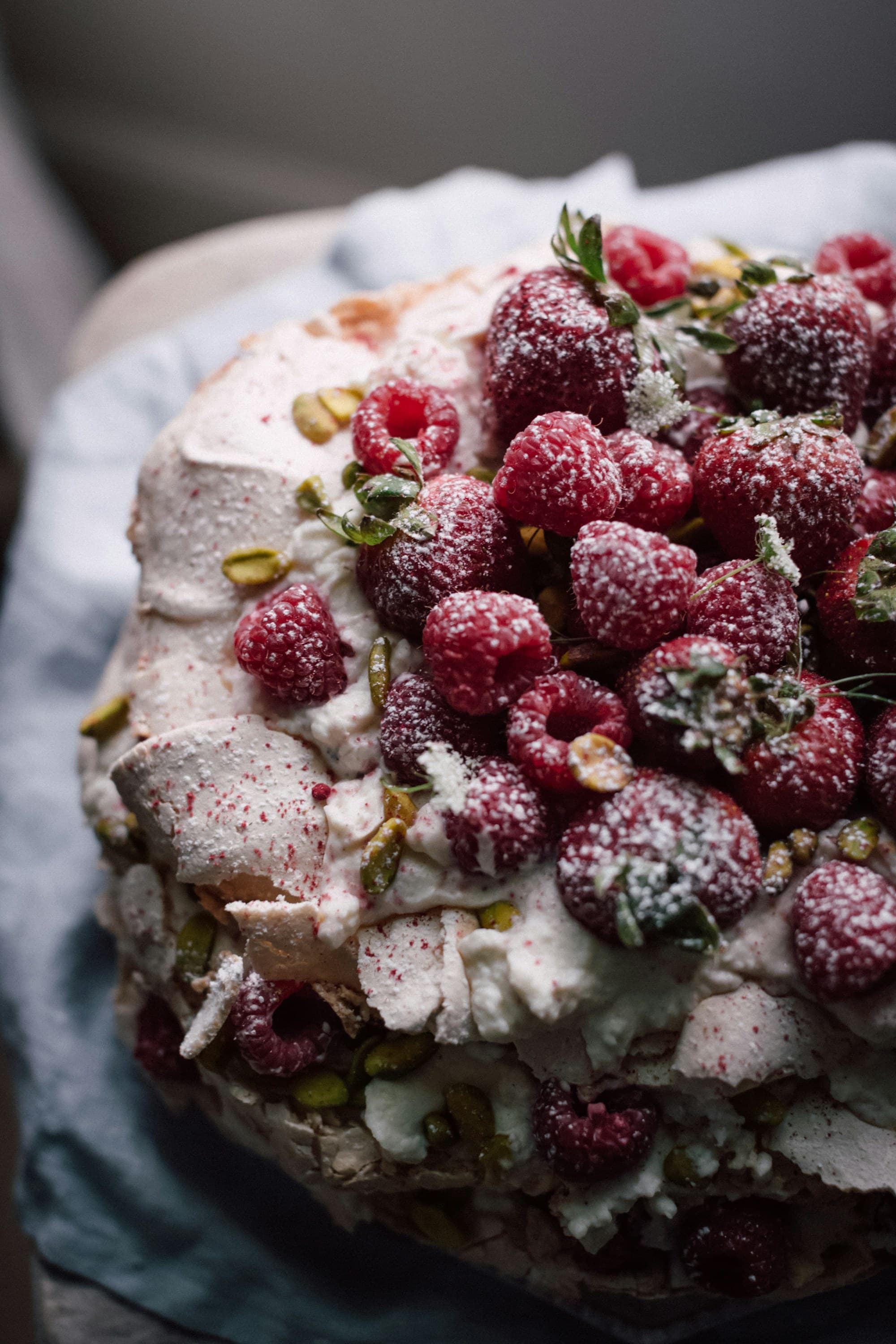
A traditional roast is too hot for the climate, so Christmas lunch is often prawns, crayfish, and cold ham. Pavlova (a meringue cake topped with cream and summer fruit) is the iconic dessert.
The iconic decoration
The Christmas bush
Australian native flora gets a Christmas role: the Christmas bush (Ceratopetalum gummiferum) blooms with bright red star-shaped flowers in December and is used in arrangements. Eucalyptus replaces holly in many homes.
How gifts are given
Santa Claus delivers gifts overnight on Christmas Eve, often arriving by surfboard, kangaroo, or boat in cultural depictions rather than a sleigh.
But who delivers yours?
Australia's gift-giver is Santa Claus. But there are eight cultural Christmas gift-givers worldwide — Santa, La Befana, the Yule Lads, Ded Moroz, Sinterklaas, the Three Kings, Christkind, and Joulupukki. Take the 6-question quiz to find your match.
Take the gift-giver quizDid you know?
Australian Santa is sometimes shown wearing board shorts and a Hawaiian shirt instead of a fur coat, and his sleigh is occasionally depicted being pulled by six white kangaroos called 'boomers.'
The shape of the season
Christmas in Australia is hot. It happens at the height of summer, in weather that typically sits in the high 70s to 80s°F and can blow past 100°F during a heat wave, with high UV index and bright clear skies. Schools have just let out for the long summer break (which in Australia runs roughly mid-December through late January), most office workers have either started their long holiday or are about to, and the entire mood of the season runs counter to the snowy, candlelit Northern Hemisphere version.
Australia has spent two centuries reconciling a holiday designed for cold dark winter with a climate that does the opposite. The result is one of the more interesting Christmas cultures in the West. It's full of imported traditions (Christmas trees, Santa, carols by candlelight) carried out in radically different conditions, plus a layer of distinctively Australian inventions that have made the holiday truly local.
The season is shorter than Northern European Christmas, since it doesn't kick off in earnest until early December, but the energy is higher because it falls during the country's most relaxed annual period. Christmas Day and Boxing Day (December 26) are both public holidays, and most workplaces effectively shut from December 22 through the second week of January.
Christmas Day at the beach (or in the backyard)
The most distinctively Australian Christmas image is the Christmas Day meal eaten outdoors (on the beach, in the backyard, on a deck) in summer clothes and sunscreen. The format varies but typically includes:
- A Christmas Day barbecue as the main meal, often replacing or supplementing a traditional roast. Prawns (always called prawns, never shrimp; Paul Hogan's "shrimp on the barbie" is American-targeted ad copy that no Australian has ever actually said) feature prominently. Whole snapper, BBQ lamb chops, sausages, and steaks all appear.
- A prawn-and-seafood spread as an alternative or addition. Sydney Fish Market on December 23-24 is one of the city's most chaotic annual events. It stays open 36 hours straight, drawing tens of thousands of buyers for their Christmas prawns, crabs, oysters, and whole fish.
- Cold roast meats. Many families do a traditional turkey or ham but serve it cold the next day in salads and sandwiches, the heat making a hot Christmas roast uncomfortable.
- Salads dominate the side spread: Greek salad, potato salad, coleslaw, beetroot salad, pavlova-adjacent fruit salads.
- Pavlova as the canonical dessert, a meringue-based cake with whipped cream and seasonal summer fruits on top (typically strawberries, kiwifruit, passionfruit, and mango). There's an ongoing debate with New Zealand about which country invented it; both claim ownership.
- Trifle. Multi-layered jelly, custard, cake, and fruit in a glass bowl. Distinctly British colonial in origin, but the Australian version emphasizes the summer fruits.
- Christmas pudding, the traditional British steamed pudding with custard. Surviving more out of tradition than enthusiasm; many younger Australian families have moved on to lighter desserts more suited to the heat.
A typical Christmas Day rhythm: a late breakfast or brunch with the immediate family and morning gift exchange, a midday or afternoon Christmas Day meal at someone's home (often outdoors), then late afternoon swimming, beach time, or backyard cricket. The Queen's (now King's) Christmas Day broadcast is still watched by older generations on the ABC; younger families largely skip it.
Carols by Candlelight
The most universally beloved Australian Christmas tradition is Carols by Candlelight, a series of large outdoor Christmas concerts held in parks and stadiums across the country on Christmas Eve. The original and most famous, Melbourne's Carols by Candlelight, has been held every Christmas Eve since 1938 (staged at the Sidney Myer Music Bowl since that venue opened in 1959) and is broadcast nationally on Channel 9.
The format: tens of thousands of people in summer clothes spread picnic blankets across a park or amphitheater lawn, each person holds a small candle (now often a glow-stick or LED candle for fire safety), and a stage hosts a rotating cast of Australian musicians performing Christmas songs from early evening through about 10:00 PM. The audience sings along, picnics, drinks white wine and beer, and waves their candles during the slower numbers.
The setting matters. It's outdoor, in summer heat (often with kids in swimsuits earlier in the afternoon), in a country park or beachside lawn, with the sun setting late (8:30-9:00 PM at Australian latitudes in December). The combination of Christmas music and a long warm sunset is a uniquely Australian Christmas atmosphere: soft, communal, lightly sentimental, very different from the cold dark candlelit church services of Northern Hemisphere Christmas Eve.
Sydney runs its own Carols in the Domain every Christmas Eve. Brisbane, Perth, Adelaide, and most regional centers run their own versions. The smaller country-town versions can be especially charming: a few hundred people on a school oval, local musicians, kids running around, a sausage sizzle fundraiser at the edge of the field.
Boxing Day
Boxing Day, December 26, is a separate full public holiday in Australia and arguably the most distinctively Australian day in the entire Christmas season. Three things define it:
The Sydney to Hobart Yacht Race. Starting at 1:00 PM on December 26 at Sydney Harbour, hundreds of yachts depart on a 628-nautical-mile race down the east coast of Australia and across the Bass Strait to Hobart, Tasmania. It's one of the world's most prestigious offshore yacht races and the start is broadcast live; Sydney's harbor foreshore fills with spectators watching the spinnaker-filled fleet move out past the heads.
The Boxing Day Test. A cricket Test match begins on December 26 at the Melbourne Cricket Ground, a multi-day match (Tests last up to five days) that is one of the most-watched annual sporting events in the country. Tens of thousands attend in person; millions more watch on TV. The Boxing Day Test against England (in Ashes years) is one of the year's biggest sporting moments.
The post-Christmas sales. Australian retailers do their biggest sales of the year starting Boxing Day morning, similar to the American Black Friday phenomenon. Sydney's CBD, Melbourne's Bourke Street Mall, and major suburban shopping centers all see massive crowds. The country effectively splits between the people watching cricket or the yacht race, the people shopping, and the people relaxing at home with leftovers.
For most families, Boxing Day is a quieter Christmas-leftovers day: cold ham sandwiches, finishing the pavlova, a beach swim, and watching whichever of the events is preferred.
Inside the home
Australian Christmas decoration follows the global template (tree, lights, wreath on the door) but with several specifically Australian adaptations:
- Christmas tree is almost always artificial (real fir trees are imported and expensive; the climate is wrong for most evergreens commonly used as Christmas trees). Pine and fir trees are sold but command high prices. Native Australian Christmas decoration sometimes incorporates eucalyptus or Christmas bush (a native shrub with red flowers in December) instead of traditional pine boughs.
- Outdoor lights are common but the long summer twilight (sunset around 8:30-9:00 PM in December) means displays only really work after 9:00 PM, which limits the seasonal "looking at Christmas lights" tradition compared to the Northern Hemisphere.
- Santa hats are universal and absurd. The standard red felt Santa hat worn at the beach in 100°F heat is a quintessentially Australian Christmas image. Many home Christmas photos feature family members in swimsuits and Santa hats.
- Christmas tinsel and decorations lean tropical. Many Australian decoration suppliers sell flamingo-themed Christmas ornaments, surfboard-themed ornaments, kangaroo-pulling-Santa's-sleigh figurines, and other localized variants alongside the standard imported traditional decor.
- The Australian Christmas bush (Ceratopetalum gummiferum), a native shrub that blooms with small white flowers in November which then ripen to bright red bracts in mid-December, is the Australian native Christmas plant equivalent of the poinsettia.
How gifts are given
Santa Claus (also called Father Christmas by older generations) delivers gifts overnight from December 24 to December 25. Children leave out a glass of milk (or, in the standing Australian joke, a cold beer), a few biscuits, and a carrot or two for the reindeer. The gifts appear under the tree by Christmas morning.
The main family gift exchange happens on Christmas morning, with the immediate family. A second round of gift-giving often happens later in the day at the Christmas lunch or dinner with extended family. The whole exchange is more leisurely than the American Christmas-morning rush. Kids open one gift at a time, take their time, often pause for breakfast or to call relatives mid-exchange.
Australian gift-giving etiquette is more modest than American. A typical Australian middle-class family Christmas might involve 3-5 gifts per child rather than the much larger American gift piles. Kris Kringle or Secret Santa (drawn-name single-gift exchanges) are common among extended families, friend groups, and workplaces; they're often used specifically to limit the financial scope of gift-giving across a large group.
If you wanted to borrow this tradition
The outdoor Christmas Day meal is worth adopting in any American region warm enough to allow it (Sun Belt, California, Florida, the Southwest). The Australian template, a midday or early-afternoon meal eaten outside, with a barbecue or grilled-seafood centerpiece, paired with cold salads and a meringue-based dessert, is a much better fit for a warm Christmas than a heavy roast served in air-conditioning. The Sun Belt has been quietly moving in this direction for years; the Australian version provides the full cultural template.
Pavlova is the easiest Australian tradition to carry home. It's a relatively easy dessert (a meringue base topped with whipped cream and fresh fruit), it's light enough to follow any heavy meal, and the visual is gorgeous: a pristine white meringue piled with colorful summer fruits, made for the camera. Strawberries, kiwifruit, passionfruit, and mango are the traditional toppings; any combination of summer fruits works.
Carols by Candlelight as a community Christmas Eve event has been increasingly imported to American suburbs in recent years, with local park departments and churches running outdoor Christmas Eve concert events with picnic blankets and candles. It works particularly well in temperate American climates where December weather permits outdoor gathering (Southern California, Texas, Florida, the Carolinas, Georgia).
Did you know
- The original Carols by Candlelight was conceived in 1937 by Norman Banks, a Melbourne radio announcer, after he saw an elderly woman listening to a carol service on the radio by the light of a single candle; the first concert followed on Christmas Eve 1938. The idea was that an outdoor service open to everyone, illuminated only by candles, would extend that same warmth to a larger community.
- The Sydney to Hobart Yacht Race has been canceled only once in its history: in 2020, due to COVID-19, the first break in 76 years of racing. Even the tragic 2024 edition, in which two sailors died in wild weather, continued on to Hobart. It remains one of the few major Australian annual events to run essentially unchanged through wars and recessions.
- Australian schoolchildren learn a parody version of "Jingle Bells" called Aussie Jingle Bells, with lyrics by Bucko & Champs (1996) describing Christmas Day at the beach, riding in a rusty Holden ute, eating prawns with brandy sauce, and Santa wearing board shorts. It's become the country's unofficial Christmas anthem.
More from Oceania

Bring a little of it home
Borrowing one tradition from somewhere else is how most of the traditions on this page started.
Free AI tool
See your own home decorated
Upload one photo and watch your room or house transform, before you buy anything.
Interactive map
All 41 countries
Gift-givers, feast tables, and the surprising customs most articles skip.
City guides
Lights worth the drive
The best displays in 40 US cities, including the free neighborhoods.
More Christmas traditions across Oceania
Christmas ideas for your own home.
Seasonal decorating tips and the occasional new tool, straight to your inbox. One list, no spam.