Christmas in
Argentina
Celebrated: December 24 (Nochebuena) through December 25
Signature traditions
- 1.Christmas falls in summer, temperatures in the 80s-90s°F push celebrations outdoors
- 2.Asado (Argentine barbecue) is the traditional Christmas Eve dinner
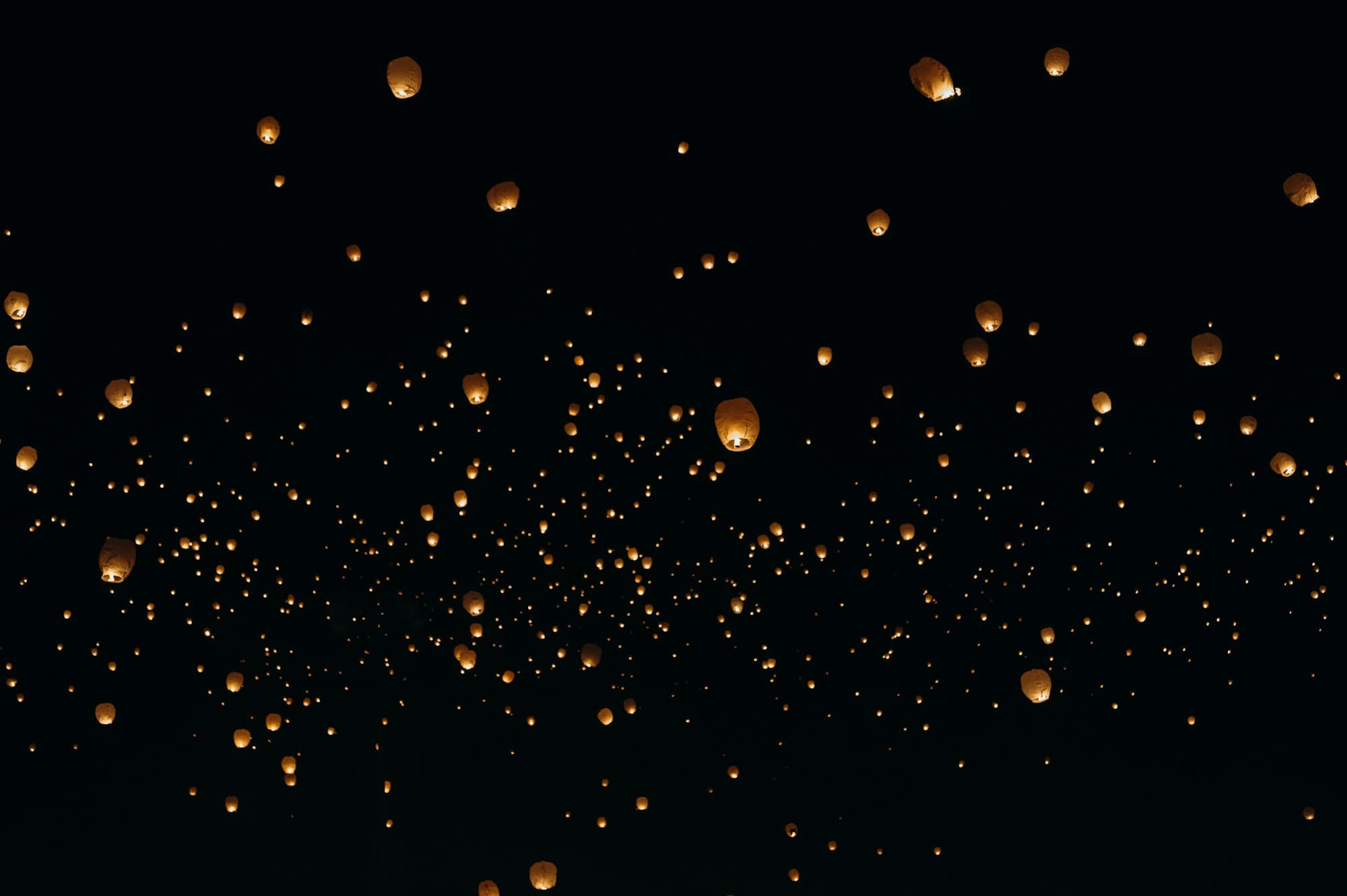
- 3.Fireworks fill the sky at midnight on December 24, with families launching paper hot-air lanterns (globos) above their backyards
- 4.A toast (brindis) at midnight with sidra (apple cider) or champagne signals the start of gift opening
- 5.Pan dulce (Italian-influenced sweet bread with candied fruit) eaten constantly through the season
What's on the table
Asado and pan dulce
Christmas Eve revolves around the parrilla (grill), slow-cooked beef ribs, chorizo, and morcilla. Pan dulce, a tall sweet bread adapted from Italian panettone by Argentina's massive Italian immigrant community, is the iconic dessert.
The iconic decoration
Pesebre and outdoor lights
The pesebre (nativity scene) takes pride of place in most Argentine homes, often more elaborate than the tree. Outdoor lights are common but understated, with most decoration happening inside.
How gifts are given
Papá Noel delivers gifts overnight on Christmas Eve, but the family gift exchange happens at midnight (just after the toast), most children stay up late to participate before going to bed.
But who delivers yours?
There are eight cultural Christmas gift-givers around the world — Santa Claus, La Befana, the Yule Lads, Ded Moroz, Sinterklaas, the Three Kings, Christkind, and Joulupukki. Take the 6-question quiz to find out which one matches you.
Take the gift-giver quizDid you know?
Argentine families launch globos (paper hot-air lanterns powered by small candles) into the night sky at midnight on December 24. From a distance, hundreds of glowing lanterns drift over Buenos Aires at once, creating an unforgettable visual that fire-safety regulations have curtailed in recent years but never fully ended.
The shape of the season
Argentine Christmas, Navidad, happens in the depths of Southern Hemisphere summer. December 24 in Buenos Aires, Mendoza, or Córdoba is typically in the low-to-mid 80s°F (28-30°C), with heatwaves pushing into the 90s, often with thunderstorms rolling in by evening. School ended weeks earlier; the country is on its long summer holiday. The combination of intense heat and the most religiously important night of the year produces a Christmas culture that bears strong family resemblance to Brazilian and Mexican Christmas, but with a distinct Italian-Spanish hybrid identity all its own.
The season runs from early December through Día de Reyes Magos on January 6 (Three Kings Day, the secondary gift moment after Christmas Eve). The two cultural peaks are Nochebuena (December 24, Christmas Eve, the main family meal and gift-exchange night) and Año Nuevo (December 31, New Year's Eve, often spent on the beach at Mar del Plata, Pinamar, or one of the Atlantic coast resorts that fill up during summer holiday).
What makes Argentine Christmas distinctive is the Italian influence. Argentina has the largest Italian diaspora per capita of any country outside Italy (roughly 60% of Argentines have some Italian ancestry) and the Christmas table reflects this directly. Vitel toné (a Piemontese dish), pan dulce (panettone), Italian-style pasta on Christmas Eve, and the elaborate sweet-pastry tradition all come from the Italian immigrant wave of 1880-1920. Spanish Catholic tradition provides the religious framing; Italian food traditions provide the menu.
Nochebuena and the asado question
The central question of every Argentine Christmas is: traditional Christmas Eve dinner, or asado (Argentine barbecue)? Both answers are common. Many families do both: a smaller Christmas Eve dinner at the table, then an asado the following day for Christmas Day lunch.
A traditional Argentine Nochebuena dinner runs the full Italian-influenced spread:
- Vitel toné: thin-sliced cold roasted veal, covered in a creamy sauce of tuna, anchovies, capers, mayonnaise, and lemon. Originated in northern Italy (Piedmont) as vitello tonnato; the Argentine version is virtually mandatory on Christmas Eve tables across the country. Make it the day before so the sauce penetrates.
- Lechón: roasted suckling pig, traditional in the colonial-Spanish Christmas pattern. Increasingly replaced by asado or vitel toné in modern households but still found in more traditional homes.
- Carré de cerdo: roasted pork loin with apple or pineapple, a contemporary alternative.
- Pollo relleno: stuffed roasted chicken, the budget alternative to lechón.
- Ensalada rusa: Russian salad (potato, peas, carrots, mayonnaise), brought to Argentina via the Spanish-immigrant cooking tradition; standard on every Christmas table.
- Empanadas: meat-filled hand pies, sometimes appearing as starters.
For the asado alternative, particularly common on Christmas Day for the larger family lunch, the grill features:
- Tira de asado (short ribs)
- Vacío (flank cut)
- Bondiola (pork shoulder)
- Chorizo and morcilla (blood sausage)
- Mollejas (sweetbreads, a treat) and chinchulines (chitterlings)
- Sweet onions, peppers, and provoleta (grilled provolone cheese)
The drink across both formats: Malbec red wine (Argentina's signature varietal), beer, and clericó (an Argentine sangría-like punch of red or white wine with chopped fresh summer fruits: peaches, plums, grapes, citrus). For toasts at midnight: sidra (apple cider, the traditional Argentine Christmas toast drink, like champagne but specifically associated with the holidays) or champaña (sparkling wine).
The dessert table
Argentine Christmas dessert is heavily Italian, with two iconic items:
-
Pan dulce: the Argentine version of panettone, a sweet bread filled with candied fruit, raisins, and nuts. Brought by Italian immigrants in the late 19th century, now produced on industrial scale by Argentine brands like Bagley and Fantoche, plus high-end artisanal versions from independent bakeries. Argentina is one of the world's largest per-capita consumers of panettone, competitive with Italy and Brazil. The Christmas-and-New-Year's-Eve pan dulce supply is so massive that supermarkets dedicate entire aisles to stacks of boxes from October through January.
-
Turrón: Spanish-origin almond nougat, both turrón duro and turrón blando, imported via Spanish immigration. Appears alongside pan dulce on every Argentine Christmas table.
Supporting cast: garrapiñada (caramelized peanuts), maní confitado (sugar-coated peanuts), frutas secas (dried fruits: figs, apricots, dates, walnuts), chocolate (Aguila and Felfort being the iconic Argentine Christmas chocolate brands), and helado (ice cream; given the summer heat, ice cream is often the actual sweet finish to the meal rather than a baked dessert).
The most distinctive Argentine Christmas drink at dessert: chilled clericó, wine with chopped summer fruits, in its simple homestyle form (sometimes just called vino con frutas). Some families also serve flan con dulce de leche (caramel flan with caramelized milk topping), the dessert that bridges everyday Argentine cooking and special-occasion cooking.
Globos and fireworks at midnight
The most photogenic Argentine Christmas tradition is the globos, paper hot-air lanterns, released at midnight on Christmas Eve. After the family dinner ends, around 11:30 PM, families step outside (often onto the balcony of a city apartment, or into the backyard of a suburban home), light the wick of a tissue-paper hot-air lantern, watch it inflate as it heats up, and release it skyward at midnight along with the chorus of fireworks going off across the city.
The lanterns drift slowly upward, sometimes hundreds per neighborhood, visible for miles, and provide the visual texture of Argentine Christmas Eve. In Buenos Aires, the combined effect of thousands of globos drifting over the city at midnight is genuinely spectacular.
The lanterns are paired with fireworks: both organized municipal displays in major cities and personal fireworks set off by households from balconies, rooftops, and yards. The decibel level in Argentine cities at midnight on December 24 is enormous; the celebration is unmistakably loud and joyous. Dogs in Argentina spend the first few minutes of every Christmas Eve under the couch.
The Pesebre
The Argentine Pesebre, or nativity scene, is taken seriously in Catholic households. Like in Spain, Italy, and Mexico, the nativity is often more visually central than the Christmas tree, especially in older or rural homes. Modern urban Argentine households typically have both, with the tree (artificial, almost always, since real trees are impractical in the summer heat) decorated in the living room and the Pesebre set up on a side table or in a corner with the holy family, the three Magi (placed elsewhere in the room and "traveling" toward the manger over the twelve days), the shepherds, animals, and a built landscape.
Baby Jesus is placed in the manger only at midnight on December 24, after the family Christmas Eve dinner. It is a small ritual moment that anchors the religious dimension of the holiday for observant families.
Día de Reyes Magos
January 6, Three Kings Day, is the secondary gift-giving day for Argentine children, following the Spanish tradition. The night before (January 5), children leave a shoe by the front door, fill it with hay or grass for the kings' camels, and leave a glass of water. The Three Kings come overnight and leave small gifts (chocolates, candies, a small toy) in or near the shoe.
The day's signature food is the Rosca de Reyes, a large ring of sweet bread topped with candied fruit, similar to the Spanish and Mexican versions, though the Argentine rosca usually skips the hidden baby-Jesus figurine that drives Mexico's famous Candlemas-tamales obligation. Where a trinket is included, finding it simply counts as good luck.
Argentine families typically do gifts on both December 25 and January 6. The larger gifts arrive on Christmas Day (after midnight on Christmas Eve, technically), and the smaller stocking-stuffer-style gifts arrive on Three Kings Day. The split is partly logistical (separates gift moments so the holiday season feels longer) and partly historical (different waves of Spanish vs. Italian immigration brought slightly different traditions, and modern Argentine families have absorbed both).
Inside the home
Argentine Christmas decoration leans towards the bright and cheerful end of the spectrum, with strong color saturation. Christmas trees are uniformly artificial, since fir trees don't survive the summer heat in most of Argentina, and they are typically decorated with red and gold ornaments, colored lights, and a star at the top. Tinsel garlands are common, often in metallic gold or silver.
Outside, strings of lights along the front of the house are the most common exterior decoration. The summer evenings (sunset shortly after 8 PM in December) mean the lights only really work after dark, but the bright Buenos Aires summer nights mean families spend evenings outdoors, so the lights do get seen.
The Pesebre (nativity scene) is the religious focal point inside, while the tree is the secular one. Argentine homes that go all-in on Christmas decoration combine both with abundant red velvet, gold accents, candles, and bowls of summer fruit on every surface.
How gifts are given
Papá Noel (Father Christmas) delivers gifts on the night of December 24, arriving with the midnight fireworks. Most Argentine families open their gifts at midnight on Christmas Eve, immediately after the dinner and the toast, rather than waiting for Christmas morning. The children stay up specifically for the midnight gift-opening moment.
Los Reyes Magos (the Three Kings) deliver a second, smaller round of gifts on the morning of January 6. Children leave their shoe out the night before; the gifts appear by morning. This round is typically candy, small toys, and stocking-stuffer items rather than big gifts.
Some families also exchange small gifts at the New Year's Eve family dinner, a third smaller round that emphasizes the family-and-friends gathering rather than the children specifically.
If you wanted to borrow this tradition
Of everything Argentine Christmas does differently, the midnight gift exchange is the piece worth copying. Pushing the gift moment from "Christmas morning before breakfast" to "midnight at the end of Christmas Eve dinner" turns the holiday's emotional peak into a shared family-around-the-table moment with adults present, drinks in hand, and the kids thrilled to be up so late. The American "gifts appear overnight" model is logistically simpler but emotionally flatter.
Vitel toné is an excellent dish to add to the Christmas Eve table: make-ahead, served cold, and summer-friendly. The thin slices of veal in creamy tuna sauce sound improbable, but the result is delicious and unexpected. The dish travels well to American kitchens and feels distinctly different from anything standard on an American Christmas spread.
The pan dulce and turrón dessert duo is widely available now in American supermarkets (especially around Christmas, in markets with Italian or Latin American sections). Putting a wedge of pan dulce alongside a piece of turrón on each plate for the Christmas Eve dessert course produces an instantly different mood than a standard pumpkin pie or yule log.
The globos at midnight is harder to import, since paper lanterns are illegal in many US jurisdictions due to fire risk, but the spirit of stepping outside at midnight on Christmas Eve to watch the sky and feel the moment carries across. Even without lanterns, a midnight outdoor moment for a brief toast and a family photo before going back inside for dessert is worth borrowing.
Did you know
- Argentina is one of the world's biggest per-capita consumers of pan dulce, in a South American panettone boom (led by Peru and Brazil) that now out-consumes Italy itself. The Argentine market for pan dulce is so large that several Italian brands (Bauli, Motta) maintain dedicated production lines for the Argentine export market with slightly different recipes calibrated to local taste preferences.
- Vitel toné, despite being the most iconic Argentine Christmas dish, is essentially unknown in modern Italy as a Christmas food. The dish is Piemontese in origin and was historically a summer dish in Italy; Argentine immigrants seem to have made it a Christmas staple specifically because it's served cold (well-suited to the summer heat).
- Clericó, the Argentine tradition of chopped summer fruits in wine, traces back to colonial-era cooking, when wine served as a flavor base for chopped fruits that wouldn't keep otherwise. The contemporary version is essentially summer sangría, but the older homestyle version uses simpler ingredients (just whatever fruit is at peak in late December).
More from South America


Bring a little of it home
Borrowing one tradition from somewhere else is how most of the traditions on this page started.
Free AI tool
See your own home decorated
Upload one photo and watch your room or house transform, before you buy anything.
Interactive map
All 41 countries
Gift-givers, feast tables, and the surprising customs most articles skip.
City guides
Lights worth the drive
The best displays in 40 US cities, including the free neighborhoods.
More Christmas traditions in South America
Christmas ideas for your own home.
Seasonal decorating tips and the occasional new tool, straight to your inbox. One list, no spam.