Christmas in
Ethiopia
Celebrated: January 7 (Genna)
Signature traditions
- 1.Christmas falls on January 7 because the Ethiopian Orthodox Church uses an ancient calendar
- 2.A 43-day fast (Tsome Nebiyat) precedes Christmas, vegan diet only
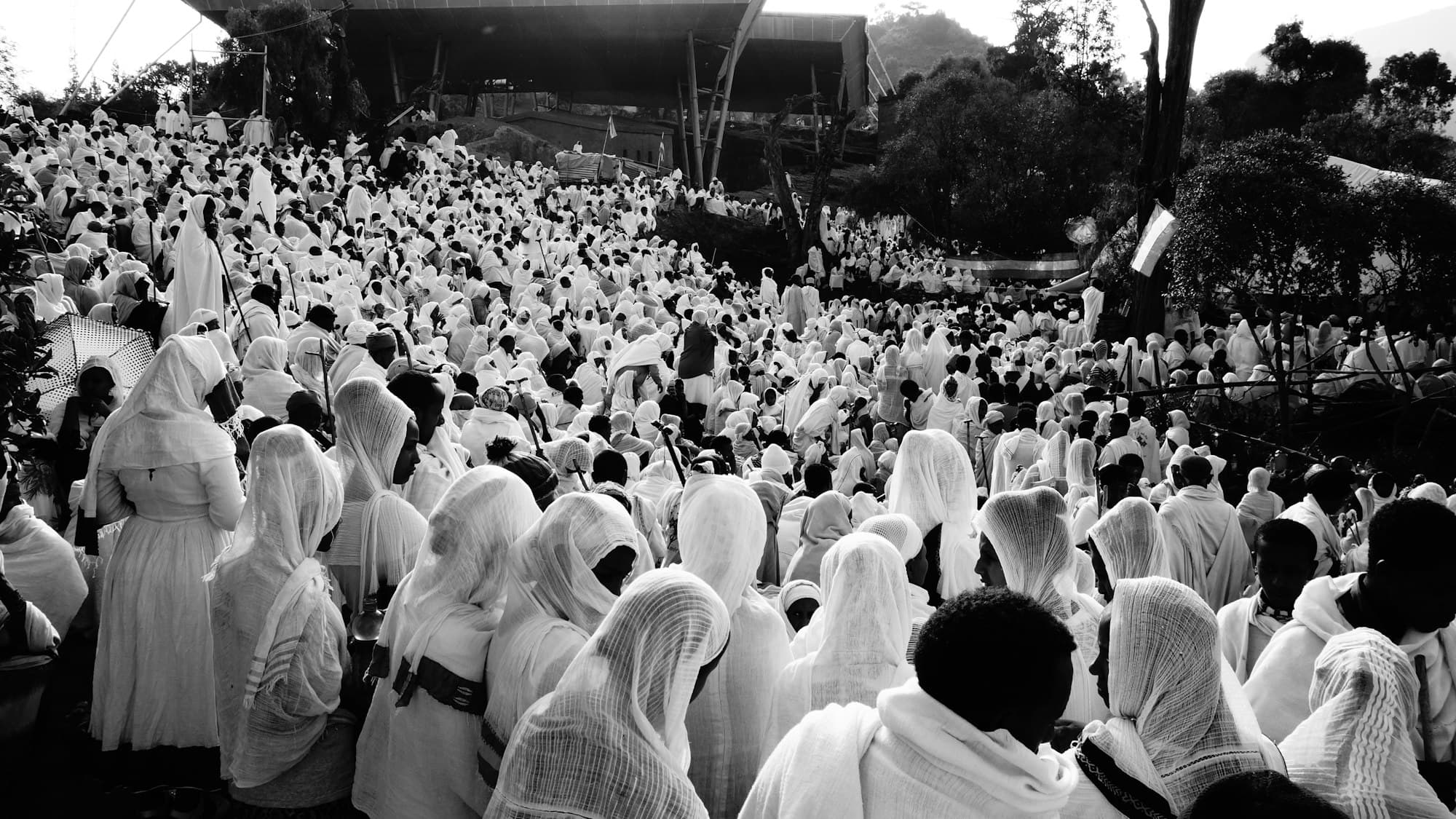
- 3.Wearing a netela (a white cotton shawl) to attend overnight church services on Christmas Eve
- 4.Playing genna, a traditional hockey-like game on Christmas Day, said to date back to shepherds celebrating Christ's birth
- 5.Communal meals shared from a single mesob (woven basket table)
What's on the table
Doro wat and injera
After 43 days of fasting, Christmas dinner is a feast: doro wat (spicy chicken stew with hard-boiled eggs), tibs (sautéed meat), and injera (the spongy sourdough flatbread that serves as both plate and utensil).
The iconic decoration
Church candles and white shawls
Decoration is religious rather than secular. Churches are illuminated with candles for the all-night service. Worshippers wear white netela shawls, symbolizing purity, creating striking visual unity.
How gifts are given
Gift-giving is modest compared to Western traditions, small presents may be exchanged within families, but the focus is on community meals and church attendance.
But who delivers yours?
There are eight cultural Christmas gift-givers around the world — Santa Claus, La Befana, the Yule Lads, Ded Moroz, Sinterklaas, the Three Kings, Christkind, and Joulupukki. Take the 6-question quiz to find out which one matches you.
Take the gift-giver quizDid you know?
The most famous Ethiopian Christmas pilgrimage is to Lalibela, a town carved with 11 medieval rock-hewn churches dating from the 12th century. Tens of thousands of worshippers descend on the site each January 7, one of the most extraordinary Christmas gatherings in the world.
The shape of the season
Ethiopia keeps one of the oldest and most distinctive Christmases on earth, and it doesn't fall on December 25. The Ethiopian Orthodox Tewahedo Church follows an ancient calendar, so Christmas, Genna (or Lidet), is celebrated on January 7. It arrives after a long fast, centers on an all-night church service rather than gifts and decorations, and is followed by a feast, a traditional game, and, for tens of thousands, a pilgrimage to one of the most extraordinary sacred sites in the world. This is Christmas as it was for over a millennium before the commercial version existed: devotional, communal, and profound.
The 43-day fast
Genna is preceded by Tsome Nebiyat, the "Fast of the Prophets," a 43-day fast during which the devout eat a vegan diet, abstaining from all meat, dairy, and eggs. The long abstinence shapes the whole season: it makes the eventual Christmas feast a genuine breaking of a fast, eagerly anticipated, and it frames the holiday as a spiritual discipline first and a celebration second. By the time Genna arrives, the feast that follows carries real weight.
The all-night service
Christmas in Ethiopia is, above all, a church event. On the eve of Genna, worshippers dress in the netela, a white cotton shawl with woven borders, and gather for an overnight liturgy that can last well into the early hours. The sight is striking: congregations clad almost entirely in white, candles illuminating ancient churches, the chanting and drumming of the Orthodox rite carrying through the night. The white shawls symbolize purity and create a powerful visual unity: thousands of people dressed alike, worshipping together in candlelight. Decoration, in the Western sense, barely figures; the candlelight and the white-clad crowd are the imagery.
The game of genna
Christmas Day itself brings genna (formally Ye Genna Chewata, "the Genna game," which takes its name from the holiday), a fast, hockey-like sport played with curved sticks and a ball. By legend it dates to the shepherds who, on hearing of Christ's birth, celebrated by playing a game with their crooks. Men and boys take to open fields to play, and it's a joyful, energetic counterpoint to the solemnity of the night's service, the festive, communal release after the fast and the liturgy.
At the table
After 43 days of fasting, the Genna feast is a true celebration of food. The centerpiece is doro wat, a rich, deeply spiced chicken stew, fragrant with berbere (the Ethiopian spice blend) and traditionally served with hard-boiled eggs. It comes accompanied by tibs (sautéed meat) and other dishes. Everything is eaten with and on injera, the large, spongy, slightly sour fermented flatbread that serves as plate, utensil, and staple all at once. The meal is shared communally from a single mesob, a colorful woven basket-table, with everyone tearing injera and scooping from the same dishes, a literal enactment of togetherness.
Lalibela
The most extraordinary Ethiopian Christmas happens at Lalibela, a town in the northern highlands famous for its eleven medieval churches carved directly down into the rock, hewn from the living stone in the 12th and 13th centuries. Each January 7, tens of thousands of white-robed pilgrims converge on Lalibela for Genna, filling the rock-hewn churches and the spaces around them for the overnight services. It is one of the largest and most awe-inspiring Christmas gatherings anywhere on the planet: a sea of white shawls and candlelight among 800-year-old churches sunk into the earth.
How gifts are given
Gift-giving is modest by Western standards. Small presents may be exchanged within families, and children sometimes receive simple gifts or new clothes, but the focus of Ethiopian Christmas is firmly on church, community, and the shared meal, not on presents. The day's meaning lies in the worship and the gathering, not the giving.
If you wanted to borrow this tradition
The most powerful thing about an Ethiopian Christmas is its order of priorities: faith, community, and a shared meal come first, and gifts barely register. For anyone feeling the commercial weight of the season, that's a clarifying example: Christmas as fasting, worship, a game in the field, and one great communal feast eaten from the same basket.
The communal meal from a shared dish travels especially well as an idea: a single table, everyone eating from the same plates, hands and bread instead of individual servings, a small act of togetherness that changes how a meal feels.
Did you know
- Ethiopian Christmas, Genna, falls on January 7, because the Ethiopian Orthodox Church follows an ancient calendar; it follows a 43-day vegan fast.
- The holiday shares its name with genna, a hockey-like game said to have been played by the shepherds celebrating Christ's birth; the game, named after the festival, is still played on Christmas Day.
- Each January 7, tens of thousands of pilgrims gather at Lalibela, a town of eleven 12th-century churches carved down into solid rock, one of the most remarkable Christmas gatherings in the world.
More from Africa


Bring a little of it home
Borrowing one tradition from somewhere else is how most of the traditions on this page started.
Free AI tool
See your own home decorated
Upload one photo and watch your room or house transform, before you buy anything.
Interactive map
All 41 countries
Gift-givers, feast tables, and the surprising customs most articles skip.
City guides
Lights worth the drive
The best displays in 40 US cities, including the free neighborhoods.
More Christmas traditions across Africa
Christmas ideas for your own home.
Seasonal decorating tips and the occasional new tool, straight to your inbox. One list, no spam.