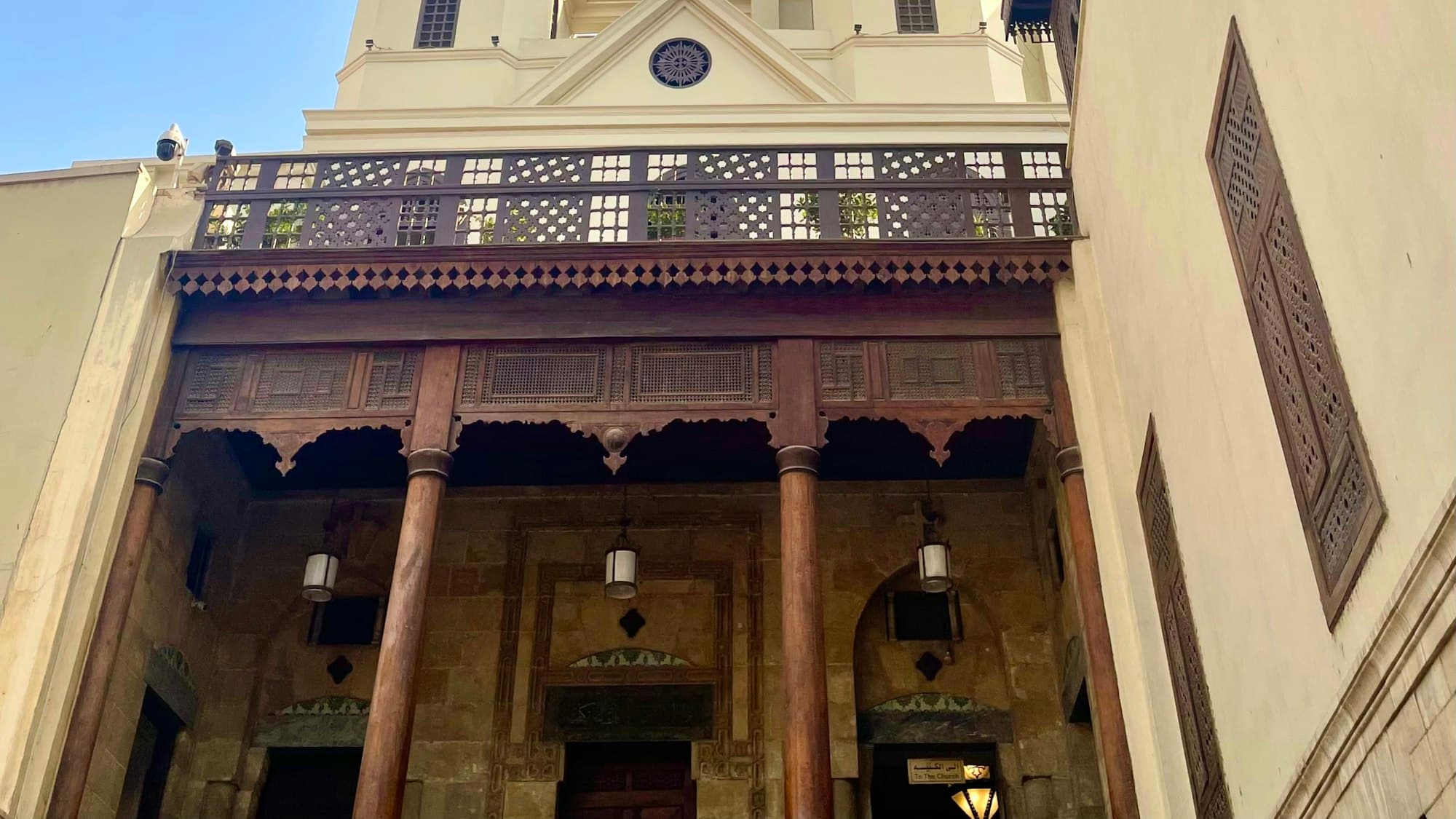
Christmas in
Egypt
Celebrated: January 7 (Coptic Orthodox Christmas)
Signature traditions
- 1.A 43-day Advent fast (Tasoum al-Milad) (vegan diet only) precedes Christmas
- 2.Midnight Mass on January 6 in Coptic Orthodox churches across Egypt, broadcast nationally from Cairo's Cathedral
- 3.Breaking the fast immediately after Mass with feteer mishaltet (flaky layered pastry) and meat dishes
- 4.Wearing new clothes on Christmas Day, a tradition particularly strong with children
- 5.Visiting friends and family with kahk (powdered-sugar cookies) and exchanging blessings throughout the day
What's on the table
Fata and kahk
After 43 days of fasting, families break the fast with fata, a layered dish of bread, rice, and meat in garlic-vinegar broth. Kahk are small powdered-sugar cookies stuffed with dates, walnuts, or honey, baked in batches before Christmas and shared widely.
The iconic decoration
Coptic crosses and lit Christmas trees
Decoration has grown more elaborate in recent decades. Many Coptic homes display Coptic crosses, lit Christmas trees, and lanterns. Cairo's Saint Mark's Coptic Cathedral is illuminated and broadcasts Christmas Eve liturgy to millions of Coptic Christians worldwide.
How gifts are given
Christmas in Egypt is more religious than commercial. Gift-giving is modest, children may receive small gifts and new clothes, but the focus is family meals and church attendance.
But who delivers yours?
There are eight cultural Christmas gift-givers around the world — Santa Claus, La Befana, the Yule Lads, Ded Moroz, Sinterklaas, the Three Kings, Christkind, and Joulupukki. Take the 6-question quiz to find out which one matches you.
Take the gift-giver quizDid you know?
The Coptic Orthodox Church, founded in Egypt in the 1st century by Saint Mark, is one of the world's oldest Christian denominations. The Egyptian Christmas tradition predates most European Christmas customs by over a millennium, and the Pope of Alexandria (based in Cairo) leads the Christmas Eve liturgy each January 6.
The shape of the season
Egypt is home to one of the oldest Christian traditions on earth, and its Christmas reflects that ancient lineage. The Coptic Orthodox Church, founded in Egypt in the first century, celebrates Christmas on January 7, following an old calendar, and the celebration is far more religious than commercial. It comes after a long fast, peaks with a midnight liturgy broadcast nationally from Cairo, and is marked by family visits, new clothes, and trays of powdered-sugar cookies shared among Christians and Muslims alike. This is a Christmas rooted in deep history rather than tinsel and shopping.
The 43-day fast
Coptic Christmas is preceded by Tasoum al-Milad, the Nativity Fast: a 43-day fast during which the faithful follow a vegan diet, abstaining from meat, dairy, and eggs. The long fast prepares both body and spirit for the feast, and it makes the breaking of it, immediately after the Christmas liturgy, a moment of real joy and release. As in Ethiopia's Orthodox tradition, the fast frames the whole season as a spiritual discipline first.
The midnight liturgy
The heart of the Egyptian Christmas is the midnight Mass on January 6, held in Coptic Orthodox churches across the country. The grandest is at Saint Mark's Coptic Orthodox Cathedral in Cairo, where the Pope of Alexandria, the head of the Coptic Church, leads the Christmas Eve liturgy, which is broadcast nationally and watched by millions of Coptic Christians in Egypt and around the world. The service is long, solemn, and ancient, sung in a liturgical tradition that stretches back nearly two thousand years. When it ends, the fast is broken and the celebration begins.
At the table
Breaking 43 days of fasting calls for a feast. A traditional Christmas dish is fata, a hearty layered dish of bread and rice with meat in a garlic-and-vinegar broth, eaten to break the fast after the midnight service. But the food most associated with Coptic Christmas is kahk: small, round shortbread cookies stuffed with dates, nuts, or honey (agameya) and buried under a thick dusting of powdered sugar. Families bake kahk in big batches before Christmas, and the cookies are shared widely, offered to every visitor and exchanged between households throughout the day.
Visiting, new clothes, and shared cookies
Christmas Day is given over to family and community. People, children especially, wear new clothes, a tradition taken seriously for the occasion. Families and friends visit one another, exchanging blessings and the ever-present kahk. Notably, the season's warmth crosses religious lines: kahk and Christmas greetings are commonly shared between Coptic Christians and their Muslim neighbors, part of the long, intertwined coexistence of Egypt's communities. The day's spirit is hospitality and connection rather than gift-giving.
Decoration
Coptic Christmas decoration has grown more elaborate in recent decades, especially in the cities. Many Coptic homes now display lit Christmas trees, lanterns, and Coptic crosses, and churches and Christian neighborhoods are illuminated for the season. Cairo's Saint Mark's Cathedral is lit up for the broadcast liturgy. Still, compared with the Western Christmas, the visual emphasis remains on the church and the family home rather than on commercial spectacle.
How gifts are given
Egyptian Christmas is more religious than commercial, and gift-giving is correspondingly modest. Children may receive small gifts and, above all, new clothes for the occasion, but the focus of the day is firmly on the family meal, the visiting, and church attendance, not on a pile of presents.
If you wanted to borrow this tradition
The loveliest exportable Egyptian custom is the plate of cookies shared across every doorstep: baking a batch of something (kahk, or any seasonal treat) specifically to offer to everyone who visits, and to carry to neighbors regardless of whether they share your holiday. It turns the season into an exchange of hospitality and goodwill rather than a transaction of gifts.
The Coptic Christmas is also a reminder of how ancient the holiday is: a tradition that predates most European Christmas customs by over a thousand years, centered, as it always was, on fasting, worship, and the family table.
Did you know
- The Coptic Orthodox Church, founded in Egypt in the 1st century by Saint Mark, is one of the world's oldest Christian denominations, and its Christmas tradition predates most European customs by over a millennium.
- Coptic Christmas falls on January 7, after a 43-day vegan fast, and the Christmas Eve liturgy led by the Pope of Alexandria in Cairo is broadcast nationally to millions.
- The signature Christmas treat is kahk, powdered-sugar cookies filled with dates, nuts, or honey, baked in batches and shared widely, including with Muslim neighbors.
More from Africa


Bring a little of it home
Borrowing one tradition from somewhere else is how most of the traditions on this page started.
Free AI tool
See your own home decorated
Upload one photo and watch your room or house transform, before you buy anything.
Interactive map
All 41 countries
Gift-givers, feast tables, and the surprising customs most articles skip.
City guides
Lights worth the drive
The best displays in 40 US cities, including the free neighborhoods.
More Christmas traditions across Africa
Christmas ideas for your own home.
Seasonal decorating tips and the occasional new tool, straight to your inbox. One list, no spam.