Christmas in
Austria
Celebrated: December 5 (Krampusnacht) and December 24-26
Signature traditions
- 1.Krampus Night (Krampusnacht) on December 5, the terrifying horned demon Krampus accompanies Saint Nicholas, punishing naughty children while Saint Nicholas rewards good ones
- 2.Krampuslauf, costumed Krampus runs through Alpine villages, with elaborate horned masks, fur suits, and chains, a centuries-old tradition still practiced
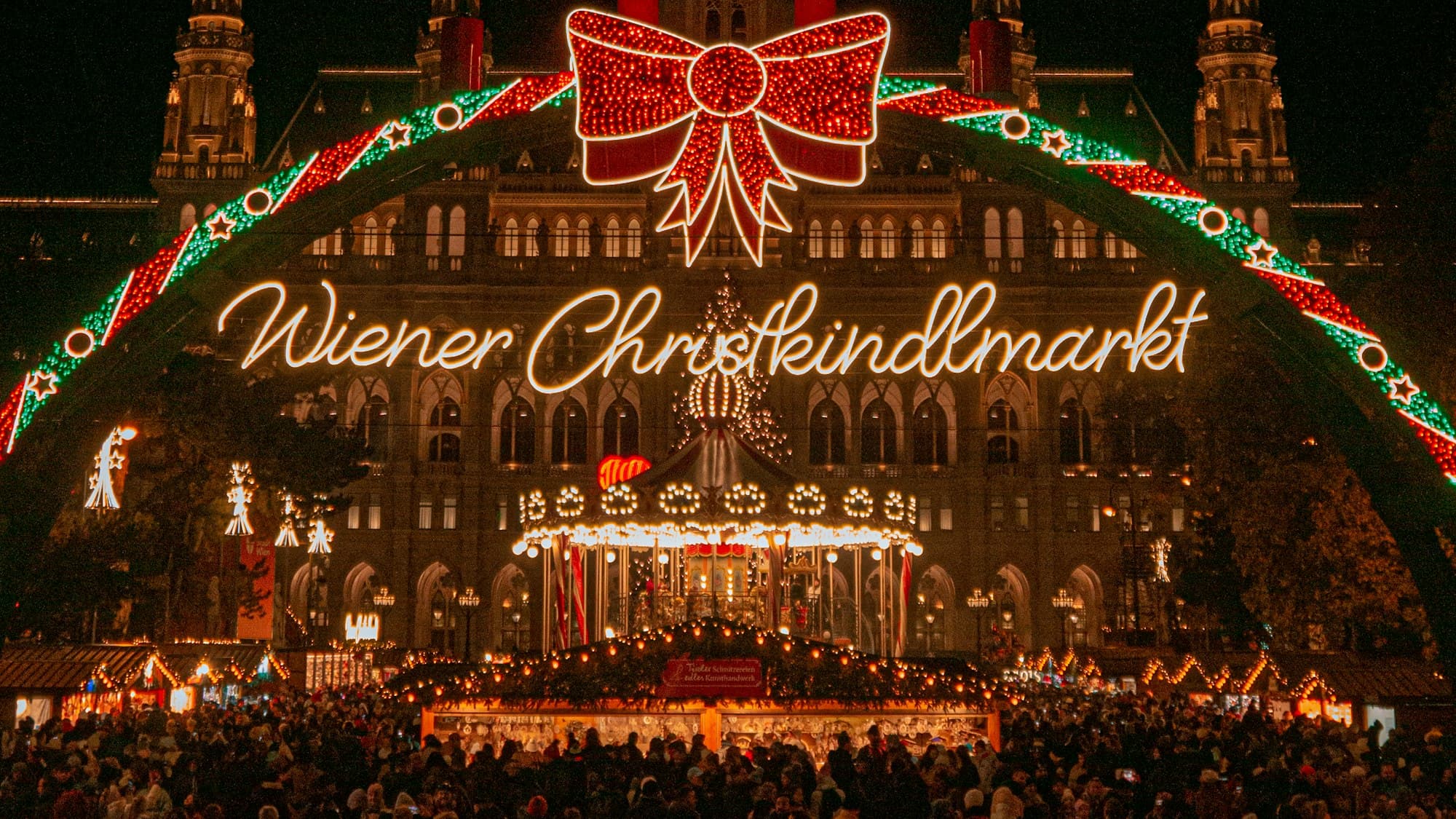
- 3.Christmas markets (Christkindlmärkte), particularly famous in Vienna, Salzburg, and Innsbruck, drawing visitors from across Europe
- 4.The Christmas tree is decorated in secret by parents on Christmas Eve and revealed to children only when a small bell rings
- 5.Singing 'Stille Nacht' ('Silent Night') in its original German on Christmas Eve, the song was composed in Austria in 1818
What's on the table
Carp, goose, and Sachertorte
Christmas Eve dinner is traditionally fried carp or roast goose with red cabbage and potato dumplings. Vanillekipferl (vanilla crescent cookies), Lebkuchen (gingerbread), and Sachertorte (the famous Viennese chocolate cake) are seasonal classics.
The iconic decoration
The Christkindlmarkt and the secret tree
Public Christmas markets fill every Austrian town square from late November. Inside homes, the Christmas tree is decorated in secret behind closed doors and only revealed on Christmas Eve when a bell rings, a moment of suspense for children that's quietly central to Austrian tradition.
How gifts are given
The Christkind (Christ Child, depicted as a winged angelic figure) brings gifts on Christmas Eve. The Christkind enters the home, decorates the tree, leaves gifts beneath it, and rings a small bell as it departs. Children only ever see the result.
But who delivers yours?
Austria's gift-giver is Christkind. But there are eight cultural Christmas gift-givers worldwide — Santa, La Befana, the Yule Lads, Ded Moroz, Sinterklaas, the Three Kings, Christkind, and Joulupukki. Take the 6-question quiz to find your match.
Take the gift-giver quizDid you know?
'Silent Night' (Stille Nacht) was composed in the small village of Oberndorf, Austria, on Christmas Eve 1818, written by priest Joseph Mohr and composer Franz Xaver Gruber when the church organ broke down. The original German lyrics are still sung in Austria each December 24, and the song is now translated into more than 300 languages worldwide.
The shape of the season
Austria runs one of Europe's most atmospheric, and most dramatic, Christmas seasons. It opens early and a little terrifyingly on December 5, Krampusnacht, builds through weeks of glowing Christmas markets, and culminates on Christmas Eve, December 24, when the Christkind secretly decorates the tree and the gifts appear. It's a season of strong contrasts: the demonic and the angelic, the public square and the hushed family room, the most famous carol in the world and the screams of costumed devils running down an Alpine street.
Krampus
Austria's most famous export to global Christmas culture is its scariest figure. Krampus is a horned, fanged, fur-covered demon (half-goat, half-devil) who is the dark counterpart to Saint Nicholas. On the night of December 5, the two travel together: Saint Nicholas rewards the good children with sweets and small gifts, while Krampus deals with the bad ones, rattling chains, brandishing birch switches, and threatening (in the old stories) to cart them off in his basket.
The living heart of the tradition is the Krampuslauf, the "Krampus run." In Alpine villages across Austria, young people don elaborate, genuinely frightening hand-carved wooden masks, towering horns, heavy fur suits, and clanking cowbells and chains, then run howling through the streets after dark, chasing and gently menacing onlookers. The masks can be heirlooms or works of real craftsmanship, and a good Krampus run is loud, smoky with torches, and unforgettable. It's a centuries-old folk custom that has, if anything, grown in recent decades.
The Christkindlmarkt
From late November, every Austrian town square fills with a Christkindlmarkt, a Christmas market of wooden stalls selling hot spiced wine (Glühwein), roasted chestnuts, gingerbread, ornaments, and handcrafts, all under strings of lights. Vienna's markets, especially the grand one in front of the City Hall, draw visitors from across Europe, and Salzburg and Innsbruck run their own beloved versions against backdrops of Baroque architecture and Alpine peaks. The market is as much a social institution as a shopping trip: you go to meet friends, cup a warm Glühwein, and stand in the cold being festive together.
The Christkind and the secret tree
In Austria, gifts aren't brought by Santa Claus but by the Christkind, the Christ Child, depicted as a radiant, angelic, winged figure. And the way it works is built entirely around suspense. On Christmas Eve, the living room is kept off-limits behind closed doors. While the children are occupied elsewhere, the tree is decorated (by the parents, in the Christkind's name), gifts are arranged beneath it, and the candles are lit. Then a small bell rings, signaling that the Christkind has come and gone, and the children are finally allowed in to see the glowing tree and the presents for the first time. They never see the Christkind itself, only the magic it leaves behind. For Austrian children, that moment the bell rings and the doors open is the emotional peak of the entire year.
Silent Night
There's a good chance the most famous Christmas carol in the world is Austrian. "Silent Night" (Stille Nacht) premiered in the small village of Oberndorf, near Salzburg, on Christmas Eve in 1818. The words came from a young priest, Joseph Mohr, who had written them as a poem in Mariapfarr in 1816; the schoolteacher and organist Franz Xaver Gruber set them to music for that Oberndorf premiere. The often-told story holds that the church organ was broken, so the carol was composed to be sung simply, to guitar. From that one village it has spread into more than 300 languages, and Austrians still sing it in the original German on Christmas Eve.
At the table
Christmas Eve dinner in Austria is traditionally lighter than the feasts of December 25 and 26, often fried carp (a Central European Christmas custom) or something as simple as sausages; roast goose with red cabbage and potato dumplings belongs more to Martinmas in November, though it lands on some holiday tables too. The real Austrian glory is the baking. Vanillekipferl, delicate vanilla crescent cookies dusted in sugar, are the quintessential Christmas cookie, made by the tin. Lebkuchen (spiced gingerbread) and a whole repertoire of Weihnachtskekse (Christmas cookies) fill most households. The Sachertorte, Vienna's famous dense chocolate cake with apricot jam, is a year-round café icon rather than a Christmas dish, but it makes plenty of holiday appearances. Glühwein and Punsch warm the markets and the home.
If you wanted to borrow this tradition
If you adopt one Austrian custom, make it the secret reveal: keep the tree behind closed doors, decorate and light it out of sight, and let the children see it for the first time only when a bell rings on Christmas Eve. It transforms the tree from something that's been sitting in the corner for weeks into a genuine, breath-catching surprise, a far more powerful piece of theater than a tree that's been up since Thanksgiving.
The Christmas-market habit travels too: even without a town square, a single evening built around Glühwein, roasted nuts, and lights outdoors with friends captures the spirit. And Vanillekipferl are a wonderful, achievable cookie to make the family signature.
Krampus is harder to borrow tastefully, but the underlying idea, a little genuine spookiness woven into the warmth, is a refreshing antidote to a holiday that's gone entirely sweet.
Did you know
- "Silent Night" was composed in Oberndorf, Austria, on Christmas Eve 1818, reportedly after the church organ broke down, and is now sung in more than 300 languages worldwide.
- The Krampus tradition is so vivid that elaborate hand-carved Krampus masks are prized folk art, passed down and collected; a serious Krampuslauf costume can take years to assemble.
- Austrian children never "see" who brings their gifts. The angelic Christkind decorates the tree in secret and announces its departure with a ringing bell, making the reveal, not the gift-opening, the heart of the evening.
More from Europe



Bring a little of it home
Borrowing one tradition from somewhere else is how most of the traditions on this page started.
Free AI tool
See your own home decorated
Upload one photo and watch your room or house transform, before you buy anything.
Interactive map
All 41 countries
Gift-givers, feast tables, and the surprising customs most articles skip.
City guides
Lights worth the drive
The best displays in 40 US cities, including the free neighborhoods.
More Christmas traditions across Europe
Christmas ideas for your own home.
Seasonal decorating tips and the occasional new tool, straight to your inbox. One list, no spam.